The TAROTs (Telescopes a Action Rapide pour les Objets Transitoires; Rapid Action Telescopes for Transient Objects) are two fully robotic observatories designed to observe the early transient optical counterpart of gamma-ray bursts (GRBs). As their occurrence is rare, we also use TAROT to observe various other celestial objects: RR Lyrae stars, minor planets and supernovae. In this paper, we describe the telescopes, their networking, and the data-processing methods used.
TAROT (Telescope a Action Rapide pour les Objets Transitoires = Rapid Action Telescope for Transient Objects) is a robotic observatory dedicated to observe the early optical transients of gamma-ray bursts. Since its first light in 1998, many improvements occurred. We describe the present technical status of TAROT that leads to the detection success of optical transients of gamma-ray bursts in 2005.
TAROT-1 has been operating routinely since July 1999. During that time 6 alerts have been observed in good weather conditions, leading to limits in magnitude of about R=14 to 17 for the early afterglow of the gamma-ray burst sources. Future prospects include the replacement of the present camera by a more sensitive one, a larger field of view, and an improved readout time.
The primary objective of the Telescope a Action Rapide pour les Objets Transitoires (TAROT - Rapid Action Telescope for Transient Objects) observatory is the detection of cosmic Gamma-Ray Burst sources at optical wavelengths while still active in Gamma-rays. It features a very rapid slewing mount, a 25 cm aperture telescope with a 2 x 2 deg. fov, and is able to reach the 17th V magnitude in 10 s. A powerful scheduling algorithm, and an automated data processing system makes TAROT a fully autonomous facility. TAROT entered into service during the fall of 1998.
TAROT-I is an automatic, autonomous ground based observatory whose primary goal is the rapid detection of the optical counterparts of cosmic gamma-ray burst sources. It will Se able to begin imaging any GRB localization seconds after receipt of an alert from CGRO/BATSE or HETE-2. TAROT-1 will reach the 17th V magnitude in 10 seconds, at a 10 sigma confidence level. TAROT will be able to observe GRB positions given by Beppo-SAX or RXTE, EUV transients from ALEXIS alerts, etc. TAROT will also study a wide range of secondary objectives and will feature a complete automatic data analysis system, and powerful scheduling software. TAROT will be installed this fall on the Plateau du Calern, 1200m above sea level. We report on the status of the project.
The origins of gamma-ray bursts still remain unknown more than 20 years after their discovery. Since burst durations at gamma-ray energies last, on average, only a few seconds, efforts at identifying the source of the bursts have concentrated on followup observations at lower energies. To investigate whether gamma-ray bursts do emit lower-energy radiation shortly after the burst event, networks of ground-based observatories have been established to search the fields of gamma-ray bursts as soon as the position of the burst is reasonably well localized. We report the preliminary results of multi-wavelength observations from the BATSE/COMPTEL/NMSU Rapid Response Network for GRB 940301. Radio observations of the burst position began within one hour of the burst detection. Optical images of the COMPTEL error box were first obtained seven hours after the burst. The ground-based optical and radio observations continued for several weeks after the burst. A small number of variable stars, and several radio sources were found inside the gamma-ray burst error box. We cannot, however, conclusively determine whether any of these objects were responsible for GRB 940301. The multi-wavelength observations we report can be used to impose limits to constrain future models for the origin of gamma-ray bursts.
A fading counterpart to a gamma-ray burst (GRB) would appear as a point source inside a GRB error region soon after the burst which dims on a timescale from minutes to days. The favorable circumstances of the burst GRB 930131 allowed for an international campaign to search for fading counterparts starting 6.8 hr after the burst. We report observations from many optical sites, two radio telescopes, and archival ROSAT data, including deep Schmidt exposures 35, 44, and 64 hr after the burst. No fading counterparts were detected with our observations.
 Michel Boer合作论文数Centre National de la Recherche Scientifique;Analysis and Experimentation on Ecosystems6
 A. Klotz合作论文数5J. Eysseric合作论文数4H. Pedersen合作论文数4M. Bringer合作论文数4Tl Cline合作论文数2Dm Palmer合作论文数2JL ATTEIA合作论文数2
 Roger Malina合作论文数Harry W. Bass Jr. School of Arts, Humanities, and Technology, The University of Texas at Dallas2
 Chryssa Kouveliotou合作论文数Department of Physics, Columbian College of Arts & Sciences, The George Washington University2
 Gerald Fishman合作论文数NASA-MSFC2K. Bennett合作论文数2
 Charles Meegan合作论文数The Center for Space Plasma and Aeronomic Research, The University of Alabama in Huntsville2A. Leroy合作论文数2
 Damerdji Yassine合作论文数France Institut d'Astrophysique et de Geophysique, de l'Universite de Liege2Rene Hudec合作论文数2Dominique Toublanc合作论文数Centre d'Etude Spatiale des Rayonnements2Guilherme Amaral Calvet合作论文数2
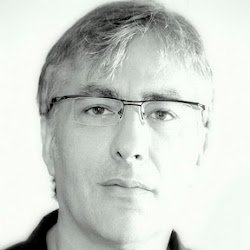 Patrick Sanchez合作论文数IRISA/INRIA IRISA2Bernard J. Mcnamara合作论文数2M. Laas–Bourez合作论文数1K. J. Schramm合作论文数1
 Sylvain Chaty合作论文数1L. Vyskočil合作论文数1J. M. Ryan合作论文数1Tat Spoelstra合作论文数1Sd Barthelmy合作论文数1HE JORGENSEN合作论文数1Da Frail合作论文数1michael palermiti合作论文数1WA MAHONEY合作论文数1robert a schwartz合作论文数1W. Wenzel合作论文数1LO HANLON合作论文数1f morand合作论文数1Ha Krimm合作论文数1
 Hans Albert Pedersen合作论文数Faculty of Agricultural Sciences, Aarhus University1
 Scott Barthelmy合作论文数Goddard Space Flight Center, National Aeronautics and Space Administration1
 D. A. Green合作论文数Department of Physics, University of Cambridge1
 Steven Levin合作论文数Jet Propulsion Laboratory, California Institute of Technology1
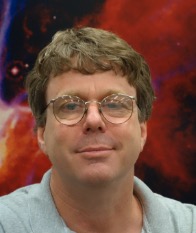 Roland K. Vanderspek合作论文数Kavli Institute for Astrophysics and Space Research, School of Science, Massachusetts Institute of Technology1
 Malcolm Coe合作论文数School of Physics & Astronomy University of Southampton1William A. Wenzel合作论文数1
 Shri Kulkarni合作论文数Division of Physics, Mathematics and Astronomy, California Institute of Technology1M. Sommer合作论文数1Wim Hermsen合作论文数1
 Lorraine Hanlon合作论文数Department of Experimental Physics;University College Dublin;Department of Experimental Physics, University College Dublin1
 George Ricker合作论文数Kavli Institute for Astrophysics and Space Research, Massachusetts Institute of Technology;Detector Laboratory, Massachusetts Institute of Technology;Goddard Space Flight Center, National Aeronautics and Space Administration1




