The genus Genkalia Kulikovskiy, Lange-Bertalot & Metzeltin is typically known from aquatic habitats; its occurrence in aerial habitats is unknown. The new species, Genkalia aravindia, was discovered in Sikkim, Eastern Himalayas, a biodiversity hotspot in India. It prefers aerophilic habitats and has a unique valve outline possessing a larger number of areolae than any other Genkalia species. The genus shows comparable features with the genera Adlafia Gerd Moser, Lange-Bertalot & Metzeltin and Boreozonacola Lange-Bertalot, M.S.Kulikovskiy & Witkowski in possessing uniseriate striae, round to oval-shaped areolae, and curved terminal raphe fissures. In India, there have been previous reports of Genkalia digitulus (Hustedt) Lange-Bertalot & Kulikovskiy (as Navicula digitulus Hustedt) from the Western Ghats and Gujarat region of India, but this is the first formal documentation of any species of Genkalia from India and the occurrence of this genus in the tropics.
We describe Adlafia kociolekii sp. nov. from aerial habitats in Sikkim, India, a part of the Eastern Himalayas. The species is described based on light and scanning electron microscopic observations. The main diagnostic features include valves are clear elliptical, a narrow axial area at the centre, radiate to convergent striation, and distinctive Voigt discontinuity at both apices. In terms of ultrastructure, the features that identify this species as new are the internally presence of raphe on the elevated sternum, with distal raphe ends distinctly deflected to opposite sides of proximal ends, and distal ends terminating in long and thickened helictoglossae. The species was also recorded from wet walls and freshwater habitats of north-east India, in the present study. The morphological features of the species are compared with other closely similar taxa of Adalfia and other naviculoid genera.
Platessa arborea sp. nov. new monoraphid diatom species is described from the tree moss habitat of India’s Sikkim state from the Eastern Himalayan biodiversity hotspot. This new species was described based on light and scanning electron micrographs and compared to morphologically similar taxa. Platessa arborea seems to have an affinity for the aerial habitat and has certain unique morphological features distinct from all the other Platessa species, such as its narrowly rounded apices, wide axial area, and the presence of predominantly uniseriate striae with unusually thick striae density. In India, there have been previous reports of some species from the genera Achnanthes and Cocconeis, which have been eventually transferred to the genus Platessa. However, this is the first formal documentation of the Platessa genus from India.
A new aerophilic diatom species, Humidophila manipurensis sp. nov., is described from the Sadu Chiru waterfalls, Manipur, India, a part of the Indo-Burma hotspot region. This species is characterized by hav-ing its valve shape slightly inflated at middle, terminal raphe ends that are slightly deflected, round areolae and a central depression. Further, we also recorded Humidophila bigibba from Meghalaya State, Northeast India, and this population is compared with the type population from Indonesia and Chinese populations. Fine structural details of both taxa were examined using light and scanning electron microscopy and compared with morpho-logically similar taxa in this genus. Addition of new species from this region will further add to the biodiversity richness of the Indo-Burma biodiversity hotspot. Further, this study confirms the presence of H. bigibba for the first time in India. This species has a deep constriction in the middle of the valve which is not found in the populations from the Indonesia and China.
Since research began in diatom ecology, scientists have focussed more on diatoms from aquatic habitats as opposed to aerial habitats. In this paper, we present the first dataset on diatoms from aerial habitats in the Indo-Burma hot spot. We have chosen the Blue Mountain region to collect tree mosses, an aerial habitat where diatoms thrive. We have addressed diatom composition and diversity in relation to altitude. Twenty-two moss samples were collected and 53 diatom taxa belonging to 21 genera were discovered and enumerated using light microscopy. The diatom flora of tree mosses is dominated by acidophilous genera Eunotia and Luticola , with both of the most abundant species Orthoseira roeseana and Luticola acidoclinata being euaerial and oligotraphentic diatoms. The samples from 1902-m altitude had the highest species diversity. Species richness was 8–22 diatom per sample, with an average of 14. The species accumulation curve shows that more diatom species will be discovered with additional sampling of aerial habitats in the Blue Mountain region.
Nine species of the diatom genus Luticola D.G.Mann were collected from wet walls and other subaerial habitats from the Western Ghats of India and analysed using light and scanning electron microscopy. Of these, seven are considered to be new species and they are formally described here. They are compared with congeners based on valve size and shape, and ultrastructural features. Another two species described previously by H.P. Gandhi and originally assigned to the genus Navicula are formally transferred to Luticola. Over 25 species of Luticola have been reported from south-east Asia, most of them endemic to the region. The morphological variation of the genus is considered along with its systematics, biogeography and ecology. It appears that south-east Asia, Antarctica and South America are the areas of endemism for this genus.
Despite more than 150 years of diatom research in India, cymbelloid taxa have rarely been investigated when compared to the other parts of the world. A new freshwater species of Encyonema Kutzing was discovered from the mountain ranges of Peninsular India and is described based on light and scanning electron microscopy observations. This paper provides a comparison of the new taxa with morphologically similar taxa of the genus Encyonema. Encyonema keshrii, sp. nov., is characterized on the basis of distinctive morphological characters including valve and apex shape as well as striae density. Enccyonema keshrii, sp. nov., is found to be a wide spread taxon with distribution across the Eastern Ghats, Western Ghats and the Eastern Himalayas of Indian subcontinent.
Pseudostaurosiropsisgeocollegarum (Witkowski) Morales is reported for the first time from India. This is very rare and neglected species was found from a Powai Lake in Mumbai, Maharashtra, India. This species was described from Poland. P.geocollegarum differs from other three members of the genus Pseudostaurosiropsis by the shape of the valves, size and number of striae in 10 µm. The present study marks the first report of Pseudostaurosiropsis to Asia with ultrastructural details. This work also highlights the biodiversity value of lesser known urban biodiversity. New taxonomic combination is suggested, Pseudostaurosiropsis triradiatum (Morales) Kulikovskiy, Glushchenko et B. Karthick stat. nov. on the basis of Pseudostaurosiropsis geocollegarum f. triradiatum Morales 2005.
A new freshwater diatom species, Gomphonema adhikarii sp. nov., is described from a small roadside pool from the alpine region of Arunachal Pradesh, Eastern Himalayas, India. Detailed valve morphological features, based on both light and scanning electron microscopy, is presented and this taxon is compared with similar species. Gomphonema adhikarii has a distinct asymmetry about the apical axis and slightly bent foot pole area. The outline of the valve is slightly undulate, the valve centre is swollen and both apices are broadly rounded. This new species described from the Eastern Himalayas supports the idea of the area being rich in biodiversity, even with respect to the freshwater diatom flora.
A new species of Pinnularia is described from a stream from Sikkim, India, falls under Eastern Himalayas biodiversity hotspot. Features that help make this species distinctive include having triundulate margin, a broad, central fascia, a central depression, and oppositely-deflected external distal raphe fissures. Pinnularia sikkimensis sp. nov. is compared with its morphologically similar species, such as Pinnularia nodosa, P. biceps, P. grunowii, P. septentrionalis, P. graciloides var. jogensis and P. ferrophila. The taxon is also recorded from two stream sites in Vietnam suggesting a wide distribution across Southeast Asia. In addition to the description of the new species, a checklist of endemic Pinnularia taxa from India is also presented.
Light and scanning electron microscope observations of Cymbella sagarensis Gandhi are presented. Morphological peculiarities of this species show that it belongs to the genus Oricymba Jüttner, Krammer, Cox, Van de Vijver & Tuji. Based on our observations, the new taxonomic combination, Oricymba sagarensis (Gandhi) C.Radhakrishnan, Kociolek & B.Karthick, comb. nov. is proposed. Morphological comparison of this species with other known members of Oricymba is given. A second taxon described by Gandhi, C. sagarensis f. gracilis Gandhi, is suggested to be a synonym of the nominate forma. Distribution of this species and other Oricymba taxa is discussed.
In this work we demonstrate the formation of a new type of polariton on the interface between a cuprous oxide slab and a polystyrene micro-sphere placed on the slab. The evanescent field of the resonant whispering gallery mode (WGM) of the micro sphere has a substantial gradient, and therefore e ectively couples with the quadrupole 1S excitons in cuprous oxide. This evanescent polariton has a long life-time, which is determined only by its excitonic and WGM component. The polariton lower branch has a well pronounced minimum. This suggests that this excitation is localized and can be utilized for possible BEC. The spatial coherence of the polariton can be improved by assembling the micro-spheres into a linear chain.
 Balasubramanian Karthick合作论文数13
 John Patrick Kociolek合作论文数6
 Sudipta Kumar Das合作论文数Centre of Excellence in Integrated Omics and Computational Biology, Utkal University4
 Maxim Kulikovskiy合作论文数Institute of Biology of Inland Waters, Russian Academy of Sciences4Irina V Kuznetsova合作论文数2Murugesan Yogeshwaran合作论文数2
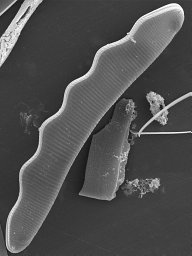 Anton Glushchenko合作论文数K? Timiryazev Inst Plant Physiol RAS, IPP RAS2
 David M. Williams合作论文数Nat Hist Museum1
 Rex Lowe合作论文数Department of Biological Sciences, Bowling Green State University1
 Wetzel Carlos Eduardo合作论文数Environm Res & Innovat Dept ERIN, LIST1Rahalkar P W合作论文数1
 Jonathan C. Taylor合作论文数1M. J. Thirumalachar合作论文数1
 Vikas Kumar合作论文数Division of Entomology;Indian Institute of Horticultural Research;Division of Entomology, Indian Institute of Horticultural Research1M TIRGARI合作论文数1




