Diverse theories suggest that people are motivated to maintain or enhance feelings of self-esteem, continuity, distinctiveness, belonging, efficacy, and meaning in their identities. Four studies tested the influence of these motives on identity construction, by using a multilevel regression design. Participants perceived as more central those identity elements that provided a greater sense of self-esteem, continuity, distinctiveness, and meaning; this was found for individual, relational, and group levels of identity, among various populations, and by using a prospective design. Motives for belonging and efficacy influenced identity definition indirectly through their direct influences on identity enactment and through their contributions to self-esteem. Participants were happiest about those identity elements that best satisfied motives for self-esteem and efficacy. These findings point to the need for an integrated theory of identity motivation.
Summary: This study examines the psychometric properties of four scales designed to assess efficacy beliefs that family members hold about their role as spouse, parent, and child, as well as about the functioning of family as a holistic system. The sample includes about 600 parents and about 1000 adolescents. Psychometric properties of the scales are examined by means of exploratory and confirmatory factor analyses as well as internal coherence coefficients. Validity was examined by means of correlations with indicators of open communication, parental monitoring, aggressive management of conflict, and family satisfaction. Confirmatory factor analysis corroborates the internal reliability of the scales and their distinctiveness. Although correlated, efficacy beliefs that family members hold regarding their capacity to meet the different roles within the family and involved in the functioning of family as a whole system are not reducible to a single dimension. The family efficacy scales provide theoretically rooted tools for studying family processes and functioning as they occur under naturalistic conditions and as a result of therapeutic interventions.
This longitudinal research examined a structural model of the self-regulatory mechanisms governing transgressive conduct. Perceived academic and self-regulatory efficacy concurrently and longitudinally deterred transgressiveness both directly and by fostering prosocialness and adherence to moral self-sanctions for harmful conduct. The impact of perceived social self-efficacy was mediated through prosocialness. Moral disengagement and prosocialness affected transgressiveness through the mediating influence of irascible affectivity and hostile rumination. Ruminative affectivity, in turn, both concurrently and longitudinally affected transgressiveness. Moral disengagement also contributed independently to variance in transgressiveness over time. This pattern of relations was obtained after controlling for prior transgressiveness. The structural model was replicated across gender and provided a better fit to the data than did several alternative models.
Les deux recherches présentées dans ce travail constituent une contribution à l’étude de l’intervention des processus cognitifs de caractère normatif sur les conduites d’évaluation. La première examine l’action de la norme d’internalité dans les processus d’attribution de responsabilité et la deuxième dans la formulation d’un pronostic social de la part des travailleurs sociaux dans des cas de mauvais traitements familiaux. Les résultats ont mis en évidence la tendance générale à donner des attributions de type interne à l’occasion de l’évaluation directe de comportements abusifs et la préférence pour une modalité d’évaluation de nature intermédiaire à l’occasion de l’évaluation indirecte des comportements attribués.
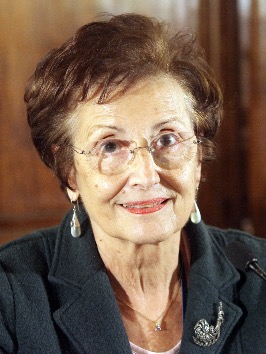 Eugenia Scabini合作论文数Di Psicologia Sociale all’Università Cattolica del Sacro Cuore4
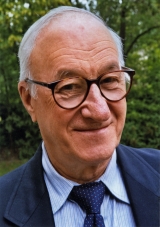 Albert Bandura合作论文数Department of Psychology, School of Humanities and Sciences, Stanford University2
 Gian Vittorio Caprara合作论文数Universita di Santiago de Compostela;Inter-University Center for the Research on the Origin of Prosocial and Antisocial Motivations2
 Claudio Barbaranelli合作论文数University of Rome “La Sapienza”2
 Concetta Pastorelli合作论文数1
 Vivian L Vignoles合作论文数School of Psychology, University of Sussex1
 Elena Marta合作论文数Laboratorio di psicologia sociale applicata, Università Cattolica del Sacro Cuore di Milano1




