Stony coral tissue loss disease (SCTLD) was first documented in Florida in 2014 and has since spread through the Caribbean causing unprecedented mortality in more than 20 species of corals. The cause of SCTLD is unknown, but bacteria are suspected based on regression of gross lesions in some corals treated with antibiotics. Limited pathology studies on SCTLD exist, but it is likely that ‘SCTLD’ is a general term encompassing tissue loss disease of unexplained origin. Here, we examined pathology of lesions in corals from the US Virgin Islands where SCTLD has recently emerged. The typical histologic lesion of SCTLD in Florida corals was lytic necrosis comprising vacuolation and necrosis of mucus cells with erosion of mesoglea and misshapen endosymbionts with variably sized intracytoplasmic granules and common occurrence of filamentous viral-like particles in endosymbionts visible on electron microscopy (EM). In contrast, USVI corals had mainly lytic mucus cell hypertrophy and necrosis with no involvement of mesoglea, endosymbiont pathology at the light microscopy level was less evident, and VLP were rarely seen on EM. We suspect SCTLD is likely more complex with multiple presentations and potential etiologies depending on geographic region. Further pathological studies from other regions might help refine the case definition of SCTLD.
Mangrove ecosystems in the Caribbean are frequently exposed to hurricanes, leading to structural and regenerative change that elicit calls for recovery action. For those mangroves unaffected by human modifications, recovery can occur naturally. Indeed, observable natural recovery after hurricanes is the genesis of the “disturbance adaptation” classification for mangroves; while structural legacies exist, unaltered stands often regenerate and persist. However, among the >7,000 islands, islets, and cays that make up the Caribbean archipelago, coastal alterations to support development affect mechanisms for regeneration, sediment distribution, tidal water conveyance, and intertidal mangrove transgression, imposing sometimes insurmountable barriers to natural post‐hurricane recovery. We use a case study approach to suggest that actions to facilitate recovery of mangroves on Caribbean islands (and similar settings globally) may be more effective when focusing on ameliorating pre‐existing anthropogenic stressors. Actions to clean debris, collect mangrove propagules, and plant seedlings are noble endeavors, but can be costly and fall short of achieving recovery goals in isolation without careful consideration of pre‐hurricane stress. We update a procedural framework that considers six steps to implementing “Ecological Mangrove Restoration” (EMR), and we apply them specifically to hurricane recovery. If followed, EMR may expedite actions by suggesting immediate damage assessment focused on hydrogeomorphic mangrove type, hydrology, and previous anthropogenic (or natural) influence. Application of EMR may help to improve mangrove recovery success following catastrophic storms, and reduce guesswork, delays, and monetary inefficiencies.
The Biological Condition Gradient (BCG) is a conceptual model used to describe incremental changes in biological condition along a gradient of increasing anthropogenic stress. As coral reefs collapse globally, scientists and managers are focused on how to sustain the crucial structure and functions, and the benefits that healthy coral reef ecosystems provide for many economies and societies. We developed a numeric (quantitative) BGC model for the coral reefs of Puerto Rico and the US Virgin Islands to transparently facilitate ecologically meaningful management decisions regarding these fragile resources. Here, reef conditions range from natural, undisturbed conditions to severely altered or degraded conditions. Numeric decision rules were developed by an expert panel for scleractinian corals and other benthic assemblages using multiple attributes to apply in shallow-water tropical fore reefs with depths <30 m. The numeric model employed decision rules based on metrics (e.g., % live coral cover, coral species richness, pollution-sensitive coral species, unproductive and sediment substrates, % cover by Orbicella spp.) used to assess coral reef condition. Model confirmation showed the numeric BCG model predicted the panel's median site ratings for 84% of the sites used to calibrate the model and 89% of independent validation sites. The numeric BCG model is suitable for adaptive management applications and supports bioassessment and criteria development. It is a robust assessment tool that could be used to establish ecosystem condition that would aid resource managers in evaluating and communicating current or changing conditions, protect water and habitat quality in areas of high biological integrity, or develop restoration goals with stakeholders and other public beneficiaries.
As coral reef condition and sustainability continue to decline worldwide, losses of critical habitat and their ecosystem services have generated an urgency to understand and communicate reef response to management actions, environmental contamination, and natural disasters. Increasingly, coral reef protection and restoration programs emphasize the need for robust assessment tools for protecting high-quality waters and establishing conservation goals. Of equal importance is the need to communicate assessment results to stakeholders, beneficiaries, and the public so that environmental consequences of decisions are understood. The Biological Condition (BCG) model provides a structure to evaluate the condition of a coral reef in increments of change along a gradient of human disturbance. Communication of incremental change, regardless of direction, is important for decision makers and the public to better understand what is gained or lost depending on what actions are taken. We developed a narrative (qualitative) Biological Condition Gradient (BCG) from the consensus of a diverse expert panel to provide a framework for coral reefs in US Caribbean Territories. The model uses narrative descriptions of biological attributes for benthic organisms to evaluate reefs relative to undisturbed or minimally disturbed conditions. Using expert elicitation, narrative decision rules were proposed and deliberated to discriminate among six levels of change along a gradient of increasing anthropogenic stress. Narrative rules for each of the BCG levels are presented to facilitate the evaluation of benthic communities in coral reefs and provide specific narrative features to detect changes in coral reef condition and biological integrity. The BCG model can be used in the absence of numeric, or quantitative metrics, to evaluate actions that may encroach on coral reef ecosystems, manage endangered species habitat, and develop and implement management plans for marine protected areas, watersheds, and coastal zones. The narrative BCG model is a defensible model and communi-cation tool that translates scientific results so the nontechnical person can understand and support both regu-latory and non-regulatory water quality and natural resource programs.
This synthesis focuses on the history of research on coral reefs within two U.S. National Park Service units in St. Croix, U.S. Virgin Islands: Buck Island Reef National Monument (from 1961 to 2022) and Salt River Bay National Historical Park and Ecological Preserve (from 1980 to 2022). Buck Island Reef National Monument (BUIS) is off the north shore of the island of St. Croix, in the U.S. Virgin Islands. Established in 1961 and expanded in 2001, it is under the jurisdiction of the National Park Service (NPS). Long-term monitoring programs maintained by the NPS and jointly by the University of the Virgin Islands (UVI) and the Virgin Islands Department of Planning and Natural Resources (VIDPNR) provide data on trends in living coral cover and specific coral species from 2000 and 2001, respectively. Disease, thermal stress (indicated by coral bleaching), and hurricanes reduced total coral cover periodically, but cover remained relatively stable from 2007 through the end of 2020. Salt River Bay National Historical Park and Ecological Preserve (SARI) is a national park on the north shore of the island of St. Croix, in the U.S. Virgin Islands. Established in 1992, it is co-managed by the NPS and the Government of the Virgin Islands. Long-term monitoring programs maintained by the NPS and by the UVI with the VIDPNR provide data on trends in living coral cover and individual coral species from 2011 and 2001, respectively. In spite of thermal stress (indicated by coral bleaching), disease, and hurricanes, total coral cover remained relatively stable through the end of 2020. This document also includes results from extensive investigations by the National Oceanic and Atmospheric Administration (NOAA) and from many individual projects including those based out of the underwater saturation habitats Hydrolab and Aquarius from 1977 to 1989, as well as studies from researchers at Fairleigh Dickinson University’s West Indies Laboratory. While not possible to review all of these in detail, this report highlights information considered useful to managers, and scientists planning future research. In 2021, a particularly virulent disease called stony coral tissue loss disease (SCTLD), first noted in 2014 in Florida, and then in 2019 in the U.S. Virgin Islands, started killing corals in BUIS and SARI with the different species showing a gradient of susceptibility. An exact cause or link between this disease and human actions has not been discovered to date. The losses associated with this disease have now exceeded those from any other stressors in these national parks.
Coral reefs in the western Atlantic and Caribbean are deteriorating primarily from disease outbreaks, increasing seawater temperatures, and stress due to land-based sources of pollutants including sediments associated with land use and dredging. Sediments affect corals in numerous ways including smothering, abrasion, shading, and inhibition of coral recruitment. Sediment delivery resulting in deposition and water quality deterioration can cause degradation at the spatial scale of corals or entire reefs. We still lack rigorous long-term studies of coral cover and community composition before, during and after major sediment stress, and evidence of recovery after watershed management actions. Here we present an overview of the effects of terrestrial sediments on corals and coral reefs, with recent advances in approaches to watershed assessment relevant to the delivery of sediments to these ecosystems. We present case studies of northeastern Caribbean watersheds to illustrate challenges and possible solutions and to draw conclusions about the current state of knowledge of sediment effects on coral reefs. With a better understanding of erosion and the pathways of sediment discharge to nearshore reefs, there is the increased potential for management interventions.
For several decades, white plagues (WPDs: WPD-I, II and III) and more recently, stony coral tissue loss disease (SCTLD) have significantly impacted Caribbean corals. These diseases are often difficult to separate in the field as they produce similar gross signs. Here we aimed to compare what we know about WPD and SCTLD in terms of: (1) pathology, (2) etiology, and (3) epizootiology. We reviewed over 114 peer-reviewed publications from 1973 to 2021. Overall, WPD and SCTLD resemble each other macroscopically, mainly due to the rapid tissue loss they produce in their hosts, however, SCTLD has a more concise case definition. Multiple-coalescent lesions are often observed in colonies with SCTLD and rarely in WPD. A unique diagnostic sign of SCTLD is the presence of bleached circular areas when SCTLD lesions are first appearing in the colony. The paucity of histopathologic archives for WPDs for multiple species across geographies makes it impossible to tell if WPD is the same as SCTLD. Both diseases alter the coral microbiome. WPD is controversially regarded as a bacterial infection and more recently a viral infection, whereas for SCTLD the etiology has not been identified, but the putative pathogen, likely to be a virus, has not been confirmed yet. Most striking differences between WPD and SCTLD have been related to duration and phases of epizootic events and mortality rates. While both diseases may become highly prevalent on reefs, SCTLD seems to be more persistent even throughout years. Both transmit directly (contact) and horizontally (waterborne), but organism-mediated transmission is only proven for WPD-II. Given the differences and similarities between these diseases, more detailed information is needed for a better comparison. Specifically, it is important to focus on: (1) tagging colonies to look at disease progression and tissue mortality rates, (2) tracking the fate of the epizootic event by looking at initial coral species affected, the features of lesions and how they spread over colonies and to a wider range of hosts, (3) persistence across years, and (4) repetitive sampling to look at changes in the microbiome as the disease progresses. Our review shows that WPDs and SCTLD are the major causes of coral tissue loss recorded in the Caribbean.
Abstract Anthropogenic environmental change has increased coral reef disturbance regimes in recent decades, altering the structure and function of many coral reefs globally. In this study, we used coral community survey data collected from 1996 to 2015 to evaluate reef‐scale coral calcification capacity (CCC) dynamics with respect to recorded pulse disturbances for 121 reef sites in the Main Hawaiian Islands and Mo'orea (French Polynesia) in the Pacific and the Florida Keys Reef Tract and St. John (U.S. Virgin Islands) in the western Atlantic. CCC remained relatively high in the Main Hawaiian Islands in the absence of recorded widespread disturbances; declined and subsequently recovered in Mo'orea following a crown‐of‐thorns sea star outbreak, coral bleaching, and major cyclone; decreased and remained low following coral bleaching in the Florida Keys Reef Tract; and decreased following coral bleaching and disease in St. John. Individual coral taxa have variable calcification rates and susceptibility to disturbances because of their differing life‐history strategies. As a result, temporal changes in CCC in this study were driven by shifts in both overall coral cover and coral community composition. Analysis of our results considering coral life‐history strategies showed that weedy corals generally increased their contributions to CCC over time while the contribution of competitive corals decreased. Shifts in contributions by stress‐tolerant and generalist corals to CCC were more variable across regions. The increasing frequency and intensity of disturbances under 21st century global change therefore has the potential to drive lower and more variable CCC because of the increasing dominance of weedy and some stress‐tolerant corals.
Hurricanes Irma and Maria ravaged the mangroves of St. John, U.S. Virgin Islands, in 2017. Basal area losses were large (63–100%) and storm losses of carbon associated with aboveground biomass amounted to 11.9–43.5 Mg C/ha. Carbon biomass of dead standing trees increased 8.1–18.3 Mg C/ha among sites, and carbon in coarse woody debris on the forest floor increased 1.9–18.2 Mg C/ha, with effects varying by mangrove typology. While St. John has only ~45 ha of mangroves, they exist as isolated basins, salt ponds, and fringe mangroves; the latter sometimes support diverse marine communities. Salt pond and fringe mangroves had proportionately more organic carbon (46.3 Mg C/ha) than inorganic carbon (1.1 Mg C/ha) in soils than isolated basins. Soil organic carbon was also appreciable in isolated basins (30.8 Mg C/ha) but was matched by inorganic C (36.7 Mg C/ha), possibly due to adjacent land use history (e.g., road construction), previous storm overwash, or geomorphology. Soil nitrogen stocks were low across all typologies. Mangroves had limited regeneration 26 months after the storms, and recovery on St. John may be hindered by pre-storm hydrologic change in some stands, and potential genetic bottlenecks and lack of propagule sources for expedient recovery in all stands.
Since 2011, tropical beaches from Africa to Brazil, Central America, and the Caribbean have been inundated by tons of sargassum seaweed from a new equatorial source of pelagic sargassum in the Atlantic. In recent years the extraordinary accumulations of sargassum make this a nuisance algal bloom for tropical coasts. In 2018 satellite data indicated floating mats of sargassum that extended throughout the Caribbean to the northeast coast of Brazil with the highest percent coverage over the water yet recorded. A literature review suggests that Atlantic equatorial recirculation of seaweed mats combined with nutrients from several possible sources may be stimulating the growth and accumulations of sargassum. In the western equatorial recirculation area, new nutrient sources may include Amazon River floods and hurricanes; in the eastern equatorial recirculation area, nutrient sources that could sustain the sargassum blooms include coastal upwelling and Congo River freshwater and nutrients.
Hurricanes Irma and Maria, two powerful storms that hit the U.S. Virgin Islands less than 2 weeks apart in September 2017, caused extensive damage to the natural resources on St. John. Damage was particularly severe in a unique mangrove/coral ecosystem in three bays within Virgin Islands Coral Reef National Monument, a National Park Service marine protected area. Many Red Mangrove (Rhizophora mangle) trees were uprooted and tossed into the sea, and the prop roots of others were stripped of corals, sponges and other marine life. No other mangrove area in the Caribbean is known to have so many scleractinian corals (about 30 species before the storms). Although many corals were overturned or buried in rubble, colonies of most of the species, including four that are listed as threatened under the U.S. Endangered Species Act, survived. Recovery of this ecosystem will depend on Red Mangrove propagules becoming established and producing prop roots to support rich marine life along with a canopy to provide the shade that was critical to the biodiversity that was present before the storms. Unlike in many situations where major disturbances reduce coral cover, the substrate that must be restored for full recovery to occur is a living substrate-the prop roots of the mangroves. Larvae of corals and sponges will need to recruit on to the roots. Future storms could hinder this process.
1. Human activities have led to widespread ecological decline; however, the severity of degradation is spatially heterogeneous due to some locations resisting, escaping, or rebounding from disturbances. 2. We developed a framework for identifying oases within coral reef regions using long-term monitoring data. We calculated standardised estimates of coral cover (z-scores) to distinguish sites that deviated positively from regional means. We also used the coefficient of variation (CV) of coral cover to quantify how oases varied temporally, and to distinguish among types of oases. We estimated "coral calcification capacity" (CCC), a measure of the coral community's ability to produce calcium carbonate structures and tested for an association between this metric and z-scores of coral cover. 3. We illustrated our z-score approach within a modelling framework by extracting z-scores and CVs from simulated data based on four generalized trajectories of coral cover. We then applied the approach to time-series data from long-term reef monitoring programmes in four focal regions in the Pacific (the main Hawaiian Islands and Mo'orea, French Polynesia) and western Atlantic (the Florida Keys and St. John, US Virgin Islands). Among the 123 sites analysed, 38 had positive z-scores for median coral cover and were categorised as oases. 4. Synthesis and applications. Our framework provides ecosystem managers with a valuable tool for conservation by identifying "oases" within degraded areas. By evaluating trajectories of change in state (e.g., coral cover) among oases, our approach may help in identifying the mechanisms responsible for spatial variability in ecosystem condition. Increased mechanistic understanding can guide whether management of a particular location should emphasise protection, mitigation or restoration. Analysis of the empirical data suggest that the majority of our coral reef oases originated by either escaping or resisting disturbances, although some sites showed a high capacity for recovery, while others were candidates for restoration. Finally, our measure of reef condition (i.e., median z-scores of coral cover) correlated positively with coral calcification capacity suggesting that our approach identified oases that are also exceptional for one critical component of ecological function.
What, exactly, is a coral reef? And how have the world’s reefs changed in the last several decades? What are the stressors undermining reef structure and function? Given the predicted effects of climate change, do reefs have a future? Is it possible to “manage” coral reefs for resilience? What can coral reef scientists contribute to improve protection and management of coral reefs? What insights can biologists and geologists provide regarding the persistence of coral reefs on a human timescale? What is reef change to a biologist... to a geologist? Clearly, there are many challenging questions. In this chapter, we present some of our thoughts on monitoring and management of coral reefs in US national parks in the Caribbean and western Atlantic based on our experience as members of monitoring teams. We reflect on the need to characterize and evaluate reefs, on how to conduct highquality monitoring programs, and on what we can learn from biological and geological experiments and investigations. We explore the possibility that specific steps can be taken to “manage” coral reefs for greater resilience.
Corals do not typically thrive in mangrove environments. However, corals are growing on and near the prop roots of red mangrove trees in Hurricane Hole, an area within the Virgin Islands Coral Reef National Monument under the protection of the US National Park Service in St. John, US Virgin Islands. This review summarizes current knowledge of the remarkable biodiversity of this area. Over 30 scleractinian coral species, about the same number as documented to date from nearby coral reefs, grow here. No other mangrove ecosystems in the Caribbean are known to have so many coral species. This area may be a refuge from changing climate, as these corals weathered the severe thermal stress and subsequent disease outbreak that caused major coral loss on the island's coral reefs in 2005 and 2006. Shading by the red mangrove trees reduces the stress that leads to coral bleaching. Seawater temperatures in these mangroves are more variable than those on the reefs, and some studies have shown that this variability results in corals with a greater resistance to higher temperatures. The diversity of sponges and fish is also high, and a new genus of serpulid worm was recently described. Continuing research may lead to the discovery of more new species.
Octocorals (Cnidaria, Octocorallia) constitute a geographically widely distributed and common group of marine invertebrates commonly referred to as “soft-corals,” “sea fans,” “horny corals,” “sea feathers,” and “sea plumes.” They are found from shallow coastal habitats to mesophotic and abyssal depths. Octocorals are important members of most Atlantic-Caribbean, Indo-Pacific, and Mediterranean coastal and mesophotic reef communities; however, information about their susceptibility to diseases, predation, and competition, and their relationship with changing environmental conditions is limited. At least 19 diseases have been observed in at least 42 common octocoral species throughout their range. Twelve of these have been reported in the wider-Caribbean (CA), one in Brazil (BR), two in the Mediterranean (ME), one in the Eastern Pacific (EP), and three in the western Pacific (WP). Pathogenic and/or environmental causes have been identified for eight diseases, including viruses, terrestrial fungi, protozoans, bacteria and cyanobacteria, filamentous algae, parasitic copepods, and high temperature. Only a few of the suspected pathogens have been tested with Koch’s postulates. At least eight disease outbreaks have led to extensive octocoral mortalities in the CA, ME, BR, and EP with detrimental ecological consequences. The fungal disease Aspergillosis has produced the highest mortalities in the CA and the EP. Other fungi, protozoans, and the bacterium Vibrio coralliilyticus were identified as potential causes of the death of millions of colonies in two Mediterranean disease outbreaks. Bacterial and fungal agents seemed to be responsible for the mass mortalities in Brazil and the WP. Most outbreaks in all regions were linked to high thermal anomalies associated with climate change, which seems to be the major driver. Other biological stressors such as predation and/or competition produce injuries that may contribute to the spread of infections and mortality. Overfishing of common predators could lead to population explosions of octocoral-feeding species that produced mass mortalities in some Caribbean localities. Our lack of knowledge of causes and pathogenesis of octocoral diseases parallels that of hard corals. New diseases are being described almost every year concomitant with increasing seawater temperatures. The ecological and economic consequences could be significant, with drastic changes in the seascape of shallow coral reefs and other coastal marine habitats and reduction of their ecological services. Given our limited knowledge, our best options for recovery of octocorals and coral reefs in general include sound management of coastal fisheries, development and tourism; reduction of land- and sea-based pollution; and abating effects of climate change.
Disturbances such as tropical storms cause coral mortality and reduce coral cover as a direct result of physical damage. Storms can be one of the most important disturbances in coral reef ecosystems, and it is crucial to understand their long-term impacts on coral populations. The primary objective of this study was to determine trends in disease prevalence and snail predation on damaged and undamaged colonies of the threatened coral species, Acropora palmata, following an episode of heavy ocean swells in the US Virgin Islands (USVI). At three sites on St. Thomas and St. John, colonies of A. palmata were surveyed monthly over one year following a series of large swells in March 2008 that fragmented 30 to 93% of colonies on monitored reefs. Post-disturbance surveys conducted from April 2008 through March 2009 showed that swell-generated damage to A. palmata caused negative indirect effects that compounded the initial direct effects of physical disturbance. During the 12 months after the swell event, white pox disease prevalence was 41% higher for colonies that sustained damage from the swells than for undamaged colonies (df = 207, p = 0.01) with greatest differences in disease prevalence occurring during warm water months. In addition, the corallivorous snail, Coralliophila abbreviata, was 46% more abundant on damaged corals than undamaged corals during the 12 months after the swell event (df = 207, p = 0.006).
What, exactly, is a coral reef? And how have the world's reefs changed in the last several decades? What are the stressors undermining reef structure and function? Given the predicted effects of climate change, do reefs have a future? Is it possible to "manage" coral reefs for resilience? What can coral reef scientists contribute to improve protection and management of coral reefs? What insights can biologists and geologists provide regarding the persistence of coral reefs on a human timescale? What is reef change to a biologist . . . to a geologist?Clearly, there are many challenging questions. In this chapter, we present some of our thoughts on monitoring and management of coral reefs in US national parks in the Caribbean and western Atlantic based on our experience as members of monitoring teams. We reflect on the need to characterize and evaluate reefs, on how to conduct high-quality monitoring programs, and on what we can learn from biological and geological experiments and investigations. We explore the possibility that specific steps can be taken to "manage" coral reefs for greater resilience.
 Jim Beets合作论文数11J. Miller合作论文数10
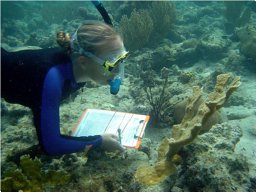 Erinn M. Muller合作论文数Department of Biological Sciences, Florida Institute of Technology9
 Alan Friedlander合作论文数Hawaii Institute of Marine Biology, Department of Biology, School of Life Sciences, University of Hawai‘i at Manoa9Larson Rebekka A合作论文数8
 Jeffrey S Miller合作论文数Blood and Marrow Transplant Program, University of Minnesota8Kimberly K. Yates合作论文数Center for Coastal and Watershed Studies, U.S. Geological Survey8Nathan Smiley合作论文数8Barry E. Devine合作论文数6Zandy Hillis-Starr合作论文数6
 James J Herlan合作论文数Rosenstiel School of Marine and Atmospheric Science, University of Miami6
 Ernesto Weil合作论文数5
 Richard S Nemeth合作论文数5Jorge R. García合作论文数4Randy Clark合作论文数4r boulon合作论文数4
 Mark E. Monaco合作论文数4James P. Beets合作论文数4
 Richard E. Dodge合作论文数4George P. Schmahl合作论文数4
 Kevin R. T. Whelan合作论文数U. S. Geological Survey;Florida Integrated Science Center;U. S. Geological Survey, Florida Integrated Science Center4R. Waara合作论文数4Margaret W. Miller合作论文数Southeast Fisheries Science Center, National Marine Fisheries Service NOAA4sarah d hile合作论文数3ernesto diaz合作论文数3
 Tyler B. Smith合作论文数Rosenstiel School of Marine and Atmospheric Science, University of Miami3Catanzaro, D.合作论文数3Gregg R. Brooks合作论文数3
 Walter C Jaap合作论文数3
 Ernest H. Williams, Jr合作论文数Department of Marine Sciences, University of Puerto Rico at Mayagüez3Rafe Boulon合作论文数3
 Richard Spieler合作论文数3
 John D Christensen合作论文数3Marcia Gilnack合作论文数3
 Ilsa B Kuffner合作论文数St. Petersburg Coastal and Marine Science Center, U.S. Geological Survey3Brian D. Keller合作论文数3
 Christopher F G Jeffrey合作论文数3Elizabeth H. Gladfelter合作论文数3James R. Guest合作论文数2
 Brian K. Walker合作论文数2christy pattengilsemmens合作论文数2vernon r leeworthy合作论文数2G.R. Brooks合作论文数2Brandi Todd合作论文数2Christina Horstmann合作论文数2Benjamin Jessup合作论文数2H.Carl Fitz合作论文数2
 Kristin Wilson Grimes合作论文数2John Hardin合作论文数2




