S. H. Curnoe, C. S. Turel, S. Bohloul, W. M. Yuhasz, R. Baumbach, M. B. Maple and J. Y. T. Wei Department of Physics and Physical Oceanography, Memorial University of Newfoundland, St. John’s, NL, A1B 3X7 Department of Physics, University of Toronto, 60 St. George Street, Toronto, ON M5S 1A7, Canada Centre for the Physics of Materials and Department of Physics, McGill University, Montreal, PQ, H3A 2T8 Department of Physics and Center for Advanced Nanoscience, University of California San Diego, La Jolla, California 92093 and Canadian Institute for Advanced Research, Toronto, ON, M5G1Z8 Canada
Point-contact Andreev reflection spectroscopy was performed on single crystals of the heavy-fermion superconductor PrOs_4Sb_12, down to 90mK and up to 3Tesla. The conductance spectra showed multiple structures, including zero-bias peaks and spectral dips, which are interpreted as signatures of multiple pairing gaps, one clearly having nodes. Samples with 2 Os were also measured, showing pronounced spectral humps consistent with the emergence of a non-nodal gap. Detailed analysis of the spectral evolution revealed a magnetic field-vs.-temperature phase diagram for PrOs_4Sb_12 characterized by two distinct superconducting order parameters.
Superconducting tips of YBa2Cu3O7−x were used to perform point-contact Andreev reflection spectroscopy on half-metallic CrO2 thin films. At 4.2 K, strong suppression of the d-wave Andreev reflection characteristics was observed, consistent with the high spin polarization of CrO2. Our technique was validated by comparison with data taken on non-magnetic Au films and with data taken by superconducting Pb tips. The point contacts were estimated to be ≲10 nm in size, attesting to their ballistic and microscopic nature. Our results demonstrate the feasibility of using superconducting cuprate tips as spin-sensitive nanoprobes of ferromagnets.
Experimental studies of the skutterudite superconductor PrOs 4 Sb 12 have reported various field-vs-temperature phase diagrams, with mixed evidence for nodes in the pairing gap. Some experiments have also indicated the presence of multiple gaps, suggesting that the pairing involves either multiple bands or multiple order parameters. To examine these issues, we have used Andreev reflection spectroscopy, performed with ballistic point contacts over a range of temperatures and magnetic fields. We observed distinct spectral evidence for gap nodes. We also observed multiple spectral features arising from Ru-doping. We interpret the evolution of these spectral features within the scenario of multigap pairing.
We present Andreev spectroscopy data, down to 80mK and up to 2.5T, taken with ballistic point contacts on single crystals of the heavy-fermion superconductor PrOs4Sb12. Spectral dependences on magnetic field H and temperature T were studied to track how the order-parameter symmetry evolves and thus map out the H–T phase diagram. We observe a field-driven change in the nodality of the order-parameter suggesting that there are multiple superconducting phases, with different pairing symmetries, in PrOs4Sb12.
We have performed point contact spectroscopy on spark-cut single crystals of ferromagnetic ZrZn2, using normal-metal tips in a dilution refrigerator down to 100mK. The differential conductance spectra show low-energy peak structures which evolve systematically with temperature below 1.1 K. We associate these state-conserving peak spectra with the surface superconductivity recently observed in ZrZn2. Implications of our data on the electron pairing in ZrZn2 are discussed.
A Reply to the Comments by G. Sheet and P. Raychaudhuri and W. K. Park and L. H. Greene.Received 8 April 2006DOI:https://doi.org/10.1103/PhysRevLett.96.259703©2006 American Physical Society
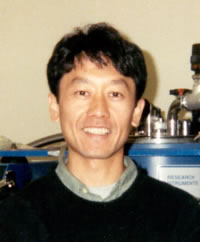 John Y.T. Wei合作论文数Department of Physics, Faculty of Arts and Science, University of Toronto10
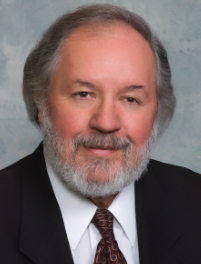 M. Brian Maple合作论文数Jacobs School of Engineering, University of California San Diego;Department of Physics, University of California San Diego6
 William M. Yuhasz合作论文数6
 Makariy Tanatar合作论文数Division of Material Science and Engineering, Ames National Laboratory;Clayton Swensson Low Temperature laboratory4J. Berdeklis合作论文数3
 Baumbach Ryan合作论文数3P. M. C. Rourke合作论文数3E. A. Yelland合作论文数2Wei John合作论文数2Robert W Hill合作论文数Department of Physics;University of Toronto;Department of Physics, University of Toronto2
 Cedomir Petrovic合作论文数Brookhaven National Laboratory2
 Guo-Xing Miao (苗国杰)合作论文数Department of Electrical and Computer Engineering, University of Waterloo;Institute for Quantum Computing, University of Waterloo2
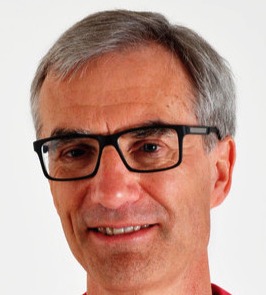 Stephen Hayden合作论文数School of Physics, University of Bristol2igor fridman合作论文数1
 Amit Gupta合作论文数1
 Anoop Gupta合作论文数SeekOut1
 Xiong Peng (彭雄)合作论文数School of Civil Engineering, Beijing Jiaotong University1
 Johnpierre Paglione合作论文数Quantum Materials Center, Department of Physics, University of Maryland;Center for Nanophysics and Advanced Materials, University of Maryland1I. Guilaran合作论文数1
 Nina Frederick合作论文数1




