This thesis is concerned with spectroscopic investigations of the photoionisation of Cl2 and NO, the characterisation of their Rydberg states and with measurements of the rovibrational energy-level structure of Cl2 . The lifetimes of nf Rydberg states of NO were measured to investigate the potential applicability of Rydberg-Stark deceleration to this species. Using a triply-resonant three-photon excitation sequence via the A 2Σ+ and the H,H′ 2Σ+,2Π intermediate Rydberg states and employing circularly polarised laser light, nf Rydberg series converging to different rotational ionisation thresholds of the vibronic 1Σ+ (v+ = 0) ground state of NO+ were excited from the ground X Π1/2 state and subsequently detected by pulsed-field ionisation. The multi-photon excitation sequence and the use of circularly polarised radiation served the purpose of increasing the absolute value of the magnetic quantum numberm to 5/2 and 7/2 and thus to exclude non-hydrogenic contributions of sand p-character to the Stark states, which are responsible for the rapid predissociation of NO Rydberg states. In the region between n = 37 and n = 51, f Rydberg state lifetimes of less than 10 ns were measured. These lifetimes increased to about 150 ns in the presence of a 20 V cm−1 DC electric field. The technique of Rydberg-Stark deceleration, however, requires lifetimes of at least 15 μs in the range of principal quantum number n = 30− 40. Employing the excitation scheme studied in this work, NO is therefore not suited for Rydberg-Stark deceleration. The unexpectedly short lifetimes of the f Rydberg states of NO observed experimentally point at a particularly efficient predissociation mechanism in the region of the adiabatic ionisation energy. For these measurements, a procedure was implemented which enabled the generation of circularly polarised radiation of high purity. Care was also taken to model the intensity distribution observed in the spectra of the A 2Σ+ and H,H′ 2Σ+,2Π intermediate states, and its dependence on the polarisation of the laser radiation. Long-lived Cl+ + Cl− ion-pair states have been observed in the vicinity of the Cl(3P2)+ Cl(1S0) dissociation threshold by mass-analysed threshold-ionisation following single-photon excitation from the X Σg (v = 0) ground state of Cl2 with a vacuum-ultraviolet laser system. The delayed field-ionisation spectra revealed a series of resonances corresponding to ion-pair states with effective principal quantum number n∗ between 1858 and 1876, belonging to an ion-pair series converging to
WHILE the surface conditions of Venus make the hypothesis of life there implausible, the clouds of Venus are a different story altogether. As was pointed out some years ago1, water, carbon dioxide and sunlight—the prerequisites for photosynthesis—are plentiful in the vicinity of the clouds. Since then, good additional evidence has been provided that the clouds are composed of ice crystals at their tops2,3, and it seems likely that there are water droplets toward their bottoms4. Independent evidence for water vapour also exists5. The temperature at the cloud tops is about 210° K, and at the cloud bottoms is probably at least 260–280° K (refs. 4 and 6). Atmospheric pressure at this temperature level is about 1 atm.7. The observed planetary albedo falls steeply in the violet and ultra-violet8, which accounts for the pale lemon yellow colour of Venus. The albedo decline would not be expected for pure ice particles, and must therefore be caused by some contaminant. Dust, ozone, C3O2 and other gases may possibly explain these data but, whatever the explanation, the ultra-violet flux below the clouds is likely to be low. If small amounts of minerals are stirred up to the clouds from the surface, it is by no means difficult to imagine an indigenous biology in the clouds of Venus. What follows is one such speculation.
During the Second Iberoamerican Graduate School on Astrobiology interesting debates, between the experts from the biological and physical backgrounds, arose about the probability of the existence of extraterrestrial intelligent beings in the universe. For this reason, it is appropriate to reproduce -for the first time in Spanish- the debate on the subject conducted, in 1995, between Carl Sagan and Ernst Mayr. This debate was organized by Guillermo A. Lemarchand and published in the pages of two consecutive numbers of "Bioastronomy News". Here we reproduce the complete debate, including its original introduction.
The late great astronomer and astrophysicist describes his personal search to understand the nature of the sacred in the vastness of the cosmos. Exhibiting a breadth of intellect nothing short of astounding, Sagan presents his views on a wide range of topics, including the likelihood of intelligent life on other planets, creationism and so-called intelligent design, and a new concept of science as informed worship. Originally presented at the centennial celebration of the famous Gifford Lectures in Scotland in 1985 but never published, this book offers a unique encounter with one of the most remarkable minds of the twentieth century.
In 1959, Miller and Urey (Science130, 245) published their classic compilation of energy sources for indigenous prebiotic organic synthesis on the early Earth. Much contemporary origins of life research continues to employ their original estimates for terrestrial energy dissipation by lightning and coronal discharges, 2 × 10¹⁹ J yr−1 and 6 × 10¹⁹ J yr−1, respectively. However, more recent work in terrestrial lightning and point discharge research suggests that these values are overestimates by factors of about 20 and 120, respectively. Calculated concentrations of amino acids (or other prebiotic organic products) in the early terrestrial oceans due to electrical discharge sources may therefore have been equally overestimated. A review of efficiencies for those experiments that provide good analogues to naturally-occurring lightning and coronal discharges suggests that lightning energy yields for organic synthesis (nmole J−1) are about one order of magnitude higher than those for coronal discharge. Therefore organic production by lightning may be expected to have dominated that due to coronae on early Earth. Limited data available for production of nitric oxide in clouds suggests that coronal emission within clouds, a source of energy heretofore too uncertain to be included in the total coronal energy inventory, is insufficient to change this conclusion. Our recommended valves for lightning and coronal discharge dissipation rates on the early Earth are, respectively, 1 × 10¹⁸ J yr−1 and 5 × 10¹⁷ J yr−1.
 Bishun N. Khare合作论文数39
 James B. Pollack合作论文数Ames Research Center, NASA24
 Christopher Chyba合作论文数Department of Astrophysical Sciences, Princeton University16W. Reid Thompson合作论文数16
 Joseph Veverka合作论文数Department of Astronomy, The College of Arts & Sciences, Cornell University15E. T. Arakawa合作论文数10
 O. Brian Toon合作论文数Department of Atmospheric and Oceanic Sciences, College of Arts and Sciences, University of Colorado Boulder;Laboratory for Atmospheric and Space Physics, University of Colorado Boulder9
 David Pieri合作论文数Earth and Space Sciences Division;Jet Propulsion Laboratory;California Institute of Technology;Jet Propulsion Laboratory, California Institute of Technology8ann druyan合作论文数7James L Elliot合作论文数7Gene D. Mcdonald合作论文数7william r thompson合作论文数6B. Eross合作论文数5
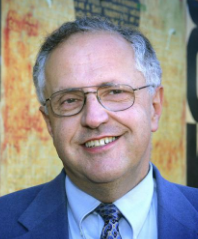 William Newman合作论文数Department of Earth, Planetary, and Space Sciences, College of Physical Sciences, University of California5
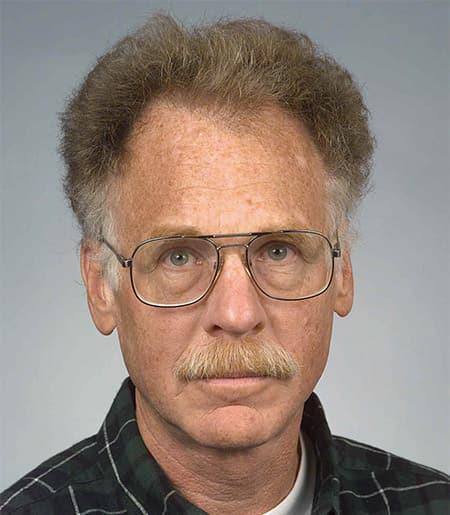 Peter J. Gierasch合作论文数Department of Astronomy, College of Arts & Sciences, Cornell University5Iosif Samuilovich Shklovskiĭ合作论文数5Lynn H. Quam合作论文数4joshua lederberg合作论文数4b g j p t murray合作论文数4
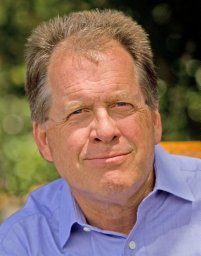 Timothy Ferris合作论文数Graduate School of Journalism, University of California, Berkeley;ClockDrive Productions4Daniel Ellsberg合作论文数3Randall Forsberg合作论文数3Paul C. Warnke合作论文数3Richard J. Barnet合作论文数3Wolfgang K. H. Panofsky合作论文数3Arthur C. Clarke合作论文数3Jack Mendelsohn合作论文数3Paul H. Nitze合作论文数3Jennifer Scarlott合作论文数3Joanne Landy合作论文数3Michael Krepon合作论文数3David Cortright合作论文数3Richard L. Garwin合作论文数3Paul Fox合作论文数3Gordon Adams合作论文数3
 Peter Thomas合作论文数Cornell Center for Astrophysics and Planetary Science, Cornell University3Robert Tucker合作论文数3
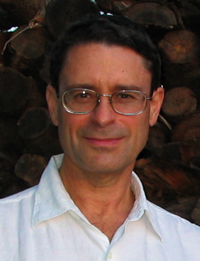 Steven Jeffrey Ostro合作论文数Asteroid Radar Group, Jet Propulsion Laboratory, NASA3William Liller合作论文数3Elliott C. Levinthal合作论文数3R. H. Steinbacher合作论文数3j veverka合作论文数2J. Veverka合作论文数2william w kellogg合作论文数2e n shipley合作论文数2b g eross合作论文数2l h quam合作论文数2jonathan c gradie合作论文数2Paul Taibl合作论文数2




