The first systematic study of the warm gas (T = 10(4-5) K) distribution across a galaxy cluster is presented using multiple background QSOs in and around the Virgo Cluster. We detect 25 Ly alpha absorbers (N-HI = 10(13.1-15.4)cm(-2)) in the Virgo velocity range toward 9 of 12 QSO sightlines observed with the Cosmic Origin Spectrograph, with a cluster impact parameter range of 0.36-1.65 Mpc (0.23-1.05R(vir)). Including 18 Ly alpha absorbers previously detected by STIS or GHRS toward 7 of 11 background QSOs in and around the Virgo Cluster, we establish a sample of 43 absorbers toward a total of 23 background probes for studying the incidence of Ly alpha absorbers in and around the Virgo Cluster. With these absorbers, we find (1) warm gas is predominantly in the outskirts of the cluster and avoids the X-ray-detected hot intracluster medium (ICM). Also, Ly alpha absorption strength increases with cluster impact parameter. (2) Ly alpha-absorbing warm gas traces cold Hi-emitting gas in the substructures of the Virgo Cluster. (3) Including the absorbers associated with the surrounding substructures, the warm gas covering fraction (100% for N-HI > 10(13.1) cm(-2)) is in agreement with cosmological simulations. We speculate that the observed warm gas is part of large-scale gas flows feeding the cluster both in the ICM and galaxies.
We report here an error in the analysis of the numerical simulations used to compare to the observations in this paper. In particular, we inadvertently used an output from the simulation at z = 0.55 instead of z = 0. The effect of this was to increase the densities in the simulation by a factor of . For a fi xed ionizing background, this results in an increase in the neutral H I density by is in ionization equilibrium . This in the H I therefore led directly to a shift of more than an order of magnitude in the predicted column densities. Since the published version of this found agreement between these simulations and the observations, this implies that the ( corrected ) simulations predict an order of magnitude too few absorbers for a given column density ( or, equivalently, a covering fraction signi fi cantly below that observed ) ; however, the uncertainty in this is quite large both because of the uncertain photo-ionizing background level at z = 0, and the relatively simple methodology used to predict the covering fraction from the simulations. Although the original simulation outputs are no longer available, preventing us from reanalyzing the original simulation, we con fi rmed this approximate scaling using an updated simulation ( Emerick et al. ) . We have carried out an extended analysis of the new simulations and refer the reader to that paper for an updated comparison between simulations and observations.
We present a study exploring the nature and properties of the Circum-Galactic Medium (CGM) and its connection to the atomic gas content in the interstellar medium (ISM) of galaxies as traced by the HI 21cm line. Our sample includes 45 low-z (0.026-0.049) galaxies from the GALEX Arecibo SDSS Survey. Their CGM was probed via absorption in the spectra of background Quasi-Stellar Objects at impact parameters of 63 to 231kpc. The spectra were obtained with the Cosmic Origins Spectrograph aboard the Hubble Space Telescope. We detected neutral hydrogen (Ly$\alpha$ absorption-lines) in the CGM of 92% of the galaxies. We find the radial profile of the CGM as traced by the Ly$\alpha$ equivalent width can be fit as an exponential with a scale length of roughly the virial radius of the dark matter halo. We found no correlation between the orientation of sightline relative to the galaxy major axis and the Ly$\alpha$ equivalent width. The velocity spread of the circumgalactic gas is consistent with that seen in the atomic gas in the interstellar medium. We find a strong correlation (99.8% confidence) between the gas fraction (M(HI)/M*) and the impact-parameter-corrected Ly$\alpha$ equivalent width. This is stronger than the analogous correlation between corrected Ly$\alpha$ equivalent width and SFR/M* (97.5% confidence). These results imply a physical connection between the HI disk and the CGM, which is on scales an order-of-magnitude larger. This is consistent with the picture in which the HI disk is nourished by accretion of gas from the CGM.
The Magellanic Stream (MS) is a well-resolved gaseous tail originating from the Magellanic Clouds. Studies of its physical properties and chemical composition are needed to understand its role in Galactic evolution. We investigate the properties of a compact HVC (CHVC 224.0-83.4-197) lying close on the sky to the MS to determine whether it is physically connected to the Stream and to examine its internal structure. Our study is based on analysis of HST/COS spectra of three QSOs (Ton S210, B0120-28, and B0117-2837) all of which pass through this single cloud at small angular separation (less than or similar to 0 degrees.72), allowing us to compare physical conditions on small spatial scales. No significant variation is detected in the ionization structure from one part of the cloud to the other. Using Cloudy photoionization models, toward Ton S210 we derive elemental abundances of [C/H] = -1.21 +/- 0.11, [Si/H] = -1.16 +/- 0.11, [Al/H] = -1.19 +/- 0.17, and [O/H] = -1.12 +/- 0.22, which agree within 0.09 dex. The CHVC abundances match the 0.1 solar abundances measured along the main body of the Stream. This suggests that the CHVC (and by extension the extended network of filaments to which it belongs) has an origin in the MS. It may represent a fragment that has been removed from the Stream as it interacts with the gaseous Galactic halo.
We analyze the physical conditions of the cool, photoionized (T similar to 10(4) K) circumgalactic medium (CGM) using the COS-Halos suite of gas column density measurements for 44 gaseous halos within 160 kpc of L similar to L+ galaxies at z similar to 0.2. These data are well described by simple photoionization models, with the gas highly ionized (n(H) (II)/n(H) greater than or similar to 99%) by the extragalactic ultraviolet background. Scaling by estimates for the virial radius, R-vir, we show that the ionization state (tracked by the dimensionless ionization parameter, U) increases with distance from the host galaxy. The ionization parameters imply a decreasing volume density profile n(H) = (10(-4.2 +/- 0.25))(R/R-vir)(-0.8 +/- 0.3). Our derived gas volume densities are several orders of magnitude lower than predictions from standard two-phase models with a cool medium in pressure equilibrium with a hot, coronal medium expected in virialized halos at this mass scale. Applying the ionization corrections to the Hi column densities, we estimate a lower limit to the cool gas mass M-CGM(cool) > 6.5 x 10(10) M-circle dot for the volume within R < R-vir. Allowing for an additional warm-hot, O vI-traced phase, the CGM accounts for at least half of the baryons purported to be missing from dark matter halos at the 10(12) M-circle dot scale.
We report on the detection of deuterated molecular hydrogen, HD, at z = 0.18. HD and H-2 are detected in HST/COS data of a low-metallicity (Z similar to 0.07 Z(circle dot)) damped Ly alpha (DLA) system at z = 0.18562 toward QSO B0120-28, with log N(H I) = 20.50 +/- 0.10. Four absorption components are clearly resolved in H-2, while two components are resolved in HD; the bulk of the molecular hydrogen is associated with the components traced by HD. We find total column densities log N(HD) = 14.82 +/- 0.15 and log N(H-2) = 20.00 +/- 0.10. This system has a high molecular fraction, f(H-2) = 0.39 +/- 0.10, and a low HD-to-H-2 ratio, log (HD/2H(2)) = -5.5 +/- 0.2 dex. The excitation temperature, T-01 = 65 +/- 2 K, in the component containing the bulk of the molecular gas is lower than in other DLAs. These properties are unlike those in other higher redshift DLA systems known to contain HD, but are consistent with what is observed in dense clouds in the Milky Way.
Dynamic interactions between the two Magellanic Clouds have flung large quantities of gas into the halo of the Milky Way. The result is a spectacular arrangement of gaseous structures, including the Magellanic Stream, the Magellanic Bridge, and the Leading Arm (collectively referred to as the Magellanic System). In this third paper of a series studying the Magellanic gas in absorption, we analyze the gas ionization level using a sample of 69 Hubble Space Telescope/Cosmic Origins Spectrograph sightlines that pass through or within 30 degrees of the 21 cm emitting regions. We find that 81% (56/69) of the sightlines show UV absorption at Magellanic velocities, indicating that the total cross-section of the Magellanic System is approximate to 11,000 deg(2), or around one-quarter of the entire sky. Using observations of the Si III/Si II ratio together with Cloudy photoionization modeling, we calculate the total gas mass (atomic plus ionized) of the Magellanic System to be approximate to 2.0 x 10(9) M-circle dot (d/55 kpc)(2), with the ionized gas contributing around three times as much mass as the atomic gas. This is larger than the current-day interstellar H I mass of both Magellanic Clouds combined, indicating that they have lost most of their initial gas mass. If the gas in the Magellanic System survives to reach the Galactic disk over its inflow time of similar to 0.5-1.0 Gyr, it will represent an average inflow rate of similar to 3.7-6.7 M-circle dot yr(-1), potentially raising the Galactic star formation rate. However, multiple signs of an evaporative interaction with the hot Galactic corona indicate that the Magellanic gas may not survive its journey to the disk fully intact and will instead add material to (and cool) the corona.
We report new observations of circumgalactic gas from the COS-Dwarfs survey, a systematic investigation of the gaseous halos around 43 low-mass z <= 0.1 galaxies using background QSOs observed with the Cosmic Origins Spectrograph. From the projected one-dimensional and two-dimensional distribution of C iv absorption, we find that Civ is detected out to approximate to 100 kpc (corresponding roughly to approximate to 0.5 R-vir) of the host galaxies. The Civ absorption strength falls off radially as a power law, and beyond approximate to 0.5 R-vir, no Civ absorption is detected above our sensitivity limit of approximate to 50-100 m angstrom . We find a tentative correlation between detected C iv absorption strength and star formation, paralleling the strong correlation seen in highly ionized oxygen for L similar to L* galaxies by the COS-Halos survey. The data imply a large carbon reservoir in the circumgalactic medium (CGM) of these galaxies, corresponding to a minimum carbon mass of greater than or similar to 1.2 x 10(6) M circle dot out to similar to 110 kpc. This mass is comparable to the carbon mass in the interstellar medium and exceeds the carbon mass currently in the stars of these galaxies. The Civ absorption seen around these sub-L* galaxies can account for almost two-thirds of all W-r >= 100 m angstrom C iv absorption detected at low z. Comparing the Civ covering fraction with hydrodynamical simulations, we find that an energy-driven wind model is consistent with the observations whereas a wind model of constant velocity fails to reproduce the CGM or the galaxy properties.
We assess the metal content of the cool (similar to 10(4) K) circumgalactic medium (CGM) about galaxies at z less than or similar to 1 using an H I-selected sample of 28 Lyman limit systems (LLS; defined here as absorbers with 16.2 less than or similar to log N-H (I) less than or similar to 18.5) observed in absorption against background QSOs by the Cosmic Origins Spectrograph on board the Hubble Space Telescope. The N-H (I) selection avoids metallicity biases inherent in many previous studies of the low-redshift CGM. We compare the column densities of weakly ionized metal species (e.g., O (II), Si (II), Mg (II)) to NH (I) in the strongest H (I) component of each absorber. We find that the metallicity distribution of the LLS (and hence the cool CGM) is bimodal with metal-poor and metal-rich branches peaking at [X/H] similar or equal to -1.6 and -0.3 (or about 2.5% and 50% solar metallicities). The cool CGM probed by these LLS is predominantly ionized. The metal-rich branch of the population likely traces winds, recycled outflows, and tidally stripped gas; the metal-poor branch has properties consistent with cold accretion streams thought to be a major source of fresh gas for star forming galaxies. Both branches have a nearly equal number of absorbers. Our results thus demonstrate there is a significant mass of previously undiscovered cold metal-poor gas and confirm the presence of metal enriched gas in the CGM of z less than or similar to 1 galaxies.
We present the design and methods of the COS-Halos survey, a systematic investigation of the gaseous halos of 44 z = 0.15-0.35 galaxies using background QSOs observed with the Cosmic Origins Spectrograph aboard the Hubble Space Telescope. This survey has yielded 39 spectra of z(em) similar or equal to 0.5 QSOs with S/N similar to 10-15 per resolution element. The QSO sightlines pass within 150 physical kpc of the galaxies, which span early and late types over stellar mass log M-*/M-circle dot = 9.5-11.5. We find that the circumgalactic medium exhibits strong H I, averaging similar or equal to 1 angstrom in Ly alpha equivalent width out to 150 kpc, with 100% covering fraction for star-forming galaxies and 75% covering for passive galaxies. We find good agreement in column densities between this survey and previous studies over similar range of impact parameter. There is weak evidence for a difference between early-and late-type galaxies in the strength and distribution of H I. Kinematics indicate that the detected material is bound to the host galaxy, such that greater than or similar to 90% of the detected column density is confined within +/-200 km s(-1) of the galaxies. This material generally exists well below the halo virial temperatures at T less than or similar to 10(5) K. We evaluate a number of possible origin scenarios for the detected material, and in the end favor a simple model in which the bulk of the detected H I arises in a bound, cool, low-density photoionized diffuse medium that is generic to all L* galaxies and may harbor a total gaseous mass comparable to galactic stellar masses.
We present the equivalent width and column density measurements for low and intermediate ionization states of the circumgalactic medium (CGM) surrounding 44 low-z, L ≈ L* galaxies drawn from the COS-Halos survey. These measurements are derived from far-UV transitions observed in HST/COS and Keck/HIRES spectra of background quasars within an impact parameter R < 160 kpc to the targeted galaxies. The data show significant metal-line absorption for 33 of the 44 galaxies, including quiescent systems, revealing the common occurrence of a cool (T ≈ 104–105 K), metal-enriched CGM. The detection rates and column densities derived for these metal lines decrease with increasing impact parameter, a trend we interpret as a declining metal surface density profile for the CGM. A comparison of the relative column densities of adjacent ionization states indicates that the gas is predominantly ionized. The large surface density in metals demands a large reservoir of metals and gas in the cool CGM (very conservatively, McoolCGM > 109 M☉), which likely traces a distinct density and/or temperature regime from the highly ionized CGM traced by O+5 absorption. The large dispersion in absorption strengths (including non-detections) suggests that the cool CGM traces a wide range of densities or a mix of local ionizing conditions. Lastly, the kinematics inferred from the metal-line profiles are consistent with the cool CGM being bound to the dark matter halos hosting the galaxies; this gas may serve as fuel for future star formation. Future work will leverage this data set to provide estimates on the mass, metallicity, dynamics, and origin of the cool CGM in low-z, L* galaxies.
We present Cosmic Origins Spectrograph (COS) measurements of metal abundances in eight 0.083 < z(abs) < 0.321 damped Ly alpha (DLA) and sub-DLA absorption systems serendipitously discovered in the COS-Halos survey. We find that these systems show a large range in metallicities, with -1.10 < [Z/H] < 0.31, similar to the spread found at higher redshifts. These low-redshift systems on average have subsolar metallicities, but do show a rise in metallicity over cosmic time when compared to higher-redshift systems. We find that the average sub-DLA metallicity is higher than the average DLA metallicity at all redshifts. Nitrogen is underabundant with respect to alpha-group elements in all but perhaps one of the absorbers. In some cases, [N/alpha] is significantly below the lowest nitrogen measurements in nearby galaxies. Systems for which depletion patterns can be studied show little, if any, depletion, which is characteristic of Milky Way halo-type gas. We also identify affiliated galaxies for three of the sub-DLAs using spectra obtained from a Keck/Low Resolution Imaging Spectrometer (LRIS). None of these sub-DLAs arise in the stellar disks of luminous galaxies; instead, these absorbers may exist in galaxy halos at impact parameters ranging from 38 to 92 kpc. Multiple galaxies are present near two of the sub-DLAs, and galaxy interactions may play a role in the dispersal of the gas. Many of these low-redshift absorbers exhibit simple kinematics, but one sub-DLA has a complicated mix of at least 13 components spread over 150 km s(-1). We find three galaxies near this sub-DLA, which also suggests that galaxy interactions roil the gas. This study reinforces the view that DLAs have a variety of origins, and low-redshift studies are crucial for understanding absorber-galaxy connections.
We present high signal-to-noise optical spectra for 67 low-redshift (0.1 < z < 0.4) galaxies that lie within close projected distances (5 kpc < rho < 150 kpc) of 38 background UV-bright QSOs. The Keck LRIS and Magellan MagE data presented here are part of a survey that aims to construct a statistically sampled map of the physical state and metallicity of gaseous galaxy halos using the Cosmic Origins Spectrograph (COS) on the Hubble Space Telescope (HST). We provide a detailed description of the optical data reduction and subsequent spectral analysis that allow us to derive the physical properties of this uniquely data-rich sample of galaxies. The galaxy sample is divided into 38 pre-selected L ~ L*, z ~ 0.2 "target" galaxies and 29 "bonus" galaxies that lie in close proximity to the QSO sightlines. We report galaxy spectroscopic redshifts accurate to +/- 30 km s-1, impact parameters, rest-frame colors, stellar masses, total star formation rates, and gas-phase interstellar medium oxygen abundances. When we compare the distribution of these galaxy characteristics to those of the general low-redshift population, we find good agreement. The L ~ L* galaxies in this sample span a diverse range of color (1.0 < u-r < 3.0), stellar mass (10^9.5 < M/M_sun < 10^11.5), and SFRs (0.01 - 20 M_sun yr-1). These optical data, along with the COS UV spectroscopy, comprise the backbone of our efforts to understand how halo gas properties may correlate with their host galaxy properties, and ultimately to uncover the processes that drive gas outflow and/or are influenced by gas inflow.
We report new observations of circumgalactic gas in the halos of early-type galaxies (ETGs) obtained by the COS-Halos Survey with the Cosmic Origins Spectrograph on board the Hubble Space Telescope. We find that detections of Hi surrounding ETGs are typically as common and strong as around star-forming galaxies, implying that the total mass of circumgalactic material is comparable in the two populations. For ETGs, the covering fraction for HI absorption above 10(16) cm(-2) is similar to 40%-50% within similar to 150 kpc. Line widths and kinematics of the detected material show it to be cold (T less than or similar to 10(5) K) in comparison to the virial temperature of the host halos. The implied masses of cool, photoionized circumgalactic medium baryons may be up to 10(9)-10(11) M-circle dot. Contrary to some theoretical expectations, strong halo Hi absorbers do not disappear as part of the quenching of star formation. Even passive galaxies retain significant reservoirs of halo baryons that could replenish the interstellar gas reservoir and eventually form stars. This halo gas may feed the diffuse and molecular gas that is frequently observed inside ETGs.
High-velocity clouds (HVCs), fast-moving ionized and neutral gas clouds found at high galactic latitudes, may play an important role in the evolution of the Milky Way. The extent of this role depends sensitively on their distances and total sky covering factor. We search for HVC absorption in Hubble Space Telescope high-resolution ultraviolet (UV) spectra of a carefully selected sample of 133 active galactic nuclei (AGN) using a range of atomic species in different ionization stages (e.g. O i, C ii, C iv, Si ii, Si iii, Si iv). This allows us to identify neutral, weakly ionized or highly ionized HVCs over several decades in H i column densities. The sky covering factor of UV-selected HVCs with |vLSR| ≥ 90 km s−1 is about 68 per cent for the Galactic sky at . About 74 per cent of the HVC directions have cm−2 and 46 per cent have cm−2. We show that our survey is essentially complete, i.e. an undetected population of HVCs with extremely low H (H i + H ii) column density is unlikely to be important for the HVC mass budget. We confirm that the predominantly ionized HVCs contain at least as much mass as the traditional H i HVCs and show that large H i HVC complexes have generally ionized envelopes extending far from the H i contours. There are also large regions of the Galactic sky that are covered with ionized high-velocity gas with little H i emission nearby. We show that the covering factors of HVCs with km s−1 drawn from the AGN and stellar (with stars at d > 3 kpc) samples are similar. This confirms that most of the HVCs are within 5–15 kpc of the sun. The HVCs with |vLSR |≳170 km s−1 are largely associated with the Magellanic Stream at b 20° as well as other large known H i complexes. We conclude that there is no evidence in the Local Group that any galaxy shows a population of HVCs extending much farther away than 50 kpc from its host, except possibly for those tracing remnants of galaxy interaction.
The circumgalactic medium (CGM) is fed by galaxy outflows and accretion of intergalactic gas, but its mass, heavy element enrichment, and relation to galaxy properties are poorly constrained by observations. In a survey of the outskirts of 42 galaxies with the Cosmic Origins Spectrograph onboard the Hubble Space Telescope, we detected ubiquitous, large (150-kiloparsec) halos of ionized oxygen surrounding star-forming galaxies; we found much less ionized oxygen around galaxies with little or no star formation. This ionized CGM contains a substantial mass of heavy elements and gas, perhaps far exceeding the reservoirs of gas in the galaxies themselves. Our data indicate that it is a basic component of nearly all star-forming galaxies that is removed or transformed during the quenching of star formation and the transition to passive evolution.
We present observations of HI and OVI absorption systems proximate to a galaxy at z_gal = 0.3529. The absorption was detected serendipitously in Cosmic Origins Spectrograph observations of the low-z QSO J0943+0531 (z_qso = 0.564). The data show two separate clouds along the sightline at an impact parameter of 95kpc from the galaxy. The first is likely low-metallicity gas falling onto the galaxy. This assessment is based on the high velocity offset of the cloud from the galaxy (delta_v = 365kms) and the weak metal line absorption, combined with photoionization modeling. The second cloud, with only a modest velocity separation from the galaxy (delta_v = 85kms), exhibits very strong OVI absorption qualitatively similar to OVI absorption seen in the Milky Way halo. Collisional ionization equilibrium models are ruled out by the metal line column density ratios. Photoionization modeling implies a length-scale for the OVI cloud of ~0.1-1.2Mpc, which indicates the absorbing gas most likely resides within the local filamentary structure. This system emphasizes that kinematic association alone is not sufficient to establish a physical connection to galaxies, even at small impact parameters and velocity separations. Observations such as these, connecting galaxies with their gaseous environments, are becoming increasingly important for understanding galaxy evolution and provide constraints for cosmological simulations.
We report on the first Cosmic Origins Spectrograph observations of damped Ly alpha systems (DLAs) and sub-damped Ly alpha systems (sub-DLAs) discovered in a new survey of the gaseous halos of low-redshift galaxies. From observations of 37 sightlines, we have discovered three DLAs and four sub-DLAs. We measure the neutral gas density Omega(HI), and redshift density dN/dz, of DLA and sub-DLA systems at z < 0.35. We find dN/dz = 0.25(-0.14)(+0.24) and Omega(HI) = 1.4(-0.7)(+1.3) x 10(-3) for DLAs, and dN/dz=0.08(-0.06)(+0.19) with Omega(HI) = 4.2(-3.5)(+9.6) x 10(-5) for sub-DLAs over a redshift path Delta z = 11.9. To demonstrate the scientific potential of such systems, we present a detailed analysis of the DLA at z(abs) = 0.1140 in the spectrum of SDSS J1009+0713. Profile fits to the absorption lines determine log N(H I) = 20.68 +/- 0.10 with a metallicity determined from the undepleted element sulfur of [S/H]=-0.62 +/- 0.18. The abundance pattern of this DLA is similar to that of higher z DLAs, showing mild depletion of the refractory elements Fe and Ti with [S/Fe] = +0.24 +/- 0.22 and [S/Ti] = +0.28 +/- 0.15. Nitrogen is underabundant in this system with [N/H] = -1.40 +/- 0.14, placing this DLA below the plateau of the [N/alpha] measurements in the local universe at similar metallicities. This DLA has a simple kinematic structure with only two components required to fit the profiles and a kinematic width of Delta nu(90) = 52 km s(-1). Imaging of the QSO field with the Hubble Space Telescope/Wide Field Camera 3 reveals a spiral galaxy at very small impact parameter to the QSO and several galaxies within 10 '', or 20 comoving kpc at the redshift of the DLA. Follow-up spectra with the Low Resolution Imaging Spectrometer on the Keck telescope reveal that none of the nearby galaxies are at the redshift of the DLA. The spiral galaxy is identified as the host galaxy of the QSO based on the near perfect alignment of the nucleus and disk of the galaxy as well as spectra of an H II region showing emission lines at the QSO redshift. A small feature appears 0 ''.70 from the nucleus of the QSO after point-spread function subtraction, providing another candidate for the host galaxy of the DLA system. Even with these supporting data, we are unable to unambiguously identify the host galaxy of the DLA, exemplifying some of the difficulties in determining DLA hosts even at low redshift.
We have serendipitously detected a strong O VI-bearing Lyman limit system at z_abs = 0.3558 toward the QSO J1009+0713 (z_em = 0.456) in our survey of low-redshift galaxy halos with the Hubble Space Telescope's Cosmic Origins Spectrograph. Its rest-frame equivalent width of W_r = 835 +/- 49 mA is the highest for an intervening absorber yet detected in any low-redshift QSO sightline, with absorption spanning 400 km s^-1 in its rest frame. HST/WFC3 images of the galaxy field show that the absorber is associated with two galaxies lying at 14 and 46 kpc from the QSO line of sight. The bulk of the absorbing gas traced by H I resides in two strong, blended component groups that possess a total logN(HI) = 18 - 18.8. The ion ratios and column densities of C, N, O, Mg, Si, S, and Fe, except the O VI, can be accommodated into a simple photoionization model in which diffuse, low-metallicity halo gas is exposed to a photoionizing field from stars in the nearby galaxies that propagates into the halo at 10% efficiency. We constrain the metallicity firmly within the range 0.1 - 1 Zsun, and photoionization modeling indirectly indicates a subsolar metallicity of 0.05 - 0.5 Zsun. The appearance of strong O VI and nine Mg II components and our review of similar systems in the literature support the "interface" picture of high-velocity O VI: the total strength of the O VI shows a positive correlation with the number of detected components in the low-ionization gas, however the total O VI column densities still far exceed the values expected from interface models for the number of detected clouds.
 J. Xavier Prochaska合作论文数Astronomy & Astrophysics Department, University of California, Santa Cruz18
 Jason Tumlinson合作论文数Space Telescope Science Institute;Center for Astrophysical Sciences, Johns Hopkins University17
 Todd Tripp合作论文数Department of Astronomy, College of Natural Sciences, University of Massachusetts Amherst15
 Jessica Werk合作论文数Department of Astronomy, University of Washington15
 Norbert Christlieb合作论文数11
 Brad Gibson合作论文数Department of Physics and Mathematics, Faculty of Science and Engineering, University of Hull;E.A. Milne Centre for Astrophysics, University of Hull10
 Timothy Beers合作论文数Department of Physics and Astronomy, College of Science, University of Notre Dame10
 John O’Meara合作论文数W. M. Keck Observatory;LUVOIR Mission Concept Science & Technology Definition Team;Cosmic Origins Program Analysis Group;Vermont Academy of Science and Engineering10
 Kenneth Sembach合作论文数Space Telescope Science Institute9
 Hsiao-Wen Chen (陳曉雯)合作论文数Department of Astronomy and Astrophysics, The University of Chicago9
 Mary E. Putman合作论文数Columbia University8
 Nicolas Lehner合作论文数Department of Physics and Astronomy, College of Science, University of Notre Dame7
 Molly S. Peeples合作论文数Ohio State University6
 Romeel Davé合作论文数Institute for Astronomy, School of Physics and Astronomy, The University of Edinburgh;University of the Western Cape6J. D. Meiring合作论文数5
 Chris Flynn合作论文数Centre for Astrophysics and Supercomputing, Swinburne University of Technology;School of Science, Computing and Engineering Technologies, Swinburne University of Technology5
 Neal Katz合作论文数Department of Astronomy, College of Natural Sciences, University of Massachusetts Amherst5
 Benjamin Oppenheimer合作论文数Center for Astrophysics and Space Astronomy, College of Arts and Sciences, University of Colorado Boulder;Department of Astronomy & Planetary Science, College of Arts and Sciences, University of Colorado Boulder5
 David H. Weinberg合作论文数Department of Astronomy, College of Arts and Sciences, The Ohio State University;Center for Cosmology and AstroParticle Physics, College of Arts and Sciences, The Ohio State University;Institut d’Astrophysique de Paris5Andrew J. Fox合作论文数4J. Christopher Howk合作论文数JHU4Amanda Brady Ford合作论文数4Joseph D. Meiring合作论文数4
 Anna Frebel合作论文数Department of Physics, School of Science, Massachusetts Institute of Technology;Kavli Institute for Astrophysics and Space Research, Massachusetts Institute of Technology4
 John Edward Norris合作论文数Research School of Astronomy and Astrophysics, College of Science, Australian National University3
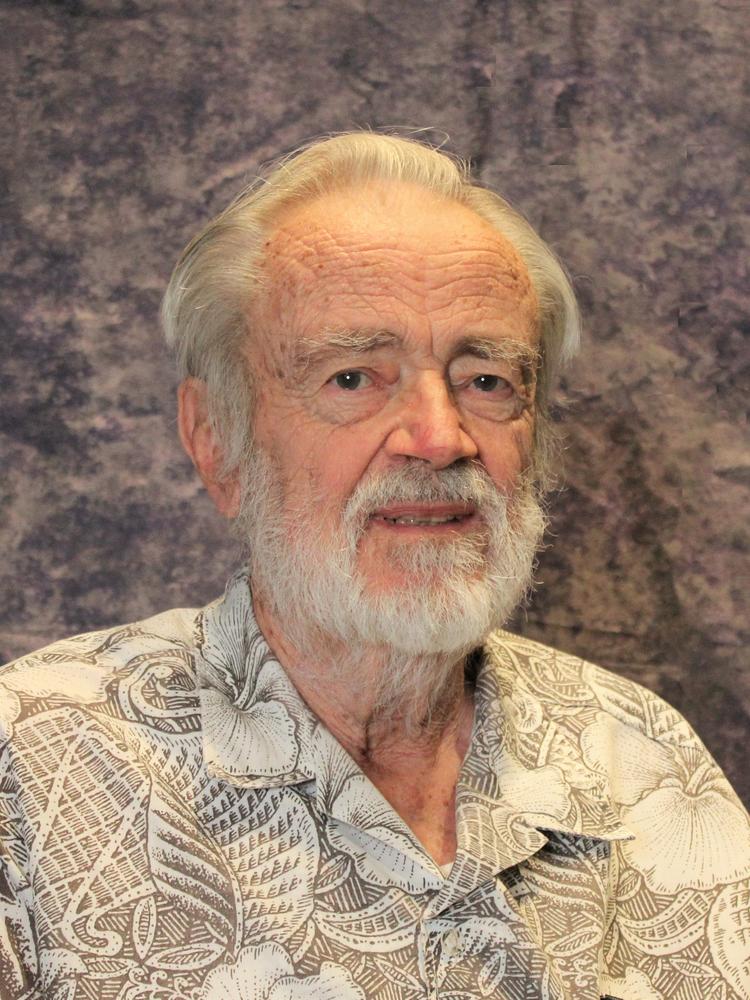 Edward Jenkins合作论文数Department of Astrophysical Sciences, Princeton University3Henry A. Kobulnicky合作论文数3
 Lutz Wisotzki合作论文数Leibniz Institute For Astrophysics Potsdam3
 Mike Bessell合作论文数Research School of Astronomy & Astrophysics, College of Science, Australian National University3Jaehyon Rhee合作论文数3
 Rongmon Bordoloi合作论文数Department of Physics, College of Sciences, North Carolina State University3
 Lister Staveley-Smith合作论文数International Centre for Radio Astronomy Research, The University of Western Australia3
 James H. Tumlinson合作论文数Center for Chemical Ecology, The Pennsylvania State University3
 Brian Uzpen合作论文数1;Department of Physics & Astronomy;University of Wyoming3
 Silvia Cristina Fernandes Rossi合作论文数Department of Astronomy, Instituto de Astronomia, Geofísica e Ciências Atmosféricas, University of São Paulo3
 Greg Bryan合作论文数Faculty of Arts and Sciences, Columbia University;The Data Science Institute, Columbia University;Department of Astronomy, Columbia University3Brian Marsteller合作论文数3A. J. Fox合作论文数2Nimisha Kumari合作论文数2
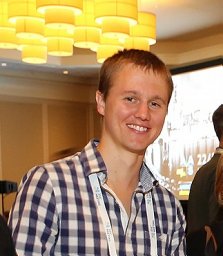 Justin Ely合作论文数Space Telescope Science Institute2
 Jane Charlton合作论文数Department of Astronomy and Astrophysics, Eberly College of Science, The Pennsylvania State University2Dieter Reimers合作论文数2Kathy L. Cooksey合作论文数2Joo Heon Yoon合作论文数Department of Astronomy;Columbia University2Cora Fechner合作论文数2Ronald Wilhelm合作论文数2
 Tobias Westmeier合作论文数Australia Telescope National Facility CSIRO2Bart Wakker合作论文数Department of Astronomy, College of Letters & Science, University of Wisconsin-Madison2




