This paper presents a Variety IDentification (VID) approach and its application to broadcast news transcription for Portuguese. The phonotactic VID system, based on Phone Recognition and Language Modelling, focuses on a single tokenizer that combines distinctive knowledge about differences between the target varieties. This knowledge is introduced into a Multi-Layer Perceptron phone recognizer by training mono-phone models for two varieties as contrasting phone-like classes. Significant improvements in terms of identification rate were achieved compared to conventional single and fused phonotactic and acoustic systems. The VID system is used to select data to automatically train variety-specific acoustic models for broadcast news transcription. The impact of the selection is analyzed and variety-specific recognition is shown to improve results by up to 13% compared to a standard variety baseline. Index Terms: accent identification, recognition of accented speech.
This paper describes the early stages of porting REAP, a tutoring system for vocabulary learning, to European Portuguese. Students learn from authentic materials, on topics of their preference. A large number of linguistic resources and filtering tools have already been integrated into the ported version. We modified the current system to also target oral comprehension.
This paper aims at proposing a measure of speech rhythm based on the inference of the coupling strength between the syllable oscillator and the stress group oscillator of an underlying coupled oscillators model. This coupling is inferred from the linear regression between the stress group duration and the number of syllables within the group, as well as from the multiple linear regression between the same parameters and an estimate of phrase stress prominence. This technique is applied to compare the rhythmic differences between European and Brazilian Portuguese in two speaking styles and three speakers per variety. Compared with a syllable-sized normalised PVI, the findings suggest that the coupling strength captures better the perceptual effects of the speakers’ renditions. Furthermore, it shows that stress group duration is much better predicted by adding phrase stress prominence to the regression. Index Terms: rhythmic variability, rhythm typology, coupledoscillators
This paper reports on recent work in the context of the activities of the PoSTPort project aimed at porting a Broadcast News recognition system originally developed for European Portuguese to other varieties. Concretely, in this paper we have focused on porting to Brazilian Portuguese. The impact of some of the main sources of variability has been assessed, besides proposing solutions at the lexical, acoustic and syntactic levels. The ported Brazilian Portuguese Broadcast News system allowed a drastic performance improvement from 56.6% WER (obtained with the European Portuguese system) to 25.5%.
This paper describes a new generic text-to-speech synthesis system, developed in the scope of the Tecnovoz Project. Although it was primarily targeted at speech synthesis in European Portuguese, its modular architecture and flexible components allows its use for different languages. We also provide a survey on the development of the language resources needed by the TTS.
This paper explores the results of a previous experiment concerning listeners’ ratings of different types of (dis)fluencies and extends the analysis of such phenomena to a corpus of university lectures. Results suggest that, although not all disfluency types are equally tolerated by listeners, such differences may be overridden by an adequate control of tonal scaling and pause length, at least. Index Terms: disfluencies, prosody, fluency ratings.
This paper describes an accent identification system for Portuguese, that explores different type of properties: acoustic, phonotactic and prosodic. The system is designed to be used as a pre-processing module for the Portuguese Automatic Speech Recognition system developed at INESC-ID. In terms of variety identification, the overall rate of correct identification is 69.0% if all 7 varieties are considered, and the best results are obtained for Brazilian Portuguese, also the variety that proved easiest to identify in perceptual experiments. When distinguishing between European, Brazilian and African Portuguese, the identification rate goes up to 94.7%. The fact that the prosodic system alone can achieve an identification rate of 77% is also worth investigating.
This paper describes the corpus of university lectures that has been recorded in European Portuguese, and some of the recognition experiments we have done with it. The highly specific topic domain and the spontaneous speech nature of the lectures are two of the most challenging problems. Lexical and language model adaptation proved difficult given the scarcity of domain material in Portuguese, but improvements can be achieved with unsupervised acoustic model adaptation. From the point of view of the study of spontaneous speech characteristics, namely disflluencies, the LECTRA corpus has also proved a very valuable resource.
This paper describes our work in digital talking book alignm ent, starting by our earlier efforts for the alignment of boo ks in European Portuguese, and ending with the two challenges we are curren tly facing of aligning books in different varieties of Portu guese and aligning parallel books in different languages. Our alignment modul e proved robust enough for porting to other varieties of Port uguese, despite the fact that the assessment of the recognition module witho ut adaptation for broadcast news had shown a very severe degr adation for some of the varieties. Our work on the alignment of audio in on e la guage with text in another is still ongoing, but informa l evaluation has led us to expect that digital talking books can be a valuab le tool for second language learning.
This paper reports preliminary results from a study of disfluencies in European Portuguese, based on a corpus of prepared (non-scripted) and spontaneous oral presentations in high school context. We will focus on the contextual distribution and temporal patterns of filled pauses and segmental prolongations, as well as on the way those are rated by listeners. Results suggest that filled pauses and segmental prolongations behave alike, have similar functions and may be considered in complementary distribution, obeying general syntactic and prosodic constraints. Index Terms spontaneous speech, disfluencies, prosody.
Digital Talking Books (DTBs) offer to visually impaired users an evolution of analogue talking books that mimics the interaction possibilities of print books. This paper describes a new DTB player which tries to improve the usability and accessibility of current players, through the combination of the possibilities offered by multimodal interaction and interface adaptability, and the integration of several language processing components. Besides the potential for a greater enjoyment of the reader in general, these modifications also pave the way to the use of DTBs in different domains, from e-inclusion to e-learning applications.
Classroom lectures may be very challenging for automatic speech recognizers, because the vocabulary may be very specific and the speaking style very spontaneous. Our first experiments using a recognizer trained for Broadcast News resulted in word error rates near 60%, clearly confirming the need for adaptation to the specific topic of the lectures, on one hand, and for better strategies for handling spontaneous speech. This paper describes our efforts in these two directions: the different domain adaptation steps that lowered the error rate to 45%, with very little transcribed adaptation material, and the exploratory study of spontaneous speech phenomena in European Portuguese, namely concerning filled pauses.
Digital Talking Books (DTBs) offer to visually impaired users an evolution of analogue talking books that mimics the interaction possibilities of print books.This paper describes a new DTB player which tries to improve the usability and accessibility of current players, through the combination of the possibilities offered by multimodal interaction and interface adaptability, and the integration of several language processing components.Besides the potential for a greater enjoyment of the reader in general, these modifications also pave the way to the use of DTBs in different domains, from e-inclusion to e-learning applications.
This paper tries to present digital spoken books as a useful diagnostic tool for detecting alignment and recognition problems and for studying the porting of these technologies to different varieties of the same language - Portuguese, in our case. We summarize the main differences between European and Brazilian Portuguese (EP/BP) and describe how they affect the GtoP system. Despite the small size of our parallel spoken book corpus in the two varieties, our preliminary experiments confirmed our expectations in terms of the effectiveness of an EP-trained aligner used on BP spoken books. They also confirmed the inadequacy of an EP Broadcast News recognizer tested over literary contents, and the expected degradation in recognition scores caused by using that recognizer on a BP spoken book. Pronunciation adaptation was tested by adding variants derived by the BP GtoP system to our EP lexicon, resulting in a very small improvement in terms of recognition scores.
The ultimate goal of the poetry assistant currently under development in our lab is an application to be used either as a poetry game or as a teaching tool for both poetry and grammar, including the complex relationships between sound and meaning. Until now we focused on the automatic classi fi cation of poems and the suggestion of the ending word for a verse. The classi fi cation module is based on poetic concepts that take into account structure and metrics. The prediction module uses several criteria to select the ending word: the structural constraints of the poem, the grammatical category of the words, and the statistical language models obtained from a text corpus. The fi rst version of the system, rather than being self-contained, is still based on the use of different heterogeneous modules. We are currently working on a second version based on a modular architecture that facilitates the reuse of the linguistic processing modules already developed within the lab.
The ultimate goal of the poetry assistant currently under development in our lab is an application to be used either as a poetry game or as a teaching tool for both poetry and grammar, including the complex relationships between sound and meaning. Until now we focused on the automatic classification of poems and the suggestion of the ending word for a verse. The classification module is based on poetic concepts that take into account structure and metrics. The prediction module uses several criteria to select the ending word: the structural constraints of the poem, the grammatical category of the words, and the statistical language models obtained from a text corpus.The first version of the system, rather than being self-contained, is still based on the use of different heterogeneous modules. We are currently working on a second version based on a modular architecture that facilitates the reuse of the linguistic processing modules already developed within the lab.
This paper describes our efforts in porting our letter-to-sound module from European Portuguese to Mirandese, the second official language in Portugal. We describe the rule formalism and the composition of the various transducers involved in the letter-to-sound conversion. We propose a set of extra SAMPA symbols to be used in the phonetic transcription of Mirandese, and we briefly cover the set of rules and results obtained for the two languages. Although at a very preliminary stage, we also describe our efforts at building a waveform generation module also based on finite state transducers. The use of finite state transducers allowed a very flexible and modular framework for deriving and testing new rule sets. Our experience led us to believe that letter-to-sound modules could be helpful tools for researchers involved in the establishment of orthographic conventions for lesser spoken languages.
 Isabel Trancoso合作论文数Instituto Superior Tecnico, University of Lisbon26
 Diamantino Caseiro合作论文数Google8
 Luís C. Oliveira合作论文数INESC-ID6
 Ana Isabel Mata合作论文数Universidade de Lisboa, Universidade de Lisboa6
 Helena Moniz合作论文数L2F INESC-ID/IST, L2F INESC-ID/IST5António Joaquim Serralheiro合作论文数INESC-ID/IST, INESC-ID/Academia Militar4
 Nuno Mamede合作论文数Instituto Superior Técnico, Universidade Técnica de Lisboa4isabel mascarenhas合作论文数3
 Alberto Abad合作论文数2
 Jose Lopes合作论文数Heriot-Watt University, Edinburgh, United Kingdom2
 Maxine Eskenazi合作论文数Language Technologies Institute, School of Computer Science, Carnegie Mellon University2
 Carlos Duarte合作论文数University of Lisbon2
 Juan Pino合作论文数Meta AI2Paulo Araújo合作论文数2
 Jorge Baptista合作论文数Universidade do Algarve;Spoken Language Systems Lab2
 Luís Marujo合作论文数INESC ID Lisboa and CMU, Lisboa, Portugal2
 Fernando M. Silva合作论文数School of Medicine, University of São Paulo (USP),2Sérgio Paulo合作论文数2Ricardo Nunes合作论文数1Maria Barros合作论文数1
 Carlos Ramon Silveira Mendes合作论文数1
 Monica Ferreira de Abreu合作论文数Centro de Pesquisa e Desenvolvimento de Solos e Recursos Ambientais, Instituto Agronômico de Campinas1
 Renato Cassaca合作论文数1
 Luís Carriço合作论文数Department of Informatics, Faculty of Sciences, University of Lisbon1Amalia Andrade合作论文数1Luís Neves合作论文数1
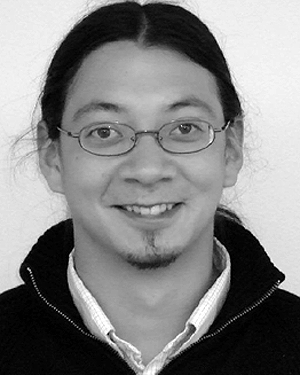 Jean-Luc Rouas合作论文数Institut de Recherche en Informatique de Toulouse;Université Toulouse III;Institut de Recherche en Informatique de Toulouse, Université Toulouse III1
 Plinio Barbosa合作论文数Lab . of Phonetics and Psycholinguistics & Dep . of Linguistics1
 Nelson Neto合作论文数Signal Processing Laboratory, Federal University of Pará1
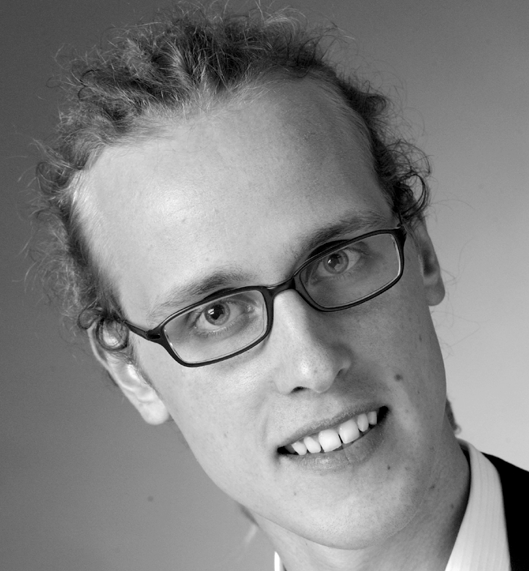 Oscar Koller合作论文数Microsoft1Luís Figueira合作论文数1
 Carlos M. Ribeiro合作论文数Instituto Superior Tecnico1Pedro M. Carvalho合作论文数1
 Carlos Teixeira合作论文数1
 Gonçalo Marques合作论文数DEM, Instituto Superior Técnico1




