We present a coil system designed to generate a highly uniform magnetic field for the n2EDM experiment at the Paul Scherrer Institute. It consists of a main B 0 coil and a set of auxiliary coils mounted on a cubic structure with a side length of 273 cm , inside a large magnetically shielded room (MSR). We have assembled this system and characterized its performances with a mapping robot. The apparatus is able to generate a 1 μ T vertical field with a relative root mean square deviation σ ( B z ) / B z = 3 × 10 - 5 over the volume of interest, a cylinder of radius 40 cm and height 30 cm . This level of uniformity overcomes the n2EDM requirements, allowing a measurement of the neutron Electric Dipole Moment with a sensitivity better than 1 × 10 - 27 e cm .
The determination of the direction of a stellar core collapse via its neutrino emission is crucial for the identification of the progenitor for a multimessenger follow-up. A highly effective method of reconstructing supernova directions within the Deep Underground Neutrino Experiment (DUNE) is introduced. The supernova neutrino pointing resolution is studied by simulating and reconstructing electron-neutrino charged-current absorption on Ar-40 and elastic scattering of neutrinos on electrons. Procedures to reconstruct individual interactions, including a newly developed technique called "brems flipping," as well as the burst direction from an ensemble of interactions are described. Performance of the burst direction reconstruction is evaluated for supernovae happening at a distance of 10 kpc for a specific supernova burst flux model. The pointing resolution is found to be 3.4 degrees at 68% coverage for a perfect interaction-channel classification and a fiducial mass of 40 kton, and 6.6 degrees for a 10 kton fiducial mass respectively. Assuming a 4% rate of charged-current interactions being misidentified as elastic scattering, DUNE's burst pointing resolution is found to be 4.3 degrees (8.7 degrees) at 68% coverage.
The Module-0 Demonstrator is a single-phase 600 kg liquid argon time projection chamber operated as a prototype for the DUNE liquid argon near detector. Based on the ArgonCube design concept, Module-0 features a novel 80k-channel pixelated charge readout and advanced high-coverage photon detection system. In this paper, we present an analysis of an eight-day data set consisting of 25 million cosmic ray events collected in the spring of 2021. We use this sample to demonstrate the imaging performance of the charge and light readout systems as well as the signal correlations between the two. We also report argon purity and detector uniformity measurements, and provide comparisons to detector simulations.
ProtoDUNE Single-Phase (ProtoDUNE-SP) is a 770-ton liquid argon time projection chamber that operated in a hadron test beam at the CERN Neutrino Platform in 2018. We present a measurement of the total inelastic cross section of charged kaons on argon as a function of kaon energy using 6 and 7 GeV/$c$ beam momentum settings. The flux-weighted average of the extracted inelastic cross section at each beam momentum setting was measured to be 380$\pm$26 mbarns for the 6 GeV/$c$ setting and 379$\pm$35 mbarns for the 7 GeV/$c$ setting.
LiquidO is an innovative scintillator-based radiation detector concept. The core idea is to achieve the self-segmentation of a detector by exploiting stochastic light confinement in a highly scattering medium. Key components include an opaque scintillator with short scattering and long absorption lengths, along with a wavelength-shifting fibre lattice for efficient collection of scintillation light, enabling confining and collecting light near its creation point. At the University of Sussex, the focus is on investigating the performance of the LiquidO technology on cosmic-ray muons detection. We developed the design of a 3D-printable 64 fibres cube. The cube has a length of a few centimetres and contains an $8 x 8$ grid of optical fibres along one direction, with a 3-millimetre pitch, read-out by silicon photomultipliers. Wax-based opaque liquid scintillators are used to fill the cube. Using this LiquidO detector, ‘ light cylinders” produced by cosmic-ray muons in a LiquidO detector are observed. The distinct LiquidO event topology is used to identify and reconstruct the muons track. A sub-millimetre one-dimensional position resolution is demonstrated, surpassing the capability of a physically segmented detector with identical pixel pitch. Room for improvements to further enhance the position resolution of the 64 -fibre cube comprises tuning the scintillator properties, supported by the study of the setup in Monte Carlo simulations. Additionally, a ten times larger prototype with 256 fibres along two perpendicular directions is being commissioned and will soon be used to acquire cosmic-ray muons data. These results demonstrate the potential of LiquidO detectors in muons imaging techniques and advance the understanding of the novel LiquidO technology. Finally, these prototypes constitute a fundamental step towards the first large-scale detector under development by the LiquidO consortium, CLOUD (Chooz LiquidO Ultra-near Detector).
High-precision searches for an electric dipole moment of the neutron (nEDM) require stable and uniform magnetic field environments. We present the recent achievements of degaussing and equilibrating the magnetically shielded room (MSR) for the n2EDM experiment at the Paul Scherrer Institute. We present the final degaussing configuration that will be used for n2EDM after numerous studies. The optimized procedure results in a residual magnetic field that has been reduced by a factor of two. The ultra-low field is achieved with the full magnetic-field-coil system, and a large vacuum vessel installed, both in the MSR. In the inner volume of ∼ 1.4 m^3 , the field is now more uniform and below 300 pT. In addition, the procedure is faster and dissipates less heat into the magnetic environment, which in turn, reduces its thermal relaxation time from 12 h down to 1.5 h .
DUNE is an international experiment dedicated to addressing some of the questions at the forefront of particle physics and astrophysics, including the mystifying preponderance of matter over antimatter in the early universe. The dual-site experiment will employ an intense neutrino beam focused on a near and a far detector as it aims to determine the neutrino mass hierarchy and to make high-precision measurements of the PMNS matrix parameters, including the CP-violating phase. It will also stand ready to observe supernova neutrino bursts, and seeks to observe nucleon decay as a signature of a grand unified theory underlying the standard model. The DUNE far detector implements liquid argon time-projection chamber (LArTPC) technology, and combines the many tens-of-kiloton fiducial mass necessary for rare event searches with the sub-centimeter spatial resolution required to image those events with high precision. The addition of a photon detection system enhances physics capabilities for all DUNE physics drivers and opens prospects for further physics explorations. Given its size, the far detector will be implemented as a set of modules, with LArTPC designs that differ from one another as newer technologies arise. In the vertical drift LArTPC design, a horizontal cathode bisects the detector, creating two stacked drift volumes in which ionization charges drift towards anodes at either the top or bottom. The anodes are composed of perforated PCB layers with conductive strips, enabling reconstruction in 3D. Light-trap-style photon detection modules are placed both on the cryostat's side walls and on the central cathode where they are optically powered. This Technical Design Report describes in detail the technical implementations of each subsystem of this LArTPC that, together with the other far detector modules and the near detector, will enable DUNE to achieve its physics goals.
The international collaboration designing and constructing the Deep Underground Neutrino Experiment (DUNE) at the Long-Baseline Neutrino Facility (LBNF) has developed a two-phase strategy toward the implementation of this leading-edge, large-scale science project. The 2023 report of the US Particle Physics Project Prioritization Panel (P5) reaffirmed this vision and strongly endorsed DUNE Phase I and Phase II, as did the European Strategy for Particle Physics. While the construction of the DUNE Phase I is well underway, this White Paper focuses on DUNE Phase II planning. DUNE Phase-II consists of a third and fourth far detector (FD) module, an upgraded near detector complex, and an enhanced 2.1 MW beam. The fourth FD module is conceived as a "Module of Opportunity", aimed at expanding the physics opportunities, in addition to supporting the core DUNE science program, with more advanced technologies. This document highlights the increased science opportunities offered by the DUNE Phase II near and far detectors, including long-baseline neutrino oscillation physics, neutrino astrophysics, and physics beyond the standard model. It describes the DUNE Phase II near and far detector technologies and detector design concepts that are currently under consideration. A summary of key R&D goals and prototyping phases needed to realize the Phase II detector technical designs is also provided. DUNE's Phase II detectors, along with the increased beam power, will complete the full scope of DUNE, enabling a multi-decadal program of groundbreaking science with neutrinos.
Doping of liquid argon TPCs (LArTPCs) with a small concentration of xenon is a technique for light-shifting and facilitates the detection of the liquid argon scintillation light. In this paper, we present the results of the first doping test ever performed in a kiloton-scale LArTPC. From February to May 2020, we carried out this special run in the single-phase DUNE Far Detector prototype (ProtoDUNE-SP) at CERN, featuring 720 t of total liquid argon mass with 410 t of fiducial mass. A 5.4 ppm nitrogen contamination was present during the xenon doping campaign. The goal of the run was to measure the light and charge response of the detector to the addition of xenon, up to a concentration of 18.8 ppm. The main purpose was to test the possibility for reduction of non-uniformities in light collection, caused by deployment of photon detectors only within the anode planes. Light collection was analysed as a function of the xenon concentration, by using the pre-existing photon detection system (PDS) of ProtoDUNE-SP and an additional smaller set-up installed specifically for this run. In this paper we first summarize our current understanding of the argon-xenon energy transfer process and the impact of the presence of nitrogen in argon with and without xenon dopant. We then describe the key elements of ProtoDUNE-SP and the injection method deployed. Two dedicated photon detectors were able to collect the light produced by xenon and the total light. The ratio of these components was measured to be about 0.65 as 18.8 ppm of xenon were injected. We performed studies of the collection efficiency as a function of the distance between tracks and light detectors, demonstrating enhanced uniformity of response for the anode-mounted PDS. We also show that xenon doping can substantially recover light losses due to contamination of the liquid argon by nitrogen.
SBND is the near detector of the Short-Baseline Neutrino program at Fermilab. Its location near to the Booster Neutrino Beam source and relatively large mass will allow the study of neutrino interactions on argon with unprecedented statistics. This paper describes the expected performance of the SBND photon detection system, using a simulated sample of beam neutrinos and cosmogenic particles. Its design is a dual readout concept combining a system of 120 photomultiplier tubes, used for triggering, with a system of 192 X-ARAPUCA devices, located behind the anode wire planes. Furthermore, covering the cathode plane with highly-reflective panels coated with a wavelength-shifting compound recovers part of the light emitted towards the cathode, where no optical detectors exist. We show how this new design provides a high light yield and a more uniform detection efficiency, an excellent timing resolution and an independent 3D-position reconstruction using only the scintillation light. Finally, the whole reconstruction chain is applied to recover the temporal structure of the beam spill, which is resolved with a resolution on the order of nanoseconds.
Ultra-low-mass axions are a viable dark matter candidate and may form a coherently oscillating classical field. Nuclear spins in experiments on Earth might couple to this oscillating axion dark-matter field, when propagating on Earth’s trajectory through our Galaxy. This spin coupling resembles an oscillating pseudo-magnetic field which modulates the spin precession of nuclear spins. Here we report on the null result of a demonstration experiment searching for a frequency modulation of the free spin-precession signal of 199Hg in a magnetic field. Our search covers the axion mass range 10^{-16} \textrm{eV} \lesssim m_a \lesssim 10^{-13} \textrm{eV} 10−16eV≲ma≲10−13eV and achieves a peak sensitivity to the axion-nucleon coupling of g_{aNN} \approx 3.5 \times 10^{-6} \textrm{GeV}^{-1} gaNN≈3.5×10⁻⁶GeV−1 .
We present a novel Active Magnetic Shield (AMS), designed and implemented for the n2EDM experiment at the Paul Scherrer Institute. The experiment will perform a high-sensitivity search for the electric dipole moment of the neutron. Magnetic-field stability and control is of key importance for n2EDM. A large, cubic, 5 m side length, magnetically shielded room (MSR) provides a passive, quasi-static shielding-factor of about 10^5 for its inner sensitive volume. The AMS consists of a system of eight complex, feedback-controlled compensation coils constructed on an irregular grid spanned on a volume of less than 1000 m ^3 around the MSR. The AMS is designed to provide a stable and uniform magnetic-field environment around the MSR, while being reasonably compact. The system can compensate static and variable magnetic fields up to ± 50 T (homogeneous components) and ± 5 T/m (first-order gradients), suppressing them to a few T in the sub-Hertz frequency range. The presented design concept and implementation of the AMS fulfills the requirements of the n2EDM experiment and can be useful for other applications, where magnetically silent environments are important and spatial constraints inhibit simpler geometrical solutions.
The rapid development of general-purpose computing on graphics processing units (GPGPU) is allowing the implementation of highly-parallelized Monte Carlo simulation chains for particle physics experiments. This technique is particularly suitable for the simulation of a pixelated charge readout for time projection chambers, given the large number of channels that this technology employs. Here we present the first implementation of a full microphysical simulator of a liquid argon time projection chamber (LArTPC) equipped with light readout and pixelated charge readout, developed for the DUNE Near Detector. The software is implemented with an end-to-end set of GPU-optimized algorithms. The algorithms have been written in Python and translated into CUDA kernels using Numba, a just-in-time compiler for a subset of Python and NumPy instructions. The GPU implementation achieves a speed up of four orders of magnitude compared with the equivalent CPU version. The simulation of the current induced on 10^3 pixels takes around 1 ms on the GPU, compared with approximately 10 s on the CPU. The results of the simulation are compared against data from a pixel-readout LArTPC prototype.
Measurements of electrons from $\nu_e$ interactions are crucial for the Deep Underground Neutrino Experiment (DUNE) neutrino oscillation program, as well as searches for physics beyond the standard model, supernova neutrino detection, and solar neutrino measurements. This article describes the selection and reconstruction of low-energy (Michel) electrons in the ProtoDUNE-SP detector. ProtoDUNE-SP is one of the prototypes for the DUNE far detector, built and operated at CERN as a charged particle test beam experiment. A sample of low-energy electrons produced by the decay of cosmic muons is selected with a purity of 95%. This sample is used to calibrate the low-energy electron energy scale with two techniques. An electron energy calibration based on a cosmic ray muon sample uses calibration constants derived from measured and simulated cosmic ray muon events. Another calibration technique makes use of the theoretically well-understood Michel electron energy spectrum to convert reconstructed charge to electron energy. In addition, the effects of detector response to low-energy electron energy scale and its resolution including readout electronics threshold effects are quantified. Finally, the relation between the theoretical and reconstructed low-energy electron energy spectrum is derived and the energy resolution is characterized. The low-energy electron selection presented here accounts for about 75% of the total electron deposited energy. After the addition of lost energy using a Monte Carlo simulation, the energy resolution improves from about 40% to 25% at 50~MeV. These results are used to validate the expected capabilities of the DUNE far detector to reconstruct low-energy electrons.
A primary goal of the upcoming Deep Underground Neutrino Experiment (DUNE) is to measure the $\mathcal{O}(10)$ MeV neutrinos produced by a Galactic core-collapse supernova if one should occur during the lifetime of the experiment. The liquid-argon-based detectors planned for DUNE are expected to be uniquely sensitive to the $\nu_e$ component of the supernova flux, enabling a wide variety of physics and astrophysics measurements. A key requirement for a correct interpretation of these measurements is a good understanding of the energy-dependent total cross section $\sigma(E_\nu)$ for charged-current $\nu_e$ absorption on argon. In the context of a simulated extraction of supernova $\nu_e$ spectral parameters from a toy analysis, we investigate the impact of $\sigma(E_\nu)$ modeling uncertainties on DUNE's supernova neutrino physics sensitivity for the first time. We find that the currently large theoretical uncertainties on $\sigma(E_\nu)$ must be substantially reduced before the $\nu_e$ flux parameters can be extracted reliably: in the absence of external constraints, a measurement of the integrated neutrino luminosity with less than 10\% bias with DUNE requires $\sigma(E_\nu)$ to be known to about 5%. The neutrino spectral shape parameters can be known to better than 10% for a 20% uncertainty on the cross-section scale, although they will be sensitive to uncertainties on the shape of $\sigma(E_\nu)$. A direct measurement of low-energy $\nu_e$-argon scattering would be invaluable for improving the theoretical precision to the needed level.
To better define appropriate applications of our 3-dimensional testicular co-culture as a model for reproductive toxicology, we evaluated the ability of the model to capture structural and functional elements that can be targeted by reproductive toxicants. Testicular co-cultures were prepared from postnatal day 5 male rats and cultured with a Matrigel overlay. Following a 2-day acclimation period, we characterized functional pathway dynamics by evaluating morphology, protein expression, testosterone concentrations, and global gene expression at a range of timepoints from experimental days 0-21. Western blotting confirmed expression of Sertoli cell, Leydig cell, and spermatogonial cell-specific protein markers. Testosterone detected in cell culture media indicates active testosterone production. Quantitative pathway analysis identified Gene Ontology biological processes enriched among genes significantly changing over the course of 21 days. Processes enriched among genes significantly increasing through time include general developmental processes (morphogenesis, tissue remodeling, etc.), steroid regulation, Sertoli cell development, immune response, and stress and apoptosis. Processes enriched among genes significantly decreasing over time include several related to male reproductive development (seminiferous tubule development, male gonad development, Leydig cell differentiation, Sertoli cell differentiation), all of which appear to peak in expression between days 1 and 5 before decreasing at later timepoints. This analysis provides a temporal roadmap for specific biological process of interest for reproductive toxicology in the model and anchors the model to sensitive phases of in vivo development, helping to define the relevance of the model for in vivo processes.
We report on a search for a new, short-range, spin-dependent interaction using a modified version of the experimental apparatus used to measure the permanent neutron electric dipole moment at the Paul Scherrer Institute. This interaction, which could be mediated by axion-like particles, concerned the unpolarized nucleons (protons and neutrons) near the material surfaces of the apparatus and polarized ultracold neutrons stored in vacuum. The dominant systematic uncertainty resulting from magnetic-field gradients was controlled to an unprecedented level of approximately 4 pT cm −1 using an array of optically-pumped cesium vapor magnetometers and magnetic-field maps independently recorded using a dedicated measurement device. No signature of a theoretically predicted new interaction was found, and we set a new limit on the product of the scalar and the pseudoscalar couplings g s g p λ 2 < 8.3 × 10 − 28 m 2 (95% C.L.) in a range of 5 µ m < λ < 25 mm for the monopole–dipole interaction. This new result confirms and improves our previous limit by a factor of 2.7 and provides the current tightest limit obtained with free neutrons.
We present the magnetically shielded room (MSR) for the n2EDM experiment at the Paul Scherrer Institute, which features an interior cubic volume with each side of length 2.92 m, thus providing an accessible space of 25 m3. The MSR has 87 openings of diameter up to 220 mm for operating the experimental apparatus inside and an intermediate space between the layers for housing sensitive signal processing electronics. The characterization measurements show a remanent magnetic field in the central 1 m3 below 100 pT and a field below 600 pT in the entire inner volume, up to 4 cm to the walls. The quasi-static shielding factor at 0.01 Hz measured with a sinusoidal 2 μT peak-to-peak signal is about 100 000 in all three spatial directions and increases rapidly with frequency to reach 108 above 1 Hz.
Experiments dedicated to the measurement of the electric dipole moment of the neutron require outstanding control of the magnetic field uniformity. The neutron electric dipole moment (nEDM) experiment at the Paul Scherrer Institute uses a 199Hg co-magnetometer to precisely monitor magnetic field variations. This co-magnetometer, in the presence of field non-uniformity, is responsible for the largest systematic effect of this measurement. To evaluate and correct that effect, offline measurements of the field non-uniformity were performed during mapping campaigns in 2013, 2014 and 2017. We present the results of these campaigns, and the improvement the correction of this effect brings to the neutron electric dipole moment measurement.
 Elaine Faustman合作论文数Department of Environmental and Occupational Health Sciences, School of Public Health, University of Washington89
 Beti Thompson合作论文数Worksite Coordinating Center, Fred Hutchinson Cancer Research Center33
 Davide Franco合作论文数24N. McConkey合作论文数24
 Ornella Palamara合作论文数24R. Guenette合作论文数24M. Mooney合作论文数24S. Gollapinni合作论文数24P. Guzowski合作论文数24M. Roda合作论文数24Andrew Mastbaum合作论文数24
 A. C. Ezeribe合作论文数Department of Physics and Astronomy, University of Sheffield24
 Xuewu Qian (钱鑫)合作论文数Brookhaven Natl Lab24Franciole Marinho合作论文数Universidade Federal de São Carlos24
 Camillo Mariani合作论文数Univ Manchester24K. Mavrokoridis合作论文数24Shanshan Gao合作论文数24Brailsford D合作论文数24Michael Joseph Betancourt合作论文数24A. Schukraft合作论文数24Ettore Segreto合作论文数Università dell'Aquila e INFN24Vitaly Kudryavtsev合作论文数Department of Physics and Astronomy, Faculty of Science, The University of Sheffield24J. Nowak合作论文数24I. Gil-Botella合作论文数23E. Cristaldo合作论文数23J. Asaadi合作论文数23I. L. De Icaza Astiz合作论文数23Aa Machado合作论文数23D. Rivera合作论文数23D. Payne合作论文数23A. Holin合作论文数23B. Howard合作论文数23
 William C. Louis合作论文数Physics Division, Los Alamos National Laboratory23P. Hamilton合作论文数23
 A. Ereditato合作论文数Yale University23
 John Molina合作论文数Universidade do Estado do Rio de Janeiro23Z. Pavlovic合作论文数23Wesley Ketchum合作论文数23
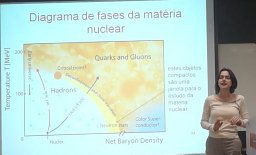 L. Paulucci合作论文数UFABC23
 Celio Adrega De Moura合作论文数Sezione di Napoli - Complesso Universitario23J. Sensenig合作论文数22D. Mladenov合作论文数22D. García Gámez合作论文数22J. Sinclair合作论文数22
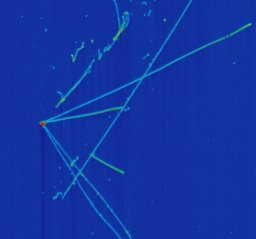 D. Caratelli合作论文数22T. Junk合作论文数22T. Gamble合作论文数22P. Machado合作论文数22S. Gardiner合作论文数22




