Summary Celebrating the 20th anniversary of the presentation of the paper by Dempster, Laird and Rubin which popularized the EM algorithm, we investigate, after a brief historical account, strategies that aim to make the EM algorithm converge faster while maintaining its simplicity and stability (e.g. automatic monotone convergence in likelihood). First we introduce the idea of a ‘working parameter’ to facilitate the search for efficient data augmentation schemes and thus fast EM implementations. Second, summarizing various recent extensions of the EM algorithm, we formulate a general alternating expectation–conditional maximization algorithm AECM that couples flexible data augmentation schemes with model reduction schemes to achieve efficient computations. We illustrate these methods using multivariate t-models with known or unknown degrees of freedom and Poisson models for image reconstruction. We show, through both empirical and theoretical evidence, the potential for a dramatic reduction in computational time with little increase in human effort. We also discuss the intrinsic connection between EM-type algorithms and the Gibbs sampler, and the possibility of using the techniques presented here to speed up the latter. The main conclusion of the paper is that, with the help of statistical considerations, it is possible to construct algorithms that are simple, stable and fast.
SUMMARY A new method is proposed for making inferences from multinomial data in cases where there is no prior information. A paradigm is the problem of predicting the colour of the next marble to be drawn from a bag whose contents are (initially) completely unknown. In such problems we may be unable to formulate a sample space because we do not know what outcomes are possible. This suggests an invariance principle: inferences based on observations should not depend on the sample space in which the observations and future events of interest are represented. Objective Bayesian methods do not satisfy this principle. This paper describes a statistical model, called the imprecise Dirichlet model, for drawing coherent inferences from multinomial data. Inferences are expressed in terms of posterior upper and lower probabilities. The probabilities are initially vacuous, reflecting prior ignorance, but they become more precise as the number of observations increases. This model does satisfy the invariance principle. Two sets of data are analysed in detail. In the first example one red marble is observed in six drawings from a bag. Inferences from the imprecise Dirichlet model are compared with objective Bayesian and frequentist inferences. The second example is an analysis of data from medical trials which compared two treatments for cardiorespiratory failure in newborn babies. There are two problems: to draw conclusions about which treatment is more effective and to decide when the randomized trials should be terminated. This example shows how the imprecise Dirichlet model can be used to analyse data in the form of a contingency table.
The articles published by the Annals of Eugenics (1925–1954) have been made available online as an historical archive intended for scholarly use. The work of eugenicists was often pervaded by prejudice against racial, ethnic and disabled groups. The online publication of this material for scholarly research purposes is not an endorsement of those views nor a promotion of eugenics in any way.
Summary There are three methods used in practice to detect human linkage. These are: (i)The sib-pair method of Penrose, applicable to pairs of brothers and sisters, when the parents’ genotypes are unknown or disregarded.(ii)The method of efficient scores (u-functions), due to Fisher and Finney, applicable to families consisting of 2 or more children, together with either or both genotypes of the parents if known.(iii)The method of likelihood ratio, or backward odds, due to Haldane & Smith, and most suitable for large pedigrees: this links up with maximum likelihood estimation. Each method has its own advantages and disadvantages. It is part of the purpose of this paper to present a connected account of the subject, showing the relations between the three methods. It appears that all are really different forms of the likelihood ratio test, suitably adapted for practical use. It is suggested that recessive children of cousin parents can be used to detect linkage. Methods of using sib-pair tables to calculate efficient scores are given. As the sib-pair table is convenient in use, methods are given to extend it to families of more than 2 sibs, though this may not be fully efficient. It is also pointed out that tables of lods (log odds) can be prepared for use with families of 2 or 3 sibs, and an example is provided.
 Dv Lindley合作论文数4Ga Barnard合作论文数3Jfc Kingman合作论文数2DR Cox合作论文数2Jw Thompson合作论文数2P Armitage合作论文数2Rl Plackett合作论文数2
 Murray Aitkin合作论文数Department of Mathematics and Statistics, The University of Melbourne2He Daniels合作论文数1GO Roberts合作论文数1irving john good合作论文数1JS Liu合作论文数1WR GILKS合作论文数1JT Kent合作论文数1Brilling.Dr合作论文数1Jnr Jeffers合作论文数1Rm Loynes合作论文数1JL Hutton合作论文数1A. P. Dawid合作论文数1Jc Gower合作论文数1Ja Dupuis合作论文数1Ij Good合作论文数1Mjr Healy合作论文数1Ms Bartlett合作论文数1P Sprent合作论文数1Vp Godambe合作论文数1Frank Hampel合作论文数1
 Alan M. Zaslavsky合作论文数Department of Health Care Policy, Blavatnik Institute, Harvard Medical School;Department of Statistics, Harvard University1Isaac Levi合作论文数1
 Andrew Gelman合作论文数Department of Statistics, Columbia University;Department of Political Science, Columbia University1
 David Spiegelhalter合作论文数Department of Pure Mathematics and Mathematical Statistics, University of Cambridge;Centre for Mathematical Sciences, University of Cambridge;Centre for Science and Policy, University of Cambridge1
 Marc Lavielle合作论文数Laboratoire de Mathématiques, Université Paris-Sud1Jean Diebolt合作论文数1
 Ben Torsney合作论文数1
 Charles J. Geyer合作论文数School of Statistics, University of Minnesota1Nicky Best合作论文数Department of Epidemiology;Public Health;Imperial College London;Department of Epidemiology, Imperial College London1David R. Cox合作论文数1
 Stephen G Walker合作论文数Department of Mathematics, College of Natural Sciences, The University of Texas at Austin1
 Colin Palmer合作论文数School of Medicine, University of Dundee1
 Christopher Jennison合作论文数School of Mathematical Sciences;University of Bath;School of Mathematical Sciences, University of Bath1Maurice G Kendall合作论文数1
 Luis R. Pericchi合作论文数Pure and Applied Mathematics Department, Simón Bolívar University1
 Philip J. Brown合作论文数School of Mathematics, Statistics and Actuarial Science, University of Kent1Dennis V. Lindley合作论文数1
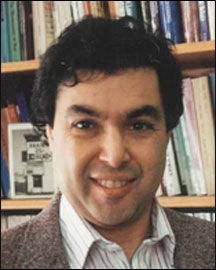 Teddy Seidenfeld合作论文数Department of Philosophy, Dietrich College of Humanities and Social Sciences, Carnegie Mellon University/Department of Statistics&Data Science, Dietrich College of Humanities and Social Sciences, Carnegie Mellon University1David E. Tyler合作论文数1
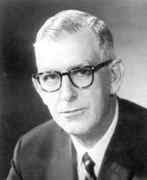 William G. Cochran合作论文数Harvard University1
 Chuanhai Liu合作论文数Bell Laboratories;Lucent Technologies;Bell Laboratories, Lucent Technologies1Seymour Geisser合作论文数Department of Statistics, University of Minnesota System1




