The central focus of digital system design engineers over the past two decades has been on the trade-offs between the power/energy and performance of the circuits implemented in current and emerging nanometer-scale VLSI technologies. A number of techniques have been developed to address this design challenge; one approach is based on a class of asynchronous pipelined digital circuit structures that are called self-timed. The dynamic power/energy dissipation is reduced in this realization, relative to synchronous implementations, because all clocks are generated locally and circuit timing and control is event driven. The performance of these circuits can exceed synchronous realization because it is based on the average intrinsic timing of the circuit instead of its worst case timing that is used to set the clock frequency in synchronous systems. The circuit design process used to determine the device sizing in self-timed circuits/systems is typically the same as that used for synchronous realizations. The input distribution is not considered in this process. A novel self-timed circuit design technique that out performs previously proposed approaches is presented in this paper. The input data distribution is used in the proposed technique to optimize the circuit performance for the respective input data set probability distribution.
Smart grid technology is a collection of existing and up-and-coming technologies working together to improve the distribution of electric energy. It provides the providers and consumer of power real time information on power production and consumption. Cyber technology is being utilized in electric smart grid system from the generation of the power to its distribution to consumers. Nowadays it has become relatively easy for consumers to be monitored through wired and wireless means using these cyber technologies on how they effectively and efficiently manage power provided to them. However with the introduction of cyber technologies in electric grid systems, there is an added risk to its implementation and operation. This paper will be looking at the security risk associated with power production and transmission, the communication protocols used in the smart grid and the security risk for consumers.
Big Data technologies like hadoop are transforming analytics and processing, but is there a role mainframe can play in improving big data analytics deployed in organizations' private clouds? Over the period of 60 years, mainframe has contributed extensively to the IT industry but has been replaced by newer machines and methods these days. In this paper we will examine some potential advantages mainframe and its advanced virtualization capability can provide to analytics using hadoop to seamlessly access the vast repositories of data which reside in the proprietary formats.
There has been much work to improve current IT Healthcare system to manage and maintain health records. The U.S government is trying to integrate different type of healthcare data to provide a centralized system for healthcare service providers and patients. However, less attention is paid to implement a system to detect fraudulent application, specifically in Medicaid. In this paper, we propose a data driven implementation using a layered architecture to filter fraudulent applications for Medicaid. In this system, we utilize a set of public and private databases which contain asset records of an individual. These asset records are used to determine the Medicaid eligibility of an applicant.
In primary health care, family history has been considered an important tool to assess the risk of having a certain disease in a person. As more and more data about the medical history of people is becoming available, it is possible to implement a dynamic disease forecast network to create the risk profile of all the family members. This network will update itself whenever medical data such as the test results of a person in the family change. The proposed network can be expanded as a child is born in the family.
In this paper, we propose an integrated architecture to detect Medicaid fraud at the time of application approval process. This architecture takes the advantages of several public databases available through different government or private organizations. These databases are used to verify applicant's information and discover any undeclared assets. We also propose a customizable weighting scheme to determine eligibility for Medicaid services.
Growth at Old Dominion Freight Lines, Inc. (NASDAQ: ODFL) necessitated the relocation of the present Disaster Recovery (DR) center in Greensboro, NC to a newly constructed center located in Thomasville, NC. The old DR site was functional and equipped with modern equipment comparable to most other corporate DR sites. The relocation provided a unique opportunity for ODFL and North Carolina Agricultural and Technical State University (NCA&T SU, NCA&T). ODFL is a third-generation North Carolina Triad area business with an established history of giving back to their community. ODFL made a grant of the existing DR center to NCA&T SU and to Davidson County Community College (DCCC) for the purpose of establishing state-of-the-art IT data center research and experience-based learning labs.The long-term goal of this project is to improve data center management techniques for better information availability, reliability, security, and cost efficiency. Several additional projects have emerged and are reported in this paper. The broader impact of this project includes development of advanced IT skills in the Triad workforce. This project has enhanced learning outcomes of enterprise computing technology students at NCA&T, area community colleges, and high schools by engaging students in applied research and providing hands-on experienced-based learning. Additionally, the authors expect availability of a skilled IT workforce to expand the Triad area economy by assisting the expansion of existing Triad enterprises and attracting new information technology dependent enterprises to relocate to the Triad.Implementation of this grant award began in November, 2011. This paper reports the initial project completions and describes how the grant resulted in new, unplanned projects. The authors believe this college-industry partnership model can be replicated readily at other institutions in need of an equipment infrastructure to foster education and research.
Game development is one of the fastest growing areas of software development. Many institutions have introduced Bachelor degree program in game development to cater to the industry demand. In this paper, we discuss the use of important key algorithms and data structures in game design and development. We highlight the usage of sorting algorithms and illustrate that other algorithms, such as searching algorithms, are most efficient when given properly sorted data. We demonstrate how game-based programming assignments can teach students algorithms. We also emphasize the importance of knowing multiple algorithms before developing a full game. We discuss the lessons learned while assigning games in beginning and intermediate level programming courses. Finally, we demonstrate how students benefit from a solid understanding of multiple data structures.
The development of World Wide Web (WWW) a little more than a decade ago has caused an information explosion that needs an Intelligent Web (IW) for users to easily control their information and commercial needs. Therefore, engineering schools have offered a variety of IW courses to cultivate hands-on experience and training for industrial systems. In this study, Open Source Software Engineering Theory (OSSET) project course has been designed to help students learn theoretical concepts of IW, practice advanced technical skills, and discover knowledge to solve problem. Undergraduate Science, Technology, Engineering and Mathematics (STEM) students involved in the development of innovative approaches and techniques. They are able to help solve the problems of disease misdiagnoses that medical and healthcare professionals experience. They co-authored and presented numerous research papers introducing the solution in different conferences. This study provides the solution in the form of an Intelligent OSSET using Service-Oriented Architecture (SOA) to decrease disease misdiagnosis in healthcare.The proposed project course has become a way to establish an "Intelligent Open Source Software Engineering for Healthcare IT" center in our department. Results show that this new course strengthens the capacity and quality of STEM undergraduate degree programs and the number of overall graduate student enrollment. It promotes a vigorous STEM academic environment and increases the number of students entering STEM careers. It expands the breadth of faculty and student involvement in research and development. It enhances and leverages the active engagement of faculty technology transfer and translational research. It improves and develops new relationships between educational institutions and research funding entities to broaden the university's research portfolio and increase funding. The proposed project course is a software engineering research methodology, an educational tool, and a teaching technique is needed in future medical and health IT fields.
Mobile Teaching: Merging Smart Phones, Cloud, and Desktop to Achieve Content-specific Instruction in a Generic Environment.Many educational institutions face a similar problem today: the necessity to reorganize teaching and labspace to improve facility utilization. [school] made the difficult decision to eliminate dedicated labs andclassrooms for content-specific instruction. Labs and classrooms previously equipped with privatenetworks and custom operating systems were replaced with a single large classroom equipped withthin-client Windows-based computers.Student demand for Linux instruction has grown eight-fold in four years at [school]. In fall 2012, seatswere limited to 60 students, and more students were involuntarily dropped. This begs the question,"How do large classes of students learn the intricate details of the Linux operating system in aWindows-based classroom with no lab?" The obvious answer is cloud-based Linux images, but cloudaccess alone is not a learning environment. The authors implemented a mobile virtual environmentwhich included a new textbook, new learning aides, and an immersive hands-on regimen. Before andafter metric-based learning outcome assessment will be presented in the paper. Before data has beencompiled, and after data will be compiled at the close of the fall 2012 semester.Methodology: The key concept is "Linux learning, anywhere, anytime." The implementation beganwith a new electronic textbook designed to present topics and tasks in five-minute sections targetedtoward mobile device access. This approach was enthusiastically received by students accustomed toinstant access, self-paced learning, and instant gratification. Students perceive reading assignmentsalmost as a game to be completed on their smart phone while walking to class or connected to the wi-fihotspot. Each short lesson is followed by individual hands-on exercises. Students use Secure Shell(SSH) to access multiple physical and cloud-based Linux servers directly from their mobile device. Ona separate server, flashcards geared to each topic allow students to reinforce their learning throughdirected repetition.In the classroom, mini-lectures expand upon the reading, and selected five-minute, hands-on practicesessions reinforce the mini-lectures and accommodate limited attention spans. Students use personalwi-fi connected smart phones, tablets, laptops, and the desktop Windows thin clients in the classroom.Key to the desktop usage is the Firefox web browser with FireSSH and epub-reader add-ons. Studentsuse multiple windows to have a side-by-side textbook and Linux command line interface available, aswell as access to the [school] content management system. The command-line interface to a commongroup of servers engages students in an electronic collaborative environment that emulates theprofessional global enterprise IT environment. The seamless, mobile-oriented environment providesstudents with 24/7 course access from almost any device or operating system.Outcome assessment: Specific exercises have been designed over several semesters to assess[accreditation agency] outcomes. This historical record allows retrospective analysis of the impact ofdelivery methodology on specific outcomes.Larger impact: This methodology can be applied to other content-specific technology instruction.Successful application of this methodology can improve student learning outcomes, improve facilityutilization, and reduce instructional cost.
Open Source Software Engineering Theory: Intelligent Educational Tool Increases Placement of Graduates in STEM Related CareersAbstractThe development of World Wide Web (WWW) a little more than a decade ago has caused aninformation explosion that needs an Intelligent Web (IW) for users to easily control theirinformation and commercial needs. Therefore, engineering schools have offered a variety of IWcourses to cultivate hands-on experience and training for industrial systems. In this study, OpenSource Software Engineering Theory (OSSET) project course has been designed to help studentslearn theoretical concepts of IW, practice advanced technical skills, and discover knowledge tosolve problem. Undergraduate Science, Technology, Engineering and Mathematics (STEM)students involved in the development of innovative approaches and techniques. They are able tohelp solve the problems of disease misdiagnoses that medical and healthcare professionalsexperience. They co-authored and presented numerous research papers introducing the solutionin different conferences. This study provides the solution in the form of an Intelligent OSSETusing Service-Oriented Architecture (SOA) to decrease disease misdiagnosis in healthcare.The proposed project course has become a way to establish an “Intelligent Open Source SoftwareEngineering for Healthcare IT" center in our department. Results show that this new coursestrengthens the capacity and quality of STEM undergraduate degree programs and the number ofoverall graduate student enrollment. It promotes a vigorous STEM academic environment andincreases the number of students entering STEM careers. It expands the breadth of faculty andstudent involvement in research and development. It enhances and leverages the activeengagement of faculty technology transfer and translational research. It improves and developsnew relationships between educational institutions and research funding entities to broaden theuniversity's research portfolio and increase funding. The proposed project course is a softwareengineering research methodology, an educational tool, and a teaching technique is needed infuture medical and health IT fields.
Venkat N. Gudivada is a professor of computer science at Marshall University, Huntington, W.V. He received his Ph.D. degree in computer science from the University of Louisiana, Lafayette. His current research interests are in personalized eLearning, verification and validation of SQL queries, high performance computing for software visualization, information retrieval, and natural language processing.
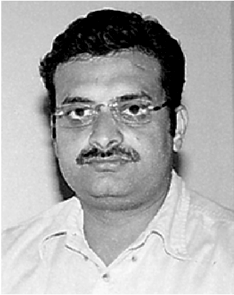 Rajeev K Agrawal合作论文数9
 Naser El-Bathy合作论文数5
 Ibraheem Kateeb合作论文数North Carolina A&T State Univ.;c;North Carolina A&T State Univ.4
 Li-Shiang Tsay合作论文数3
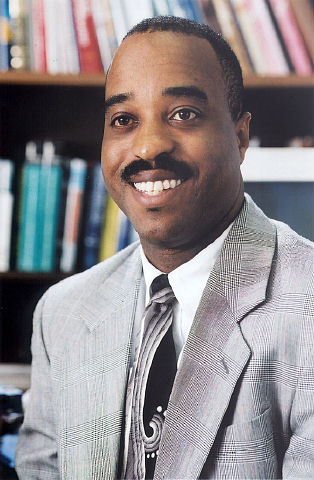 Clay Gloster合作论文数Advanced Digital Systems Design
Advanced Digital Systems Design Lab3Larry Burton合作论文数2Aiman Ghassan Baset合作论文数2robert cobb合作论文数2Tony Graham合作论文数Mulberry Technologies, Inc.2Muhammad Suleiman合作论文数2Zachary Kurmas合作论文数Department of Computer Science & Information Systems, Grand Valley State University2Mohammed El-Bathy合作论文数2
Clay Gloster合作论文数Advanced Digital Systems Design
Advanced Digital Systems Design Lab3Larry Burton合作论文数2Aiman Ghassan Baset合作论文数2robert cobb合作论文数2Tony Graham合作论文数Mulberry Technologies, Inc.2Muhammad Suleiman合作论文数2Zachary Kurmas合作论文数Department of Computer Science & Information Systems, Grand Valley State University2Mohammed El-Bathy合作论文数2 Ghassan Azar合作论文数2Craig Rhodes合作论文数1
 Evelyn Sowells-Boone合作论文数North Carolina A&T State University1Barel, Y.合作论文数1Jeffrey Anu合作论文数1
 Kadadi, A.合作论文数Dept. of Comput. Syst. Technol., North Carolina A & T State Univ.;c;Dept. of Comput. Syst. Technol., North Carolina A & T State Univ.1
 Venkat N. Gudivada合作论文数1
 Sambit Bhattacharya合作论文数Fayetteville State University1W. Grosky合作论文数Department of Computer and Information Science
University of Michigan - Dearborn
1
Sambit Bhattacharya合作论文数Fayetteville State University1W. Grosky合作论文数Department of Computer and Information Science
University of Michigan - Dearborn
1




