Mental health services are most effective and equitable when designed, delivered, and evaluated in collaboration with People With Lived Experience of mental health conditions (PWLE). However, PWLE are rarely involved in health systems strengthening, and when they are, it is limited to specific components (e.g., peer helpers) rather than multi-tiered collaboration in the full continuum of home to community to facility based services. Moreover, programs that do involve PWLE typically involve people with a history of substance use conditions or common mental disorders. The collaboration of People With Lived Experience of Psychosis (PWLP) is especially rare. Therefore, we aim to explore the feasibility of collaborating with PWLP for health systems strengthening in this feasibility trial. This pilot cluster randomized controlled feasibility trial will randomize 36 health facilities to a standard implementation arm where primary care workers (PCW) will be trained by mental health specialists (control), or a collaborative care model with added co-facilitation of PCW trainings by PWLP as well as home visits by PWLP to service users (intervention). The intervention condition is referred to as “Strengthening CAre in collaboration with People with lived Experience of psychosis in Uganda” (SCAPE-U). The 36 health facilities will be distributed across six clusters with three clusters in each arm. PhotoVoice will be used to train PWLP to be co-facilitators of PCW training and provide home-based support to service users in the intervention arm. The primary outcomes of the feasibility trial will be the feasibility, acceptability, and safety of collaborating with PWLP. Data will also be collected on individual-level outcomes for PCWs, and service users to inform the feasibility of data collection and obtain effect size estimates. Findings from this feasibility trial will inform a fully powered trial to evaluate the benefits of an implementation strategy characterized by collaboration with PWLP across the continuum of healthcare services. ClinicalTrials.gov. number: NCT05863572. Date of registration: May 18, 2023. URL of trial registry record: https://clinicaltrials.gov/study/NCT05863572?term=NCT05863572 rank=1 .
Integration of diagnosis and treatment for mental, neurological, and substance use (MNS) disorders into primary health care is a recommended strategy to improve access to services in low-and middle-income countries. Despite numerous initiatives for integration of mental health care in Uganda, there has not been an evaluation of health management information system (HMIS) records to determine whether MNS disorders are routinely diagnosed. We sought to determine diagnostic pattern of MNS disorders at primary health facilities in Wakiso and Kampala districts, the most populous regions of Uganda. Lower-level primary health facilities were visited to obtain records from HMIS registers, to document diagnoses of MNS disorders. Secondary data analysis was conducted and descriptive statistics reported. A total of 40 primary health care facilities were visited representing 58.6% of the health facilities in the study districts. More than half (54.8%) and almost all (87.5%) of the lower-level health facilities in Wakiso district and Kampala district respectively were visited. The proportion of MNS disorders diagnosed at lower-level primary health facilities in Uganda is very low with Epilepsy the most common MNS diagnosis recorded. Reasons for such low numbers of diagnoses at primary health facilities are discussed as are possible solutions.
In Uganda, low resources for mental health provision combine with disadvantage and inadequate supports for family and community-based care. Catalysed by the need to reduce overcrowded psychiatric hospital wards and frequent readmissions at Butabika National Referral Mental Hospital (BNRMH) in Kampala, the nongovernment organisation YouBelong Uganda (YBU) developed the YouBelong Home (YBH) intervention. YBH is a theoretically eclectic pre and post hospital discharge intervention. This paper reports on qualitative findings of the project Curtailing Hospital Readmissions for Patients with Severe Mental Illness in Africa (CHaRISMA), which explored how to refine the YBH intervention. The project was funded by a UK Joint Global Health Trials (JGHT) Development Grant. Data was collected through structured interviews with service users and caregivers, reflective practice by the YBH implementing team and a stakeholder focus group. A summary of refinements to the YBH intervention follows the TIDieR format (Template for Intervention Description and Replication).
Background In low-income settings with limited social protection supports, by necessity, families are a key resource for care and support. Paradoxically, the quality of family care for people living with Severe Mental Illness (PLSMI) has been linked to support for recovery, hospital overstay and preventable hospital readmissions. This study explored the care experiences of family members of PLSMI with patients at the national mental hospital in Kampala, Uganda, a low income country. This study was undertaken to inform the development of YouBelongHome (YBH), a community mental health intervention implemented by YouBelong Uganda (YBU), a registered NGO in Uganda. Methods Qualitative data was analysed from 10 focus groups with carers of ready to discharge patients on convalescent wards in Butabika National Referral Mental Hospital (BNRMH), Kampala. This is a subset of data from a mixed methods baseline study for YouBelong Uganda, undertaken in 2017 to explore hospital readmissions and community supports for PLSMI from the Wakiso and Kampala districts, Uganda. Results Three interrelated themes emerge in the qualitative analysis: a range of direct, practical care provided by the caregiver of the PLSMI, emotional family dynamics, and the social and cultural context of care. The family care giving role is multidimensional, challenging, and changing. It includes protection of the PLSMI from harm and abuse, in the context of stigma and discrimination, and challenging behaviours that may result from poor access to and use of evidence-based medicines. There is reliance on traditional healers and faith healers reflecting alternative belief systems and health seeking behaviour rather than medicalised care. Transport to attend health facilities impedes access to help outside the family care system. Underpinning these experiences is the impact of low economic resources. Conclusions Family support can be a key resource and an active agent in mental health recovery for PLSMI in Uganda. Implementing practical family-oriented mental health interventions necessitates a culturally aware practice. This should be based in understandings of dynamic family relationships, cultural understanding of severe mental illness that places it in a spiritual context, different family forms, caregiving practices and challenges as well as community attitudes. In the Ugandan context, limited (mental) health system infrastructure and access to medications and service access impediments, such as economic and transport barriers, accentuate these complexities.
There are significant barriers to the development of a 'balanced model' of mental health in low-income countries. These include gaps in the evidence base on effective responses to severe mental health issues and what works in the transition from hospital to home, and a low public investment in primary and community care. These limitations were the drivers for the formation of the non-government organization, YouBelong Uganda (YBU), which works to contribute to the implementation of a community-based model of mental health care in Uganda. This paper overviews an intervention protocol developed by YBU, which is a combined model of parallel engagement with the national mental hospital in Kampala, Uganda, movement of 'ready for discharge' patients back to their families and communities, and community development. The YBU programme is theoretically underpinned by a capabilities approach together with practical application of a concept of 'belonging'. It is an experiment in implementation with hopes that it may be a positive step towards the development of an effective model in Uganda, which may be applicable in other countries. Finally, we discuss the value in joining ideas from social work, sociology, philosophy, public health and psychiatry into a community mental health 'belonging framework'.
With the passage of time valuable lessons have been learnt about both effective practices for program and system integration and the sizable barriers, including the challenges in sustaining constructive integration. This paper is a reflection on sustainable integrative practices and is grounded in the direct experience of one of the authors, who held the post of the South Australian Social Inclusion Commissioner. We reflect upon the structure and mechanism of the South Australian Social Inclusion Initiative (2002–2011) as well as using a case study of a successful integrative program of the Social Inclusion Initiative, a program in South Australia’s School Retention Action Plan 2004 Making the Connections (South Australian Social Inclusion Board, 2004) that was implemented to improve school retention. The case study draws out salient factors of clear rationale, coordination, collaboration, communication, team work and trust as skills and ingredients to bring about integration in policy and programs. While the integration literature affirms that these ingredients are primary skills for the development of an integrative framework, we also assert that they are not enough for successful and sustained integration. Absent from much of the literature is a discussion about the use of power and the manner in which horizontal integrative work occurs. We take up this theme to draw out some implications for analysis of sustainable integrative practices.
The strategy implemented by South Australia to address the issues of homelessness and social inclusion is described. The manner in which an integrated approach is being followed by the health and housing departments of the South Australian government, and homelessness specialist services to deliver services for inner-city homeless people by identifying their specific needs is discussed.
 Fiona Verity合作论文数4
 Mutamba Byamah B合作论文数2Sauharda Rai合作论文数1
 Laura Asher合作论文数School of Medicine, Faculty of Medicine and Health Sciences, The University of Nottingham1Noeline Nakasujja合作论文数Dept Psychiat, Makerere Univ1
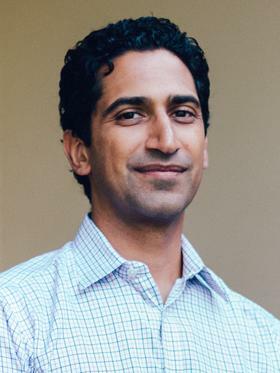 Shevin Jacob合作论文数Liverpool School of Tropical Medicine1
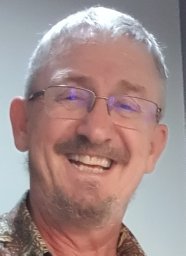 Greg Fegan合作论文数Wellcome Trust Centre for Geographic Medicine Research -Coast, Kenya Medical Research Institute;Department of Epidemiology and Population Health, London School of Hygiene and Tropical Medicine;Kenya Medical Research Institute, London School of Hygiene and Tropical Medicine1
 Brandon A Kohrt合作论文数Department of Anthropology, Emory University1




