One of the ways that environmental inequalities manifest is through the market economy. Research increasingly shows how the weight of capitalist interests cause disequilibria in nature: these imbalances spread to the welfare of animals and back to humans through socio-economic interactions. One Health recognises this connection as generative of unhealthy environments, but little has so far been said about the morality of balancing conflicting interests between animals and humans for resources and space. This paper focusses on One Health’s interdisciplinarity; and provides an alternative research methodology, based on concordance of the “right to science,” to analyse ethical collaborations between markets and ecological economies. The argument is illustrated by the financing of space exploration and its cost to the environment. My modest ambition is to enhance the ethical debate of a planetary “eco-” [Greek: oikos “house, dwelling place, habitation”] by connecting health, economies [oikonomia “household management”], and ecology [logia “study of”] to a sense of normative environmentalism.
This paper develops a vision for The Ecological Genome Project: an aspirational, global endeavour to connect human genomic sciences with the ethos of ecological sciences. The Project's goal is to strengthen interdisciplinary networks that relate to diverse initiatives using genomic technologies, with respect to shared ethical frameworks and governance structures. To this end, this paper proposes a practical definition of ecogenomics to align various methodologies and values in a single environmental field using principles used to safeguard all forms of life in their habitats. We achieve this by using a One Health approach as a pretext for disparate disciplines to collaborate and also a lens to view the Ethical, Legal and Social Implications (ELSI) inherent in ecological systems.
One Health emerges from the contingent scientific, social, and political realities of environmentalism. The concept mixes the land, sea, and sky with geopolitics on the global stages of the United Nations and World Health Organization. It inspires new investment in conservation and public health, motivates interdisciplinary collaboration, and in practice implicates green economies and animal law as well. This Element does not tackle all of this but attempts to situate One Health in the catastrophe of COVID-19; a socio-ecological upheaval prophetic of the inevitable next pandemic evolving from planetary climate crisis of our own making. One Health Environmentalism argues that humanity's future depends upon extending an olive branch to biotic communities, by being less speciesist and less blind to the rights in nature.
Non-human animal chimeras, containing human neurological cells, have been created in the laboratory. Despite a great deal of debate, the status of such beings has not been resolved. Under normal definitions, such a being could either be unconventionally human or abnormally animal. Practical investigations in animal sentience, artificial intelligence, and now chimera research, suggest that such beings may be assumed to have no legal rights, so philosophy could provide a different answer. In this vein, therefore, we can ask: What would a chimera, if it could think, think about? Thinking is used to capture the phenomena of a novel, chimeric being perceiving its terrible predicament as no more than a laboratory experiment. The creation of a thinking chimera therefore forces us to reconsider our assumptions about what makes human beings (potentially) unique (and other sentient animals different), because, as such, a chimera's existence bridges our social and legal expectations about definitions of human and animal. Society has often evolved new social norms based on different kinds of (ir)rational contrivances; the imperative of non-contradiction, which is defended here, therefore requires a specific philosophical response to the rights of a thinking chimeric being.
Background The following outlines ethical reasons for widening the Human Genome Organisation’s (HUGO) mandate to include ecological genomics. Main The environment influences an organism’s genome through ambient factors in the biosphere (e.g. climate and UV radiation), as well as the agents it comes into contact with, i.e. the epigenetic and mutagenic effects of inanimate chemicals and pollution, and pathogenic organisms. Emerging scientific consensus is that social determinants of health, environmental conditions and genetic factors work together to influence the risk of many complex illnesses. That paradigm can also explain the environmental and ecological determinants of health as factors that underlie the (un)healthy ecosystems on which communities rely. We suggest that The Ecological Genome Project is an aspirational opportunity to explore connections between the human genome and nature. We propose consolidating a view of Ecogenomics to provide a blueprint to respond to the environmental challenges that societies face. This can only be achieved by interdisciplinary engagement between genomics and the broad field of ecology and related practice of conservation. In this respect, the One Health approach is a model for environmental orientated work. The idea of Ecogenomics—a term that has been used to relate to a scientific field of ecological genomics—becomes the conceptual study of genomes within the social and natural environment. Conclusion The HUGO Committee on Ethics, Law and Society (CELS) recommends that an interdisciplinary One Health approach should be adopted in genomic sciences to promote ethical environmentalism. This perspective has been reviewed and endorsed by the HUGO CELS and the HUGO Executive Board.
One health suggests that human and animal health are comparable, but in practice, the concept aligns with the principles of public health ethics. One health ethics, as such, appears to eschew connotations of equality for the natural world. A theory of agency revises that anthropocentric assumption. This article begins with a critique of environmental dualism: the idea that human culture and nature are separate social realms, thus justifying public health as a (unifying) purpose. In response, this article argues that, first, a neuroethics of one health might equally regard humans and (some) animals, which have comparable mental states, as rational agents. Second, rational agency should ground our moral connections to nature in terms of the egalitarian interests we have (as coinhabitants) in the health of the planet. While this article makes a moderate case for interspecific rights (as the first argument asserts), neuroscience is unlikely for now to change how most public institutions regard nonhuman animals in practice. However, the second argument asserts that rational agency is also grounds for philosophical environmentalism. One health ethics, therefore, is a theory of equality and connects culture to nature, and, as such, is a separate, but coextensive approach to that of public health.
This letter is the Human Genome Organisation’s summary reaction to the 2020 COVID-19 pandemic. It identifies key areas for genomics research, and areas in which genomic scientists can contribute to a global response to the pandemic. The letter has been reviewed and endorsed by the HUGO Committee on Ethics, Law and Society (CELS) and the HUGO Council.
One health has brought to the fore connections-between human culture and nature-that underlie healthy (and unhealthy) ecological niches. Like other emerging environmental concepts-eco-health, one medicine and planetary health-one health merges scientific evidence with reasons for sustaining a healthy environment. This narrative is not new, but the importance of a cogent way of thinking about nature in ways that allow us to ameliorate harms brought about by human activities has become a theme of the Anthropocene. Many societies face seemingly insurmountable crises, brought about by a collective failure to foster ethical forms of environmental health. The following essay is an egalitarian reimagining of one health ethics. Undertaking this task is of considerable philosophical importance, because solving the problem of denotation-asking what is one health?-could change our rational view of nature for the betterment of humankind and our Earthly companions.
Given the broad coverage of “Human Brain Surrogates Research: The Onrushing Ethical Dilemma,” this commentary focuses on the section “human/nonhuman brain chimeras,” and specifically, the questions...
The writer responds to the article "Human-Animal Chimeras: The Moral Insignificance of Uniquely Human Capacities," by Julian J. Koplin, in the September-October 2019 issue of the Hastings Center Report.
During the 2020 COVID-19 pandemic, open science has become central to experimental, public health, and clinical responses across the globe. Open science (OS) is described as an open commons, in which a right to science renders all possible scientific data for everyone to access and use. In this common space, capitalist platforms now provide many essential services and are taking the lead in public health activities. These neoliberal businesses, however, have a problematic role in the capture of public goods. This paper argues that the open commons is a community of rights, consisting of people and institutions whose interests mutually support the public good. If OS is a cornerstone of public health, then reaffirming the public good is its overriding purpose, and unethical platforms ought to be excluded from the commons and its benefits.
Johnson and Degeling have recently enquired whether one health (OH) requires a comprehensive normative framework, concluding that such a framework, while not necessary, may be helpful. In this commentary, we provide a context for this debate, and describe how pragmatism has been predominant in the OH literature. We nevertheless argue that articulating a comprehensive normative theory to ground OH practice might clear existing vagueness and provide stronger guidance in relevant health dilemmas. A comprehensive theory will also be needed eventually to ground notions such as universal good. We, thus, call for the systematic articulation of a comprehensive, metaethical theory, concomitantly with already ongoing normative work.
The HUGO Committee on Ethics, Law and Society (CELS) undertook a Working Group exploration of the key ethical issues arising from genome sequencing in 2013. The Imagined Futures paper the group subsequently published proposed points to consider when applying genomic bioinformatics to data repositories used in genomic medicine and research (http://www.hugo-international.org/Resources/Documents/CELS_Article-ImaginedFutures_2014.pdf). Given the ever-increasing power to sequence the human genome rapidly and inexpensivelyas well as trends toward Big Data and Open Sciencewe take this opportunity to update and refine the key findings of that paper.
The tobacco industry's involvement in the electronic cigarette research that informs public health policy is controversial. On the one hand, some are concerned that their involvement presents conflicts of interest that bias research outputs and invalidate the policies that use them. On the other hand, some have argued that the tobacco industry may support valid research and contribute to the goals of public health, for instance, if the interests of the e-cigarette industry could be part of a tobacco smoking cessation policy. We approach this debate from the ethical perspective of the public interest and the public good, considering how legitimate researchers can square their expert opinion with validating tobacco industry-funded research, given the perfidy of the tobacco industry and paucity of robust, conclusive evidence on the public health impacts of liberalizing e-cigarette use.
Gene editing may be used to engineer organisms that are better or worse adapted to survival. Coupled with gene drives – molecular genetic strategies that perpetuate specific phenotypes in a target species – it would now be possible to edit wild animal populations that impact on public health. It is generally agreed that community engagement should guide prospective gene drive field trials. However, the analysis in this article reveals that there is a tension between publics and the public interest: it is contentious to allow communities to decide policy when doing so will have consequences beyond their own interests, as surely gene drives will; conversely, it goes against ideal deliberation for the state to impose policy without this democratic condition. The gene drive controversy creates further dichotomies illustrative of this tension: giving effect to weighted decisions that discriminate between culture and nature, local and global, private and public, and present and future interests. In this article, an emerging concept of One Health ethics (OH) is employed to strengthen ethical engagement on the policy roadmap used to navigate the gene drive controversy. OH in practice has been shown to provide insightful solutions at the interface between animal and human health; and, in this article, that advantage is extended to the public good and public interest. In so doing, OH ethics – as spelled out here – is coextensive with public health ethics.
Open science can significantly influence the development and translational process of precision medicine in Canada. Precision medicine presents a unique opportunity to improve disease prevention and healthcare, as well as to reduce health-related expenditures. However, the development of precision medicine also brings about economic challenges, such as costly development, high failure rates, and reduced market size in comparison with the traditional blockbuster drug development model. Open science, characterized by principles of open data sharing, fast dissemination of knowledge, cumulative research, and cooperation, presents a unique opportunity to address these economic challenges while also promoting the public good. The Centre of Genomics and Policy at McGill University organized a stakeholders’ workshop in Montreal in March 2018. The workshop entitled “Could Open be the Yellow Brick Road to Precision Medicine?” provided a forum for stakeholders to share experiences and identify common objectives, challenges, and needs to be addressed to promote open science initiatives in precision medicine. The rich presentations and exchanges that took place during the meeting resulted in this consensus paper containing key considerations for open science precision medicine in Canada. Stakeholders would benefit from addressing these considerations as to promote a more coherent and dynamic open science ecosystem for precision medicine.
This article refers to:Patenting Foundational Technologies: Lessons From CRISPR and Other Core Biotechnologies
We agree with Sarah J. L. Edwards and colleagues’ proposal for a One Health (OH) approach to vaccinate great apes (hereafter, apes) as a response to Ebolavirus emergence in Africa (Edwards et al. 2...
 Lysaght Tamra合作论文数Yong Loo Lin School of Medicine, National University of Singapore17
 Lederman Zohar合作论文数9
 Adrian Carter合作论文数Turner Institute for Brain and Mental Health, School of Psychological Sciences, Monash University8
 Alastair Campbell合作论文数Centre for Ethics in Medicine;University of Bristol;Centre for Ethics in Medicine, University of Bristol8Yann Joly合作论文数Division of Biomedical Ethics, School of Population and Global Health, Faculty of Medicine and Health Sciences, McGill University7
 John J Mulvihill合作论文数Department of Pediatrics, College of Medicine, University of Oklahoma7
 Wayne Hall合作论文数National Centre for Youth Substance Use Research, University of Queensland;Faculty of Health and Behavioural Sciences, University of Queensland6
 Richard Ashcroft合作论文数City Law School, City, University of London6
 Ruth Chadwick合作论文数6
 Gerard Porter合作论文数Mason Institute, School of Law, The University of Edinburgh4
 Douglas Sipp合作论文数Riken Center for Developmental Biology, Science Policy and Ethics Studies Unit, 2-2-3 Minatojima-minamimachi, Chuo-ku, Kobe 650-0047, Japan4
 Subramaniam Mythily合作论文数Saw Swee Hock School of Public Health, National University of Singapore3
 Voo Teck Chuan合作论文数Yong Loo Lin School of Medicine, National University of Singapore3Kerridge Ian合作论文数3
 Van Der Eijk Yvette合作论文数Saw Swee Hock School of Public Health, National University of Singapore3
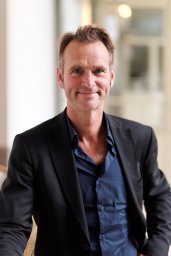 Hub Zwart合作论文数Faculty of Science - Institute for Science, Innovation & Society, Radboud University Nijmegen3
 CHONG Siow Ann合作论文数Saw Swee Hock School of Public Health, National University of Singapore;Research Division, Institute of Mental Health3Kang Sim合作论文数Natl Univ Singapore2
 Sum Min Yi合作论文数Research Division, Institute of Mental Health2
 Richard James Coker合作论文数London School of Hygiene & Tropical Medicine2
 Calvin WL Ho合作论文数2
 David Nutt合作论文数Department of Brain Sciences, Faculty of Medicine, Imperial College London2
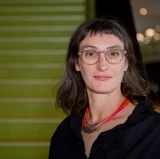 Catherine Mills合作论文数School of Philosophical, Historical and International Studies, Faculty of Arts, Monash University2
 Richard Huxtable合作论文数University of Bristol Centre for Ethics in Medicine2
 David Bickford合作论文数Department of Biological Sciences;National University of Singapore;University of Alaska Museum;National University of Singapore, University of Alaska Museum2
 Ruud Ter Meulen合作论文数2
 Paul Anantharajah Tambyah合作论文数Division of Infectious Diseases, Department of Medicine, National University Hospital;Department of Medicine, Yong Loo Lin School of Medicine, National University of Singapore2ross duncan合作论文数1Won Bok Lee合作论文数1Sandeep Vanamala合作论文数1Sarah E Ali-Khan合作论文数1Ingrid Winship合作论文数1Robert Cook-Deegan合作论文数1joseph m mulvihill合作论文数1
 Sangeetha Watson合作论文数1Roxanne Caron合作论文数1Priscilla M. D. G. Cesar合作论文数1
 Claire Lajaunie合作论文数Lab Populat Environm Dev, Aix Marseille Univ1
 Palmira Granados Moreno合作论文数Ctr Genom & Policy, McGill Univ1
 Ian Kerridge合作论文数School of Health Sciences, Faculty of Medicine and Health, The University of Sydney1
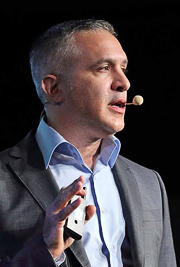 Richard Gold合作论文数Faculty of Law, McGill University1
 Tih Shih Lee合作论文数Neuroscience and Behavioral Disorders, Duke-NUS Medical School1
 Ellen Wright Clayton合作论文数Center for Biomedical Ethics and Society, Vanderbilt University Medical Center;School of Law, Vanderbilt University1
 Aled Edwards合作论文数Department of Medical Biophysics, Temerty Faculty of Medicine, University of Toronto;Structural Genomics Consortium;M4K Pharma;McGill University1
 William Oetting合作论文数Department of Experimental and Clinical Pharmacology, College of Pharmacy, University of Minnesota1Krishna Lalit合作论文数National Cancer Centre1Thorogood Adrian合作论文数1
 Bertier Gabrielle合作论文数Center for Genomic Regulation, Barcelona, Spain.1Bailey Michele Marie合作论文数1




