Illuminating selections from Jung's writings on the nature of evil Well-known for his articulation of the "shadow side" of human individuality and culture, C. G. Jung wrote a great deal about the question of evil throughout his life and in scattered places in his work. In this book, Murray Stein brings together key selections of Jung's writings on the subject. In Jung's early work on the unconscious, he considered the role of evil in the mental processes of the severely disturbed. Later, he viewed the question of moral choice within the framework of his ideas about archetypes and discussions about moral choices, conscience, and the continual ethical reflection that is necessary for all of us. The material here includes letters to Freud and Father Victor White and writings ranging from his Answer to Job to his travel piece on North Africa.
Illuminating selections from Jung's writings on alchemy and the transformation of the human spirit The ancient practice of alchemy, which thrived in Europe until the seventeenth century, dealt with the phenomenon of transformation—not only of ore into gold but also of the self into Other. Through their work in the material realm, alchemists discovered personal rebirth as well as a linking between outer and inner dimensions. C. G. Jung first turned to alchemy for personal illumination in coping with trauma brought on by his break with Freud. Alchemical symbolism eventually suggested to Jung that there was a process in the unconscious, one that had a goal beyond discharging tension and hiding pain. In this book, Nathan Schwartz-Salant brings together key selections of Jung's writings on the subject. These writings expose us to Jung's fascinating reflections on the symbols of alchemy—such as the three-headed Mercurial dragon, hermaphrodites, and lions devouring the sun—and brings us closer to the spirit of his approach to the unconscious, closer than his purely scientific concepts often allow.
In this book, Dr. Jung, who has been the author of some of the most provocative hypotheses in modern psychology, describes what he regards as an authentic religious function in the unconscious mind. Using a wealth of material from ancient and medieval gnostic, alchemistic, and occultistic literature, he discusses the religious symbolism of unconscious processes and the possible continuity of religious forms that have appeared and reappeared through the centuries.
 r f c hull合作论文数23franz alt合作论文数6aniela jaffe合作论文数5Sonu Shamdasani合作论文数5william mcguire合作论文数4roland cahen合作论文数2jolande szekacs jacobi合作论文数2ca ca padma sambhava合作论文数2w y evanswentz合作论文数2da zhuo ling mu (大拙 鈴木)合作论文数2mariemartine louziersahler合作论文数2Maria Rosa Borras合作论文数2J. G. Lewis合作论文数1karl kerenyi合作论文数1Ernst Riess合作论文数1emmanuel mounier合作论文数1th cent yeśesmtshorgyal合作论文数1A MITSCHERLICH合作论文数1Mark Kyburz合作论文数1Karen Horney合作论文数1daisetz teitaro suzuki合作论文数1christmas humphreys合作论文数1H. G. Baynes合作论文数1paul radin合作论文数1richard wilhelm合作论文数1William McGuire合作论文数1Franz Riklin合作论文数1jun xiong he he (俊雄 河合)合作论文数1ludovico rosenthal合作论文数1agus cremers合作论文数1salome burckhardt合作论文数1alexandra tondat合作论文数1kang yu tian zhong (康裕 田中)合作论文数1Ri Evans合作论文数1
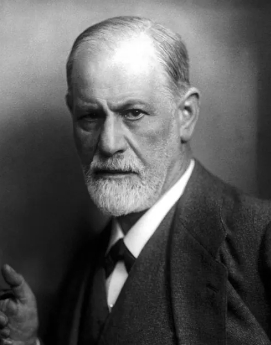 Sigmund Freud (西格蒙德·弗洛伊德)合作论文数University of Vienna1
 Brian E. Carpenter合作论文数1
 Serge Moscovici合作论文数European Laboratory of Social Psychology1R. Engst合作论文数1Heinrich Zollinger合作论文数1Ludwig Von Bertalanffy合作论文数Wien1Siegfried Borelli合作论文数1Albert E. Avey合作论文数1
 Verena Kast合作论文数1
 Henry Corbin合作论文数1
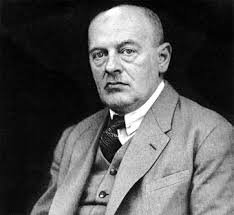 Max Scheler合作论文数1Jurgen Ruesch合作论文数1Bruno Bettelheim合作论文数1
 Erich Fromm合作论文数Faculty of the William Alanson White Institute of Psychiatry1G. Von Bally合作论文数1




