Network analysis was used to investigate the interrelationships among 23 digital biomarkers characterizing lifestyle activity (derived from a smartwatch) and glycated haemoglobin (HbA1c) values over 18 months in 61 Type 2 diabetes patients with several comorbidities (hypertension, ischaemic heart disease, chronic kidney disease and chronic obstructive pulmonary disease) and who were taking 11 types of medications. Five lifestyle data categories—sleep, sleep stages, step daily counts, exercise, and heart rate—were analysed and included in the networks. The findings from this research not only reinforce those of previous studies but also suggest that the relationship between lifestyle and HbA1c depends not only on the type of comorbidity or medication but also on specific lifestyle behaviours. For example, frequent deep sleep is strongly correlated with a reduction in HbA1c levels on subsequent days. The evaluation of the centrality measures provides new insights into the relative importance of individual lifestyle characteristics within various networks that can be considered targets for HbA1c interventions.
Digital coaching for healthcare is challenging due to the heterogeneous nature of data sources. This often leads to the development of ad-hoc pipelines customised to different combinations of formats, which are hard to maintain and easily fall out of date. In this paper, we present MatKG and HeLiFit (Health, Lifestyle and Fitness), which consist of a pipeline and an extended ontological model for scalable construction of a Knowledge Graph integrating electronic medical records, medical devices with consumer behavioural, and bio data. This fully-developed solution effectively addresses the challenge of semantic interoperability between healthcare institutions and consumer technology providers, using standards such as FHIR and RML supporting the construction of the cross-organisation health data space needed for powering a new generation of AI solutions. Its design and development were driven by a wide range of use cases and an equivalent number of digital coaching solutions for promoting health and lifestyle recommendations on different patient cohorts and healthcare institutions in 11 countries across Europe and Asia. We extended HeLiFit to accommodate a broader range of applications, including sleep and nutrition recommendations. This infrastructure is currently being employed by thousands of users and different pools of experts engaged in the validation of the generated recommendations. Moreover, in line with Open Science principles, we have made our system available as an off-the-shelf scalable solution that can fast-track innovation in the field of semantic AI for healthcare.
Integrating deep learning techniques, particularly language models (LMs), with knowledge representation techniques like ontologies has raised widespread attention, urging the need of a platform that supports both paradigms. Although packages such as OWL API and Jena offer robust support for basic ontology processing features, they lack the capability to transform various types of information within ontologies into formats suitable for downstream deep learning-based applications. Moreover, widely-used ontology APIs are primarily Java-based while deep learning frameworks like PyTorch and Tensorflow are mainly for Python programming. To address the needs, we present DeepOnto, a Python package designed for ontology engineering with deep learning. The package encompasses a core ontology processing module founded on the widely-recognised and reliable OWL API, encapsulating its fundamental features in a more "Pythonic" manner and extending its capabilities to incorporate other essential components including reasoning, verbalisation, normalisation, taxonomy, projection, and more. Building on this module, DeepOnto offers a suite of tools, resources, and algorithms that support various ontology engineering tasks, such as ontology alignment and completion, by harnessing deep learning methods, primarily pre-trained LMs. In this paper, we also demonstrate the practical utility of DeepOnto through two use-cases: the Digital Health Coaching in Samsung Research UK and the Bio-ML track of the Ontology Alignment Evaluation Initiative (OAEI).
BackgroundHealthy lifestyle interventions have a positive impact on multiple disease trajectories, including cancer-related outcomes. Specifically, appropriate habitual physical activity, adequate sleep, and a regular wholesome diet are of paramount importance for the wellness and supportive care of survivors of cancer. Mobile health (mHealth) apps have the potential to support novel tailored lifestyle interventions. ObjectiveThis observational pilot study aims to assess the feasibility of mHealth multidimensional longitudinal monitoring in survivors of cancer. The primary objective is to test the compliance (user engagement) with the monitoring solution. Secondary objectives include recording clinically relevant subjective and objective measures collected through the digital solution. MethodsThis is a monocentric pilot study taking place in Bangor, Wales, United Kingdom. We plan to enroll up to 100 adult survivors of cancer not receiving toxic anticancer treatment, who will provide self-reported behavioral data recorded via a dedicated app and validated questionnaires and objective data automatically collected by a paired smartwatch over 16 weeks. The participants will continue with their normal routine surveillance care for their cancer. The primary end point is feasibility (eg, mHealth monitoring acceptability). Composite secondary end points include clinically relevant patient-reported outcome measures (eg, the Edmonton Symptom Assessment System score) and objective physiological measures (eg, step counts). This trial received a favorable ethical review in May 2023 (Integrated Research Application System 301068). ResultsThis study is part of an array of pilots within a European Union funded project, entitled “GATEKEEPER,” conducted at different sites across Europe and covering various chronic diseases. Study accrual is anticipated to commence in January 2024 and continue until June 2024. It is hypothesized that mHealth monitoring will be feasible in survivors of cancer; specifically, at least 50% (50/100) of the participants will engage with the app at least once a week in 8 of the 16 study weeks. ConclusionsIn a population with potentially complex clinical needs, this pilot study will test the feasibility of multidimensional remote monitoring of patient-reported outcomes and physiological parameters. Satisfactory compliance with the use of the app and smartwatch, whether confirmed or infirmed through this study, will be propaedeutic to the development of innovative mHealth interventions in survivors of cancer. International Registered Report Identifier (IRRID)PRR1-10.2196/52957
The European Project GATEKEEPER aims to develop a platform and marketplace to ensure a healthier independent life for the aging population. In this platform the role of HL7 FHIR is to provide a shared logical data model to collect data in heterogeneous living, which can be used by AI Service and the Gatekeeper HL7 FHIR Implementation Guide was created for this purpose. Independent pilots used this IG and illustrate the impact of the approach, benefit, value, and scalability.
With the advent of Artificial Intelligence for healthcare, data synthesis methods present crucial benefits in facilitating the fast development of AI models while protecting data subjects and bypassing the need to engage with the complexity of data sharing and processing agreements. Existing technologies focus on synthesising real-time physiological and physical records based on regular time intervals. Real health data are, however, characterised by irregularities and multimodal variables that are still hard to reproduce, preserving the correlation across time and different dimensions. This paper presents two novel techniques for synthetic data generation of real-time multimodal electronic health and physical records, (a) the Temporally Correlated Multimodal Generative Adversarial Network and (b) the Document Sequence Generator. The paper illustrates the need and use of these techniques through a real use case, the H2020 GATEKEEPER project of AI for healthcare. Furthermore, the paper presents the evaluation for both individual cases and a discussion about the comparability between techniques and their potential applications of synthetic data at the different stages of the software development life-cycle.
Telemedicine can provide benefits in patient affected by chronic diseases or elderly citizens as part of standard routine care supported by digital health. The GATEKEEPER (GK) Project was financed to create a vendor independent platform to be adopted in medical practice and to demonstrate its effect, benefit value, and scalability in 8 connected medical use cases with some independent pilots. This paper, after a description of the GK platform architecture, is focused on the creation of a FHIR (Fast Healthcare Interoperability Resource) IG (Implementation Guide) and its adoption in specific use cases. The final aim is to combine conventional data, collected in the hospital, with unconventional data, coming from wearable devices, to exploit artificial intelligence (AI) models designed to evaluate the effectiveness of a new parsimonious risk prediction model for Type 2 diabetes (T2D).
The GATEKEEPER (GK) Project was financed by the European Commission to develop a platform and marketplace to share and match ideas, technologies, user needs and processes to ensure a healthier independent life for the aging population connecting all the actors involved in the care circle. In this paper, the GK platform architecture is presented focusing on the role of HL7 FHIR to provide a shared logical data model to be explored in heterogeneous daily living environments. GK pilots are used to illustrate the impact of the approach, benefit value, and scalability, suggesting ways to further accelerate progress.
We propose a semantic dietary coaching system for personalized chronic disease management. Technically, we built three types of knowledge graphs (KGs): a guideline graph, food graph, and user health graph. These graphs respectively represented prestigious dietary guidelines, food ingredients and nutrition information from over 500 thousand recipes, as well as an individual’s lifelog from mobile and wearable devices and health status. Through reasoning of the KGs, we provided personalized dietary coaching through intake diagnosis and menu selection. Expert verification showed that our system outperformed human-curated coaching in terms of guideline compliance and expert consent rates by 79% and 34%, respectively. Additionally, we developed a mobile application and released a closed-beta service to 100 diabetics. Its on-device reasoning capability enabled an accurate health coaching service while preserving privacy.
The World Health Organization and the American College of Sports Medicine have released guidelines on physical activity and sedentary behavior, as part of an effort to reduce inactivity worldwide. However, to date, there is no computational model that can facilitate the integration of these recommendations into health solutions (e.g., digital coaches). In this paper, we present an operational and machine-readable model that represents and is able to reason about these guidelines. To this end, we adopted a symbolic AI approach that combines two paradigms of research in knowledge representation and reasoning: ontology and rules. Thus, we first present HeLiFit, a domain ontology implemented in OWL, which models the main entities that characterize the definition of physical activity, as defined per guidance. Then, we describe HeLiFit-Rule, a set of rules implemented in the RDFox Rule language, which can be used to represent and reason with these recommendations in concrete real-world applications. Furthermore, to ensure a high level of syntactic/semantic interoperability across different systems, our framework is also compliant with the FHIR standard. Through motivating scenarios that highlight the need for such an implementation, we finally present an evaluation of our model that provides results that are both encouraging in terms of the value of our solution and also provide a basis for future work.
The paper presents DLV, an advanced AI system from the area of Answer Set Programming (ASP), showing its high potential for reasoning over ontologies. Ontological reasoning services represent fundamental features in the development of the Semantic Web. Among them, scientists are focusing their attention on the so-called ontology-based query answering (OBQA) task where a (conjunctive) query has to be evaluated over a logical theory (a.k.a. Knowledge Base, or simply KB) consisting of an extensional database (a.k.a. ABox) paired with an ontology (a.k.a. TBox). From a theoretical viewpoint, much has been done. Indeed, Description logics and Datalog ^± have been recognized as the two main families of formal ontology specification languages to specify KBs, while OWL has been identified as the official W3C standard language to physically represent and share them; moreover sophisticated algorithms and techniques have been proposed. Conversely, from a practical point of view, only a few systems for solving complex ontological reasoning services such as OBQA have been developed, and no official standard has been identified yet. The aim of the present paper is to illustrate the applicability of the well-known ASP system DLV for powerful ontology-based reasoning.
Efficient large-scale reasoning is a fundamental prerequisite for the development of the Semantic Web. In this scenario, it is convenient to reduce standard reasoning tasks to query evaluation over (deductive) databases. From a theoretical viewpoint much has been done. Conversely, from a practical point of view, only a few reasoning services have been developed, which however typically can only deal with lightweight ontologies. To fill the gap, the paper presents owl2dlv, a novel and modern Datalog system for evaluating SPARQL queries over very large OWL 2 knowledge bases. owl2dlv builds on the well-known ASP system dlv by incorporating novel optimizations sensibly reducing memory consumption and a server-like behavior to support multiplequery scenarios. The high potential of owl2dlv for large-scale reasoning is outlined by the results of an experiment on data-intensive benchmarks, and confirmed by the direct interest of a major international industrial player, which has stimulated and partially supported this work.
Research has approached the practice of musical reception in a multitude of ways, such as the analysis of professional critique, sales figures and psychological processes activated by the act of listening. Studies in the Humanities, on the other hand, have been hindered by the lack of structured evidence of actual experiences of listening as reported by the listeners themselves, a concern that was voiced since the early Web era. It was however assumed that such evidence existed, albeit in pure textual form, but could not be leveraged until it was digitised and aggregated. The Listening Experience Database (LED) responds to this research need by providing a centralised hub for evidence of listening in the literature. Not only does LED support search and reuse across nearly 10,000 records, but it also provides machine-readable structured data of the knowledge around the contexts of listening. To take advantage of the mass of formal knowledge that already exists on the Web concerning these contexts, the entire framework adopts Linked Data principles and technologies. This also allows LED to directly reuse open data from the British Library for the source documentation that is already published. Reused data are re-published as open data with enhancements obtained by expanding over the model of the original data, such as the partitioning of published books and collections into individual stand-alone documents. The database was populated through crowdsourcing and seamlessly incorporates data reuse from the very early data entry phases. As the sources of the evidence often contain vague, fragmentary of uncertain information, facilities were put in place to generate structured data out of such fuzziness. Alongside elaborating on these functionalities, this article provides insights into the most recent features of the latest instalment of the dataset and portal, such as the interlinking with the MusicBrainz database, the relaxation of geographical input constraints through text mining, and the plotting of key locations in an interactive geographical browser.
Several real-world applications of made evident the need for efficiently handling multiple queries and reasoning tasks over large-sized knowledge bases. In this paper we present some recent enhancements in the ASP system for enabling reasoning over large-scale domains. In particular, we developed both an optimized implementation, sensibly reducing memory consumption, and a server-like behaviour to support efficiently multiple-query scenarios. The high potential of for large-scale reasoning is outlined by the results of an experiment on data-intensive benchmarks. The applicability of the system in real-world scenarios is demonstrated employing as reasoning service to query, in natural language, the large DBpedia knowledge base. The relevance and the high potential industrial value of this research is also confirmed by the direct interest of a major international industrial player, which has stimulated and partially supported this work.
Ontology-based query answering (OBQA), without any doubt, represents one of the fundamental reasoning services in Semantic Web applications. Specifically, OBQA is the task of evaluating a (conjunctive) query over a knowledge base (KB) consisting of an extensional dataset paired with an ontology. A number of effective practical approaches proposed in the literature rewrite the query and the ontology into an equivalent Datalog program. In case of very large datasets, however, classical approaches for evaluating such programs tend to be memory consuming, and may even slow down the computation. In this paper, we explain how to compute a memory-saving evaluation plan consisting of an optimal indexing schema for the dataset together with a suitable body-ordering for each Datalog rule. To evaluate the quality of our approach, we compare our plans with the classical approach used by DLV over widely used ontological benchmarks. The results confirm the memory usage can be significantly reduced without paying any cost in efficiency.
One of the existing query recommendation strategies for unknown datasets is example, i.e. based on a query that the user already knows how to formulate on another dataset within a similar domain. In this paper we measure what contribution a structural analysis of the query and the datasets can bring to a recommendation strategy, to go alongside approaches that provide a semantic analysis. Here we concentrate on the case of star-shaped SPARQL queries over RDF datasets. The illustrated strategy performs a least general generalization on the given query, computes the specializations of it that are satisfiable by the target dataset, and organizes them into a graph. It then visits the graph to recommend first the reformulated queries that reflect the original query as closely as possible. This approach does not rely upon a semantic mapping between the two datasets. An implementation as part of the SQUIRE query recommendation library is discussed.
Knowledge graph refinement is often a time consuming process due to the lack of domain knowledge and automatic tools to support maintainers to detect erroneous information. Few tools are available to support the task of measuring the accuracy of triples (source triples) in a knowledge graph. We developed a platform which we call TAA for measuring triple accuracy by discovering evidence triples from external knowledge graphs. It consists of a quality assessment pipeline which contains a series of components from fetching target triples from external knowledge graphs to finding matched triples among the target triples and calculating a score to represent the level of accuracy of a source triple. In addition, TAA represents the assessment result using an evidence graph and exposes its functionality to other applications via REST web service.
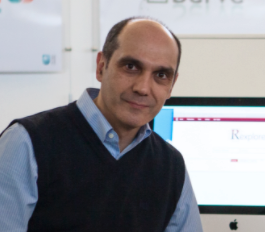 Enrico Motta合作论文数Knowledge Media Institute, The Open University;Department of Information Science and Media Studies, University of Bergen17
 Mathieu D'Aquin合作论文数Université de Lorraine11
 Roberta Costabile合作论文数University of Calabria7Jessica Zangari合作论文数7
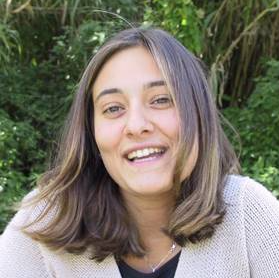 Simona Perri合作论文数Department of Mathematics and Computer Science, University of Calabria7
 Giuseppe Fico合作论文数6
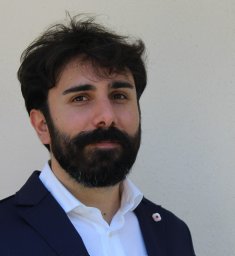 Alessio Fiorentino合作论文数Univ Calabria, Dept Math & Comp Sci, Arcavacata Di Rende, Italy6
 Marco Manna合作论文数Department of Mathematics and Computer Science, University of Calabria6
 Mathieu D’Aquin合作论文数Knowledge Media institute (KMi) of the Open University in Milton Keynes, UK6
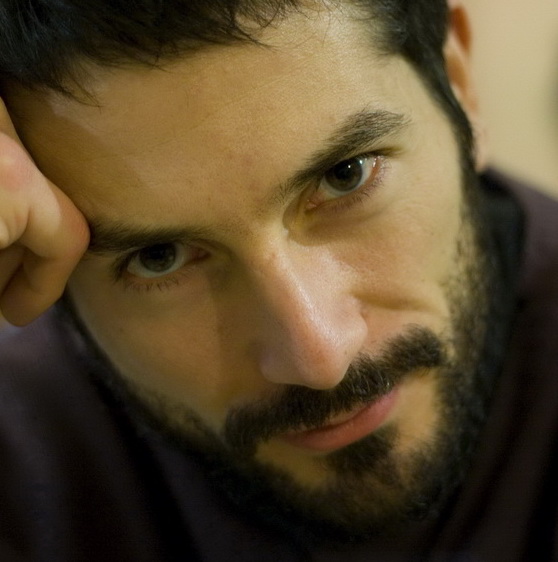 Francesco Calimeri合作论文数Department of Mathematics and Computer Science, University of Calabria6Giovanni Laboccetta合作论文数5
 Francesco Ricca合作论文数Department of Mathematics and Computer Science, University of Calabria5
 Yannis Tzitzikas合作论文数Department of Computer Science, University of Crete5
 Nicola Leone合作论文数Department of Mathematics and Computer Science, University of Calabria5
 Yannis Marketakis合作论文数Computer Science Department, University of Crete5
 Pavlos Fafalios合作论文数Institute of Computer Science, University of Crete5Davide Fuscà合作论文数5
 Kristian Reale合作论文数Dipartimento di Matematica, Università della Calabria5Pierfrancesco Veltri合作论文数5Nikos Minadakis合作论文数5
 Eugenio Gaeta合作论文数Life Supporting Technologies, Technical University of Madrid5Stefano Germano合作论文数Department of Computer Science, University of Oxford5
 Cristina Civili合作论文数DIAG Sapienza Università di Roma4
 Alessio Antonini合作论文数Dept. of Electron., Inf. & Bioeng., Politec. di Milano;c;Dept. of Electron., Inf. & Bioeng., Politec. di Milano4
 Bernardo Cuteri合作论文数University of Calabria4
 Alessandro Adamou合作论文数Bibliotheca Hertziana – Max Planck Institute for Art History4
 Mario Alviano合作论文数Department of Mathematics and Computer Science, University of Calabria4
 Leandro Pecchia合作论文数School of Engineering, Faculty of Science, Engineering and Medicine, The University of Warwick4Francesco Giuliani合作论文数3
 Rohit Ail合作论文数3Giorgio Cangioli合作论文数3
 Catherine E. Chronaki合作论文数Institute of Computer Science, FORTH3
 Michalis Mountantonakis合作论文数3
 Franco Mercalli合作论文数Computer Center, IBM Italia SpA3
 Muhammad Salman Haleem合作论文数School of Engineering, Faculty of Science, Engineering and Medicine, The University of Warwick3
 Roberta Gazzarata合作论文数Department of Communication, Computer and System Sciences (DIST),, University of Genoa3
 Paolo Zampognaro合作论文数Engineering SpA - Research & Development Lab, Roma, Italy3Atos Origin合作论文数2Laboratorios Kin合作论文数2
 Alba Gallego合作论文数2
 Iman Naja合作论文数Univ Aberdeen, Dept Comp Sci, Aberdeen AB24 3UE, Scotland2Chryssoula Bekiari合作论文数2Alexandros Gougousis合作论文数1Nicholas I Wreglesworth合作论文数1Lisa Stieler合作论文数1Catherine Bale合作论文数1Byunghyun Kim合作论文数1
 Audrey Ekuban合作论文数1Changhyub Woo合作论文数1




