Ocean fine-scale dynamics such as submesoscale processes constitute one of the key points in understanding current velocities with a tridimensional approach. Their in situ observation remains challenging due to their short space and time extent and duration. The Northern Current in the Western Mediterranean Sea, corresponding to the Northern branch of the basin cyclonic circulation, can be influenced by wind events, inducing intrusions on the continental shelf and associated fine-scale dynamics. In order to detect these phenomena, the JULIO mooring (JUdicious Location for Intrusion Observation) located on the Eastern side of the Gulf of Lion’s shelf on the 100m isobath, measures tridimensional current velocities since 2012 using an acoustic Doppler current profiler (ADCP) at 300kHz. In addition, vertical velocities have been episodically measured with other methods such as the FreeFall-ADCP (FF-ADCP), and an autonomous Vertical Velocity Profiler (VVP) both developed at MIO. First, the JULIO time-series has shown a significant contribution of biology to vertical motions, with systematic negative vertical velocities measured at night time. This effect was particularly strong in the subsurface layer at 15 to 25 meters depth and enhanced during spring. Second, strong observed 3D-currents, coinciding with wind events, induce current shears and intrusions as well as vertical velocities in this dynamical coastal region with complex bathymetric constraints. Furthermore, the SWOT satellite mission launched in 2022 constitutes a powerful ally by providing a new tool to detect fine-scale features from the surface dynamics near JULIO, and especially during the daily fast sampling phase from April to July 2023. Given the impact of wind forcing on current dynamics in this region, the question arises to what extent the Northern Current and its intrusions on the continental shelf might be affected by climate change.
During the RESILIENCE cruise aboard the R/V Marion Dufresne II (April 19–24 May 2022), a high‐resolution in situ observation campaign investigated a mesoscale dipole in the Mozambique Channel, composed of a large anticyclonic ring and a cyclonic eddy. Using an innovative adaptive sampling strategy to track its movement, we employed continuous observing systems, including a Moving Vessel Profiler and Acoustic Doppler Current Profilers, to capture high‐resolution vertical sections. The results revealed a distinct dipolar structure: The 250 km‐wide anticyclonic ring featured low chlorophyll and homogeneous waters, while the smaller cyclonic eddy exhibited higher chlorophyll concentrations and pronounced salinity variations. These include patches, vertically stacked layers, and filaments, reflecting a mix of contrasted water masses from the southern Mozambique Channel and the Sofala Bank. A central jet between the eddies exhibited horizontal velocities up to 130 cm , facilitating significant offshore transport exceeding 10 Sverdrups in the upper 250 m and emphasizing the dipole's role in eastward water movement. Vertical velocities, derived from the Quasi‐Geostrophic Omega equation, highlighted the influence of smaller‐scale structures in driving vertical motions, reaching 40 m at depth. Lagrangian particle trajectories revealed the dipole's spiraling structure and its connectivity to coastal waters. These findings show that Mozambique Eddy‐Ring Dipoles efficiently transport properties from the continental shelf to the open ocean, enhancing regional ecosystem connectivity. This work provides new insights into their biogeochemical, biological and ecological significance, challenging traditional cyclonic/anticyclonic eddy paradigms, and setting the foundation for future studies on mesoscale dipoles in the region.
Despite the challenge of measuring them due to their small intensities, oceanic vertical velocities (W) constitute essential key variables in understanding ocean dynamics, and ocean-atmosphere interactions and biogeochemical processes. Coastal events and fine-scale processes (1–100 km and days to weeks) can lead to high-intensity vertical velocities. Such processes can be observed in the Northwestern Mediterranean Sea. In particular, the Gulf of Lion is a region prone to intense north-westerly and easterly wind episodes that strongly impact the oceanic circulation. This work presents mooring ADCPs as reliable tools for physics-driven W measurements, with an adaptive algorithm which is applicable anywhere offshore in the ocean to detect W in fine-scale processes. The JULIO mooring (JUdicious Location for Intrusion Observation) is located on the boundary of the eastern side of the Gulf of Lion's shelf at the 100 m isobath. JULIO provides Eulerian measurements of three-dimensional current velocities over two main time-periods: 2012–2015, and since 2020. Vertical velocity measurements from JULIO show a good agreement with two independent methods: a Free-Fall Acoustic Doppler Current Profiler and an innovative Vertical Velocity Profiler. To measure physics-driven vertical velocities, we developed a method to identify and filter out biology-induced vertical velocities. Combining satellite and in situ observations with wind model outputs, we identify wind-induced downwelling and upwelling events at JULIO associated with physics-driven vertical velocities with maximum amplitudes of −465/127 m d−1. Hence, this analysis underlines the need for long term multimethod observations in such coastal areas forced by intense wind episodes.
During the SWOT fast sampling phase in spring 2023, the BioSWOTMed cruise (https://doi.org/10.17600/18002392) sampled for four weeks a front located on both the western and eastern swaths of the 003 SWOT pass, about 100 km northeast of Menorca, in the Western Mediterranean Sea. The front coincided to a portion of the north Balearic front. The front was modulated by the presence of eddies of small Rossby radius (of the order of 20-30km), not visible in conventional altimetry maps. The availability of cloud-free images of ocean color (OLCI) for five consecutive days also revealed the presence of various submesoscale structures and part of their life cycle. The front consisted of a strong roughly eastward meandering jet, separating cold, salty and more productive waters (modified Atlantic Water) in the north from warm, fresher and more oligotrophic waters (younger Atlantic Water) in the south. In addition to classical hydrological, glider, drifters/floats and moving vessel profiler (MVP) measurements, 3D oceanic velocities were measured by 3 ship-mounted acoustic Doppler current profilers (ADCPs), 2 lowered-ADCPs, 1 free-falling newer generation 5-beam ADCP and 2 autonomous vertical velocity profilers. The jet had horizontal velocities up to ~0.35 m.s-1 (0-300 m average), with a cross-jet distance of ~40 km and a vertical extension of 200 m. 1m-surface drifters deployed in the core of the jet traveled at a speed of ~0.5 m.s-1. Two northerly storms generated intense near-inertial waves interacting in the mesoscale field of several eddies sampled by the ship. Cyclogeostrophic velocities derived from SWOT are in good agreement with the measured ADCP (horizontal) velocities. The normalized relative vorticity provides a regional view of the complex oceanic circulation of the jet meandering between various mesoscale eddies and interacting with submesoscale structures. The high variability of vertical velocities (+/- 1.5 cm.s-1) of various origins masks the expected cross-frontal ageostrophic circulation. The finescale 3D circulations observed and well captured at the surface by SWOT are also associated with complex biological content distribution.
scientifiques de niveau recherche, publiés ou non, émanant des établissements d'enseignement et de recherche français ou étrangers, des laboratoires publics ou privés.
A low-cost multipurpose oceanographic vertical profiler is described. Its application to the measurement of vertical currents, inspired by ocean glider flight-model methods, is presented. Preliminary results of the BioSWOT-Med campaign, carried out in April-May 2023, illustrate the instrument’s ability to capture weak signals, potentially linked to sub-mesoscale oceanic structures.
The study of extreme weather events and their impact on ocean physics and biogeochemistry is challenging due to the difficulty involved with collecting in situ data. However, recent research has pointed out the major influence of such physical forcing events on microbiological organisms. Moreover, the occurrence of such intense events may increase in the future in the context of global change. In May 2019, an intense storm occurred in the Ligurian Sea (north-western Mediterranean Sea) and was captured during the FUMSECK (Facilities for Updating the Mediterranean Submesoscale – Ecosystem Coupling Knowledge) cruise. In situ multi-platform (vessel-mounted acoustic Doppler current profiler, thermosalinometer, fluorometer, flow cytometer, a moving vessel profiler equipped with a multi-sensor towed vehicle, and a glider) measurements along with satellite data and a 3D atmospheric model were used to characterise the fine-scale dynamics occurring in the impacted oceanic zone. The most affected area was marked by a lower water temperature (1 ∘C colder), a factor of 2 increase in surface chlorophyll a, and a factor of 7 increase in the nitrate concentration, exhibiting strong gradients with respect to the surrounding waters. Our results show that this storm led to a deepening of the mixed-layer depth from 15 to 50 m and a dilution of the deep chlorophyll maximum. As a result, the surface biomass of most phytoplankton groups identified by automated flow cytometry increased by up to a factor of 2. Conversely, the carbon / chlorophyll ratio of most phytoplankton groups decreased by a factor of 2, evidencing significant changes in the phytoplankton cell composition. These results suggest that the role of storms on the biogeochemistry and ecology of the Mediterranean Sea may be underestimated and highlight the need for high-resolution measurements during these events coupling physics and biology.
Vertical velocities knowledge is essential to study fine-scale dynamics in the surface layers of the ocean and to understand their impact on biological production mechanisms. However, these vertical velocities have long been neglected, simply parameterized, or considered as not measurable, due mainly to their order of magnitude (less than mm s(-1) up to cm s(-1)), generally much lower than the one of the horizontal velocities (cm s(-1) to dm s(-1)), hence the challenge of their in situ measurement. In this paper, we present an upgraded method for direct in situ measurement of vertical velocities using data from different acoustic Doppler current profilers (ADCPs) associated with CTD probes, and we perform a comparative analysis of the results obtained by this method. The analyzed data were collected during the FUMSECK cruise, from three ADCPs: two Workhorse (conventional ADCPs), one lowered on a carousel and the other deployed in free-fall mode, and one Sentinel V (a new-generation ADCP with four classical beams and a fifth vertical beam), also lowered on a carousel. Our analyses provide profiles of vertical velocities on the order of mm s(-1), as expected, with standard deviations of a few mm s(-1). While the fifth beam of the Sentinel V exhibits a better accuracy than conventional ADCPs, the free-fall technique provides a more accurate measurement compared to the carousel technique. Finally, this innovative study opens up the possibility to perform simple and direct in situ measurements of vertical velocities, coupling the free-fall technique with a five-beam ADCP.
The study of oceanic vertical velocities arises increasing interest in the oceanographic community. The general interest in the determination of vertical velocities is rooted in their key role for global oceanic balance and their impact on the vertical transfer of nutrients, heat and carbon despite their generally low magnitude of O(1-100 m day-1). With the pressing global warming issues linked to the disturbance of the carbon cycle by anthropogenic activities, estimating vertical velocities becomes an essential information for a better representation of biogeochemical budgets, especially in coastal areas. Considering the challenges in directly measuring vertical velocities, numerous studies have been conducted in highly energetic regions, with estimation of large vertical motions. Instead, in this study, we have estimated vertical velocities based on a method suitable for low-intensity regions, where we expected a magnitude of few mm s-1 up to cm s-1. We have developed a new method for direct in situ measurement of vertical velocities using data from different Acoustic Doppler Current Profilers (conventional four-beam vs new generation Sentinel-V five-beam ADCPs) following different sampling techniques (lowered vs free falling). We collected data during the FUMSECK cruise in May 2019 in the Ligurian Sea (Northwestern Mediterranean Sea). Our analyses provided profiles of vertical velocities of the order of mm s-1, as expected, with standard deviations of a few mm s-1. While the fifth beam of the Sentinel-V showed a better accuracy than conventional ADCPs, the free-fall technique provided more accurate measurements compared to the lowered technique. In parallel to this in situ analysis, we use the three-hourly fields of the SYMPHONIE circulation model that we implemented over the FUMSECK area during the period of the measurement campaign, using a grid of 1 km horizontal resolution and 60 hybrid "z-sigma" vertical levels. Combining in situ and numerical data in this study allows us to have a synoptic vision of the temporal evolution of vertical velocities. Some of these measurements were gathered along the density front of the Northern Current known to be active in terms of vertical dynamics. The Northern Current flows along the coast; measuring vertical velocities in its region represents a new way to approach nearshore oceanic processes. Moreover, this new information should also represent a key point for the future improvement of altimetry near the coast, especially in the context of the launch of new generation SWOT altimetry. Finally, this innovative study paves the way to measure vertical velocities directly in situ, by coupling the free-fall technique with a five-beam ADCP. Consequently, we plan to apply these findings in areas characterized by either low or intense vertical dynamics to improve both the observational and modeling components of oceanic processes.
FUMSECK (Facilities for Updating the Mediterranean Submesoscale - Ecosystem Coupling Knowledge) is a one-week cruise, which took place in spring 2019, in the gulf of Genoa (NW Mediterranean Sea), onboard the R/V Téthys II. It was conducted in preparation of the BioSWOT-Med cruise in the SW Mediterranean Sea in 2022, planned as part of the ``Adopt a Cross Over'' initiative organising simultaneous oceanographic cruises around the world during the SWOT fast sampling phase. During FUMSECK we tested various technological innovations for the study of fine-scale dynamics and their coupling with biogeochemistry. By their interactions, the fine scales could induce some ageostrophic and tridimensional dynamics, which are a critical point for the understanding of the vertical exchanges and their effect on biogeochemistry. Therefore, the fine scales play a key role in the oceans global balance and, despite their low intensity, clearly impact processes such as nutriment vertical transfer and carbon export. However, their ephemeral nature complicates their in situ measurements, which are nevertheless essential for their understanding and for the confirmation of the models’ prediction and the satellite observations. Furthermore, measuring vertical velocities in situ represents a real challenge since they are several orders of magnitude below the horizontal ones. The FUMSECK cruise benefited from the automatic Lagrangian SPASSO treatment of the satellite data with an onshore team providing a daily bulletin of analysis and guidance on the fine-scale structures in the studied area. The distribution of phytoplankton functional groups at a small spatio-temporal scale was measured by automated flow cytometry with imaging. This technology allows to address the distribution of phytoplankton at fine scales within its hydrodynamic context. Several methods of measuring vertical velocities have been deployed, using different ADCP at fixed depth and in profile, FF-ADCP (Free Fall ADCP), the VVP (Vertical Velocities Profiler) prototype developed at MIO, and a SeaExplorer glider. These methods have shown promising results for in situ measurement of vertical velocities. Overall results show an abrupt change of population associated with a fine-scale structure appearance in relation with a storm event. In addition, in order to study the physical part of the biological carbon pump, we experienced the release, following, pumping and detection by cytometry of a sample of biodegradable micro-particles that mimic the phytoplankton, and established a proof-of-concept for this method. Finally, we studied the MVP (Moving Vessel Profiler) instruments behaviour and reduced significantly a rotative effect. We will describe the instrumental and analysis methodology deployed during FUMSECK in the study area of the Ligurian Sea, including the Northern Current, and present the results on the fine-scale dynamics and their impact on biology.
The fine scales are defined here as oceanic dynamical features (eddies, fronts and filaments) generally induced by mesoscale interactions and frontogenesis, and often associated with intense vertical exchanges. These processes are characterized by horizontal scales of 1–10 km with a relatively short lifetime of days/weeks to months. This temporal scale is similar to that of many biological processes, such as, phytoplankton growth, suggesting a physical and biological coupling. Numerical simulations and satellite observations have allowed the characterization of this regime highlighting the role played by these fine scales on structuring the phytoplankton community. To better understand this coupling mechanism, physical and biological in situ measurements are necessary. However, the observations of fine scales remains challenging due to the difficulties of sampling at high spatio-temporal frequency (~km ~daily). Over the past few years, the Mediterranean Sea has become a lab for developing fine scale in situ strategies. Indeed, a series of campaigns using a satellite based adaptative and Lagrangian strategy coupled with a high-resolution physical-biological sampling, have been performed in order to follow and describe fine scale structures. Following this strategy, the PROTEVSMED-SWOT 2018 cruise has been leaded in the South of the Balearic Islands, with a particular attention to correlate the Lagrangian sampling with the temporal phytoplankton growth, in order to reconstruct the phytoplankton diurnal cycle. Multidisciplinary in situ sensors have allowed to identify a frontal area with a dynamic vertical circulation. Furthermore, the presence of two Atlantic waters, at different stages of mixing associated with various abundances of several phytoplankton groups, corroborated that fine scales must be dynamical barriers to transport, as previous modeling studies have proposed. In order to better understand fine scale mechanisms, the Protevs Gibraltar cruise was performed in the Strait of Gibraltar in October 2020. This region of study is characterized by an important exchange of Mediterranean and Atlantic waters, and also by an intense circulation that generates energetic processes, which make it a favorable place for the formation of fine scale structures. The new knowledge acquired with these studies paves the way to the future BIOSWOT-Med campaign planned for 2022 in the western Mediterranean Sea under the future SWOT satellite crossover tracks.
Vertical velocities knowledge is essential to study fine-scale dynamics in the surface layers of the ocean and to understand their impact on biological production mechanisms, in both coastal and offshore environments. Indeed, the general interest in fine-scale and, more precisely, in the determination of vertical velocities, is explained by their key role in global oceanic balance and their impact on the vertical transfer of nutrients and carbon budget despite their low intensity. With the increasing global warming issues linked to the forcing of the carbon cycle by anthropogenic activities, the estimation of vertical velocities becomes an essential information for a better representation of biogeochemical budgets. However, these vertical velocities have long been neglected, simply parameterized, or considered as not measurable, due mainly to their order of magnitude (mm s-1), generally much lower than the one of the horizontal velocities (cm s-1). Consequently, direct in situ measurement of vertical velocities is still currently one of the biggest challenges in physical oceanography. We have been working to develop a new method for direct in situ measurement of vertical velocities using data from different Acoustic Doppler Current Profilers (ADCPs) associated with CTD probes, and we performed a comparative analysis of the results obtained by this method. The analyzed data were collected during the FUMSECK cruise (2019, Ligurian Sea), from three ADCPs: two Workhorse (conventional ADCPs), one lowered on a carousel and the other deployed in free-fall mode, and one Sentinel V (a new generation ADCP with four classical beams and a fifth vertical beam), also lowered on a carousel. Our analyses provided profiles of vertical velocities of the order of mm s-1, as expected, with standard deviations of a few mm s-1. While the fifth beam of the Sentinel V has shown a better accuracy than conventional ADCPs, the free-fall technique has provided a more accurate measurement compared to the carousel technique. Some of these measurements were gathered along the edge of the Northern Current and this new information on coastal edge currents represents a key point for the future improvement of coastal altimetry in particular. Finally, this innovative study opens up the possibility to perform simple and direct in situ measurements of vertical velocities, coupling the free-fall technique with a five-beam ADCP. Hence, we plan to deploy a free-falling Sentinel V in offshore areas characterized by intense fine-scale ocean dynamics, but also and above all, in coastal areas, where topographic forcings are typically the source of high amplitude vertical velocities.
Compared to horizontal components, the vertical components of ocean currents are generally very weak (a few mm/s) in all oceanic regions of the world. Due to their major role in the vertical distribution of physical and biogeochemical properties of sea water, their extended knowledge is of utmost importance for oceanographers. However, their in-situ measurement represents a real technical challenge, even using sophisticated instruments such as ADCPs. As a complement to the ADCP method presented in another session (Comby et al.), we have developed an original alternative instrument, called the VVP (Vertical Velocity Profiler). It was inspired by several published works which exploit the difference between the real vertical speed Wr of a submarine glider (~dP/dt, from the onboard pressure sensor) and its theoretical vertical speed Wth extracted from a flight model. The oceanic vertical speed Woc is thus expressed by the simple difference Woc = Wr - Wth at any point in the water column. The very first prototype of the VVP consisted of a float and a friction disc, ballasted to sink at a very low speed (~ 0.1 m / s) and dragged down to the desired depth by a dead-weight which was automatically released after a suitable delay. The release system was developped in-house (patent filled in March 2020), based on a textured insert trapped in a volume of ice melting at controlled speed. Since then, the concept of the profiler has evolved considerably. The last design uses an electric thruster that drives the profiler down to a predefined setpoint depth. Once the depth is reached, the thruster is stopped and the profiler then rises slowly (~0.1 m/s) to the surface under the sole effect of its slightly positive buoyancy. The mechanical balance between buoyancy and hydrodynamic drag results in a constant vertical speed of ascent in water at rest. Any deviation from this constant speed is then interpreted as an oceanic vertical velocity signal. This new design allows a very large number of consecutive profiles to be collected, the number of descent-ascent cycles and the setpoint depth being programmed and controlled using an ARDUINO microcontroller board. The selected Li-Io battery allows for several hours of continuous profiling. When on surface, the profiler is currently located by a commercial GPS tracker integrated into the electronic case. The vertical velocity of the profiler is accurately measured at high frequency (2Hz) thanks to the fast-response pressure sensor of the onboard RBR-CONCERTO autonomous CTD, which also measures the sea water density involved in drag and buoyancy. Trials both in deep pool and in the field are scheduled in spring 2021 in order to refine the prototype design and to definitely set the flight model parameters. This development benefits from CNES (Centre National d'Etudes Spatiales) financial support in the framework of the BIOSWOT international program.
The FUMSECK cruise was a one-week technological cruise, which took place in spring 2019, in the gulf of Genoa (NW Mediterranean Sea), onboard the R/V Tethys II. Its aim was to perform several technological tests of some instruments used for the study of the fine-scale processes and dynamics. It was conducted in preparation of the BioSWOT-Med cruise in the SW Mediterranean Sea in 2022, planned as part of the "Adopt a Cross Over" initiative organising simultaneous oceanographic cruises around the world during the SWOT fast sampling phase. During FUMSECK we tested various technological innovations for the study of fine-scale dynamics and their coupling with biogeochemistry. * student † contract ended ‡ now at SCRIPPS 1
 Stephanie Barrillon合作论文数13
 Petrenko Anne合作论文数OSU/Centre d’Océanologie de Marseille, Université de la Méditerranée13Jean-Luc Fuda合作论文数12
 Andrea M. Doglioli合作论文数Department of Physics;University of Genova;Department of Physics, University of Genova12
 Gérald Grégori合作论文数CNRS - Centre national de la recherche scientifique;Institut Méditérranéen d'Océanographie10
 Roxane Tzortzis合作论文数9
 Anthony Bosse合作论文数Aix Marseille Univ, Univ Toulon7
 Melilotus Thyssen合作论文数Centre d'Océanologie de Marseille, Université de la Méditerranée7Nagib Bhairy合作论文数6
 Francesco D'Ovidio合作论文数Institut Pierre-Simon Laplace, Université Pierre et Marie Curie5Louise Rousselet合作论文数Scripps Institution of Oceanography, University of California3
 Frederic Cyr合作论文数Fisheries & Oceans Canada, Northwest Atlantic Fisheries Ctr3Maxime Arnaud合作论文数2Hubert Bataille合作论文数2
 Patrick Marsaleix合作论文数2
 Patrice Le Gal合作论文数Institut de Recherche sur les Phénomènes Hors Equilibre, Aix Marseille Université;CNRS2
 Yann Ourmières合作论文数Department of Civil and Environmental Engineering;University of Southampton;Department of Civil and Environmental Engineering, University of Southampton2
 C. Estournel合作论文数Laboratoire d'Aérologie, Université Paul Sabatier2Robin Rolland合作论文数1Morgane Didry合作论文数1Anaïs Ricout合作论文数1Théo Coulon合作论文数1Anne Petrenko合作论文数1Christopher Luneau合作论文数1Christophe Yohia合作论文数1
 Floriane Sudre合作论文数1b s malauene合作论文数1Robin Fuchs合作论文数1Lucie Bordois合作论文数1
 Sven Gastauer合作论文数Centre for Marine Science and Technology, Curtin University, GPO Box U1987, Perth, WA 6845, Australia1
 barbara barcelollull合作论文数CSIC, Univ Illes Balears1
 Gildas Cambon合作论文数1
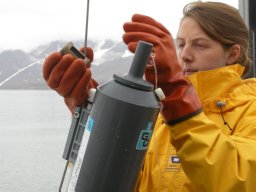 Margaux Noyon合作论文数Ocean Sciences, Nelson Mandela University1
 Berta Geller合作论文数Department of Family Medicine, University of Vermont;College of Medicine, Dartmouth College1
 Leo Berline合作论文数College of Oceanic;Atmospheric Sciences;Oregon State University;College of Oceanic|Atmospheric Sciences, Oregon State University1
 Pierre Garreau合作论文数IFREMER, DYNECO/PHYSED1
 Steven Herbette合作论文数1Massimo Pacciaroni合作论文数1
 Hubert Branger合作论文数Centre National de la Recherche;University of Marseille;Centre National de la Recherche, University of Marseille1
 Claire Menesguen合作论文数1Franck Dumas合作论文数Institut de Radioprotection et de Sûreté Nucléaire;Laboratoire de Radioécologie de Cherbourg-Octeville;Institut de Radioprotection et de Sûreté Nucléaire, Laboratoire de Radioécologie de Cherbourg-Octeville1Michel Lafont合作论文数1
 Jean-François Ternon合作论文数Institut de Recherche pour le Développement, Centre de Cayenne1Caroline Ulses合作论文数Pole d’Oceanographie Côtiere de l’Observatoire Midi-Pyrenées-Laboratoire d’Aerologie1
 Marc Tedetti合作论文数Aix Marseille Universite, Universite de Toulon, Mediterranean Institute of Oceanography, Marseille, 13288, France1
 Pierrick Penven合作论文数Institut de Recherche pour le Développement1
 Pascale Bouruet-Aubertot合作论文数UNITÉ DE RATTACHEMENT DU RESPONSABLE1
 Ananda Pascual合作论文数Marine Technologies, Operational Oceanography, and Sustainability Department, Mediterranean Institute for Advanced Studies1




