AIMS/HYPOTHESIS:Vitamin D insufficiency has not been well studied in Native American (NA) children, who are at risk for obesity and diabetes. The authors examined vitamin D insufficiency and its association with body mass index (BMI) and insulin resistance.METHODS:In a cross-section of NA children 5 to 18 years old (N = 198), anthropometrics, biomarkers of insulin resistance, and 25-hydroxy-vitamin D concentration [25(OH) vitamin D] were measured. BMI% and homeostatic model assessment of insulin resistance (HOMA-IR) were calculated.RESULTS:Mean age was 10.8 ± 0.3 years (mean ± SEM). Mean serum 25(OH) vitamin D was 17.8 ± 0.4 ng/mL and 97% had vitamin D insufficiency [25(OH) vitamin D <30 ng/mL]. After adjusting for BMI, 25(OH) vitamin D was inversely associated with HOMA-IR (P < .0001) and several other markers of insulin resistance.CONCLUSIONS/INTERPRETATION:Vitamin D insufficiency was nearly universal in this cohort of NA children and was associated with diabetes and vascular risk markers. Whether vitamin D supplementation can improve insulin resistance must be studied further.
The product of the Drosophila embryonic lethal abnormal visual system is a conserved protein (ELAV) necessary for normal neuronal differentiation and maintenance. It possesses three RNA-binding domains and is involved in the regulation of RNA metabolism. The long elav 3'-untranslated region (3'-UTR) is necessary for autoregulation. We used RNA-binding assays and in vitro selection to identify the ELAV best binding site in the elav 3'-UTR. This site resembles ELAV-binding sites identified previously in heterologous targets, both for its nucleotide sequence and its significant affinity for ELAV (K-d 40 nM). This finding supports our model that elav autoregulation depends upon direct interaction between ELAV and elav RNA. We narrowed down the best binding site to a 20 nt long sequence A(U-5)A(U-3)G(U-2)A(U-6) in an alternative 3' exon. We propose and test a model in which the regulated use of this alternative 3' exon is involved in normal elav regulation. Found in NEurons (FNE), another neuronal RNA-binding protein paralogous to ELAV, also binds this site. These observations provide a molecular basis for the in vivo interactions reported previously between elav and fne.
The mechanisms by which alpha-2 adrenergic receptors are down-regulated following chronic exposure to agonist are not well understood. Interestingly, the human alpha-2C receptor does not down-regulate, whereas the opossum alpha-2C receptor does down-regulate. A comparison of the amino acid sequence of the third intracellular loop of these two receptors shows that the opossum alpha-2C receptor contains a potential G protein-coupled receptor kinase (GRK)phosphorylation motif (EESSTSE) with four hydroxyl residues, whereas the human alpha-2C receptor motif only contains two hydroxyl residues (DESSAAAAE). Because a similar acidic serine-rich motif (EESSSSD) in the human alpha-2 adrenergic receptor has been demonstrated to be phosphorylated by GRK and all four serines are required for desensitization of the receptor, we sought to determine whether the EESSTSE sequence was involved in the down-regulation of the alpha-2C adrenergic receptor.
In these studies, we examined the effect of a maximum-tolerated, split-dose chemotherapy protocol of cyclophosphamide, cisplatin, and 1,3-bis(2-chloroethyl)-1-nitrosourea carmustine on neutrophil and lymphocyte subpopulations in the peripheral blood (PBL), thymus, bone marrow and spleen. It was found that this protocol of polychemotherapy, modeled after the induction protocol used with autologous bone marrow transplantation for breast cancer, suppressed both B and T cell populations and T cell function at times when the absolute neutrophil count had returned to normal or supernormal numbers. In the peripheral blood, 7 days following initiation of chemotherapy, there was a twofold increase in the percentage of granulocytes as compared to the level in control animals on the basis of a differential count. The polymorphonuclear neutrophil (PMN) frequency in the bone marrow was increased on day 14 and statistically identical to that in control mice on all other days analyzed. In contrast to the bone marrow cells and PBL on day 7, the frequency of PMN in the spleen and thymus was depressed. B cells (B220+) were depressed in the PBL, spleen and bone marrow and took 18–32 days to return to their normal frequency, while the frequency of B cells in the thymus was increased owing to a loss of immature T cells. The percentage of CD3+ cells in the thymus, spleen and bone marrow was significantly increased and required 10–18 days to return to normal levels, while the absolute number of CD3+ cells in the blood varied around the normal value. The ratio of CD4+ to CD8+ cells in all the organs studied varied only slightly owing to a similar reconstitution of CD4+ and CD8+ cells. In contrast to the phenotypic recovery of the CD3+, CD4+ and CD8+ cells, the ability of the splenic lymphocytes to respond to concanavalin-A was depressed and remained depressed, despite the phenotypic reconstitution of the T cell subsets, on the basis of both percentage and absolute cell number. These results show a selective T and B cell depression following multi-drug, split-dose chemotherapy in tissue and blood leukocyte populations and a chronic depression in T cell function.
To establish a rat urinary bladder carcinogenesis model in vitro, primary rat bladder epithelial cells were grown in media containing 2-amino-4-(5-nitro-2-furyl)thiazole (ANFT), the water-soluble metabolite of N-[4-(5-nitro-2-furyl)-2-thiazolyl]-formamide (FANFT), for 4 weeks followed by long-term (4-7 months) exposure to control medium, sodium saccharin (NaS), or urea. Another set of cultures were exposed to ANFT, NaS and urea simultaneously. Several phenotypic changes were observed in the chemically exposed cell cultures, namely differences in cell morphology, increased growth rate and the ability to grow on plastic instead of rat-tail collagen support. All of the chemically exposed cultures were anchorage independent except one of those treated with NaS. The ANFT-treated cells followed by control medium or urea and cells treated with ANFT, NaS and urea were tumorigenic when transplanted to nude mice, whereas NaS or ANFT followed by NaS treatment were not. The tumors were carcinomas and their epithelial differentiation was verified by strong positive staining for cytokeratin. These studies demonstrate the urothelial transforming capability of ANFT in cell culture without the necessity for a long exposure to a secondary chemical.
Malignant transformation of cells in vitro requires the action of cooperating oncogenes. However, the action of a single activated oncogene, if placed under a strong constitutive promoter, is sufficient to transform in vitro established cells. We have investigated the role of cooperating oncogenes in the transformation of normal rat bladder epithelial cells. Effects of polyoma middle T, v-Ha-ras or activated rat c-Ha-ras, independently or in combination with v-myc on in vitro and in vivo behavior of rat bladder epithelial cells were studied. Introduction of polyoma middle T alone, c-Ha-ras or in some cases v-myc into "normal" rat bladder epithelial cells was sufficient for full malignant transformation of these cells. In addition, introduction of polyoma middle T, activated c-Ha-ras or v-myc transformed cells into nude mice, resulted in development of highly invasive adenocarcinomas. These results indicate that full malignant transformation of normal rat bladder epithelial cells did not require the action of introduced cooperating oncogenes.
 T Masui合作论文数2
 Samuel M. Cohen合作论文数Department of Pathology, Microbiology and Immunology, College of Medicine, University of Nebraska Medical Center2
 Angela Mann合作论文数2Fj Chlapowski合作论文数1Judi Erickson合作论文数1Connie Brushbreaker合作论文数1
 Fang Qiu (邱方)合作论文数Fred & Pamela Buffett Canc Ctr, Univ Nebraska Med Ctr1
 Yu Fang合作论文数1
 David B. Bylund合作论文数University of Nebraska Medical Center1Ogle Eric A合作论文数1Jackson John D合作论文数1
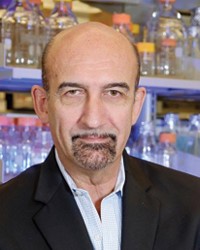 Mario Stevenson合作论文数Division of Infectious Diseases, Department of Medicine, Miller School of Medicine, University of Miami1Whiting Mary合作论文数1Beals Jennifer合作论文数1
 James E. Talmadge合作论文数Department of Pathology and Microbiology, College of Medicine, University of Nebraska Medical Center1Phyllis A. Nsiah-Kumi合作论文数1Takehiko Okamura合作论文数1Greg A. Perry合作论文数1Jean D. Deupree合作论文数1Marie-Laure Samson合作论文数1Jennifer L. Larsen合作论文数1




