In a large (n = 459) sample of adults free of psychiatric, neurologic, and endocrinologic disease, platelet monoamine oxidase activity was analyzed by multiple regression of the demographic variables age, race, and gender on enzyme activity. Reported here are variations for all three demographic variables such that significantly greater enzyme activity is seen in female, older, and white subjects relative to male, younger, and black subjects. For each demographic group the data demonstrated a curvilinear relationship of age and enzyme activity with a nadir of activity at age 30. For this sample enzyme activity nearly doubled between subjects at age 30 and at age 80. We believe this study to be the first to report racial differences in this enzyme activity and to analyze normative data for this enzyme by multiple regression techniques.
Extracts of autopsied human brain tissue exhibited a specific inhibition of [3H]spiroperidol binding, in support of previous reports. The extent of binding inhibition varied depending upon the brain region from which the tissue was taken. We observed two peaks of inhibition binding from extracts of caudate or putamen placed on a Sephadex G10 column. Results of experiments to characterize the extract in the second peak indicate a correlation between inhibition of spiroperidol binding and dopamine content of the tissue. The content of the first peak could not be definitively identified but indirect evidence indicates that it may be a high molecular weight conjugate of dopamine that is formed at low concentrations. No evidence was obtained to suggest the existence of previously undetected neuroleptic-like material in human brain.
Reported here are the results of a study of symptom state, platelet monoamine oxidase (MAO) activity, and demographic variables in a group of elderly neuroleptic-free schizophrenics. Analyzed by both bivariate and multivariate techniques, the data from this sample indicate that after the effects of demographic variables upon the variance of enzyme activity have been controlled for, the patients most likely to continue to manifest schizophrenic symptomatology in the senium are those with low platelet MAO activity. The results are discussed with respect to other studies of platelet MAO and prognosis in schizophrenia and with respect to future studies.
An inverse correlation between platelet monoamine oxidase activity and spontaneous eye-blink rate, a putative measure of central dopaminergic activity, was found in medication-free chronic schizophrenic patients without tardive dyskinesia (n = 20, rs = -.47, P less than .025). A similar correlation was found when patients with tardive dyskinesia were included but was weaker (n = 27, rs = -.35, P less than .05). Normal controls and patients with tardive dyskinesia did not demonstrate this relationship. This report confirms a previous finding of a significant platelet monoamine oxidase-blink rate correlation in chronic schizophrenic patients. Insofar as this relationship is mediated by dopamine, it suggests that dopaminergic relations are more readily demonstrated in schizophrenic subjects than normals. Moreover, tardive dyskinesia appears to obscure this dopaminergic relationship.
Platelet monoamine oxidase activity (MAO) was studied serially over time in 16 chronic schizophrenic patients when medication free and then when medicated. Thirteen of the 16 patients had significant decreases in platelet MAO activity following neuroleptic drug treatment. The change in MAO activity was found to be correlated with response to treatment and to dose of medication.
Twelve elderly women with tardive dyskinesia were matched with 12 patients without dyskinesia. Lymphocyte monoamine oxidase (MAO) activity and plasma prolactin and growth hormone concentrations were determined "blind" in these 12 pairs of patients. Chronic schizophrenic patients with tardive dyskinesia had significantly lower lymphocyte MAO activity as compared to controls. Organic brain syndrome patients with dyskinesia did not differ from controls in the lymphocyte MAO activity. These results with lymphocyte MAO parallel our earlier findings on platelet MAO. No significant differences were found between dyskinesia group and controls in the plasma prolactin and growth hormone concentrations. Possible implications of our findings are discussed.
Plasma dopamine-beta-hydroxylase (DBH) activity was studied in two different populations of chronic schizophrenic patients and assayed by two independent laboratories. No significant difference between schizophrenic patients and normal controls was found although in both groups chronic undifferentiated schizophrenics with paranoid features had a trend towards lower DBH activity than the other patients and controls. In addition, DBH and monoamine oxidase (MAO) activities were studied in 13 schizophrenic patients and available first degree-relatives. There was no association of low MAO and low DBH activities within the schizophrenic families.
The methods used in the determination of platelet monoamine oxidase (MAO) activity in 26 studies of chronic schizophrenic patients and normal subjects (reviewed by Wyatt, Potkin, and Murphy 1979) are examined. The most commonly used substrate was tryptamine (64 percent) followed by tyramine, benzylamine, and β-phenylethylamine. When the relationship between the MAO activity and substrate concentration was examined, it was found that as many as 75 percent of the studies used suboptimal substrate concentrations. It appears that some chronic schizophrenics have a lower Michaelis constant (Km) and maximal velocity (Vmax). Thus, the use of suboptimal substrate concentrations could lead not only to a low estimate of the MAO activity, but also to erroneous comparisons between schizophrenic and normal groups. Because platelets are markedly heterogeneous in size and density, the differential centrifugation methods used for platelet preparation can produce up to an eight-fold error in the estimation of the MAO activity. We describe the use of a new method for the preparation of platelets that avoids many of the problems of the differential centrifugation methods. The new method shows substantially less intrasubject variance in MAO activity and is significantly different from the differential centrifugation procedures (by X2 of pooled intraclass correlations, p <.005).
A brief history and summary of studies designed to elucidate the role of monoamine oxidase (MAO) in schizophrenia are presented. The majority of these studies have reported a decrease in the platelet enzyme activity of chronic schizophrenic patients when compared to controls. Difficulties encountered when comparing MAO activity measured in different patient populations are also considered. Finally, the significance of decreased platelet MAO activity is discussed with respect to its possible etiological role in some forms of schizophrenia.
The Michaelis constants (Vmax and Km) for platelet monoamine oxidase (MAO) with tyramine as substrate are found to be significantly lower in chronic schizophrenic patients than in normal controls. Furthermore, these kinetic parameters for the MAO of paranoid chronic schizophrenics are significantly lower than those for nonparanoid chronic schizophrenics. Paranoid chronic schizophrenia may be a separate biochemical disorder from other chronic schizophrenias.
In Experiment 1, the dose-response effects of three dopamine-β-hydroxylase (DBH) inhibitors (diethyldithiocarbamate, FLA-63 and U-14, 624) on the endogenous levels of norepinephrine and dopamine in pons-medulla of rat brain were determined. In Experiment 2, the effect of low doses of diethylithiocarbamate (2.5 to 120 mg/kg) on the level of norepinephrine-3H produced from dopamine-H3 was determined. The data obtained by extrapolation of the curves in both experiments provided an estimation of the in vivo level of DBH activity and suggested that it was not present in excess. Finally, in Experiment 3, the three DBH inhibitors reduced self-stimulation (a behavior dependent upon catecholamines) in a dose-related manner and intraventricular injections of 1-norepinephrine reinstated normal rates of self-stimulation. The results from the three experiments are consistent with the idea that DBH is involved in the regulation of norepinephrine biosynthesis. The relationship of this finding to our earlier report of a deficit of DBH in post-mortem brains of schizophrenics is discussed.
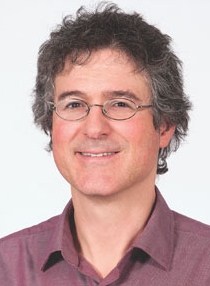 Lincoln Stein合作论文数Ontario Institute for Cancer Research;Department of Molecular Genomics, Temerty Faculty of Medicine, University of Toronto22
 RJ WYATT合作论文数14TP BRIDGE合作论文数13
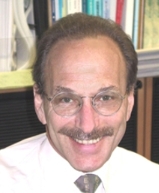 Steven G. Potkin合作论文数School of Medicine, University of California, Irvine;Brain Imaging Center, University of California, Irvine13BH Phelps合作论文数12Lincoln D. Stein合作论文数Cold Spring Harbor Laboratory9Bd Berger合作论文数8
 James D Belluzzi合作论文数School of Medicine, University of California8S Ritter合作论文数5
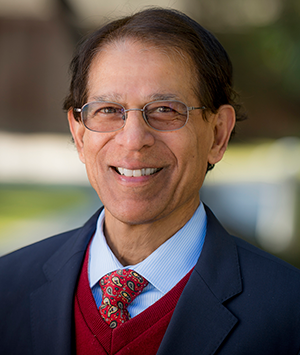 Dilip Jeste合作论文数Institute of Engineering in Medicine, University of California, San Diego;Sam and Rose Stein Institute for Research on Aging, University of California, San Diego5LE DELISI合作论文数4Rl Wagner合作论文数4Richard Jed Wyatt合作论文数National Institutes of Health4Dl Drabkin合作论文数3Dimitrios Sarantakis合作论文数3V GARSKY合作论文数3R. F. Young aad合作论文数2
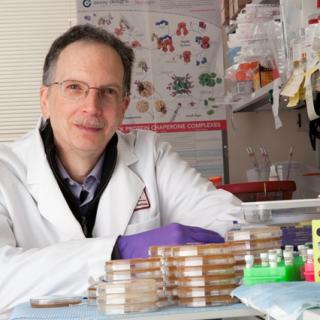 Leonard M. Neckers合作论文数Urologic Oncology Branch, National Cancer Institute, Center for Cancer Research2
 Joel E Kleinman合作论文数2CN KARSON合作论文数2Dl Margules合作论文数1rodger d kobes合作论文数1Bj Soldo合作论文数1Bruce Phelps合作论文数1MJ FRANCAK合作论文数1PS APOSTOLES合作论文数1RA STAUB合作论文数1DV JESTE合作论文数1AM Duchemin合作论文数1P Bridge合作论文数1S ZALCMAN合作论文数1Norman Grant合作论文数1Neal R. Cutler合作论文数1
 Alan D. Rogol合作论文数School of Medicine, University of Virginia1Craig N. Karson合作论文数1John Morihisa合作论文数1Jack E. Rosenblatt合作论文数1HE CANNONSPOOR合作论文数1
 Karen Faith Berman合作论文数Section on Integrative Neuroimaging, National Institute of Mental Health, National Institutes of Health, U.S. Department of Health and Human Services;Section on Psychosis and Cognitive Studies, National Institute of Mental Health, National Institutes of Health, U.S. Department of Health and Human Services;Clinical and Translational Neuroscience Branch, National Institute of Mental Health, National Institutes of Health, U.S. Department of Health and Human Services1




