The world human population is more and more urban and cities have a strong impact on the biosphere. This explains the development of urban ecology. In this context, the goal of our work is fourfold: to describe the diversity of scientific questions in urban ecology, show how these questions are organized, to assess how these questions can be built in close interactions with stakeholders, to better understand the role urban ecology can play within ecological sciences. A workshop with scientists from all relevant fields (from ecology to sociology) and stakeholders was organized by the Foundation for Research on Biodiversity (FRB). Three types of scientific issues were outlined about (1) the biodiversity of organisms living in urban areas, (2) the functioning of urban organisms and ecosystems, (3) interactions between human societies and urban ecological systems. For all types of issues we outlined it was possible to distinguish both fundamental and applied scientific questions. This allowed building a unique research agenda encompassing all possible types of scientific issues in urban ecology. As all types of ecological and evolutionary questions can be asked in urban areas, urban ecology will likely be more and more influential in the development of ecology. Taken together, the future of towns, their biodiversity and the life of city dwellers is at stake. Increasing the space for ecosystems and biodiversity within towns is more and more viewed as crucial for the well-being of town dwellers. Depending on research and the way its results are taken into account, very different towns could emerge. Urban areas can be viewed as a test and a laboratory for the future of the interactions between human and ecological systems.
Spoil tip production is one of the most extreme means of soil destruction, replacing the native soil with a coarse substrate. In this paper, we aim to determine the colonization of soil biota in new substrates, using collembola assemblages as an indicator. In Northern France, we sampled collembola communities in 11 coal mine spoil tips and their surroundings divided in four stages of vegetation development: bare soil, meadow, shrub and tree covers. We demonstrated that collembola assemblages of spoil tips were different from those observed in the surrounding native soil. Collembola communities on bare soil were characterized by pioneer (based on the Indval index) or exotic species (new in Northern France). However, homogenization occurred with development of vegetation cover. Indeed, our data showed no difference in springtail diversity between spoil tips and their corresponding environments regarding the tree vegetation cover. Using the Indval method, we defined pioneer, colonizing, opportunist or stenoecious species as a function of substrate affinities. Using the same method, we defined specialists, elective, preferring or indifferent species as a function of vegetation cover affinities, showing similarities with previously published surveys. Hence, our results were obtained by a focused analysis of species and their particularity. Finally, we discussed the interest in and the complementarity between the species analysis approach and the methodology dealing with functional traits and of its importance in the decision process of restoration and/or conservation of nature.
We sampled collembolan communities in 11 coal mine spoil tips (locally called 'terrils') from the North of France, and their surroundings, in various stages of vegetation development (bare soil, herb, shrub and tree vegetation). We wondered whether species, functional trait (Community Weighted Mean trait or CWM) composition and trait diversity (Rao's quadratic entropy) responded to the particular environment of coal mine spoil tips (here called 'terril' effect) and to successional effects and which of these three sets was the best indicator of soil and vegetation effects, taking into account that spoil tips were spatially distant and idiosyncratic (e.g. varying in height, area, past history and surrounding environment). We showed that species, but not traits, were strongly influenced by site effects, while traits were influenced by both 'terril' and successional effects to a significant extent, making traits more robust than species when trying to discern patterns of community response to soil and vegetation changes. Functional diversity did not show any significant multi-trait response to either 'terril' or successional effects, but several functional traits showed an increase in diversity with succession. The overall response of trait diversity was intermediate between species and trait responses. The 'terril' effect was mainly mediated by a coarser soil texture (51% coarse sand compared to 14% in the surrounding environment) which, combined with harsher microclimate conditions, stems in a better representation of functional traits linked to subterranean life, such as shorter body length and increased representation of parthenogenesis. Successional effects (in particular the increase in diversity shown by several functional traits varying with vertical distribution) were mediated by the increasing development of organic horizons but other factors like microclimate were seemingly involved, too. More generally this study showed that shift to subterranean life was an adapted response of collembolan communities to harshness of the environment and that vertically stratified ecosystems allow a more complete expression of their functional diversity.
Soil invertebrates are poorly studied in an urban context. Here we examine soil compaction in an urban environment, focusing on its persistence and its impact on biodiversity. This is achieved by studying a sensitive taxon, the collembolan (springtails). Soil core samples were taken in different location of a residential neighbourhood under construction, and collembolan species were extracted using a Berlese-Tullgren funnel. Soil compaction was determined by measuring bulk density. We documented soil compaction, ranging from 1 g/cm3 to 1.6 g/cm3. While collembolans are normally affected by compaction, such an effect was not observed in terms of species diversity, which remains relatively constant under all compaction levels. However, compaction was correlated with differences in the structure of collembolan communities. Indeed, we were able to discriminate different levels of compaction using collembolan community data alone. Moreover, this study confirms that compaction decreases with time. However, differences in species community structure can be observed one year after the end of the disturbance. Finally, we provide some insights into the reality of soil compaction in an urban environment, and highlight that the classical biodiversity indices may be insufficient for assessing the impact of an environmental disturbance, and that more detailed analyses at the community level may be very useful, or even indispensable.
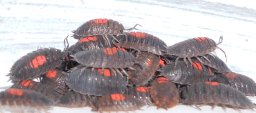
How individuals modulate their behavior according to social context is a major issue in the understanding of group initiation, group stability and the distribution of individuals. Herein, we investigated the mechanisms of aggregation behavior in Porcellio scaber, a terrestrial isopod member of the Oniscidea, a unique and common group of terrestrial crustaceans. We performed binary choice tests using shelters with a wide range of population densities (from 10 to 150 individuals). First, the observed collective choices of shelters strengthen the demonstration of a social inter-attraction in terrestrial isopods; especially, in less than 10 min, the aggregation reaches its maximal value, and in less than 100 s, the collective choice is made, i.e., one shelter is selected. In addition, the distribution of individuals shows the existence of (1) quorum rules, by which an aggregate cannot emerge under a threshold value of individuals, and (2) a maximum population size, which leads to a splitting of the populations. These collective results are in agreement with the individual’s probability of joining and leaving an aggregate attesting to a greater attractiveness of the group to migrants and greater retention of conspecifics with group size. In this respect, we show that the emergence of aggregation in terrestrial isopods is based on amplification mechanisms. And lastly, our results indicate how local cues about the spatial organization of individuals may favor this emergence and how individuals spatiotemporally reorganize toward a compact form reducing the exchange with the environment. This study provides the first evidence of self-organization in a gregarious crustacean, similar as has been widely emphasized in gregarious insects and eusocial insects.
RésuméLorsqu'un animal meurt, son cadavre forme un écosystème local instable et éphémère où différentes communautés d'insectes nécrophages vont se nourrir. Cette étude a pour but de caractériser les relations entre deux familles fréquentes en contextes médico-légal : les Diptères Calliphoridae et les Coléoptères Dermestidae. Des expériences de choix binaire (olfactomètres en T) et de prédation des Dermestes sur les larves de Diptères ont constitué le 1er axe de notre étude. Il en ressort que l'espèce D. maculatus (adultes et larves) n'exerce qu'une très faible prédation sur les larves de L. sericata. En absence de nourriture, les Dermestes sont néanmoins capables de prédater les pupes de L. sericata, et donc de faire disparaitre ces traces particulièrement importantes en entomologie médico-légale et en archéo-entomologie. Le second axe s'est focalisé sur les relations de compétition et d'agrégation entre D. maculatus et D. haemorrhoidalis. Les résultats obtenus n'ont pas mis en évidence de mécanismes de compétition ou d'exclusion entre ces deux espèces pourtant amenées à fréquenter simultanément le même habitat et à exploiter les mêmes ressources. Placées en condition de choix binaire (2 spots identiques), les 2 espèces s'agrègent ensemble. Mais le développement conjoint de ces 2 espèces sur une seule source de nourriture non limitante entraine une baisse significative du taux de survie chez les deux espèces. Au vu de ces résultats, nous avons conclu à la possibilité d'une coexistence de ces différentes espèces (L. sericata, D. maculatus et D. haemorrhoidalis) sur un cadavre.
Household products such as bleach, gasoline or hydrochloric acid have been used to mask the presence of a cadaver or to prevent the colonization of insects. These types of chemicals affect insect development and alter the forensic entomology analysis. This study was designed to test the effects of six household products (bleach, mosquito repellent, perfume, caustic soda, insecticide and unleaded gasoline) on blowfly (Lucilia sericata, Diptera: Calliphoridae) larval development. Furthermore, the effects of climate (rain or dry conditions) on larval development were analyzed. For each replication, 100 first instars were placed on a rat cadaver on which one household product was spilled. We observed a decrease in the survival rates of the larvae but no significant effect on their development times or the adult size. The same trends were observed under rainy conditions. However, the rain altered the effects of some tested household products, especially gasoline. These results demonstrate for the first time the successful development of necrophagous larvae on chemically contaminated cadavers, and provide evidence for the range of possible effects to expect.
Woodlice are fully terrestrial crustaceans and are known to be sensitive to water loss. Their half-ellipsoidal shapes represent simple models in which to investigate theoretical assumptions about organism morphology and rates of exchange with the environment. We examine the influence of surface area and mass on the desiccation rates in three eco-morphologically different species of woodlice: Oniscus asellus, Porcellio scaber, and Armadillidium vulgare. Our analysis indicates that the rate of water loss of an individual depends on both the initial weight and the body surface area. Interspecific and intraspecific analyses show that the mass-specific water loss rate of a species decreases along with the ratio of surface area to volume. In particular, we show that body shape explains the difference in mass-specific water loss rates between A. vulgare and P. scaber. This observation also explains several known ecological patterns, for example, the distribution and survivorship of individuals. However, in addition to body size and shape, water loss in terrestrial isopods depends also on the coefficient of permeability (i.e., a measure of water loss rate per surface unit), which is high in O. asellus and lower (and at similar levels) in P. scaber and A. vulgare. We discuss morphological, physiological, and behavioral aspects of water loss avoidance in terrestrial isopods. J. Morphol. 276:1283-1289, 2015. (c) 2015 Wiley Periodicals, Inc.
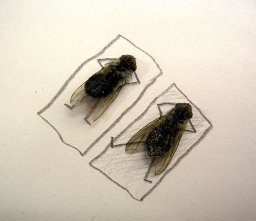
This study was designed to examine the common belief that necrophagous blowflies lay their eggs in wounds. The egg-laying behaviour of Lucilia sericata was observed under controlled conditions on wet, artificially wounded or short-haired areas of rat cadavers. Flies laid significantly more eggs on the wet area and the area with short hair than on the dry area or area with long hair. No eggs were observed inside the wounds in any of the replicates. The effect of egg immersion (body fluids often exudes in wounds) on the survival rate of larvae was also investigated. In low water condition, an average of 72.7±7.9% of the larvae survived and they reached a mean length of 7.5±0.6mm. In contrast, submerging eggs under a high volume of water strongly affected their survival rate (25±3.7%) and development. Similar results were observed using unfrozen pig blood instead of water. These data question the information found in the literature regarding the preferential egg-laying behaviour of Calliphorids flies in wounds.
Animal cadavers are colonized by a rich community of insects and forms complex local ecosystem. The purpose of this study was to characterize the relationships that may exist between Dermestes maculatus and other carrion-feeding insect species. Two questions were explored: (1) the interaction between Lucilia sericata and Dermestes maculatus and (2) the interaction between Dermestes maculatus and Dermestes haemorrhoidalis. For this purpose, experiments of interspecific predation, competition and aggregation were performed. Results show that neither Dermestes maculatus adults nor larvae interact with Lucilia sericata larvae (maggots): they were not attracted to a place where L. sericata larvae were present and they did not eat them either. However, without other food source available (no meat), starved D. haemorrhoidalis larvae did eat pupae of Lucilia sericata, which means they might be able to remove evidences of flies development. In the second part of the study, experiments failed to explain why only a single species of Dermestidae is generally observed on human corpses. Indeed, we did not observe segregation between Dermestes maculatus and Dermestes haemorrhoidalis: these 2 species were able to aggregate on the same spot. Furthermore, competition between these two species does exist but equally decreased the survival rate of the 2 species.
In a patchy environment, how social animals manage conspecific and environmental cues in their choice of habitat is a leading issue for understanding their spatial distribution and their exploitation of resources. Here, we experimentally tested the effects of environmental heterogeneities (artificial shelters) and some of their characteristics (size and fragmentation) on the aggregation process of a common species of terrestrial isopod (Crustacea). One hundred individuals were introduced into three different heterogeneous set-ups and in a homogeneous set-up. In the four set-ups, the populations split into two aggregates: one large (approx. 70 individuals) and one smaller (approx. 20 individuals). These aggregates were not randomly distributed in the arena but were formed diametrically opposite from one another. The similarity of the results among the four set-ups shows that under experimental conditions, the environmental heterogeneities have a low impact on the aggregation dynamics and spatial patterns of the isopod, merely serving to increase the probability of nucleation of the larger aggregation at these points. By contrast, the regulation of aggregate sizes and the regular distribution of groups are signatures of local amplification processes, in agreement with the short-range activator and long-range inhibitor model (scale-dependent feedbacks). In other words, we show how small-scale interactions may govern large-scale spatial patterns. This experimental illustration of spatial self-organization is an important step towards comprehension of the complex game of competition among groups in social species.
In this paper, we compare five different types of traps currently used in biodiversity studies to collect flying insects. Our aim is to evaluate the potentials and the limits of these traps in the ass essment of insect biodiversity. Hence, we compared the diversity of insects caught by a malaise trap, a yellow pan trap, a blue pan trap, a suction trap and a light trap in six different lo cations in Brussels. We showed that these traps caught nearly only insects: more than 98.3% of all collected organisms were insects. Only the blue pan trap caught, in higher proportions, other arthropods such as isopods or spiders. The Malaise trap was generally the most effective trap capturing the majority of Homoptera, Heteroptera, Psocoptera, Diptera, Trichoptera and Hymenoptera. The yellow pan trap was often the second most effective trap particularly for Hy menoptera, Diptera and Homoptera. Without surprise, the light trap caught nearly all Lepidoptera (Heterocera). Some combinations of two different traps were very effective. However, none of these combinations were the most effective for all families of insects. Moreover, the combination of the two most effective traps (Malaise and yellow pan traps) was not the best combination. We discuss about the effectiveness of traps and the usefulness of their association. Finally, we raise the particular case of urban environment which needs the use of discreet traps. Malaise trap; pan traps; suction trap; light trap; complementary traps; biodiversity.
Aggregation in terrestrial isopods, a behaviour that results in the formation of dense clusters, is readily accepted as a mechanism of resistance to desiccation. Thus, aggregation is considered to be an adaptation to terrestrial life in this fully terrestrial suborder of crustaceans. In the present study of Porcellio scaber Latreille, a cosmopolitan species, individual water loss is investigated experimentally as a function of the size of the aggregates and, for the first time, over a large range of group sizes (groups of 1, 10, 20, 40, 60, 80 and 100 individuals). From the perspective of an isolated individual, aggregation behaviour is effective in reducing the rate of water loss whatever the group size, and reduces the individual water loss rate by more than half in large groups. However, the water loss rate of an individual follows a power law according to group size. Accordingly, if the addition of individuals to small groups strongly reduces the water losses per individual, adding individuals to large groups only slightly reduces the individual water losses. Thus, the successful reduction of the water loss rate by this aggregation behaviour is confirmed, although only up to a certain limit, particularly if the number of individuals per aggregate exceeds 50–60 under the experimental conditions used in the present study. Moreover, the individual surface area exposed to the air, as a function of group size, follows a similar pattern (i.e. a similar power law). Thus, a geometrical explanation is proposed for the nonlinear water losses in woodlice aggregates. These results are discussed in relation to the group sizes observed both in the laboratory and the field.
Several parameters can delay the first arrival of flies on a corpse and the subsequent development of the larvae. This study focuses on the development of L ucilia sericata (Diptera: Calliphoridae) ( M eigen, 1826) on household chemical‐contaminated substrates. bleach, perfume, hydrochloric acid, caustic soda, insecticide, mosquito repellent, and gasoline in quantities consistent with an amount that could possibly be spilled on a corpse were mixed with beef liver to simulate contaminated fleshes. Larvae were bred at 25°C on these media until emergence. Four developmental parameters were followed: survival rates, development times, sex ratios, and adult sizes. Hydrochloric acid, insecticide, and gasoline killed all larvae. In low quantities, caustic soda and mosquito repellent increased the development time and decreased the adult size. However, high quantities of these chemicals killed all larvae. Lastly, bleach and perfume did not affect the survival rate and barely impacted the development time or adult size. These results demonstrate common household products spilled on a corpse can strongly affect the development of C alliphoridae larvae. The effects of such products should be considered in forensic entomology cases.
Vectors of aggregation are well known for some arthropod species, but not for many others. We aimed to describe larval aggregation (experiment 1) in the carrion fly, Lucilia sericata (Diptera: Calliphoridae), and to investigate the effect of food and conspecifics on larval behaviour (experiment 2). In experiment 1, 40 larvae were placed in a petri dish with a homogeneous diet for 30 min, 1 h, 3 h, 5 h or 24 h. This experiment demonstrated for the first time under controlled conditions the active aggregation of L. sericata larvae. The results indicate that the aggregation took place quickly and was reinforced with time. After only 3 h, one main aggregate comprising a majority of individuals was observed. These results also highlight the likely use by necrophagous larvae of a signal left by conspecifics as an aggregation vector. In experiment 2, we used a video-tracking system to investigate whether such an aggregative signal exists. Fed and starved larvae were tracked for 5 min in a circular area with each half marked with a different signal combination. The time spent in the signal zones, the distance travelled, the velocity, the time at the stop and the number of stops in each zone were measured. The larvae were significantly retained by a signal (mark) left by conspecifics. Together, the results of this study demonstrate the existence of a contact and/or odour-mediated signal involved in the aggregative behaviour of necrophagous larvae. (C) 2013 The Association for the Study of Animal Behaviour. Published by Elsevier Ltd. All rights reserved.
In the animal kingdom, living in group is driven by a tradeoff between the costs and the benefits of this way of life. This review focuses especially on the benefits of aggregation and crowding in woodlice (Crustacea: Isopoda: Oniscidea). Indeed, woodlice are well known to live in groups. Their aggregation behavior, as described in the early works of Allee, is regarded as a mechanism to prevent desiccation to which woodlice are extremely sensitive. However, it is now clear that there are additional benefits to aggregation in woodlice. Hence, this review addresses not only the limitation of water loss as the main factor explaining aggregation patterns, but also alternative explanations as reduction of oxygen consumption, increase in body growth, biotic stimuli for reproduction, better access to mates, possible shared defenses against predators, promotion of coprophagy as a secondary food source, sheltering behavior and the acquisition of internal symbionts. In addition, we place woodlice in the context of a terrestrialization process and propose that woodlice—the only suborder of Crustacea almost entirely composed of strictly terrestrial species—are a model taxon for studying the evolution of sociality through the transition from water to land. Further, we discuss other ultimate causes of aggregation preserved in terrestrial isopods in light of those explained in aquatic isopods and under the concept of exaptation. This knowledge could help understand, in this and other taxa, how the spatial closeness between conspecifics may promote the colonization of new environments and nonphysiological responses to climatic constraints.
Kevin Richard Abbott, Thomas Carlton Adam, Elizabeth Adkins-Regan, Ingi Agnarsson, Christian Agrillo, David Ainley, Ça glar Akçay, Susan C. Alberts, John Alcock, V. Altbäcker, Lee Altenberg, Mirjam Amcoff, Christopher Anderson, Maydianne C. B. Andrade, Clare P. Andrews, Lucy Aplin, M. Apollonio, Yimen Araya, Elizabeth A. Archie, Daniel Ardia, Walter Arnold, Andrea S. Aspbury, Filippo Aureli, Amir Ayali, Patricia R. Y. Backwell, Vittorio Baglione, Emily Jean Baird, Maria Sol Balbuena, Barbara Ballentine, Thorsten Balsby, Jesse Barber, Flavia Barbosa, Isabel Barja, Ludek Bartos, Jitka Bartosova, Alexandra L. Basolo, William M. Baum, Bruno Baur, Sepideh Bazazi, Laura Beani, Christopher David Beatty, Guy Beauchamp, Gabriel J. L. Beckers, Oliver Beckers, Christa Beckmann, Peter A. Bednekoff, Jacinta Catherine Beehner, Madeleine Beekman, Marc Bélisle, Alison Bell, Matthew Bell, Lauryn Benedict, Olivier Bénichou, John F. Benson, Fred B. Bercovitch, Paulo Sergio Bernarde, Susan M. Bertram, Robert Biegler, John Bienenstock, T. Bilde, Andrew Birnie, D. Biro, Peter Biro, David Blehert, Daniel T. Blumstein, Nikolai Bode, Markus Boeckle, Susanne den Boer, Katie Boes, Richard Bon, Francesco Bonadonna, Giuseppe Boncoraglio, Kristin E. Bonnie, Isobel Booksmythe, Asa Borg, Gerald Borgia, Raphael R. Boulay, E. Keith Bowers, Denis Boyer, Ryan Boyko, Jack W. Bradbury, Yoni Brandt, Lauren J. N. Brent, Elodie Floriane Briefer, Ben Brilot, Grant E. Brown, Henrik Brumm, Juerg Michael Brunnschweiler, Nichola Brydges, Katherine L. Buchanan, Sergey Budaev, Matthew Bulbert, Gordon M. Burghardt, Darren Burke, Theresa M. Burt de Perera, Maxwell Nicholas Burton-Chellew, Michael Butler, B. Buwalda, John A. Byers, W. H. Cade, Christine A. Caldwell, Daniela Campobello, U. Candolin, Hernán Alberto Cañon Jones, Manuela Capello, John P. Capitanio, Pau Carazo, C. Carere, Michèle Carlier, Pascal Carlier, Sarah D. Carnegie, Alecia J. Carter, Rachel Cartwright, Jon Cavanaugh, Sarah Certel, Alexis S. Chaine, Nadine C. Chapman, Ronald Chase, Douglas Patrick Chivers, J. H. Christy, Phillip Clapham, Christopher J. Clark, Fay E. Clark, Zanna Clay, Ian Cleasby, Bruce Cochran, T. S. Collett, Sarah Amanda Collins, Guadalupe Corcobado, Adolfo Cordero Rivera, Marina Cords, David Costantini, Luiz Ernesto Costa-Schmidt, I. Côté, Rickey Cothran, Margaret J. Couvillon, Alice Cowie, Adam Crane, Jeremy Chase Crawford, Scott Creel, Margaret Chatham Crofoot, Darren Paul Croft, David B. Croft, Adam L. Cronin, Fiona Cross, Molly Elizabeth Cummings, Elena Cunningham, J. Thomas Curtis, I. C. Cuthill, Marco Dadda, Christine Dahlin, Jonathan N. Daisley, Sarah Dalesman, Melanie Dammhahn, Safi K. Darden, Marian S. Dawkins, Shermin De Silva, Vincent Debat, Javier delBarco-Trillo, Elisa Demuru, Dale DeNardo, Sebastien Deregnaucourt, Emmanuel Desouhant, C. Detrain, Cédric Devigne, Andre A. Dhondt, Anthony Di Fiore, Janis L. Dickinson, Lawrence M. Dill, Niels Jeroen Dingemanse, John Philip Dittami, Laura M. Dixon, Matina Carmel Donaldson-Matasci, Amélie N. Dreiss, Christine Dreyer, Hugh Drummond, Hannah L. Dugdale, Reuven Dukas, Audrey Dussutour, Teresa L. Dzieweczynski, Ryan Earley, Marion East, Allan Edelsparre, Matthew Edenbrow, Martin Edvardsson, R. W. Elwood, Louise Emmerson, Leif Engqvist, Amanda Lynn Ensminger, David Arthur Enstrom, Sophie E. F. Evison, Bonnie Fairbanks, Tara Marie Farrell, Peter J. Fashing, Donald H. Feener, Jr, William Edgar Feeney, Ofer Feinerman, Michael H. Ferkin, Florencia Fernandez Campon, Ola M. Fincke, Julia Fischer, Tecumseh Fitch, Patrick Fitze, Andrea Flack, Owen R. Floody, Steffen Foerster, Susanne Foitzik, Scott Forbes, Jukka Forsman, W. Forstmeier, Kevin Foster, Rebecca Fox, Michael Fraker, Tamara Frank, Daniel W. Franks, Nigel R. Franks, Mathias Franz, Todd M. Freeberg, Leonard Freed, Rafael Freire, Claire Fuller, Anna Gagliardo, Jean-Michel Gaillard, Bennett G. Galef, Jr, Dave Gammon, Hugo Gante, Laszlo Zsolt Garamszegi, Ellen Clare Garland, Simon Garnier, Jacques Gautrais, Nicole Geberzahn, Sabine Gebhardt-Henrich, Robert Gegear, Nicole M. Gerlach, Thomas Getty, Cameron Ghalambor, Francesca Gherardi, Irene Giardina, F. Gilbert, Ian Christopher Gilby, Erin Hanora Gillam, Katie Gilmour, Jean-François Giroux, Doris Gomez, Luis M. Gomez-Laplaza, Eben Goodale, Deborah M. Gordon, L. M. Gosling, Patrick Gouat, Marlene Goubault, Harold Gouzoules, Anna Greenwood, Emma Greig, Greg Grether, Michael Griesser, Matteo Griggio, T. G. G. Groothuis, Matt James Grove, Thibaud Gruber, Christoph Grueter, Palestina Guevara-Fiore, Lauren Guillette, Jennifer M. Gumm, Markus Gusset, Marcel Philipp Haesler, Julie C. Hagelin, Adrian Hailey, Tim Hain, Steven Hamblin, Ian Michael Hamilton, Tessa van der Hammen, Erina Hara, Tomohiro Harano, James F. Hare, Jeff Harvey, Mark E. Hauber, Susan Healy, Eileen A. Hebets, J. Heinze, Jens Herberholz, Marie Herberstein, Neill Andrew Herbert, James Herbert-Read, Gabor Herczeg, Andrew David Higginson, Heather M. M. Hill, Katherine Hinde, Ben T. Hirsch, Gerlinde Hoebel, Frauke Hoffmann, Erik Höglund, Jacob Höglund, Herbert Hoi, Robert Iain Holbrook, Marie-Jeanne Holveck, Lydia Hopper, Andrew G. Horn, Bailey House, Piet van den Hout, Daniel R. Howard, Michael Hrncir, Wen-san Huang, Melissa Hughes, William Hughes, T. Andrew Hurly, Jerry Husak, John M. C. Hutchinson, Jeremy Hyman, Elina Immonen, Pablo Iraeta, Murray Itzkowitz, Lucia F. Jacobs, David Jacoby, Elizabeth M. Jakob, Alex James, Arne Janssen, Jodie Jawor, Raphael Jeanson, Dómhnall John Jennings, Keith Jensen, Arild Johnsen, J. Chadwick Johnson, Joseph Samuel Johnson, L. Scott Johnson, Pierre Jouventin, Alan C. Kamil, Apostolos Kapranas, P. Karell, Kristina Karlsson, Ioanna Katsiadaki, Allison B. Kaufman, Martin Kavaliers, Tamar Keasar, Nina M. Keil, Jennifer Kelley, Laura A. Kelley, Clint D. Kelly, Darrell J. Kemp, Bart Kempenaers, R. M. Kilner, Petter Kjellander, Karin Kjernsmo, Oddmund Kleven, Mathias Koelliker, Hanna Kokko, Petr E. Komers, Fränzi Korner, Peter Korsten, Amanda Korstjens, K. Kotrschal, Simona Kralj-Fi ser, Donald L. Kramer, Indrikis Krams, Kellie Kuhn, Hansjoerg Kunc, Kirk E. LaGory, David C. Lahti, David Laloi, Dunja K. Lamatsch, Tom A. Langen,
Kevin Richard Abbott, Thomas Carlton Adam, Bart Adriaenssens, Christian Agrillo, Tomonari Akamatsu, Ça glar Akçay, Erol Akçay, Tatsuya Amano, Mirjam Amcoff, Luisa Amo, Maria Clara P. Amorim, William Amos, Mathieu Amy, Christopher V. Anderson, J. R. Anderson, Sylvia Anton, Coren Lee Apicella, Hiroyuki Arakawa, Marcelo Araya-Salas, Sarah E. J. Arnold, Gareth Arnott, Kate Ashbrook, Jelle Atema, Jacqueline K. Augustine, Filippo Aureli, Michel Baguette, Emily Jean Baird, Rohini Balakrishnan, Barbara Ballentine, Emilio Barba, Colleen A. Barber, Jesse Barber, Miguel Barbosa, Matthew Allen Barbour, Kim A. Bard, Isabel Barja, Craig Barnett, Franklin Barnwell, Louise Barrett, Douglas Barron, Katherine L. Barry, Ludek Bartos, Farrah Bashey, Alexandra L. Basolo, Elizabeth Bastiaans, Lucy Anne Bates, Melissa Bateson, Emmanuelle Baudry, Matthew T. Bealor, Guy Beauchamp, Elizabeth A. Becker, Gabriel J. L. Beckers, Peter A. Bednekoff, Jacinta Catherine Beehner, Spencer Behmer, Alison Bell, Matthew Bell, Merav Ben-David, Lauryn Benedict, Giovanni Benelli, Sarah Benhaiem, Fred B. Bercovitch, Daniel A. Bergman, Thore Bergman, Ralph Bergmüller, Kathleen Beyer, Robert Biegler, Allert Bijleveld, Verner P. Bingman, Andrew K Birnie, Angelo Bisazza, Jeff Black, Aaron Blaisdell, Pierrick Blanchard, Bronwyn Heather Bleakley, Arjan Blokland, Nikolai Bode, Loic Bollache, Richard Bon, Francesco Bonadonna, Alan B. Bond, Ronald Bonnett, David Bonter, Neeltje J. Boogert, Luca Borger, Christophe Bousquet, Karolina Brandlova, Michael D. Breed, Samantha Bremner-Harrison, Elodie Floriane Briefer, Mark Briffa, R. Mark Brigham, Ben Brilot, Jim Briskie, A. Brodin, Tomas Brodin, Mark Broom, Sarah Frances Brosnan, George D. Broufas, Charles R. Brown, Grant E. Brown,William D. Brown, Henrik Brumm, Eleanor Brush, R. Bshary, Katherine Buchanan, Sergey Budaev, Christina D. Buesching, Aurelie Buffin, Thomas Bugnyar, Joseph Bump, Melissa BurnsCusato, Theresa M. Burt de Perera, John A. Byers, John Byers, Francesca Cagnacci, Nancy G. Caine, Kristina Cammen, Carlos Camp, Daniel Campos, David Canal, U. Candolin, Hernán Alberto Cañon Jones, Michael A. Cant, Mauricio Cantor, John P. Capitanio, Pau Carazo, Gonçalo Cardoso, C. Carere, Michèle Carlier, Pascal Carlier, Justin M. Carre, Alecia J. Carter, Michael Casey, Francisco Ceacero, Vanina Chalcoff, JasonW. Chapman, Taylor Chapple, Gloriana Chaverri, Lucy Gaia Cheke, Dorothy L. Cheney, Siu Gin Cheung, Douglas Patrick Chivers, J. H. Christy, Nicolas Claidière, Rulon Clark, Dale L. Clayton, Kenneth E. Clifton, Fiona Clissold, Tim H. Clutton-Brock, John F. Cockrem, Gabriel Colbeck, Ross Antony Coleman, Richard C. Connor, S. J. Cooke, Idelle Cooper, Carlos Cordero, Marina Cords, Ana Maria Costa-Leonardo, P. A. Cotton, Gérard Coureaud, Rita Covas, Catherine P. Cramer, Jeremy Chase Crawford, RobinMichael Crewe, Ondi Crino, Catherine Crockford, Darren Paul Croft, William-Georges Crosmary, Paul Cryan, Molly Elizabeth Cummings, Elena Cunningham, Bruce S. Cushing, I. C. Cuthill, Roslyn Dakin, James Dale, Sarah Dalesman, Kevin Daly, Melanie Dammhahn, Peter Daniel, Morgan David, Nico de Bruyn, María DeMársico, Amy Elizabeth Deacon, Nina Deisig, Javier delBarco-Trillo, Johann Delcourt, Elisa Demuru, Bertrand L. Deputte, Charles Derby, Sebastien Deregnaucourt, Elizabeth Derryberry, Patrizia D’Ettorre, Lynn D. Devenport, Cédric Devigne, Andre A. Dhondt, Samuel Luis Diaz-Munoz, Janis L. Dickinson, Lise Diez, Heidi E. M. Dobson, Seth D. Dobson, Ned Dochtermann, Miguel dos Santos, Claudie Doums, Cynthia Downs, Amélie N. Dreiss, Ana Duarte, Lee Alan Dugatkin, Reuven Dukas, Jenny C. Dunn, Peter O. Dunn, Audrey Dussutour, Emily Halsey DuVal, Madeline Eacott, Martin Edvardsson, Dominic Alexander Edward, Damian Octavio Elias, Jesse Mathias Swanson Ellis, Nathan Jon Emery, Hans W. Erhard, Eyal Ert, Alice Exnerová, Damien Roger Farine, Gesa Feenders, William Edgar Feeney, M. Brock Fenton, Esteban Fernández-Juricic, Ramon Ferrer i Cancho, Daniel Fessler, Marco Festa-Bianchet, Lisa Filippi, Julia Fischer, Patrick Fitze, Lauren Patricia Fitzsimmons, Tom Flower, Steffen Foerster, Sean Fogarty, Susanne Foitzik, Joseph J. Fontaine, Scott Forbes, Gillian S. Forrester, W. Forstmeier, Kasey Fowler-Finn, Rebecca Fox, Dorothy Fragaszy, Michael Fraker, Clinton D. Francis, Tamara Frank, Daniel W. Franks, Orlaith N. Fraser, ToddM. Freeberg, Joachim G. Frommen, Ines Fuertbauer, Leonida Fusani, Anna Gagliardo, Jean-Michel Gaillard, Bennett G. Galef, Jr, Dave Gammon, StevenW. Gangestad, Jessica Garb, Colin Garroway, Mary Garvin, Sidney A. Gauthreaux, Jacques Gautrais, E. Geffen, Emilie Genty, Nicole M. Gerlach, Joshua Gibson, James D. J. Gilbert, Richard Gill, Jean-Guy Godin, Shira D. Gordon, Root Gorelick, Marlene Goubault, Hanna Granroth-Wilding, James W. A. Grant, David A. Gray, Stephanie Green, Michael D. Greenfield, Anna Greenwood, Michael Griesser, S. W. Griffiths, Matteo Griggio, Tomas Grim, Christoph Grueter, A. S. Grutter, Palestina Guevara-Fiore, Lauren Guillette, James C. Ha, Adrian Hailey, Wouter Halfwerk, Michelle L. Hall, T. Hance, Shala Hankison, Frank E. Hanson, Tomohiro Harano, Ian C. W. Hardy, Benjamin L. Hart, Paul J. B. Hart, Michael Haselhuhn, Marie Haskell, Ben J. Hatchwell, Mark E. Hauber, Dana M. Hawley, Matt Hayward, Brian A. Hazlett, Ann V. Hedrick, Berthold Hedwig, Gergely Hegyi, S. Held, C. K. Hemelrijk, Natalie Hempel de Ibarra, Carol Henger, Jens Herberholz, Marie Herberstein, James Herbert-Read, Alexandra Marcela Hernandez, Anthony Herrel, Emilio Herrera, Diana K. Hews, Andrew David Higginson, James P. Higham, Dee Higley, Geoffrey E. Hill, Russell A. Hill, Hiroyuki Hirayama, Ben T. Hirsch, Elizabeth A. Hobson, Keith Hobson, Thomas S. Hoffmeister, Erik Höglund, Kim L. Hoke, C. Tate Holbrook, Øistein Haugsten Holen, Marie-Jeanne Holveck, Lydia Hopper, Andrew G. Horn, Katherine Albro Houpt, David Hu, Robert Hubrecht, Elise Huchard, Sarah C. Humfeld, Jerry Husak, Belen Ibañez, Kate Elizabeth Ihle, Carrie Ijichi, Simone Immler, Vera Lucia Imperatriz-Fonseca, Brian Inouye, Patricia Izar, Piotr G. Jablonski, Alain Jacot, Charles Janson, Dómhnall John Jennings, Keith Jensen, Stephanie Jesseau, Brian Johnson, Robert A. Johnson, Adam G. Jones, Katherine Ann Jones, Therésa M. Jones, Thomas C. Jones, Peter Gregory Judge, Tatsuya Kameda, Jason Kamilar, Peter M. Kappeler, Apostolos Kapranas, Kenji Karino, Kristina Karlsson Green, Paul Kaseloo, Michael Matthew Kasumovic, Lee Kats, Martin
 Claire Detrain合作论文数CP 231, Universite´ Libre de Bruxelles18
 Jean-Louis Deneubourg合作论文数Faculté des Sciences, Université Libre de Bruxelles10
 Broly Pierre合作论文数7
 Damien Charabidze合作论文数6
 Benoît Vanhée合作论文数3Mullier Romain合作论文数3Didier Gosset合作论文数3Frédérique Rosenbaum合作论文数2Elodie Floriane Briefer合作论文数2Christian Agrillo合作论文数2Ludek Bartos合作论文数2
 Mirjam Amcoff合作论文数Department of Zoology/Ethology, Stockholm University2
 Aubernon Cindy合作论文数Université Lille Nord de France;Forensic Taphonomy Unit, UDSL2
 Alexandra L. Basolo合作论文数Department of Biological Sciences, School of Biological Sciences, College of Arts and Sciences, University of Nebraska-Lincoln2
 Jean-Christophe de Biseau合作论文数2Barbara Ballentine合作论文数2
 Janis Dickinson合作论文数Department of Natural Resources, College of Agriculture and Life Sciences, Cornell University2
 Valery Hedouin合作论文数Lille University2Patricia R. Y. Backwell合作论文数1
 Sebastien Barot合作论文数1Philippe Billet合作论文数1Gareth Arnott合作论文数1Ryan Boyko合作论文数1Katherine L. Buchanan合作论文数1M. Apollonio合作论文数1William A. Searcy合作论文数1Emily Jean Baird合作论文数1Aurélie Buffin合作论文数1Yves Petit-Berghem合作论文数1Dorothée Labarraque合作论文数1Thomas Bugnyar合作论文数1Marion Veyrières合作论文数1Marianne Hédont合作论文数1Emmanuelle Gonzalez合作论文数1Etienne Bérille合作论文数1laetitia devigne合作论文数1Elisabeth Rémy合作论文数1Sophie Evison合作论文数1Gabriel J. L. Beckers合作论文数1Mark Briffa合作论文数1
 Yann Dusza合作论文数1
 Jean-Noël Consalès合作论文数UMR TELEMME 7303, Aix Marseille Univ1Pierre Mouchon合作论文数1
 Flavia Barbosa合作论文数Dept Biol, Lake Forest Coll1Louis Deharveng合作论文数1Yann Delannoy合作论文数1
 Maydianne Andrade合作论文数Andrade Lab, Department of Biological Sciences, University of Toronto Scarborough1
 Susan C. Alberts合作论文数Department of Biology, Trinity College of Arts & Sciences, Duke University1Mathieu Amy合作论文数1




