We describe an experiment in large-scale autoformalization of algebraic topology in an Interactive Theorem Proving (ITP) environment, where the workload is distributed among multiple LLM-based coding agents. Rather than relying on static central planning, we implement a simulated bounty-based marketplace in which agents dynamically propose new lemmas (formal statements), attach bounties to them, and compete to discharge these proof obligations and claim the bounties. The agents interact directly with the interactive proof system: they can invoke tactics, inspect proof states and goals, analyze tactic successes and failures, and iteratively refine their proof scripts. In addition to constructing proofs, agents may introduce new formal definitions and intermediate lemmas to structure the development. All accepted proofs are ultimately checked and verified by the underlying proof assistant. This setting explores collaborative, decentralized proof search and theory building, and the use of market-inspired mechanisms to scale autoformalization in ITP.
Proofgold is a blockchain that supports formalized mathematics alongside standard cryptocurrency functionality. It incorporates logical constructs into the blockchain, including declarations of formal theories, definitions, propositions and proofs. It also supports placing and collecting bounties on proving these propositions, incentivizing the development of the formal libraries contained in Proofgold. In this paper, we present a web-based blockchain explorer for Proofgold. The system exposes not only the usual transactional data but also the formal mathematical components embedded in the chain and allows some interaction with them. The explorer allows users to inspect blocks, transactions, and addresses, as well as formal objects: theories, definitions, theorems and their proofs. We also support the submission of transactions to the blockchain using our interface. We describe the system architecture and its integration with the Proofgold Lava software, highlighting how the explorer supports navigation of formal content and facilitates mathematical knowledge management in a decentralized setting, as well as a number of formalizations in category theory done in the system.
We use SMT technology to address a class of problems involving uninterpreted functions and nonlinear real arithmetic. In particular, we focus on problems commonly found in mathematical competitions, such as the International Mathematical Olympiad (IMO), where the task is to determine all solutions to constraints on an uninterpreted function. Although these problems require only high-school-level mathematics, state-of-the-art SMT solvers often struggle with them. We propose several techniques to improve SMT performance in this setting.
The fundamental building blocks of the Bitcoin lightning network are bidirectional payment channels. We describe an extension of payment channels in the Proofgold network which allow the two parties to bet on whether a proposition will be proven by a certain time. These provide the foundation for a Proofgold lightning network that would allow parties to request proofs (by betting there will be no proof by a certain time) and other parties to provide proofs (and be rewarded by betting there will be a proof). The bets may also provide a way to approximate the probability that a certain proposition is provable (in the given amount of time). We describe the implementation of payment channels supporting proofs in Proofgold and discuss a potential lightning network that could be built as a result. One application of such lightning network would be a large decentralized infrastructure for fast collaborative formalization projects.
We use automated theorem provers to significantly shorten a formal development in higher order set theory. The development includes many standard theorems such as the fundamental theorem of arithmetic and irrationality of square root of two. Higher order automated theorem provers are particularly useful here, since the underlying framework of higher order set theory coincides with the classical extensional higher order logic of (most) higher order automated theorem provers, so no significant translation or encoding is required. Additionally, many subgoals are first order and so first order automated provers often suffice. We compare the performance of different provers on the subgoals generated from the development. We also discuss possibilities for proof reconstruction, i.e., obtaining formal proof terms when an automated theorem prover claims to have proven the subgoal.
Recently an extension to higher-order logic — called DHOL — was introduced, enrich- ing the language with dependent types, and creating a powerful extensional type theory. In this paper we propose two ways how choice can be added to DHOL. We extend the DHOL term structure by Hilbert’s indefinite choice operator ε, define a translation of the choice terms to HOL choice that extends the existing translation from DHOL to HOL and show that the extension of the translation is complete and give an argument for soundness. We finally evaluate the extended translation on a set of dependent HOL problems that require choice.
In 1995, McKay and Radziszowski proved that the Ramsey number R(4,5) is equal to 25. Their proof relies on a combination of high-level arguments and computational steps. The authors have performed the computational parts of the proof with different implementations in order to reduce the possibility of an error in their programs. In this work, we prove this theorem in the interactive theorem prover HOL4 limiting the uncertainty to the small HOL4 kernel. Instead of verifying their algorithms directly, we rely on a verified SAT solver to prove gluing lemmas. To reduce the number of such lemmas and thus make the computational part of the proof feasible, we implement a generalization algorithm and verify that its output covers all the possible cases.
Dependent type theory gives an expressive type system facilitating succinct formalizations of mathematical concepts. In practice, it is mainly used for interactive theorem proving with intensional type theories, with PVS being a notable exception. In this paper, we present native rules for automated reasoning in a dependently-typed version (DHOL) of classical higher-order logic (HOL). DHOL has an extensional type theory with an undecidable type checking problem which contains theorem proving. We implemented the inference rules as well as an automatic type checking mode in Lash, a fork of Satallax, the leading tableaux-based prover for HOL. Our method is sound and complete with respect to provability in DHOL. Completeness is guaranteed by the incorporation of a sound and complete translation from DHOL to HOL recently proposed by Rothgang et al. While this translation can already be used as a preprocessing step to any HOL prover, to achieve better performance, our system directly works in DHOL. Moreover, experimental results show that the DHOL version of Lash can outperform all major HOL provers executed on the translation.
Motivated by the recent 10 million dollar AIMO challenge, this paper targets the problem of finding all functions conforming to a given specification. This is a popular problem at mathematical competitions and it brings about a number of challenges, primarily, synthesizing the possible solutions and proving that no other solutions exist. Often, there are infinitely many solutions and then the set of solutions has to be captured symbolically. We propose an approach to solving this problem and evaluate it on a set of problems that appeared in mathematical competitions and olympics.
Metamath is a proof assistant that keeps surprising outsiders by its combination of a very minimalist design with a large library of advanced results, ranking high on the Freek Wiedijk’s 100 list. In this work, we develop several translations of the Metamath logic and its large set-theoretical library into higher-order and first-order TPTP formats for automated theorem provers (ATPs). We show that state-of-the-art ATPs can prove 68% of the Metamath problems automatically when using the premises that were used in the human-written Metamath proofs. Finally, we add proof reconstruction and premise selection methods and combine the components into the first hammer system for Metamath
We present a benchmark of 29687 problems derived from the On-Line Encyclopedia of Integer Sequences (OEIS). Each problem expresses the equivalence of two syntactically different programs generating the same OEIS sequence. Such programs were conjectured by a learning-guided synthesis system using a language with looping operators. The operators implement recursion, and thus many of the proofs require induction on natural numbers. The benchmark contains problems of varying difficulty from a wide area of mathematical domains. We believe that these characteristics will make it an effective judge for the progress of inductive theorem provers in this domain for years to come.
We describe a translation from a fragment of SUMO (SUMO-K) into higher-order set theory. The translation provides a formal semantics for portions of SUMO which are beyond first-order and which have previously only had an informal interpretation. It also for the first time embeds a large common-sense ontology into an interactive theorem proving system. We further extend our previous work in finding contradictions in SUMO from first-order constructs to include a portion of SUMO’s higher-order constructs. Finally, using the translation, we can create problems that can be proven using higher-order interactive and automated theorem provers. This is tested in several systems and used to form a corpus of higher-order common-sense reasoning problems.
We propose infinite model finding as a new task for SMT-Solving. Model finding has a long-standing tradition in SMT and automated reasoning in general. Yet, most of the current tools are limited to finite models despite the fact that many theories only admit infinite models. This paper shows a variety of such problems and evaluates synthesis approaches on them. Interestingly, state-of-the-art SMT solvers fail even on very small and simple problems. We target such problems by SyGuS tools as well as heuristic approaches.
: Abstract An interesting goal is for SMT solvers to produce independently checkable proofs. SMT languages already have expressive power that goes beyond first-order languages, and further extensions would give even more expressive power by allowing quantification over function types. Indeed, such extensions are considered in the current proposal for the new standard SMT3. Given the expressive power of SMT and its extensions, careful thought must be given to the intended semantics and an appropriate notion of proof. We propose higher-order set theory as an appropriate interpretation of SMT (and extensions) and obtain an adequate notion of SMT proofs via proof terms in higher-order set theory. To demonstrate the strength of this approach, we give a number of abstract examples that would be difficult to handle by other notions of proof. To demonstrate the practicality of the approach, we describe a family of integer difference logic examples. We give proof terms for each of these examples and check the correctness of the proofs using two proof checkers: the proof checker distributed with the Proofgold system and an alternative checker we have implemented that does not rely on access to the Proofgold block chain.
Lash is a higher-order automated theorem prover created as a fork of the theorem prover Satallax. The basic underlying calculus of Satallax is a ground tableau calculus whose rules only use shallow information about the terms and formulas taking part in the rule. Lash uses new, efficient C representations of vital structures and operations. Most importantly, Lash uses a C representation of (normal) terms with perfect sharing along with a C implementation of normalizing substitutions. We describe the ways in which Lash differs from Satallax and the performance improvement of Lash over Satallax when used with analogous flag settings. With a 10s timeout Lash outperforms Satallax on a collection TH0 problems from the TPTP. We conclude with ideas for continuing the development of Lash.
We prove in constructive logic that the statement of the Cantor-Bernstein theorem implies excluded middle. This establishes that the Cantor-Bernstein theorem can only be proven assuming the full power of classical logic. The key ingredient is a theorem of Martín Escardó stating that quantification over a particular subset of the Cantor space 2^ℕ, the so-called one-point compactification of ℕ, preserves decidable predicates.
Proofgold is a peer to peer cryptocurrency making use of formal logic. Users can publish theories and then develop a theory by publishing documents with definitions, conjectures and proofs. The blockchain records the theories and their state of development (e.g., which theorems have been proven and when). Two of the main theories are a form of classical set theory (for formalizing mathematics) and an intuitionistic theory of higher-order abstract syntax (for reasoning about syntax with binders). We have also significantly modified the open source Proofgold Core client software to create a faster, more stable and more efficient client, Proofgold Lava. Two important changes are the cryptography code and the database code, and we discuss these improvements. We also discuss how the Proofgold network can be used to support large formalization efforts.
This paper proposes a technique to limit the number of possible terms to be considered in quantifier instantiation. One of the major hurdles that SMT solvers face when dealing with quantifiers is that there are simply too many terms to instantiate with. So even if the right set of terms is available to the solver, meaning they appear in the formula, the solver might not have enough resources to come upon the right combination. This motivates the technique presented in this paper, which instantiates only by a certain type of terms, called discriminating terms. The paper introduces a class of formulas, where the proposed technique has a considerable impact.
In this paper we share several experiments trying to automatically translate informal mathematics into formal mathematics. In our context informal mathematics refers to human-written mathematical sentences in the LaTeX format; and formal mathematics refers to statements in the Mizar language. We conducted our experiments against three established neural network-based machine translation models that are known to deliver competitive results on translating between natural languages. To train these models we also prepared four informal-to-formal datasets. We compare and analyze our results according to whether the model is supervised or unsupervised. In order to augment the data available for auto-formalization and improve the results, we develop a custom type-elaboration mechanism and integrate it in the supervised translation.
We present a reinforcement learning toolkit for experiments with guiding automated theorem proving in the connection calculus. The core of the toolkit is a compact and easy to extend Prolog-based automated theorem prover called plCoP. plCoP builds on the leanCoP Prolog implementation and adds learning-guided Monte-Carlo Tree Search as done in the rlCoP system. Other components include a Python interface to plCoP and machine learners, and an external proof checker that verifies the validity of plCoP proofs. The toolkit is evaluated on two benchmarks and we demonstrate its extendability by two additions: (1) guidance is extended to reduction steps and (2) the standard leanCoP calculus is extended with rewrite steps and their learned guidance. We argue that the Prolog setting is suitable for combining statistical and symbolic learning methods. The complete toolkit is publicly released.
 Cezary Kaliszyk合作论文数Computational Logic Group, Department of Computer Science, University of Innsbruck14
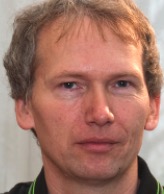 Josef Urban合作论文数Czech Institute of of Informatics, Robotics and Cybernetics, Czech Technical University in Prague;Faculty of Information Technology, Czech Technical University in Prague13
 Thibault Gauthier合作论文数Czech Institute of Informatics, Robotics, and Cybernetics, Czech Technical University in Prague6
 Mikoláš Janota合作论文数Department of Applied Mathematics, Faculty of Information Technology, Czech Technical University in Prague;Czech Institute of Informatics, Robotics and Cybernetics, Czech Technical University in Prague6
 Gert Smolka合作论文数Saarland University5
 Christoph Benzmüller合作论文数Lehrstuhl für AI Systems Engineering, Fakultät Wirtschaftsinformatik und Angewandte Informatik, University of Bamberg;IDNI AG5
 Peter B. Andrews合作论文数Mathematical Sciences, Mellon College of Science, Carnegie Mellon University5
 Michael Kohlhase合作论文数Computer Science;Jacobs University4
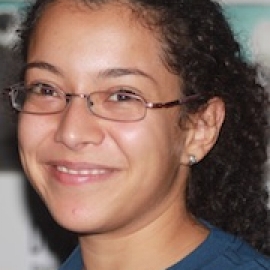 Christine Rizkallah合作论文数School of Computing and Information Systems, The University of Melbourne4
 Karol Pak合作论文数Institute of Computer Science;University of Biaystok;Institute of Computer Science, University of Biaystok3
 Matthew Thomas Bishop合作论文数Neurobiology and Surgery;Dalhousie University;Division of Neurosurgery;Queen Elizabeth II Health Sciences Centre;Queen Elizabeth II Health Sciences Centre, Dalhousie University2
 Christoph Benzmueller合作论文数Computer Science;Saarland University;boundary of AI2
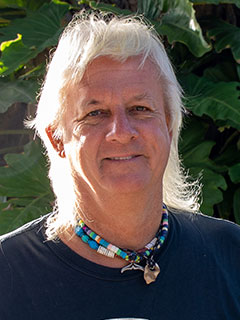 Geoff Sutcliffe合作论文数Department of Computer Science, College of Arts and Sciences, University of Miami2
 Julian Parsert合作论文数Department of Computer Science, University of Oxford;University of Innsbruck1Mirek Olšák合作论文数1
 Zsolt Zombori合作论文数1Carneiro Mario合作论文数1Bartosz Piotrowski合作论文数Czech Tech Univ1Qingxiang Wang合作论文数1
 Martin Suda合作论文数Czech Tech Univ, Prague, Czech Republic1Pierre Pradic合作论文数Department of Computer Science, University of Oxford1
 Stefan Ratschan合作论文数Max-Planck-Institut für Informatik, Saarbrücken, Germany1
 Agata Ciabattoni合作论文数Vienna University of Technology1
 Frank Pfenning合作论文数Department of Philosophy, Carnegie Mellon University;Computer Science Department, Carnegie Mellon University1Karel Chvalovský合作论文数1
 Hongwei Xi合作论文数Department of Computer Science, College of Arts & Sciences, Boston University1Feryal Fulya Horozal合作论文数1Frank Theiss合作论文数1
 Jörg Siekmann合作论文数 DFKI;department of computer science 1
 Adam Pease合作论文数Articulate Software1
 Richard Statman合作论文数Department of Mathematical Sciences, Mellon College of Science, Carnegie Mellon University1
 Sunil Issar合作论文数Carnegie Mellon University1




