PURPOSE:Survivors of childhood cancer can suffer from long-term sequelae or decline in quality of life (QoL), for which careful and standardized selection of outcome measures become more important. This study aims to assess different QoL-related outcomes using three distinct questionnaires in an international study, identify the priorities of childhood ALL survivors via the administered questionnaires, and investigate potential interrelationships among QoL domains across the questionnaires. METHODS:Childhood ALL survivors treated according to the EORTC CLG treatment protocols 58741, 58831/2, and 58881 were recruited in Belgium and France and answered self-report QoL questionnaires, including the Short-Form Health Survey 12 (SF12), the Quality-of-Life Systemic Inventory (QLSI), and the Impact of Cancer for Childhood Cancer Survivors (IOC-CS). To explore which scales overlapped or were novel, Pearson correlations were used to explore associations. In addition, based on the QLSI, we checked whether each of the top priorities of childhood ALL survivors were covered by the SF12 or IOC-CS, by mapping their scales quantitatively and qualitatively. RESULTS:QoL data for 186 survivors were provided. Priority areas, as assessed by the QLSI, were vitality, physical abilities, memory, overall physical health, sleep, interaction with friends, love life. Love life was an important source of happiness (for 42%), and for some reported as the domain they were unhappiest in (13%). Quantitative mapping shows moderate correlations between the SF12 scales and IOC-CS scales: life challenges, body and health, thinking and memory, and socializing. Qualitative mapping highlighted additional important domains, specifically family, romantic and friendship relationships, and sleep and memory. CONCLUSIONS:Our findings suggest that the measures complement each other, but are less valuable in isolation for ALL survivors. Using a cancer survivorship measure, combined with some additional items covering priorities might provide a more holistic picture.
Improved treatment landscape has led to better outcomes for paediatric acute lymphoblastic leukemia (ALL) survivors. As the number of survivors increase, we need to elucidate the long‐term quality of life (QoL) and domains of complaints in these patients. Furthermore, the main priorities of these patients need to be clarified. We assessed long‐term QoL outcomes of survivors of childhood ALL compared to matched population controls.
Background: due to increasing survival rates in childhood acute lymphoblastic leukemia (ALL), the number of survivors has been expanding. A significant proportion of these survivors can experience long-term emotional and psychosocial problems. However, the exact risk factors remain inconclusive. We investigated potential risk factors for decreased daily life quality and life challenges in long-term childhood ALL survivors enrolled between 1971 and 1998 in EORTC studies. Methods: self-report questionnaires were collected from 186 survivors (109 females; mean age at diagnosis 5.62 years, range 0.2–14.7; median time since diagnosis of 20.5 years (12.9–41.6)), including the Short-Form Health Survey (SF-12) and Impact of Cancer-Childhood Survivors (IOC-CS). Multivariable linear regression models were used to assess the impact of gender, age at diagnosis, relapse/second neoplasm, National Cancer Institute (NCI) risk group and cranial radiotherapy on 2 subscales of the SF-12 (physical and mental health) and five subscales of the IOC-CS (life challenges, body and health, personal growth, thinking and memory problems and socializing). Results: mental component scores of SF-12 were not significantly associated with any risk factor. Physical component scores were lower in relapsed, irradiated and NCI high-risk patients. Regarding IOC-CS negative impact subscales, life challenges was more negatively impacted by cancer in female, younger (i.e., <6 years) and relapsed patients. Regarding the positive impact scales, personal growth was more positively impacted in relapsed patients, whereas body and health, and socializing, were less positively impacted in these patients, compared to non-relapsed patients. Socializing was more positively impacted in older patients (>6 years). Conclusions: this study demonstrates that long-term outcomes can be both adverse and positive, depending on the patient’s demographic and clinical characteristics. Younger, female, and relapsed patients might encounter more life challenges years after their disease, while physical challenges could occur more often in relapsed and high-risk patients. Finally, the positive effect on socializing in the older patients sheds new light on the importance of peer interactions for this subgroup. Specific individual challenges thus need specialized support for specific subgroups.
BACKGROUND:During the initial COVID-19 pandemic, young United Kingdom (UK) kidney patients underwent lockdown and those with increased vulnerabilities socially isolated or 'shielded' at home. The experiences, information needs, decision-making and support needs of children and young adult (CYA) patients or their parents during this period is not well known. METHODS:A UK-wide online survey co-produced with patients was conducted in May 2020 amongst CYA aged 12-30, or parents of children aged < 18 years with any long-term kidney condition. Participants answered qualitative open text alongside quantitative closed questions. Thematic content analysis using a three-stage coding process was conducted. RESULTS:One-hundred and eighteen CYA (median age 21) and 197 parents of children (median age 10) responded. Predominant concerns from CYA were heightened vigilance about viral (68%) and kidney symptoms (77%) and detrimental impact on education or work opportunities (70%). Parents feared the virus more than CYA (71% vs. 40%), and had concerns that their child would catch the virus from them (64%) and would have an adverse impact on other children at home (65%). CYA thematic analysis revealed strong belief of becoming seriously ill if they contracted COVID-19; lost educational opportunities, socialisation and career development; and frustration with the public for not following social distancing rules. Positive outcomes included improved family relationships and community cohesion. Only a minority (14-21% CYA and 20-31% parents, merged questions) desired more support. Subgroup analysis identified greater negative psychological impact in the shielded group. CONCLUSIONS:This survey demonstrates substantial concern and need for accurate tailored advice for CYA based on individualised risks to improve shared decision making.
 Claire Freycon合作论文数4Marie-Françoise Dresse合作论文数4
 Caroline Piette合作论文数4
 Charlotte Sleurs合作论文数Paediat Oncol, Katholieke Univ Leuven4
 P Rohrlich合作论文数Pediat Hematol, Hop Pediat Nice4Pluchart Claire合作论文数4
 Stefan Suciu合作论文数Department of Biostatistics, European Organisation for Research and Treatment of Cancer4
 Yves Benoit合作论文数Ghent University4Anne Uyttebroeck合作论文数4Els Vandecruys合作论文数4
 Jammbe Z Musoro合作论文数4Alina Ferster合作论文数3Jutte Van Der Werff Ten Bosch合作论文数3Michal Kicinski合作论文数3
 Madeline Lee Pe合作论文数3
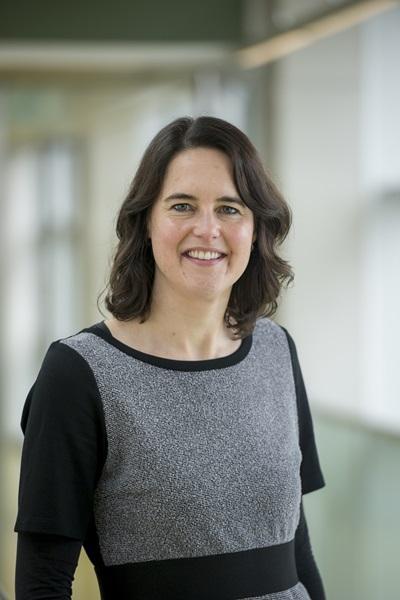 Anne-Sophie Darlington合作论文数School of Health Sciences, Faculty of Environmental and Life Sciences, University of Southampton3
 Corneel Coens合作论文数3
 Pierre Missotten合作论文数CHR Citadelle3
 Alison Rowsell合作论文数2Ali Rowsell合作论文数1Arvind Nagra合作论文数1Culliford David J合作论文数1Wallace Dean合作论文数1Alejandra Recio Saucedo合作论文数Faculty of Medicine, University of Southampton1
 Tse Yincent合作论文数Department of Nephrology, Great Ormond Street Hospital for Children1
 Kay Tyerman合作论文数1Tanya Pankhurst合作论文数The Medical School, University of Birmingham1




