Personalized algorithms can inadvertently expose users to discomforting recommendations, potentially triggering negative consequences. The subjectivity of discomfort and the black-box nature of these algorithms make it challenging to effectively identify and filter such content. To address this, we first conducted a formative study to understand users' practices and expectations regarding discomforting recommendation filtering. Then, we designed a Large Language Model (LLM)-based tool named DiscomfortFilter, which constructs an editable preference profile for a user and helps the user express filtering needs through conversation to mask discomforting preferences within the profile. Based on the edited profile, DiscomfortFilter facilitates the discomforting recommendations filtering in a plug-and-play manner, maintaining flexibility and transparency. The constructed preference profile improves LLM reasoning and simplifies user alignment, enabling a 3.8B open-source LLM to rival top commercial models in an offline proxy task. A one-week user study with 24 participants demonstrated the effectiveness of DiscomfortFilter, while also highlighting its potential impact on platform recommendation outcomes. We conclude by discussing the ongoing challenges, highlighting its relevance to broader research, assessing stakeholder impact, and outlining future research directions.
Artificial intelligence and blockchain can improve the effectiveness of leadership decision-making in two dimensions. Artificial intelligence technology can improve the scientificity of leadership decision-making, and blockchain technology can guarantee the democracy of leadership decision-making. Society pushes everyone to be gregarious. Group recommendation is thus one of the research focuses in recent years. Prior group recommendation algorithms fail to consider either the influence of group structure on computing scale or the impressions users of higher weights leave on other group members. To address the aforementioned challenges, this paper proposes a group recommendation model based on members' influence and leader impact. In this paper, a model has been proposed to compute members' influence on each other based on interactions and presence. The decisions of leaders identified by the proposed model are the basis for further group recommendation, which yields satisfactory recommendations for most group members as leaders' judgments are more professional. Experimental results on real-world datasets demonstrate better accuracy of the proposed method compared to those of the mainstream group recommendation algorithms.
Dynamic graphs arise in various real-world applications, and it is often welcomed to model the dynamics in continuous time domain for its flexibility. This paper aims to design an easy-to-use pipeline (EasyDGL which is also due to its implementation by DGL toolkit) composed of three modules with both strong fitting ability and interpretability, namely encoding, training and interpreting: i) a temporal point process (TPP) modulated attention architecture to endow the continuous-time resolution with the coupled spatiotemporal dynamics of the graph with edge-addition events; ii) a principled loss composed of task-agnostic TPP posterior maximization based on observed events, and a task-aware loss with a masking strategy over dynamic graph, where the tasks include dynamic link prediction, dynamic node classification and node traffic forecasting; iii) interpretation of the outputs (e.g., representations and predictions) with scalable perturbation-based quantitative analysis in the graph Fourier domain, which could comprehensively reflect the behavior of the learned model. Empirical results on public benchmarks show our superior performance for time-conditioned predictive tasks, and in particular EasyDGL can effectively quantify the predictive power of frequency content that a model learns from evolving graph data.
Inductive one-bit matrix completion is motivated by modern applications such as recommender systems, where new users would appear at test stage with the ratings consisting of only ones and no zeros. We propose a unified graph signal sampling framework which enjoys the benefits of graph signal analysis and processing. The key idea is to transform each user's ratings on the items to a function (signal) on the vertices of an item-item graph, then learn structural graph properties to recover the function from its values on certain vertices -- the problem of graph signal sampling. We propose a class of regularization functionals that takes into account discrete random label noise in the graph vertex domain, then develop the GS-IMC approach which biases the reconstruction towards functions that vary little between adjacent vertices for noise reduction. Theoretical result shows that accurate reconstructions can be achieved under mild conditions. For the online setting, we develop a Bayesian extension, i.e., BGS-IMC which considers continuous random Gaussian noise in the graph Fourier domain and builds upon a prediction-correction update algorithm to obtain the unbiased and minimum-variance reconstruction. Both GS-IMC and BGS-IMC have closed-form solutions and thus are highly scalable in large data. Experiments show that our methods achieve state-of-the-art performance on public benchmarks.
Spectral methods for graph neural networks (GNNs) have achieved great success. Despite their success, many works have shown that existing approaches are mainly focused on low-frequency information which may not be pertinent to the task at hand. Recent efforts have been made to design new graph filters for wider frequency profiles, but it remains an open problem how to learn multi-scale disentangled node embeddings in the graph Fourier domain. In this paper, we propose a graph (signal) sampling and filtering framework, entitled Pyramid Graph Neural Network (PyGNN), which follows the Downsampling-Filtering-Upsampling-Decoding scheme. To be specific, we develop an ω-bandlimited downsampling approach to split input graph into subgraphs for the reduction of high-frequency components, then perform spectral graph filters on subgraphs to achieve node embeddings with different frequency bands, and propose a Laplacian smoothing-based upsampling approach to extrapolate the node embedding on subgraphs to the full set of vertices on the original graph. In the end, we add frequency-aware gated units to decode node embeddings of different frequencies for downstream tasks. Results on both homophilic and heterophilic graph datasets show its superiority over state-of-the-art methods.
In traditional pulsating high-frequency injection (PHFVI), the PI regulator is usually used to extract rotor position information of the machine. The PI regulator has some shortcomings, such as poor tracking performance and weak anti-interference ability. Thus a new full-order state observer is proposed to extract rotor position information in this paper. This method firstly uses the PHFVI to get the rotor position error signal and then establishes a full-order state observer according to the mechanical motion equation of the machine to estimate the rotor position and speed. This paper introduces a new coordinate transformation to further decouple the mathematical model of the double salient machine (DSM). The results of simulation in MATLAB/Simulink show that the method proposed in this paper has effectiveness and anti-interference performance and has a certain reference value for the research of speed sensorless control of DSM.
Personalized recommendation systems learn user preference characteristics by analyzing behavioral data such as ratings and comments generated by users in the Internet, and provide precise recommendations for individual users accordingly. However, in real life, users often conduct group activities like group buying and traveling together. How to recommend for groups has become a heated research topic in recent years. Most existing group recommendation algorithms are recommended for given divided groups by collectively combining the preferences of members in the group. However, in most cases, users’ group properties are fickle. As the results of group detection are decisive to the performance of group recommendation, group detection is particularly important to the group recommendation algorithm. After analyzing problems of existing group recommendation algorithms, this paper proposes the density peak clustering group detection algorithm based on GRU-CNN and the group recommendation algorithm based on the mechanism. With respect to group detection, most of the existing group detection algorithms suffer from certain deficiencies: First, depending solely on the users’ static preference features while ignoring the variation of users’ interest over time when finding the group structure in the network; second, group division based on users’ topic features extracted from reviews is difficult to support further digging of the in-depth features in reviews. To address the above-mentioned problems, this paper proposes a density peak clustering group detection algorithm based on CNN-GRU. It would first extract representative keywords in the reviews with LDA topic model, and then model time series information based on GRU attaining users’ dynamic topic features. Coupling with deeper characteristics cored out by CNN, density peak clustering algorithm completes its group detection finally. Experiments on real dataset indicate that the features mined by the fusion depth neural network model effectively capture users’ dynamic preferences, and yield better results of group detection than that of existing algorithms.
With the deepening application of wearable devices in the field of indoor positioning, the mining and application of human behavior patterns based on new technologies such as mobile terminals, channel technologies and intelligent algorithms have gradually become a research hotspot in the field of intelligent positioning. At this stage, outdoor positioning satellite technology has been gradually improved, but it cannot work effectively in indoor environment, and indoor positioning technology has not formed a set of standard and effective scheme at this stage, which leads to a scene of a hundred contentions for indoor positioning technology. This paper proposes an indoor intelligent localization algorithm based on channel state information, which first forms the measurements of antenna subarrays by the fixed antenna subset arrays located in different paths to achieve the phase estimation based on channel state; then determines the AoA of the direct path from the target to the AP using ToF information and eliminates the STO noise of channel state information by unfolding the best linear fit of CSI phase; again the AoA and ToF estimates from multiple measurements are plotted in two-dimensional space, and the direct path possibility estimation is achieved by identifying the estimates through five clusters of Gaussian-averaged clustering algorithm; finally the coordinates of the target to be located are obtained by coupling direct propagation path, estimation clustering and least-squares estimation using three APs as the receiver and the target to be located as the transmitter. The simulation results show that the intelligent localization algorithm proposed in this paper is able to lack the localization accuracy at the decimeter level in the indoor localization environment with three fixed APs, and the average error is better than the localization algorithms of support vector machine, deep learning and limit learning.
Sequential recommendation aims to predict users' next interaction items based on their historical interaction sequences, however, the problem of sparse user behavior and ineffective use of item attribute information makes it difficult to learn high-quality representations of user preferences. To address this problem, inspired by recent advances in contrastive learning techniques, we propose a novel Item Attribute-aware Contrastive Learning framework for Sequential Recommendation, named IACL4SR, which differs from previous contrastive learning-based sequential recommendation approaches by incorporating item attribute information in user behavior sequences to build an augmented view of users' fine-grained preferences for item attributes, thereby capture the association between user and item attributes in the sequence transformation model. Specifically, we devise a dual-strategy relay data augmentation method to model user sequences and item attribute sequences, while we modify the fusion method of item attribute embedding in the self-attentive mechanism to obtain more accurate user representations. Finally, we jointly train and optimized the main sequential recommendation task and auxiliary contrastive learning task. Extensive experiments on three widely used real datasets show that IACL4SR achieves more advanced recommendation performance than existing baseline methods.
Capturing the dynamics in user preference is crucial to better predict user future behaviors because user preferences often drift over time. Many existing recommendation algorithms – including both shallow and deep ones – often model such dynamics independently, i.e., user static and dynamic preferences are not modeled under the same latent space, which makes it difficult to fuse them for recommendation. This paper considers the problem of embedding a user's sequential behavior into the latent space of user preferences, namely translating sequence to preference. To this end, we formulate the sequential recommendation task as a dictionary learning problem, which learns: 1) a shared dictionary matrix, each row of which represents a partial signal of user dynamic preferences shared across users; and 2) a posterior distribution estimator using a deep autoregressive model integrated with Gated Recurrent Unit (GRU), which can select related rows of the dictionary to represent a user's dynamic preferences conditioned on his/her past behaviors. Qualitative studies on the Netflix dataset demonstrate that the proposed method can capture the user preference drifts over time and quantitative studies on multiple real-world datasets demonstrate that the proposed method can achieve higher accuracy compared with state-of-the-art factorization and neural sequential recommendation methods.
Architecture. We implemented our model in PyTorch [2]. The local feature CNN uses a modified version of ResNet-50 as a backbone without pretraining. The sizes of the coarse-, middle-, and fine-level feature maps are 1/32, 1/16, and 1/4 of the original image size, respectively. The channel number of each layer’s feature is converted to 256 by 1 × 1 convolutions. For the transformer, we use three layers for both encoder and decoder. Same with COTR, we disallow self-attention among the query points in the decode stage. For coarse-to-fine refinement modules, we set the crop window size w = 17, w = 13. For the AQC module, we set t = 1, Knum = 128. The distance threshold Th is set to 0.8 times of the corresponding side of patches during training and 0.6 times during inference.
Matrix approximation (MA) methods are integral parts of today's recommender systems. In standard MA methods, only one feature vector is learned for each user/item, which may not be accurate enough to characterize the diverse interests of users/items. For instance, users could have different opinions on a given item, so that they may need different feature vectors for the item to represent their unique interests. To this end, this article proposes a mixture matrix approximation (MMA) method, in which we assume that the user-item ratings follow mixture distributions and the user/item feature vectors vary among different stars to better characterize the diverse interests of users/items. Furthermore, we show that the proposed method can tackle both rating prediction and the top-N recommendation problems. Empirical studies on MovieLens, Netflix and Amazon datasets demonstrate that the proposed method can outperform state-of-the-art MA-based collaborative filtering methods in both rating prediction and top-N recommendation tasks.
In collaborative filtering (CF) algorithms, the optimal models are usually learned by globally minimizing the empirical risks averaged over all the observed data. However, the global models are often obtained via a performance tradeoff among users/items, i.e., not all users/items are perfectly fitted by the global models due to the hard non-convex optimization problems in CF algorithms. Ensemble learning can address this issue by learning multiple diverse models but usually suffer from efficiency issue on large datasets or complex algorithms. In this article, we keep the intermediate models obtained during global model learning as the snapshot models, and then adaptively combine the snapshot models for individual user-item pairs using a memory network-based method. Empirical studies on three real-world datasets show that the proposed method can extensively and significantly improve the accuracy (up to 15.9% relatively) when applied to a variety of existing collaborative filtering methods.
User interests are usually dynamic in the real world, which poses both theoretical and practical challenges for learning accurate preferences from rich behavior data. Among existing user behavior modeling solutions, attention networks are widely adopted for its effectiveness and relative simplicity. Despite being extensively studied, existing attentions still suffer from two limitations: i) conventional attentions mainly take into account the spatial correlation between user behaviors, regardless the distance between those behaviors in the continuous time space; and ii) these attentions mostly provide a dense and undistinguished distribution over all past behaviors then attentively encode them into the output latent representations. This is however not suitable in practical scenarios where a user's future actions are relevant to a small subset of her/his historical behaviors. In this paper, we propose a novel attention network, named self-modulating attention, that models the complex and non-linearly evolving dynamic user preferences. We empirically demonstrate the effectiveness of our method on top-N sequential recommendation tasks, and the results on three large-scale real-world datasets show that our model can achieve state-of-the-art performance.
One-bit matrix completion is an important class of positive-unlabeled (PU) learning problems where the observations consist of only positive examples, e.g., in top-N recommender systems. For the first time, we show that 1-bit matrix completion can be formulated as the problem of recovering clean graph signals from noise-corrupted signals in hypergraphs. This makes it possible to enjoy recent advances in graph signal learning. Then, we propose the spectral graph matrix completion (SGMC) method, which can recover the underlying matrix in distributed systems by filtering the noisy data in the graph frequency domain. Meanwhile, it can provide micro- and macro-level explanations by following vertex-frequency analysis. To tackle the computational and memory issue of performing graph signal operations on large graphs, we construct a scalable Nystrom algorithm which can efficiently compute orthonormal eigenvectors. Furthermore, we also develop polynomial and sparse frequency filters to remedy the accuracy loss caused by the approximations. We demonstrate the effectiveness of our algorithms on top-N recommendation tasks, and the results on three large-scale real-world datasets show that SGMC can outperform state-of-the-art top-N recommendation algorithms in accuracy while only requiring a small fraction of training time compared to the baselines.
Due to the limitation of energy consumption and power consumption, the embedded platform cannot meet the real-time requirements of the far-infrared image pedestrian detection algorithm. To solve this problem, this paper proposes a new real-time infrared pedestrian detection algorithm (RepVGG-YOLOv4, Rep-YOLO), which uses RepVGG to reconstruct the YOLOv4 backbone network, reduces the amount of model parameters and calculations, and improves the speed of target detection; using space spatial pyramid pooling (SPP) obtains different receptive field information to improve the accuracy of model detection; using the channel pruning compression method reduces redundant parameters, model size, and computational complexity. The experimental results show that compared with the YOLOv4 target detection algorithm, the Rep-YOLO algorithm reduces the model volume by 90%, the floating-point calculation is reduced by 93.4%, the reasoning speed is increased by 4 times, and the model detection accuracy after compression reaches 93.25%.
User ratings on items are noisy in real-world recommender systems, which raises challenges to matrix approximation (MA)-based collaborative filtering (CF) algorithms - the learned models will be easily biased to the noisy training data and yield low generalization performance. This paper proposes a noise-resilient matrix approximation (NORMA) method, which can achieve less biased matrix approximation and thus more accurate collaborative filtering. In NORMA, an adaptive weighting strategy is proposed to decrease the gradient updates of noisy ratings, so that the learned MA models will be less prone to the noisy ratings. Theoretical analyses show that NORMA can achieve better generalization performance than standard matrix approximation methods. Experimental studies on real-world datasets demonstrate that NORMA can outperform state-of-the-art matrix approximation-based collaborative filtering methods in recommendation accuracy.
Ensemble matrix approximation (MA) methods have achieved promising performance in collaborative filtering, many of which perform matrix approximation on multiple submatrices of user-item ratings in parallel and then combine the predictions from the sub-models for higher efficiency. However, data partitioning could lead to suboptimal accuracy due to the lack of capturing structural information related to most or all users/items. This paper proposes a new ensemble learning framework, in which the local models and global models are synergetically updated from each other. This makes it possible to capture both local associations in user-item subgroups and global structures over all users and items. Experiments on three real-world datasets demonstrate that the proposed method outperforms six state-of-the-art methods in recommendation accuracy with decent scalability.
Gradient-based learning methods such as stochastic gradient descent are widely used in matrix approximation-based collaborative filtering algorithms to train recommendation models based on observed user-item ratings. One major difficulty in existing gradient-based learning methods is determining proper learning rates, since model convergence would be inaccurate or very slow if the learning rate is too large or too small, respectively. This paper proposes AdaError, an adaptive learning rate method for matrix approximation-based collaborative filtering. AdaError eliminates the need of manually tuning the learning rates by adaptively adjusting the learning rates based on the noisiness level of user-item ratings, using smaller learning rates for noisy ratings so as to reduce their impact on the learned models. Our theoretical and empirical analysis shows that AdaError can improve the generalization performance of the learned models. Experimental studies on the MovieLens and Netflix datasets also demonstrate that AdaError outperforms state-of-the-art adaptive learning rate methods in matrix approximation-based collaborative filtering. Furthermore, by applying AdaError to the standard matrix approximation method, we can achieve statistically significant improvements over state-of-the-art collaborative filtering methods in both rating prediction accuracy and top-N recommendation accuracy.
 Dongsheng Li (李东胜)合作论文数Microsoft Research Asia;School of Computer Science, Fudan University16
 Junchi Yan (严骏驰)合作论文数Department of Computer Science and Engineering, Shanghai Jiao Tong University;ReThinkLab, Shanghai Jiao Tong University12
 Li Shang (尚笠)合作论文数School of Computer Science, Fudan University8
 Stephen Chu合作论文数IBM8
 Qin (Christine) Lv合作论文数Department of Computer Science, University of Colorado Boulder8
 Ning Gu (顾宁)合作论文数School of Computer Science, Fudan University7
 Tun Lu (卢暾)合作论文数School of Computer Science, Fudan University7
 Xiaokang Yang (杨小康)合作论文数Institute of Image Communication and Network Engineering, School of Electronic Information and Electrical Engineering, Shanghai Jiao Tong University6
 Haoyu Geng (耿皓宇)合作论文数Shanghai Jiao Tong University4
 Xin Wang合作论文数3Zhaoli Wu合作论文数3
 Yingying Zhao合作论文数Key Laboratory for Mechanical Behavior of Materials School of Materials Science and Engineering, Xi an Jiaotong University3
 Hansu Gu合作论文数3Longzhi Du合作论文数2Gang Zeng合作论文数2Yandong Liu合作论文数2zhaobing Han合作论文数2
 Nianzu Yang (杨念祖)合作论文数ThinkLab, Shanghai Jiao Tong University;Department of Computer Science, School of Electronic Information and Electrical Engineering, Shanghai Jiao Tong University2
 Peng Zhang合作论文数Huashan Hospital2
 Hua Chai合作论文数Didi Chuxing2
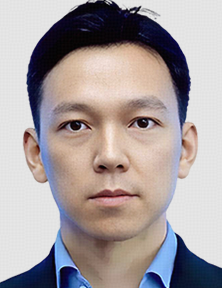 Rongrong Ji (纪荣嵘)合作论文数School of Informatics, Xiamen University2Stephen M. Chu合作论文数1Yiyang Shao合作论文数1L. Nanni合作论文数1
 Nicole Vincent合作论文数1
 Yunhang Shen (沈云航)合作论文数Tencent Youtu Lab1
 Daniel Moreira合作论文数1
 Qi Wang (王琦)合作论文数University of Cambridge1Yongsheng Xia合作论文数1
 Zijie Ouyang合作论文数1
 Hao Zhang (张浩)合作论文数NVIDIA Research1Jianping Yu合作论文数1Daiyue Xue合作论文数1
 Haodong Liu合作论文数1
 Jiahao Liu合作论文数Meituan NLP1Hanchi Huang合作论文数Shanghai Jiao Tong Univ, AI Inst, MoE Key Lab Artificial Intelligence, Shanghai, Peoples R China1QingTai Ye合作论文数1
 Yuxing Chen合作论文数University of Helsinki, Helsinki, Finland1
 Aghiles Salah合作论文数LIPADE, Paris Descartes University1
 Xu-Yao Zhang (张煦尧)合作论文数School of Artificial Intelligence, University of Chinese Academy of Sciences;State Key Laboratory of Multimodal Artificial Intelligence Systems, Institute of Automation, Chinese Academy of Sciences1
 Zhifeng Li (李志锋)合作论文数Tencent AI Lab1
 Yang Xia (夏阳)合作论文数School of Computer Science & Technology, China University of Mining and Technology1
 Bo Du (杜博)合作论文数School of Computer Science, Wuhan University1
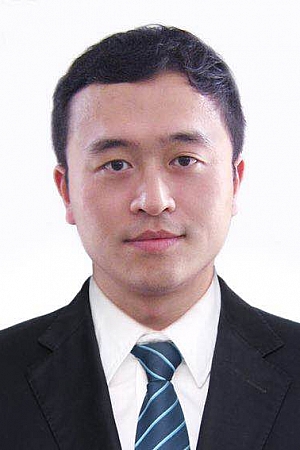 Jun Yu (俞俊)合作论文数School of Computer Science, Hangzhou Dianzi University1
 Xinchao Wang合作论文数Department of Electrical and Computer Engineering, National University of Singapore1
 Martin Mundt合作论文数Hessian.AI;TU Darmstadt1
 Jungong Han (韩军功)合作论文数Department of Automation, School of Information Science and Technology, Tsinghua University1
 Song Bai (柏松)合作论文数MiroMind1




