The acyclic dichromatic number of an oriented graph is the minimum size of a vertex-partition such that the digraphs induced by any single part are acyclic, and the oriented bipartite graphs between any two parts are acyclic too. We characterize the subtournaments that must appear in every tournament with sufficiently large acyclic dichromatic number, thereby confirming a conjecture of Bang-Jensen, Picasarri-Arrieta, and Yeo and prove that acyclic dichromatic number satisfies a local to global property.
An orientation of a given static graph is called transitive if for any three vertices $a,b,c$, the presence of arcs $(a,b)$ and $(b,c)$ forces the presence of the arc $(a,c)$. If only the presence of an arc between $a$ and $c$ is required, but its orientation is unconstrained, the orientation is called quasi-transitive. A fundamental result presented by Ghouila-Houri guarantees that any static graph admitting a quasi-transitive orientation also admits a transitive orientation. In a seminal work, Mertzios et al. introduced the notion of temporal transitivity in order to model information flows in simple temporal networks. We revisit the model introduced by Mertzios et al. and propose an analogous to Ghouila-Houri's characterization for the temporal scenario. We present a structure theorem that will allow us to express by a 2-SAT formula all the constraints imposed by temporal transitive orientations. The latter produces an efficient recognition algorithm for graphs admitting such orientations. Additionally, we extend the temporal transitivity model to temporal graphs having multiple time-labels associated to their edges and claim that the previous results hold in the multilabel setting. Finally, we propose a characterization of temporal comparability graphs via forbidden temporal ordered patterns.
In 1985, El-Zahar and Sauer showed that the chromatic number of the direct product of two 4-chromatic graphs is 4, establishing a nontrivial case of Hedetniemi's conjecture, which has since been refuted in general. Their proof uses the concept of an exponential graph, showing that if a graph H has no proper 3-coloring, then the exponential graph K-3(H) has a proper 3-coloring. This exponential graph is constructed by associating with each vertex a nonproper 3-coloring of H, and thus has a succinct representation. Some twenty years later, Tardif observed that at the crux of their proof lies the fact that a certain subgraph of the exponential graph K-3(H) is bipartite, and this implies that K(3)(H )is 3-colorable. The proof of bipartiteness of this subgraph is nonconstructive in the sense that it does not reveal to which side of a bipartition a vertex belongs. Given that this subgraph has a succinct representation, Tardif asked if there is an explicit proof of bipartiteness. In other words, in order to determine to which side of a bipartition a vertex in this subgraph belongs, can we use only the associated coloring of H? In this paper, we show that there is such an explicit bipartition. This gives an alternative proof of the aforementioned theorem of El-Zahar and Sauer and of another theorem from the same era due to Haggkvist, Hell, Miller and Neumann Lara on the multiplicativity of odd cycles.
In its Euclidean form, the Dense Neighborhood Lemma (DNL) asserts that if V is a finite set of points of R-N such that for each v is an element of V the ball B(v, 1) intersects V on at least delta vertical bar V vertical bar points, then for every epsilon > 0, the points of V can be covered with f(delta, epsilon) balls B(v, 1+epsilon) with v is an element of V. DNL also applies to other metric spaces and to abstract set systems, where elements are compared pairwise with respect to (near) disjointness. In its strongest form, DNL provides an epsilon-clustering with size exponential in epsilon(-1), which amounts to a Regularity Lemma with 0/1 densities of some trigraph. Trigraphs are graphs with additional red edges. They are natural instances of partial concept classes, introduced by Alon, Hanneke, Holzman and Moran [FOCS 2021]. This paper is mainly a combinatorial study of the generalization of VapnikCervonenkis dimension to partial concept classes. The main point is to show how trigraphs can sometimes explain the success of random sampling even though the VC-dimension of the underlying graph is unbounded. All the results presented here are effective in the sense of computation: they primarily rely on uniform sampling with the same success rate as in classical VC-dimension theory. Among some applications of DNL, we show that (3t-8/3t-5+ epsilon) center dot n-regular Kt-free graphs have bounded chromatic number. Similarly, triangle-free graphs with minimum degree n/3 - n(1-epsilon) have bounded chromatic number (this does not hold with n/3- n(1-o(1))). For tournaments, DNL implies that the domination number is bounded in terms of the fractional chromatic number. Also, (1/2-epsilon)-majority digraphs have bounded domination, independently of the number of voters.
The results of this note were stated in the first author PhD manuscript in 2006 but never published. The writing of a proof given there was slightly careless and the proof itself scattered across the document, the goal of this note is to give a short and clear proof using Farkas Lemma. The first result is a characterization of the acyclic chromatic number of a digraph in terms of cyclic ordering. Using this theorem we prove that for any digraph, one can sequentially reverse the orientations of the arcs of a family of directed cycles so that the resulting digraph has acyclic chromatic number at most 2.
The dichromatic number of an oriented graph is the minimum size of a partition of its vertices into acyclic induced subdigraphs. We prove that oriented graphs with no induced directed path on six vertices and no triangle have bounded dichromatic number. This is one (small) step towards the general conjecture asserting that for every oriented tree T and every integer k, any oriented graph that does not contain an induced copy of T nor a clique of size k has dichromatic number at most some function of k and T.
The dichromatic number of a digraph is the minimum size of a partition of its vertices into acyclic induced subgraphs. Given a class of digraphs , a digraph is a hero in if ‐free digraphs of have bounded dichromatic number. In a seminal paper, Berger et al. give a simple characterisation of all heroes in tournaments. In this paper, we give a simple proof that heroes in quasitransitive oriented graphs (that are digraphs with no induced directed path on three vertices) are the same as heroes in tournaments. We also prove that it is not the case in the class of oriented multipartite graphs, disproving a conjecture of Aboulker, Charbit and Naserasr, and give a characterisation of heroes in oriented complete multipartite graphs up to the status of a single tournament on six vertices.
We consider the graph-theoretic problem of removing (few) nodes from a directed acyclic graph in order to reduce its depth. While this problem is intractable in the general case, we provide a variety of algorithms in the case where the graph is that of a circuit of fan-in (at most) two, and explore applications of these algorithms to secure multiparty computation with low communication. Over the past few years, a paradigm for low-communication secure multiparty computation has found success based on decomposing a circuit into low-depth “chunks”. This approach was however previously limited to circuits with a “layered” structure. Our graph-theoretic approach extends this paradigm to all circuits. In particular, we obtain the following contributions: We also obtain additional contributions to reducing the amount of bootstrapping for fully homomorphic encryption, and to other types of sublinear-communication MPC protocols such as those based on correlated symmetric private information retrieval.
The dichromatic number of an oriented graph is the minimum size of a partition of its vertices into acyclic induced subdigraphs. We prove that oriented graphs with no induced directed path on six vertices and no triangle have bounded dichromatic number. This is one (small) step towards the general conjecture asserting that for every oriented tree $T$ and every integer $k$, any oriented graph that does not contain an induced copy of $T$ nor a clique of size $k$ has dichromatic number at most some function of $k$ and $T$ .
We introduce the notion of clique number of a tournament and investigate its relation with the dichromatic number. In particular, it permits defining $\dic$-bounded classes of tournaments, which is the paper's main topic.
The Burning Number Conjecture claims that for every connected graph $G$ of order $n,$ its burning number satisfies $b(G) \le \lceil \sqrt{n}\, \rceil.$ While the conjecture remains open, we prove that it is asymptotically true when the order of the graph is much larger than its growth, which is the maximal distance of a vertex to a well-chosen path in the graph. We prove that the conjecture for graphs of bounded growth reduces to a finite number of cases. We provide the best-known bound on the burning number of a connected graph $G$ of order $n,$ given by $b(G) \le \sqrt{4n/3} + 1,$ improving on the previously known $\sqrt{3n/2}+O(1)$ bound. Using the improved upper bound, we show that the conjecture almost holds for all graphs with minimum degree at least $3$ and holds for all large enough graphs with minimum degree at least $4$. The previous best-known result was for graphs with minimum degree $23$.
The dichromatic number χ⃗(D) of a digraph D is the minimum size of a partition of its vertices into acyclic induced subgraphs. We denote by λ(D) the maximum local edge connectivity of a digraph D. Neumann-Lara proved that for every digraph D, χ⃗(D) ≤λ(D) + 1. In this paper, we characterize the digraphs D for which χ⃗(D) = λ(D) + 1. This generalizes an analogue result for undirected graph proved by Stiebitz and Toft as well as the directed version of Brooks' Theorem proved by Mohar. Along the way, we introduce a generalization of Hajós join that gives a new way to construct families of dicritical digraphs that is of independent interest.
A digraph is semicomplete if any two vertices are connected by at least one arc and is locally semicomplete if the out-neighbourhood and the in-neighbourhood of any vertex induce a semicomplete digraph. In this paper we study various subclasses of locally semicomplete digraphs for which we give structural decomposition theorems. As a consequence we obtain several applications, among which an answer to a conjecture of Naserasr and the first and third authors: if an oriented graph is such that the out-neighbourhood of every vertex induces a transitive tournament, then one can partition its vertex set into two acyclic digraphs.
The dichromatic number of an oriented graph is the minimum size of a partition of its vertices into acyclic induced subdigraphs. We prove that oriented graphs with no induced directed path on six vertices and no triangle have bounded dichromatic number. This is one (small) step towards the general conjecture asserting that for every oriented tree T and every integer k, any oriented graph that does not contain an induced copy of T nor a clique of size k has dichromatic number at most some function of k and T.
A (unit) disk graph is the intersection graph of closed (unit) disks in the plane. Almost three decades ago, an elegant polynomial-time algorithm was found for M AXIMUM C LIQUE on unit disk graphs [Clark, Colbourn, Johnson; Discrete Mathematics ’90]. Since then, it has been an intriguing open question whether or not tractability can be extended to general disk graphs. We show that the disjoint union of two odd cycles is never the complement of a disk graph nor of a unit (3-dimensional) ball graph. From that fact and existing results, we derive a simple QPTAS and a subexponential algorithm running in time 2 Õ( n 2/3 ) for M AXIMUM C LIQUE on disk and unit ball graphs. We then obtain a randomized EPTAS for computing the independence number on graphs having no disjoint union of two odd cycles as an induced subgraph, bounded VC-dimension, and linear independence number. This, in combination with our structural results, yields a randomized EPTAS for M AX C LIQUE on disk and unit ball graphs. M AX C LIQUE on unit ball graphs is equivalent to finding, given a collection of points in R 3 , a maximum subset of points with diameter at most some fixed value. In stark contrast, M AXIMUM C LIQUE on ball graphs and unit 4-dimensional ball graphs, as well as intersection graphs of filled ellipses (even close to unit disks) or filled triangles is unlikely to have such algorithms. Indeed, we show that, for all those problems, there is a constant ratio of approximation that cannot be attained even in time 2 n 1−ɛ , unless the Exponential Time Hypothesis fails.
The edge clique cover number ecc(G) of a graph G is the size of the smallest collection of complete subgraphs whose union covers all edges of G. Chen, Jacobson, Kezdy, Lehel, Scheinerman, and Wang conjectured in 2000 that if G is claw-free, then ecc(G) is bounded above by its order (denoted n). Recently, Javadi and Hajebi verified this conjecture for claw-free graphs with an independence number at least three. We study the edge clique cover number of graphs with independence number two, which are necessarily claw-free. We give the first known proof of a linear bound in n for ecc(G) for such graphs, improving upon the bou nd of O(n(4/3) log(1/3) n) due to Javadi, Maleki, and Omoomi. More precisely we prove that ecc(G) is at most the minimum of n + delta(G) and 2n - Omega(root n log n), where delta(G) is the minimum degree of G. In the fractional version of the problem, we improve these upper bounds to 3/2n. We also verify the conjecture for some specific subfamilies, for example, when the edge packing number with respect to cliques (a lower bound for ecc(G)) equals n, andwhenG contains no induced subgraph isomorphic to H where H is any fixed graph of order 4.
The dichromatic number of a digraph $D$ is the minimum number of colors needed to color its vertices in such a way that each color class induces an acyclic digraph. As it generalizes the notion of the chromatic number of graphs, it has become the focus of numerous works. In this work we look at possible extensions of the Gyárfás-Sumner conjecture. In particular, we conjecture a simple characterization of sets $\mathcal F$ of three digraphs such that every digraph with sufficiently large dichromatic number must contain a member of $\mathcal F$ as an induced subdigraph. Among notable results, we prove that oriented $K_4$-free graphs without a directed path of length $3$ have bounded dichromatic number where a bound of $414$ is provided. We also show that an orientation of a complete multipartite graph with no directed triangle is $2$-colorable. To prove these results we introduce the notion of nice sets that might be of independent interest.
We study the dichromatic number of a digraph, defined as the minimum number of parts in a partition of its vertex set into acyclic induced subdigraphs. We consider the class of oriented graphs such that the out-neighbourhood of any vertex induces a transitive tournament and prove for it a decomposition theorem. As a consequence, we obtain that oriented graphs in this class have dichromatic number at most 2, proving a conjecture of Naserasr and the first and third authors of this paper in Extension of the Gyárfás-Sumner conjecture to digraphs arXiv:2009.13319.
In this paper,we investigate the complexity of Maximum Independent Set ( MIS ) in the class of H -free graphs, that is, graphs excluding a fixed graph as an induced subgraph. Given that the problem remains NP -hard for most graphs H , we study its fixed-parameter tractability and make progress towards a dichotomy between FPT and W [1]-hard cases. We first show that MIS remains W [1]-hard in graphs forbidding simultaneously K 1 , 4 , any finite set of cycles of length at least 4, and any finite set of trees with at least two branching vertices. In particular, this answers an open question of Dabrowski et al. concerning C 4 -free graphs. Then we extend the polynomial algorithm of Alekseev when H is a disjoint union of edges to an FPT algorithm when H is a disjoint union of cliques. We also provide a framework for solving several other cases, which is a generalization of the concept of iterative expansion accompanied by the extraction of a particular structure using Ramsey’s theorem. Iterative expansion is a maximization version of the so-called iterative compression . We believe that our framework can be of independent interest for solving other similar graph problems. Finally, we present positive and negative results on the existence of polynomial (Turing) kernels for several graphs H .
 Stéphan Thomassé合作论文数LIRMM, Université Montpellier 215Pierre Aboulker合作论文数13Aubian Guillaume合作论文数8
 Michel Habib合作论文数LIAFA, Univ. Paris Diderot - Paris VII, France8
 Marthe Bonamy合作论文数LaBRI, Université de Bordeaux6Fabien De Montgolfier合作论文数Université Paris Diderot6
 Nicolas Bousquet合作论文数AlGCo Project-Team, LIRMM6
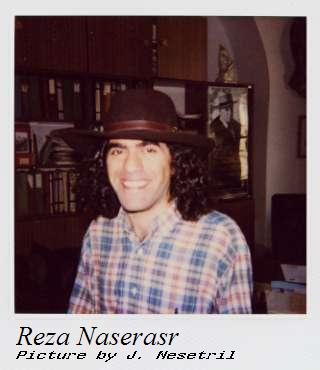 Reza Naserasr合作论文数School of Mathematics and Statistics,5Vincent Limouzy合作论文数LIAFA5
 Édouard Bonnet合作论文数CNRS5Mathieu Raffinot合作论文数4Nicolas Trotignon合作论文数INRIA, Université de Lyon4
 Kristina Vušković合作论文数School of Computing, Faculty of Engineering and Physical Sciences, University of Leeds3Laurent Viennot合作论文数INRIA Rocquencourt2Michaël Rao合作论文数2
 Lalla Mouatadid合作论文数2Alantha Newman合作论文数DIMACS Center2Jean-Sébastien Sereni合作论文数2
 Remi Watrigant合作论文数2
 Emmanuelle Lebhar合作论文数Center for Mathematical Modeling, CNRS2Romain Bourneuf合作论文数1J. Bang-Jensen合作论文数1
 Patrice Ossona de Mendez合作论文数1
 Mikael Rabie合作论文数1
 Mauricio Soto合作论文数1
 Paul Bastide合作论文数1
 Rezvan Sherkati合作论文数Dept Elect & Comp Engn, McGill Univ1Théo Pierron合作论文数Univ. Bordeaux, Bordeaux INP, CNRS, LaBRI, UMR5800, F-33400 Talence, France1
 Lucas Hosseini合作论文数Skiplabs1
 Oscar Defrain合作论文数CNRS, Université Clermont Auvergne1Lucas Pastor合作论文数Laboratoire G-SCOP,University of Grenoble,Grenoble,France1Frédéric Maffray合作论文数1Lopes R A合作论文数1Meyer Pierre合作论文数1
 Anthony Bonato合作论文数Dept Math, Ryerson Univ1
 Alkida Balliu合作论文数Gran Sasso Science Institute1
 Geoffroy Couteau合作论文数CNRS IRIF, Université de Paris Paris France1David Howard合作论文数1
 Gwenaël Joret合作论文数Computer Science Department, Université Libre de Bruxelles1Henning Bruhn合作论文数1
 Eun Jung (EJ) Kim合作论文数High Performance Computing Laboratory, Department of Computer Science & Engineering, Dwight Look College of Engineering, Texas A&m University1
 Jan Arne Telle合作论文数Department of Informatics, Faculty of Science and Technology, University of Bergen1
 Maria Chudnovsky合作论文数Department of Mathematics, Princeton University1
 Paweł Rzążewski合作论文数Department of Information Processing Systems, Faculty of Mathematics and Information Sciences, Warsaw University of Technology;University of Warsaw1
 Pascal Koiran合作论文数computer science
Ecole Normale Superieure de Lyon1
Pascal Koiran合作论文数computer science
Ecole Normale Superieure de Lyon1 Ben Seamone合作论文数Faculty of Mathematics, University of Waterloo1Frédéric Havet合作论文数Univ. Nice-Sophia-Antipolis1
 Ron Aharoni合作论文数Department of Mathematics, Technion - Israel Institute of Technology1
 Cyril Gavoille合作论文数Laboratoire Bordelais de Recherche en Informatique, Universite de Bordeaux1




