ion, General Conceptions, Self-consciousness, Mental Individuality.It would be very difficult for any one with even much more knowledge than I possess, to determine how far animals exhibit any traces of these high mental powers. This difficulty arises from the impossibility of judging what passes through the mind of an animal; and again, the fact that writers differ to a great extent in the meaning which they attribute to the above terms, causes a further difficulty. If one may judge from various articles which have been published lately, the greatest stress seems to be laid on the supposed entire absence in animals of the power of abstraction, or of forming general concepts. But when a dog sees another dog at a distance, it is often clear that he perceives that it is a dog in the abstract; for when he gets nearer his whole manner suddenly changes if the other dog be a friend. A recent writer remarks, that in all such cases it is a pure assumption to assert that the mental act is not essentially of the same nature in the animal as in man. If either refers what he perceives with his senses to a mental concept, then so do both.[200] When I say to my terrier, in an eager voice (and I have made the trial many times), "Hi, hi, where is it?" she at once takes it as a sign that something is to be hunted, and generally first looks quickly all around, and then rushes into the nearest thicket, to scent for any game, but finding nothing, she looks up into any neighbouring tree for a squirrel. Now do not these actions clearly shew that she had in her mind a general idea or concept that some animal is to be discovered and hunted? It may be freely admitted that no animal is self-conscious, if by this term it is implied, that he reflects on such points, as whence he comes or whither he will go, or what is life and death, and so forth. But how can we feel sure that an old dog with an excellent memory and some power of imagination, as shewn by his dreams, never reflects on his past pleasures or pains in the chase? And this would be a form of self-consciousness. On the other hand, as Buchner[201] has remarked, how little can the hard worked wife of a degraded Australian savage, who uses very few abstract words, and cannot count above four, exert her selfconsciousness, or reflect on the nature of her own existence. It is generally admitted, that the higher animals possess memory, attention, association, and even some imagination and reason. If these powers, which differ much in different animals, are capable of improvement, there seems no great improbability in more complex faculties, such as the higher forms of abstraction, and self-consciousness, &c., having been evolved through the development and combination of the simpler ones. It has been urged against the views here maintained that it is impossible to say at what point in the ascending scale animals become capable of abstraction, &c.; but who can say at what age this occurs in our young children? We see at least that such powers are developed in children by imperceptible degrees. That animals retain their mental individuality is unquestionable. When my voice awakened a train of old associations in the mind of the before-mentioned dog, he must have retained his mental individuality, although every atom of his brain had probably undergone change more than once during the interval of five years. This dog might have brought forward the argument lately advanced to crush all evolutionists, and said, "I abide amid all mental moods and all material changes.... The teaching that atoms leave their impressions as legacies to other atoms falling into the places they have vacated is contradictory of the utterance of consciousness, and is therefore false; but it is the teaching necessitated by evolutionism, consequently the hypothesis is a false one."[202] Language.This faculty has justly been considered as one of the chief distinctions between man and the lower animals. But man, as a highly competent judge, Archbishop Whately remarks, "is not the only animal that can make use of language to express what is passing in his mind, and can understand, more or less, what is so expressed by another."[203] In Paraguay the Cebus azarae when excited utters at least six distinct sounds, which excite in other monkeys similar emotions. [204] The movements of the features and gestures of monkeys are understood by us, and they partly understand ours, as Rengger and others declare. It is a more remarkable fact that the dog, since being domesticated, has learnt to bark[205] in at least four or five distinct tones. Although barking is a new art, no doubt the wild parent-species of the dog expressed their feelings by cries of various kinds. With the domesticated dog we have the bark of eagerness, as in the chase; that of anger, as well as growling; the yelp or howl of despair, as when shut up; the baying at night; the bark of joy, as when starting on a walk with his master; and the very distinct one of demand or supplication, as when wishing for a door or window to be opened. According to Houzeau, who paid particular attention to the subject, the domestic fowl utters at least a dozen significant sounds.[206] The habitual use of articulate language is, however, peculiar to man; but he uses, in common with the lower animals, inarticulate cries to express his meaning, aided by gestures and the movements of the muscles of the face.[207] This especially holds good with the more simple and vivid feelings, which are but little connected with our higher intelligence. Our cries of pain, fear, surprise, anger, together with their appropriate actions, and the murmur of a mother to her beloved child are more expressive than any words. That which distinguishes man from the lower animals is not the understanding of articulate sounds, for, as every one knows, dogs understand many words and sentences. In this respect they are at the same stage of development as infants, between the ages of ten and twelve months, who understand many words and short sentences, but cannot yet utter a single word. It is not the mere articulation which is our distinguishing character, for parrots and other birds possess this power. Nor is it the mere capacity of connecting definite sounds with definite ideas; for it is certain that some parrots, which have been taught to speak, connect unerringly words with things, and persons with events.[208] The lower animals differ from man solely in his almost infinitely larger power of associating together the most diversified sounds and ideas; and this obviously depends on the high development of his mental powers. As Horne Tooke, one of the founders of the noble science of philology, observes, language is an art, like brewing or baking; but writing would have been a better simile. It certainly is not a true instinct, for every language has to be learnt. It differs, however, widely from all ordinary arts, for man has an instinctive tendency to speak, as we see in the babble of our young children; whilst no child has an instinctive tendency to brew, bake, or write. Moreover, no philologist now supposes that any language has been deliberately invented; it has been slowly and unconsciously developed by many steps.[209] The sounds uttered by birds offer in several respects the nearest analogy to language, for all the members of the same species utter the same instinctive cries expressive of their emotions; and all the kinds which sing, exert their power instinctively; but the actual song, and even the call-notes, are learnt from their parents or foster-parents. These sounds, as Daines Barrington [210] has proved, "are no more innate than language is in man." The first attempts to sing "may be compared to the imperfect endeavour in a child to babble." The young males continue practising, or as the bird-catchers say, "recording," for ten or eleven months. Their first essays show hardly a rudiment of the future song; but as they grow older we can perceive what they are aiming at; and at last they are said "to sing their song round." Nestlings which have learnt the song of a distinct species, as with the canary-birds educated in the Tyrol, teach and transmit their new song to their offspring. The slight natural differences of song in the same species inhabiting different districts may be appositely compared, as Barrington remarks, "to provincial dialects"; and the songs of allied, though distinct species may be compared with the languages of distinct races of man. I have given the foregoing details to shew that an instinctive tendency to acquire an art is not peculiar to man. With respect to the origin of articulate language, after having read on the one side the highly interesting works of Mr. Hensleigh Wedgwood, the Rev. F. Farrar, and Prof. Schleicher,[211] and the celebrated lectures of Prof. Max Muller on the other side, I cannot doubt that language owes its origin to the imitation and modification of various natural sounds, the voices of other animals, and man's own instinctive cries, aided by signs and gestures. When we treat of sexual selection we shall see that primeval man, or rather some early progenitor of man, probably first used his voice in producing true musical cadences, that is in singing, as do some of the gibbon-apes at the present day; and we may conclude from a widelyspread analogy, that this power would have been especially exerted during the courtship of the sexes,would have expressed various emotions, such as love, jealousy, triumph,and would have served as a challenge to rivals. It is, therefore, probable that the imitation of musical cries by articulate sounds may have given rise to words expressive of various complex emotions. The strong tendency in our nearest allies, the monkeys, in microcephalous idiots,[212] and in the barbarous races of mankind, to imitate whatever they hear deserves notice, as bearing on the subject of imitation. Since monkeys certainly understand much that
Quien desee determinar si el hombre es el descendiente modificado de alguna forma preexistente probablemente se preguntará primero si varía, aunque sea mínimamente, en su estructura corporal y sus facultades mentales; y, de ser así, si estas variaciones se transmiten a su descendencia de acuerdo con las leyes que prevalecen en los animales inferiores.
Published in 1842, this important monograph by Charles Darwin (1809–82) formed the first part of a trilogy of geological studies based on observations made during the celebrated second voyage of the Beagle. Influenced by Charles Lyell's Principles of Geology, Darwin drew in particular on data from the survey of the Keeling Islands in the Indian Ocean to support his theory that subsidence of the ocean floor can account for the formation of coral atolls. He first presented his findings in a paper for the Geological Society of London in 1837, but a heavy workload and illness delayed the appearance of this elegantly argued and illustrated study. For this and his work on barnacles, Darwin would receive the Royal Society's royal medal in 1853. The other studies in the trilogy, Geological Observations on the Volcanic Islands (1844) and Geological Observations on South America (1846), are also reissued in this series.
Life satisfaction is the most pivotal elements that arise in marital satisfaction of couples. The purpose of this study was to show the importance of mental health and life satisfaction of pregnant women during pregnancy. This study was conducted on two groups of subjects, women with intended pregnancy (n = 101) and women with unintended pregnancy (n = 100), a total of 201 patients who admitted to one of the hospitals of Community Clinic Project, Fatepur, Pirganj, Rangpur for medical examination and a period of maternity. Sampling was done in a purposive sampling manner. The method of the study was a cause and effect-comparative one. The used questionnaire was made by the researcher consisting of the demographic variables, satisfaction with life and Diner short form of sexual function. After obtaining consent, questionnaire was completed by the complementary method. Descriptive statistics, percentage, mean and standard deviation were used to analyze the data. To evaluate the research hypotheses, inferential statistics methods, t-test for both groups and Pearson's correlation coefficient were used. According to the results, a significant difference was seen in life satisfaction between women with intended pregnancy and those with unintended pregnancy (P <0.0001). While there was no significant difference in the overall score scale of sexual satisfaction between the two groups of pregnant women but significant difference was obtained concerning sexual desire and sexual satisfaction (P <0.0001). Sexual desire and satisfaction in women with intended pregnancy was reported to be higher than those in women with unintended pregnancy. Finally attention to the psychological needs of pregnant women during pregnancy especially in women with unintended pregnancy will help them to prevent connubial problems and make their life satisfactory.
This volume is part of the definitive edition of letters written by and to Charles Darwin, the most celebrated naturalist of the nineteenth century. Notes and appendixes put these fascinating and wide-ranging letters in context, making the letters accessible to both scholars and general readers. Darwin depended on correspondence to collect data from all over the world, and to discuss his emerging ideas with scientific colleagues, many of whom he never met in person. The letters are published chronologically. In 1881, Darwin published his final book, The Formation of Vegetable Mould through the Action of Worms. He reflected on reactions to his previous book, The Power of Movement in Plants, and worked on two papers for the Linnean Society on the action of carbonate of ammonia on plants. In this year, Darwin's elder brother, Erasmus, died, and a second grandchild, also named Erasmus, was born.
CAN MAN CONTROL HIS NUMBERS? SIR CHARLES DARWIN* I.Introduction When I was honored by the invitation to make a contribution to this symposium, I was embarrassed by the fact that all the other contributors were professional experts in the various subjects associated with evolutionary theory, whereas my own claims could at best be classed as those of an amateur. I have therefore chosen a subject where perhaps I can get on closer terms with the rest, because forecasting on incomplete data is related to statistical theory, a subject ofsome ofmy own earlier studies. Most of the contributions to the symposium are concerned with the way our knowledge has expanded during the past century, and it seemed it would not be uninteresting to attempt an estimate of the probable state of the world at the times when there might be celebrations ofthe second and later centenaries of 1859. Stimulating contributions to the subject of man's future have been given by Huxley and Müller, and I certainly cannot aspire to make criticisms oftheir work. My own aim has been to deal with a far shorter range of time than they do, though I shall permit myselfa few comments on the remoter future too. II.The Present Numbers It can be taken as established by the demographers that our present world population ofmore than two and one-halfbillion will almost surely have become at least five billion by the end of the twentieth century. No famines or pestilences on any reasonably probable scale can affect this, and war of the old type would also be quite unimportant. Even an atomic war would be hardly likely to make a great difference by its * Newnham Grange, Cambridge, England. This paper was prepared for the Darwin Centennial Celebration held at the University ofChicago, November 24-28, 1959. 252 Sir Charles Darwin · Can Man Control His Numbers? Perspectives in Biology and Medicine ¦ Winter i960 direct effects, but it must be recognized that there would very probably be a breakdown of world economics, with consequent killing of many more—perhaps even halfthe world—by famine. However, I do not propose to pay consideration to atomic wars because of the present great uncertainties about them. According to expert agricultural opinion, it should be possible to feed these five billion. Itmaycallforthe enforcement ofbetterfarming methods in many places and for great outlay on irrigation schemes. Also it may require what could be called the charitable transfer of food from parts ofthe world where there has been overproduction to other parts suffering from shortage. According to the experts, it should be possible to raise food production to double the present quantities and so to feed the doubled population. Of course this is not as happy a result as might appear at first sight because we have to remember that even now half the world is undernourished. The world seems to be capable of dealing with the problems of the next fifty years without taking any very radically new kind of action, but what willhappenthen? Why shouldnot the population tend to double again in the following fifty years up to ten billion? This would certainly strain the resources of the finite area of our earth. We have got onto the Malthusian spiral of geometric increase, and we must ask whether anything can be done to prevent our relapse into the hard conditions of most ancient periods of history when the escape from the spiral was through recurrent famine, pestilence, and massacre. Quite a new feature has now entered into our oudook on human life. In the old days population at most never increased more than quite slowly, being restrained by natural selection. To judge whether some past epoch had been a good one or a bad one, it was quite reasonable to make the estimate by merely counting heads—a good epoch being one when numbers were increasing, a bad one when they were diminishing. Now that we are free from the ruthless action ofnatural selection, we are faced with the prospect that increase will be a bad thing because it may lead to a disastrous lowering ofworld conditions. We are being forced to make a revolutionary change in our...
Written in collaboration with his son Francis, a notable botanist, this 1880 book builds on Darwin's earlier investigations into climbing plants, orchids, insectivorous plants, flower variety, and the processes of fertilisation. This detailed study of many species from seed to mature plant further develops Darwin's work on adaptation and evolution, with the aim of collating the results of individual studies into common factors applicable to plants in general. Particular emphasis is given to analysis and investigation of the process here termed circumnutation, the movement of the stem of the plant in order to direct the head in certain directions. This is seen as of paramount importance, with the conclusion that it is modification of this feature that has enabled plants to adapt and evolve so diversely. The authors also note similarities between plants and animals, such as sensitivity to touch and habit of action at certain times.
Delivery assisted by skilled birth attendant is recommended as a means to reduce maternal mortality. However untrained traditional birth attendant (UTBA) assisted home is very high in developing countries. The objective of this study is to assess socio-demographic determinants of UTBA assisted home delivery in rural Bangladesh. Data used in this study was obtained from women questionnaire of the 2011 Bangladesh Demographic and Health Survey (BDHS). Mothers residing in rural Bangladesh, who gave valid information on both delivery place and assistance during delivery, were included in this study (n = 4983). Binary logistic regression model was used to explore factors influencing home delivery assisted by untrained traditional birth attendant. Most of the mothers (79%) reported to have delivered at home and of these home deliveries, 76% were assisted by untrained traditional birth attendant. In multivariate regression model, it is found that the odds of UTBA assisted home delivery decreased with motherâs education, husbandâs education, higher wealth index, number of Antenatal Care (ANC) visits and media exposure. To reduce maternal mortality in rural areas of Bangladesh, program managers and policy makers should consider these factors in designing programs and implementing interventions.
 julius victor carus合作论文数15h g bronn合作论文数8Alfred Russel Wallace合作论文数7nora barlow合作论文数6darwin francis sir合作论文数6Edmond. Barbier合作论文数4ernst krause合作论文数4
 Janet Browne合作论文数Department of the History of Science, Harvard University4duncan m porter合作论文数3
 Susan Michie合作论文数Department of Clinical, Educational and Health Psychology, Division of Psychology and Language Sciences, University College London;Centre for Behaviour Change, University College London3Donald J. Weinshank合作论文数3bert james loewenberg合作论文数2susan ayers合作论文数2James A. Secord合作论文数2Gavin De Beer合作论文数2Colonel Jackson合作论文数1Richard Owen合作论文数1john illustrateur gould合作论文数1Anton Dohrn合作论文数1michel prum合作论文数1p j gautrey合作论文数1D'Arcy Wentworth Thompson合作论文数1G. R. Waterhouse合作论文数1Robert Fitzroy合作论文数1elizabeth illustrateur gould合作论文数1
 Atiqul Chowdhury合作论文数1Peter J. Bowler合作论文数1A. C. Seward合作论文数1F. Darwin合作论文数1asa gray合作论文数1jed harrison合作论文数1Nathan Sheppard合作论文数1Sandra Herbert合作论文数1David Hume合作论文数1john austin合作论文数1John Locke合作论文数1australian aborigines合作论文数1cleveland duval合作论文数1Henry Thomas De La Beche合作论文数1
 Sayem Ahmed合作论文数1
 Lennart Olsson合作论文数1
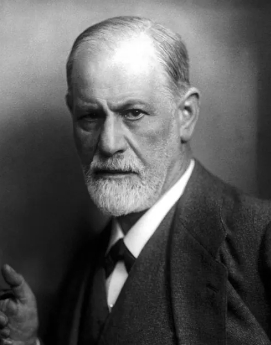 Sigmund Freud (西格蒙德·弗洛伊德)合作论文数University of Vienna1
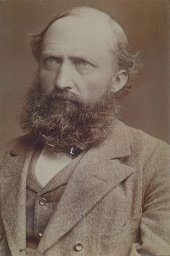 Hermann Müller合作论文数Leipzig University1
 Md Mehedi Hasan合作论文数Helen Keller Intl1
 david kohn合作论文数drew university1thomas bell合作论文数1
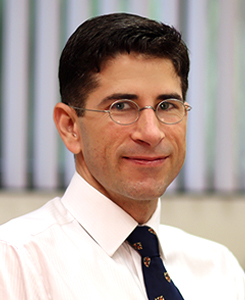 John Van Wyhe合作论文数Department of Biological Sciences, Faculty of Science, National University of Singapore1Marsha Richmond合作论文数1
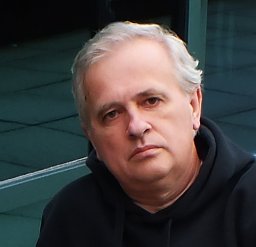 David Antonio合作论文数Department of Neurosciences, Psichiatric and Anesthesiological Sciences, University of Messina1




