Nanocrystals of mixed metal chalcogenides such as silver bismuth sulfide (AgBiS2) offer a potential route to low-cost, environmentally friendly solar absorbers. Realizing the full potential of these materials requires a high degree of control over their properties and preparation. An understanding of the mechanisms by which molecular precursors undergo conversion and decomposition reactions during synthesis is essential for achieving this synthetic control and reproducibility. Here, we have expanded on the development of AgBiS2 nanocrystal synthesis using N,N-diethyldithiocarbamate complexes of Ag+ and Bi3+ as single-source precursors in oleylamine (OLA), establishing it as a reliable approach to high-purity and highly crystalline AgBiS2 nanomaterials. Although size tunability with this method is limited, we unexpectedly found that the addition of dodecanethiol (DDT) to the reaction mixture significantly accelerated the precursor decomposition at lower temperatures, leading to smaller size nanocrystalline domains, albeit with detrimental effects on the particle morphology. In order to understand the origin of this effect, we studied the kinetics and mechanism of precursor decomposition under different conditions using variable-temperature NMR in combination with DFT computations. We found that the use of DDT in combination with OLA promotes acid-catalyzed pathways for N,N-diethyldithiocarbamate transamidation with OLA, ultimately inducing low-temperature C-S bond cleavage. Demonstrating the advantages of this mechanistic understanding, we redesigned a new synthesis using a CS2 additive in combination with dithiocarbamate precursors which produces high-quality, quantum-confined AgBiS2 nanocrystals. In addition to new routes to size-tunable AgBiS2 nanocrystals, these studies provide potentially useful mechanistic insights about dialkyldithiocarbamate precursor conversion reactions in general, and how they can be rationally controlled.
We report the synthesis of the Ru(II) zwitterionic complexes [MeRu(η6-carbazole-N-EMe2Cl)(PPh3)2] (E = Al, Ru-1; Ga, Ru-2) via a one-pot reaction of RuCl2(PPh3)3 with carbazole in the presence of excess group 13 trialkyl reagents (AlMe3 or GaMe3). Structural characterization confirms η6-coordination of ruthenium to a single fused aryl ring of the carbazole framework. The zwitterionic character of Ru-1 and Ru-2 results from deprotonation of the carbazole N-H bond to form an anionic amido fragment coordinated to a group 13 center, while the cationic Ru(II) center is supported by two phosphines, a methyl ligand, and an η6-bound carbazole-derived ligand. Treatment of Ru-1 or Ru-2 with Brookhart's acid [H(OEt2)2][BArF4] reprotonates the amido nitrogen to afford the complex cation [MeRu(η6-carbazole)(PPh3)2]+ (Ru-3). While the zwitterionic complexes Ru-1 and Ru-2 show modest catalytic activity, protonation generates the highly active ion pair Ru-3, which exhibits superior activity and regioselectivity in the hydroboration of N-heterocycles, enabling either 1,4-reduction of pyridines or 1,2-reduction of quinolines under mild, solvent-free conditions without additional additives. Turnover numbers (TONs) of up to 874 for quinoline and 1000 for pyridine are achieved in gram scale reactions. These values compare favorably with those reported for related Ru, Rh, and Ni systems. Overall, this work provides a rare example of a group 13-stabilized zwitterionic ruthenium-arene system derived from carbazole activation and demonstrates its conversion into a highly active cationic catalyst, expanding the scope of ruthenium-arene chemistry for the selective functionalization of N-heterocycles.
A general and practical enantioselective C-H activation/hydroarylation enabled by chiral transient directing groups (cTDGs) and ruthenium η-arene catalysts is reported, providing efficient access to benzo-fused six-membered heterocycles, including chiral chromanes, xanthenes, and related frameworks. It represents a rare and stereochemically distinct application of cTDG-enabled asymmetric C-H activation in d-metal catalysis, which operates a sequential hydroarylation, in contrast to the well-established Pd(II)-based cTDG systems that primarily mediate other classes of C-H functionalization pathways. Notably, this method enables streamlined access to bioactive xanthene scaffolds, including dendrafaconrol-type frameworks, while being equally applicable to chromane derivatives. The catalytic system employs readily available and structurally tunable Ru(II) arene complexes in combination with simple α-branched chiral amines for cooperative enantiomeric control. Arising from the interplay between the cTDG and the η-arene ligand, modular combinations of chiral amines and Ru-arene catalysts enabled efficient optimization of both reactivity and enantioselectivity across diverse substrates. Mechanistic studies, including H/D scrambling, kinetic isotope effect experiments, and density functional theory (DFT) computations, reveal a dynamic catalytic landscape in which the turnover-determining transition state (TDTS) is condition-dependent, and the two enantiomeric pathways proceed through distinct rate-determining steps, providing insight into asymmetric induction in conformationally flexible d-metal systems. The retained aldehyde functionality enables diverse downstream transformations, affording rapid access to biorelevant polycyclic scaffolds and previously unreported architectures. Collectively, this work establishes a modular and tunable platform for asymmetric C-H hydroarylation and expands the synthetic utility of cTDG-enabled catalysis.
A route to a readily accessible source of an anionic methylidyne group (CH-) was developed via lithium-halogen exchange of 11-iodo-9,10-dihydro-9,10-methanoanthracene (MA-I). Upon reaction of this alkyllithium precursor with the complex (TMS-TREN)MoCl as a test platform, the methylidyne complex (TMS-TREN)Mo[triple bond, length as m-dash]CH is quantitatively and rapidly delivered with concomitant loss of anthracene. The kinetics and mechanisms of this reaction are investigated experimentally and computationally and suggest the intermediacy of a metal cycloalkyl complex that releases anthracene through a stepwise pathway via a radical intermediate; the rate of this bond cleavage reaction is more than six orders of magnitude faster than the previously reported route to this complex via ethylene loss from a metal cyclopropyl complex.
Metal-metal cooperativity can promote heterolytic H2 cleavage in hydrogenation, yet few studies compare systems with and without intrametallic bonding. We investigated this effect in Z-type Rh(I)-Ga(III) complexes during the hydrogenation of styrene and related alkenes. Complexes [Rh{Me2Ga(OPy-6-Me)2}(COD)] (12), [Rh{MeGa(OPy-6-Me)2}(COE)Me] (13), and [Rh{MeGa(OPy-6-Me)2}(C2H4)Me] (14) were obtained by metathesis of [Na{Ga(OPy-6-Me)2Me2}2] with [Rh(L)nCl]2 (L = COD, COE, C2H4). The chelate effect of COD in 12 seemingly prevented methyl migration and alkene elimination on Rh, distinguishing from 13 and 14, which exhibited Rh-Ga σ bonding. Crystallographic studies and analyses of frontier orbitals, along with natural bond orbital analysis for complexes 12-14, characterized 13 and 14 as Z-type complexes. Cyclic voltammetry revealed cathodic events at higher potentials for 13 and 14, consistent with lower HOMO energies. Catalytically, 14 showed the highest activity in styrene hydrogenation (TOF 121 h-1), outperforming 12 (6.7 h-1) and 13 (14.3 h-1), and was also active for 1-hexene (109 h-1) and cis-cyclooctene (31 h-1). Insights into the mechanism were provided by 1H NMR and DFT computations, revealing two plausible catalytic cycles that highlight the significance of metal-metal cooperativity in hydrogenation reactions.
A series of CCCNHC pincer Pd(II)X complexes, where X = Cl, Br, or I, were synthesized by a metalation/transmetalation reaction sequence and characterized by NMR and Raman spectroscopy, photophysical studies, X-ray crystallography, and DFT computational studies. This is the first detailed report of the CCCNHC pincer Pd complexes analogous to the previously reported Pt analogs. Photophysical measurements show that by varying the X ligand, the emission wavelength can be tuned. The chloride complex is a water and air stable blue emitter with a quantum yield of 46 % and all three complexes have photostabilities >90 %. A combined DFT and TD-DFT study has been carried out to investigate ground state and excited state geometries as well as absorption and emission processes of CCCNHC Pd complexes. Theoretical results were compared with the corresponding experimental results and showed good agreement. Raman spectroscopy (computational and experimental) was used to examine Pd-X vibrations which have been rarely reported in the literature. Several by-products of the metalation/transmetalation procedure were identified. A rare mixed normal/abnormal carbene pincer Pd(II)Cl complex was isolated and crystallographically characterized.
The thermodynamic favorability of an alkaline solution for the oxidation of water suggests the need for developing hydrogen evolution reaction (HER) catalysts that can function in basic aqueous solutions so that both of the half reactions in overall water splitting can occur in mutually compatible solutions. Although photocatalytic HERs have been reported mostly in acidic solutions and a few at basic pHs in mixed organic aqueous solutions, visible-light driven HER catalyzed by molecular metal complexes in purely alkaline aqueous solutions remains largely unexplored. Here, we report a new cobalt complex with a tetrapyridylamine ligand that catalyzes photolytic HER with turnover number up to 218 000 in purely aqueous solutions at pH 9.0. Density functional theory (DFT) calculations suggested a modified electron transfer (E)-proton transfer (C)-electron transfer (E)-proton transfer (C) (mod-ECEC) pathway for hydrogen production from the protonation of CoII-H species. The remarkable catalytic activity resulting from subtle structural changes of the ligand scaffold highlights the importance of studying structure-function relationships in molecular catalyst design. Our present work significantly advances the development of a molecular metal catalyst for visible-light driven HER in more challenging alkaline aqueous solutions that holds substantial promise in solar-driven water-splitting systems.
Monoligated and bis-ligated CCC-NHC pincer Fe complexes with n-butyl substituents have been synthesized by the Zr metalation/transmetalation route. Both the direct metalation/transmetalation and transmetalation from the isolated ((CCCBu)-C-Bu-C-i-C-i)ZrNMe2Cl2, 3, yielded the octahedrally coordinated Fe(III) bis-ligated complex [((CCCBu)-C-Bu-C-i-C-i)(2)Fe]Cl, 2a. Transmetalation from in situ and isolated ((CCCBu)-C-Bu-C-i-C-i)ZrCl3, 5, in the presence of excess TMSCl and 1 equiv of the Fe source yielded the monoligated ((CCCBu)-C-Bu-C-i-C-i)FeCl2, 4. Conditions that convert [((CCCBu)-C-Bu-C-i-C-i)(2)Fe](+), 2, to ((CCCBu)-C-Bu-C-i-C-i)FeCl2, 4, complex have been found. Characterization included H-1 NMR, UV-visible, femtosecond transient absorption spectroscopies, TD-DFT computations, and mass spectroscopy along with X-ray crystallographic structure determinations.
The copper-catalyzed azide-alkyne cycloaddition (CuAAC) has heralded a new era of chemical biology and biomedicine. However, caveats of the CuAAC include formation of reactive oxygen species (ROS) and other copper-related toxicity. This limits utility in sensitive biological samples and matrices. Towards addressing these caveats, we synthesized and fully characterized two air and water stable trinuclear Cu(I) dimer complexes. The complexes were stable to oxidation in the presence of hydrogen peroxideand other chelators, which was reasoned to be due to the linear benzimidazole-Cu-benzimidazole geometry. Computational investigations of the catalytic cycle implicated two of the three coppers in the trimer complex as the active metal centers. The complexes were shown to catalyze the reaction at far below sub-toxic concentrations for intracellular click reactions to label triple negative breast cancer cells and compared to the current CuSO4-THPTA standard.
Robust earth-abundant transition metal-based photocatalysts are needed for photocatalytic CO2 reduction. A series of six Ni(II) complexes have been synthesized with a tridentate CNC pincer ligand composed of two imidazole or benzimidazole-derived N-heterocyclic carbene (NHC) rings and a pyridyl ring with different R substituents (R = OMe, Me, H) para to N of the pyridine ring. These complexes have been characterized by using spectroscopic, analytic, and crystallographic methods. The electrochemical properties of all complexes were studied by cyclic voltammetry under N-2 and CO2 atmospheres. Photocatalytic reduction of CO2 to CO and HCO2- was analyzed using all of the complexes in the presence and absence of an external photosensitizer (PS). All of these complexes are active as photocatalysts for CO2 reduction with and without the presence of an external PS with appreciable turnover numbers (TONs) for formate (HCO2-) production and typically lower amounts of CO. Notably, all Ni(II) CNC-pincer complexes in this series are also active as self-sensitized photocatalysts. Complex 4(Me) with a benzimidazole-derived CNC pincer ligand was found to be the most active self-sensitized photocatalyst. Ultrafast transient absorption spectroscopy (TAS) experiments and computational studies were performed to understand the mechanism of these catalysts. Whereas sensitized catalysis involves halide loss to produce more active complexes, self-sensitized catalysis requires some halide to remain coordinated to allow for favorable electron transfer between the excited nickel complex and the sacrificial electron donor. This then allows the nickel complex to undergo CO2 reduction catalysis via Ni-I or Ni-0 catalytic cycles. The two active species (Ni-I and Ni-0) demonstrate distinct reactivity and selectivity which influences the formation of CO vs formate as the product.
Although the activation of elemental sulfur by main group compounds is well-documented in the literature, the products of such reactions are often heterocyclic in nature. However, the isolation and characterization of sulfur catenates (i.e., acyclic sulfur chains) is significantly less common. In this study, we report the activation of elemental sulfur by the 9-CAAC-9-borafluorene radical (1) and anion (2) (CAAC = (2,6-diisopropylphenyl)-4,4-diethyl-2,2-dimethyl-pyrrolidin-5-ylidene) to form boron-sulfur catenates (3-6). From the isolation of the octasulfide-bridged compound 3, a sulfur extrusion reaction using 1,3,4,5-tetramethylimidazol-2-ylidene (IMe4) was used to decrease the sulfide chain length from eight to seven (4). Bonding analysis of compounds 3-6 was performed using density functional theory, which elucidated the nature of the sulfur-sulfur bonding observed within these compounds. We also report the synthesis of a series of borafluorene-chalcogenide species (7-9), via diphenyl dichalcogenide activation, which portray characteristics described by an internal heavy atom effect. Compounds 7-9 each exhibit blue fluorescence, with the lowest energy emissive process (S2 → S0) at 436 nm (7 and 8) and 431 nm (9). The S1 → S0 emission is not observed experimentally due to a Laporte forbidden transition. Density functional theory was employed to investigate the frontier molecular orbitals and absorption and emission profiles of compounds 7-9.
In contrast to the reported CCC-NHC pincer ligands that contain normal N-heterocyclic carbenes (NHC), herein we report an imidazole-based abnormal NHC (aNHC) pincer ligand, CCC-aNHC. The CCC-aNHC pincer Pt complex with two aNHC donors was synthesized via the in situ metalation and transmetalation methodology. The 1,3-phenylene(bis-2-phenyl-3-butyl imidazolium) diiodide salt was reacted with Zr(NMe2)(4) to generate a CCC-aNHC pincer zirconium complex in situ. It was transmetalated to Pt using [Pt(COD)Cl-2]. Electrospray ionization of the Pt pincer complex [((Ca-iCa-iCBu)-C-Bu)PtI] in acetonitrile generated an intense peak at m/z = 696.2375, which was assigned to the dinitrogen adduct [M-I+N-2](+) of the cationic CCC-aNHC pincer Pt(II) complex [((Ca-iCa-iCBu)-C-Bu)Pt-N-2](+), representing a rare example of the platinum dinitrogen organometallic complex. The super electron-donating ability of the pincer ligands with abnormal NHC enabled the cationic CCC-aNHC pincer Pt(II) complex to selectively bind N-2 over MeCN in a first-order analysis. A collision-induced dissociation (CID) study was conducted on the N-2 and MeCN adducts, suggesting that more energy was required to dissociate N-2 than MeCN. A computational study suggested that the N-2 adduct was kinetically stable in the gas phase whereas the MeCN adduct was thermodynamically preferred. The computational results reconciled the mass spectral data experiment with an attempt to isolate the N-2 adduct. DFT computation suggested that N-2 dissociation is more challenging due to higher energy transition states, and there is a competitive pathway of N-2 tumbling within the coordination sphere of the Pt. This tumbling path is not available from the MeCN ligand due to ligand structural differences.
The metal-catalyzed C-H borylation reaction is a robust and valuable method for the installation of boronate esters into simple organic substrates. The regioselectivity observed in early examples was governed by steric control; those systems were extended to include a number of approaches that override the natural selectivity to obtain directed C-H borylation. In spite of the array of catalysts and directing groups that are now known to achieve directed reactions, no comprehensive experimental and computational study of the mechanism has been reported to date. In this study, experimental and computational results have been used to provide a detailed study of the catalytic mechanism of amine-directed C(sp(2))-H borylation. A notable result of the present study is the absence of inter- or intramolecular kinetic isotope effects at the functionalized C-H bond. The kinetic and computational data support a rate-determining reassociation of pinacolborane from the iridium catalyst to allow carbon-boron bond formation. An additional feature of note is the role of the boron source in the reaction. Computational analysis revealed the anticipated role of pinacolborane generated in the catalytic cycle. Based on this analysis, pinacolborane was examined as an additive, which overcame an induction period and provided an overall rate enhancement. Pinacolborane was found to serve as an autocatalyst in the transformation, a feature that can be utilized to improve the reactivity in directed C-H borylation reactions. The experimentally and computationally determined free energies of activation for the overall reaction are in agreement and provide valuable insights into substrate-directed C-H borylation reactions.
A new synthesis of N-fused tetracyclic indole derivatives and their related polycyclic analogues has been developed based on ruthenium-(II)-catalyzed C-H activation and intramolecular hydroarylation. A series of polycyclic indoles with a 3-formyl group have been prepared in good to high yields. Various aliphatic and aromatic amines have been studied to form a transient directing group with the aldehyde for the catalytic process. A significant impact of the structures of the aromatic amines was identified, and 1-naphthylamine was shown to enable the catalytic process. DFT computations were performed to gain further insight into the role of the transient directing groups.
The MOF material NU-1000 was employed to host Ni tripodal complexes prepared from new organometallic precursors [HNi(κ4(E,P,P,P)-E(o-C6H4CH2PPh2)3], E = Si (Ni-1), Ge (Ni-2). The new heterogeneous catalytic materials, Ni-1@NU-1000 and Ni-2@NU-1000, show the advantages of both homogeneous and heterogeneous catalysts. They catalyze the hydroboration of aldehydes and ketones more efficiently than the homogeneous Ni-1 and Ni-2, under aerobic conditions and show recyclability.
The formation of dimer [(μ-Cl)Rh-(κ3(P,Si,Si)PhP(o-C6H4CH2SiiPr2)(o-C6H4CH2SiiPrnPr))]2 (Rh-3) with an n-propyl group on one of the silicon atoms as a minor product was affected by the reaction of [RhCl(COD)]2 with proligand PhP(o-C6H4CH2SiHiPr2)2, L1. The major product of the reaction was monomeric 14-electron Rh(III) complex [ClRh(κ3(P,Si,Si)PhP(o-C6H4CH2SiiPr2)2)] (Rh-1). Computations revealed that the monomer-dimer equilibrium is shifted toward the monomer with four isopropyl substituents on the two Si atoms of the ligand as in Rh-1; conversely, the dimer is favored with only one n-propyl as in Rh-3, and with less bulky alkyl substituents such as in [ClRh(κ3(P,Si,Si)PhP(o-C6H4CH2SiMe2)2]2 (Rh-2). Computations on the mechanism of formation of Rh-3 directly from [RhCl(COD)]2 are in agreement with the experimental findings and it is found to be less energetic than if stemming from Rh-1. Additionally, a Si-O-Si complex, [μ-Cl-Rh{κ3(P,Si,C)PPh(o-C6H4CH2SiiPrO SiiPr2CH-o-C6H4)}]2, Rh-4, is generated from the reaction of Rh-1 with adventitious water as a result of intramolecular C-H activation.
A series of five ruthenium (II) complexes containing a tridentate CNC pincer ligand, a bidentate 2,2 '- bipyridine (bpy) ligand, and a monodentate ligand (chloride, bromide, or acetonitrile) were synthesized. The CNC pincer ligands used imidazole or benzimidazole-derived N-heterocyclic carbenes (NHCs) as the C donors and a 4-methoxy-substituted central pyridyl ring as the N donor. All of the complexes were characterized by analytical, spectroscopic, and single-crystal X-ray diffraction methods. These complexes were used as catalysts for visible-light-driven CO2 reduction in the presence and absence of an external photosensitizer (PS). Notably, complex 4C with a benzimidazole-derived CNC pincer ligand and bromide as the monodentate ligand was the most active catalyst tested for both sensitized and self-sensitized CO2 reduction. Thus, this catalyst was the subject of further mechanistic studies using transient absorption spectroscopy (TAS), absorption spectroelectrochemistry (SEC), and computational studies. A mechanism has been proposed for self-sensitized CO2 reduction involving (1) light excitation of the catalyst, (2) reduction by sacrificial donors, (3) halide loss, and (4) CO2 binding to form [RuCO2]+ as the catalyst resting state. The timeline for these steps and the structures of key intermediates are all supported by experimental observations (including TAS and SEC) and supporting computational studies. Subsequent steps in the cycle past [RuCO2]+ were not experimentally observable, but they are supported by computations. Experiments were also used to explain the differences observed for sensitized catalysis. Catalyst 4C is an unusually active catalyst for both sensitized and self-sensitized CO2 reduction, and thus being able to understand how it functions and which steps are turnover limiting is an important development facilitating the design of commercially viable catalysts for solar fuel formation.
An entry from the Cambridge Structural Database, the world’s repository for small molecule crystal structures. The entry contains experimental data from a crystal diffraction study. The deposited dataset for this entry is freely available from the CCDC and typically includes 3D coordinates, cell parameters, space group, experimental conditions and quality measures.
A combined synthetic and theoretical investigation of N-heterocyclic carbene (NHC) adducts of magnesium amidoboranes is presented, which involves a rare example of reversible migratory insertion within a normal valent s -block element. The reaction of (NHC)Mg(N(SiMe 3 ) 2 ) 2 ( 1 ) and dimethylamine borane yields the tris(amide) adduct (NHC−BN)Mg(NMe 2 BH 3 )(N(SiMe 3 ) 2 ) ( 2 ; NHC−BN = NHC−BH 2 NMe 2 ). In addition to Me 2 N=BH 2 capture at the NHC C−Mg bond, mechanistic investigations suggest the likelihood of aminoborane migratory insertion from an RMg(NMe 2 BH 2 NMe 2 BH 3 ) intermediate. To elucidate these processes, the carbene complexes (NHC)Mg(NMe 2 BH 3 ) 2 ( 8 ) and (NHC)Mg(NMe 2 BH 2 NMe 2 BH 3 ) 2 ( 9 ) were synthesized, and a dynamic migration of Me 2 N=BH 2 between Mg−N and NHC C−Mg bonds was observed in 9 . This unusual reversible migratory insertion is presumably induced by dissimilar charge localization in the − {NMe 2 BH 2 NMe 2 BH 3 } anion, as well as the capacity of NHCs to reversibly capture Me 2 N=BH 2 in the presence of Lewis acidic magnesium species.
 Guangchao Liang (梁广超)合作论文数Academy of Advanced Interdisciplinary Research, Xidian University35
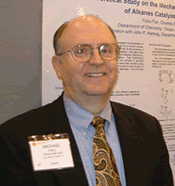 Michael B. Hall合作论文数Department of Chemistry, Texas A&M University32
 Zhao Xuan合作论文数26
 T. Keith Hollis合作论文数Department of Chemistry, The University of Chicago23Robert W Lamb合作论文数20Theodore J. Burkey合作论文数20Nathan J. Deyonker合作论文数University of Memphis, University of Memphis ^17
 Nathan I. Hammer合作论文数University of Mississippi16
 Jared H. Delcamp合作论文数Roger Adams Laboratory;Department of Chemistry;UniVersity of Illinois;Roger Adams Laboratory, UniVersity of Illinois15
 Elizabeth T Papish合作论文数Laboratory, Cornell University15Thomas Hollis合作论文数Health Sciences Department of Biochemistry, Wake Forest University15Jason A. Denny合作论文数14Bruno Donnadieu合作论文数13Roger G. Letterman合作论文数13
 Ping Wang (王平)合作论文数Dept Chem & Biochem, Florida State Univ13Qu Fengrui合作论文数11Leigh Katherine N合作论文数11Jermaine O. Johnson合作论文数10
 Thi Khanh Nghia Le合作论文数10
 Valle Henry U合作论文数10
 Robert J. Gilliard合作论文数9
 Nathan C. Frey合作论文数Prescient Design;Genentech;AtomicAI9
 George Michael Blackburn合作论文数Department of Molecular Biology and Biotechnology, The University of Sheffield9
 Matthew W. Bowler合作论文数ESRF, Europ. Synchrt. Radiation Facility9
 Sanjit Das合作论文数Dept Chem & Biochem, Univ Alabama8Min Zhang合作论文数8
 Van Dornshuld Eric合作论文数Department of Chemistry and Biochemistry, University of Mississippi8Burjor Captain合作论文数Department of Chemistry and Biochemistry, University of South Carolina8Theodore R. Helgert合作论文数8Diane A. Dickie合作论文数Department of Chemistry, Simon Fraser University8Shane Autry合作论文数7
 Chance Boudreaux合作论文数Department of Chemistry and Biochemistry, University of Alabama7
 Manohar Vennampalli合作论文数7
 Charles B. Duke合作论文数Department of Physics and Astronomy, University of Rochester7Edwin J. Heilweil合作论文数7Matthew J. Cliff合作论文数Department of Molecular Biology and Biotechnology, The University of Sheffield7Allen G. Oliver合作论文数University of Notre Dame, University of Notre Dame7Andrea M. Hounslow合作论文数7N.H. Williams合作论文数6F. Hollfelder合作论文数6Kristie R. Ruddick合作论文数6Karen L. Mosley合作论文数6N. J. Baxter合作论文数6
 Russell S. Drago合作论文数Department of Chemistry, University of Florida6
 Nalaka Liyanage合作论文数University of Mississippi Chemistry and Biochemistry, UNITED STATES6
 Dinesh Nugegoda合作论文数Dept Chem & Biochem, Univ Mississippi6
 Vivek Dixit合作论文数Purdue Quantum Sci & Engn Inst, Purdue Univ6Burks Dalton B合作论文数6
 Richard D. Adams合作论文数Department of Chemistry and Biochemistry, College of Arts and Sciences, University of South Carolina6




