at the age of 94.He was a co-winner of the Nobel Prize in Chemistry in 1985 for developing mathematical methods for deducing the molecular structures of chemical compounds.Herb was born in New York City, the oldest of three sons of Israel Hauptman -a printer -and Leah (Rosenfeld) Hauptman, who was a sales clerk in the ladies' hat department of a prominent New York City department store.He credited his parents for playing an integral role in his development as a scientist; they gave him the choice to study whatever he wanted.In his Nobel autobiography, he said, 'My interest in most areas of science and mathematics began at an early age, as soon as I had learned to read, and continues to this day.'He also frequently said that the beauty of the Platonic solids was an early inspiration.He attended Townsend Harris High School, where his interest in science and mathematics was nurtured, and then went on to the City College of New York where he graduated in 1937, earning the Belden Medal as the top student in mathematics.He also earned a master's degree in mathematics at Columbia University in 1939.On a blind double date in the fall of 1940, Herb found that he preferred his friend's date.Displaying the same drive that later led to his professional success, he quickly acted on his emotions and, within a matter of weeks, married his young bride, Edith Citrynell, an educator.Shortly after he and Edith were married, Herb joined the legions of young American men who were sent to serve in World War II.A Navy ensign, he was stationed in the Southwest Pacific where he was trained as a weather forecaster.He was made a permanent 'officer of the day' and was responsible for responding to a variety of crises.While he only had one day of firefighter training, he also served as a Fire Marshall in the Philippines -an assignment that twice nearly cost him his life.His time in the war was marred with close calls and the constant presence of death and destruction.During his war years, he spent his rare moments of spare time studying calculus (he brought the book with him to the South Pacific) and solving mathematical problems.His wartime experience was a constant memory throughout his life and led him, in future years, to Image courtesy of Michael Mandolfo.
Grids represent an emerging technology that allows geographically- and organizationally-distributed resources (e.g., computer systems, data repositories, sensors, imaging systems, and so forth) to be linked in a fashion that is transparent to the user. The New York State Grid (NYS Grid) is an integrated computational and data grid that provides access to a wide variety of resources to users from around the world. NYS Grid can be accessed via a Web portal, where the users have access to their data sets and applications, but do not need to be made aware of the details of the data storage or computational devices that are specifically employed in solving their problems. Grid-enabled versions of the SnB and BnP programs, which implement the Shake-and-Bake method of molecular structure (SnB) and substructure (BnP) determination, respectively, have been deployed on NYS Grid. Further, through the Grid Portal, SnB has been run simultaneously on all computational resources on NYS Grid as well as on more than 1100 of the over 3000 processors available through the Open Science Grid.
Direct methods of phase determination have played an important role in determining heavy-atom substructures from difference amplitudes of native-derivative crystal pairs or crystals containing anomalously scattering atoms. The minimal principle-based Shake-and-Bake procedure is one of the most successful direct methods for heavy-atom substructure determination. The computer program SnB, which implements the Shake-and-Bake procedure and is part of the protein structure-determination package BnP, has recently been optimized for rapid and automated substructure determination. Specifically, SnB has been upgraded with (i) a newly developed statistical minimal function for higher success rates, (ii) an optimal FFT grid size for dramatic cost-effectiveness improvement, (iii) a dynamic figure of merit for automatic substructure-solution detection and (iv) a strategy of alternation of anomalous differences with isomorphous dispersive differences for virtually guaranteed substructure solution.
In this paper, we present cyberinfrastructure and grid computing efforts in New York State. In particular, we focus on fundamental efforts in Binghamton and Buffalo, including the design, development, and deployment of the New York State Grid, as well as a grass-roots New York State Initiative.
A new version of the direct-methods program SnB has been developed. This version incorporates the triplet sieve method for phasing centrosymmetric structures in a way that is transparent to users. The triplet sieve procedure may decrease significantly the time required to achieve a solution for such structures.
This chapter describes the steps required to carry out the two-stage phasing process for proteins and illustrates these through the application of BnP program to the multiple-wavelength anomalous dispersion (MAD) data set for the selenomethionine derivative of methylmalonyl-coenzyme A epimerase from Propionibacterium shermanii. The BnP program has two operational modes, automatic and manual. In automatic mode, which is geared to routine high-throughput applications, the user needs only to specify a few parameters, and the entire two-stage phasing process from substructure determination through phase refinement and solvent flattening is chained together and started by clicking a single button. On the other hand, manual mode is available for large structures or difficult problems with marginal data, and it allows the user to control many parameters and to execute the major steps in the phasing process sequentially.
Computational and data grids represent an emerging technology that allows geographically and organizationally distributed resources ( e.g. computing and storage resources) to be linked and accessed in a fashion that is transparent to the user, presenting an extension of the desktop for users whose computational, data and visualization needs extend beyond their local systems. The New York State Grid is an integrated computational and data grid that provides web-based access for users from around the world to computational, application and data storage resources. This grid is used in a ubiquitous fashion, where the users have virtual access to their data sets and applications, but do not need to be made aware of the details of the data storage or computational devices that are specifically employed. Two of the applications that users worldwide have access to on a variety of grids, including the New York State Grid, are the SnB and BnP programs, which implement the Shake-and-Bake method of molecular structure ( SnB ) and substructure ( BnP ) determination, respectively. In particular, through our grid portal ( i.e. logging on to a web site), SnB has been run simultaneously on all computational resources on the New York State Grid as well as on more than 1100 of the over 3000 processors available through the Open Science Grid.
We have designed and deployed the New York State Grid (NYS Grid), which consists of an integrated computational and data grid. NYS Grid is used in a ubiquitous fashion, where the users have virtual access to their data sets and applications, allowing the user to perform tasks without knowledge of the physical hosts for data storage or compute systems. A wide variety of applications have been ported to NYS Grid, including critical programs in a variety of fields that are ideally suited to a multiprocessor computing environment with distributed datasets. Two applications from structural biology are presented as exemplars, including our Grid portal version of the SnB program, which has been run simultaneously on all computational resources on NYS Grid, as well as on the majority of the tens of thousands of processors available through the Open Science Grid. This paper also discusses previous grids that we developed, including the Buffalo-based (ACDC) experimental grid and the Western New York Grid, as well as a wide variety of advances that we have made in terms of grid monitoring, predictive scheduling, grid portal design, and grid-enabling application templates, to name a few.
The background and use of dual-space direct methods for the ab initio phasing of small macromolecules as well as the phasing of heavy-atom substructures of larger biological structures are described. Basic concepts include normalized structure factors, multisolution procedures, random trial structures, phase-refinement formulas, peak-picking techniques, density modification including charge flipping, and recognizing solutions. Other topics discussed are the use of Patterson information to get better starting phases, avoiding false minima, the effects of data resolution, data quality and completeness, special features of space group P1, refinement strategies, and future possibilities. Several independent computer programs that implement these concepts are then briefly described.
A novel statistical approach to the phase problem in X-ray crystallography was introduced in a recent paper [Xu & Hauptman (2004), Acta Cryst. A60, 153-157]. In this approach, a new minimal function based on the statistical distribution of structure-invariant values serves as the foundation of an optimization procedure called statistical Shake-and-Bake. Favorable application of this procedure to Se-atom substructure determination depends on the choice of the statistical interval over which the function is defined. The effects of interval variation have been studied for 19 Se-atom substructures ranging in size from five to 70 Se atoms in the asymmetric unit and the results have shown an overall improvement in success rate relative to traditional Shake-and-Bake. Statistical Shake-and-Bake is being incorporated as the default optimization procedure in newly distributed versions of the SnB and BnP computer programs.
We present a fully networked system for visually monitoring and editing scientific data across a wide variety of platforms and graphics environments. The software that we introduce provides a cross-platform, collaborative environment to view and modify data. Our solution allows for an immersive display of structures in a CAVE virtual reality environment, as well as full support for traditional desktop graphics environments. Via an auto-refresh capable file-based database, the software system also provides a real-time monitor for applications so that a geographically distributed set of personnel can monitor the progress of an application(s). The system was designed with an object-oriented approach in order to allow for an easy extension of the API. In this paper, we demonstrate proof-of-concept by using a critical, complex, and computationally intensive application from structural biology (Shake-and-Bake) that was recently listed on the IEEE poster of “Top Algorithms of the 20 Century”. CR Categories: I.3 [Computer Graphics]: General; E.1 [Data Structures]: Distributed Data Structures; D.1.5 [Programming Techniques]: Object-oriented Programming; C.2.4 [Distributed Systems]; B.4.2 [Input/Output and Data Communications]: Input/Output Devices---Image display; J.3 [Life and Medical Sciences]: Biology and genetics;
DETERMINATION C152abnormally large errors in the phase of systematically weak reflections.To avoid this, special treatment is needed.Direct methods have been developed to solve the phase problem for small structures having pseudo-translational symmetry.The method can be used to obtain the actual heavy-atom substructures from the Bijvoet differences in the presence of pseudo-translational symmetry.Various phasing procedures have been tested and compared using a set of artificial protein SAD data.
We have been developing a new program, Phaser, to apply likelihood to solving macromolecular crystal structures by molecular replacement and experimental phasing methods.Initial experiences with molecular replacement using brute-force likelihood targets in the program Beast [1] showed that likelihood had greater power to discriminate correct solutions, but the brute-force approach was prohibitively slow.To address this problem we have developed likelihood-based fast rotation [2] and fast translation [3] functions.The combination of these fast targets in Phaser with powerful automation strategies makes it possible to solve many difficult molecular replacement problems routinely.More recent developments in Phaser focus on experimental phasing.The program includes new likelihood targets for phasing by SAD [4], as well as by MAD or MIRAS (unpublished).Completion of the heavy-atom substructure is accomplished through the automated interpretation of log-likelihood-gradient maps.Applications of Phaser to difficult structure solutions will be discussed, along with plans for future development.
Shake-and-Bake is a dual-space direct-methods procedure for crystal structure determination capable of providing ab initio solutions for structures containing as many as 1200 independent non-H atoms, as well as for heavy-atom substructures containing as many as 160 Se atoms in the asymmetric unit. In traditional Shake-and-Bake, phase refinement in reciprocal space utilizes the technique of parameter shift to reduce the value of a minimal function that considers only the mean-square differences between the current values of the cosine structure invariants and their expected values. A new type of minimal function, termed the sine-enhanced minimal function, considers both cosine and sine values of the structure invariants. Exhaustive tests on six Se-atom substructures, ranging in size from 12 to 160 Se atoms in the asymmetric unit, have shown that a two- to eightfold increase in the percentage of trials that converge to solution is attainable with the technique of sine-enhanced parameter shift. The corresponding sine-enhanced Shake-and-Bake, with suitable default parameter values, is being incorporated into a new distributed version of the SnB computer program.
Shake-and-Bake is an ab initio direct method for solving the crystallographic phase problem. Its most distinctive feature is the repeated alternation of reciprocal-space phase refinement with a complementary real-space process that seeks to improve phases by applying constraints. The Shake-and-Bake philosophy has been implemented in two independent computer programs, SnB and SHELXD. These programs have proven capable of solving complete structures containing as many as 2000 independent non-H atoms provided that accurate diffraction data have been measured to a resolution of 1.2Å or better. By using anomalous difference data, solutions have also been obtained for substructures containing as many as 70 selenium atoms. Substructure data sets having a maximum resolution in the 2.25-5.0Å range have been used successfully.
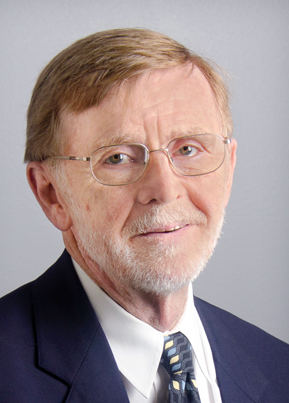 William L. Duax合作论文数Department of Structural Biology, Jacobs School of Medicine & Biomedical Sciences, State University of New York at Buffalo23
 Russ Miller合作论文数Department of Computer Science and Engineering, School of Engineering and Applied Sciences, University at Buffalo The State University of New York;Department of Electrical Engineering, School of Engineering and Applied Sciences, University at Buffalo The State University of New York;Zyante, Inc.16
 Hauptman Herbert A合作论文数8
 Jane F Griffin合作论文数Hauptman-Woodward Medical Research Institute8Douglas C. Rohrer合作论文数7
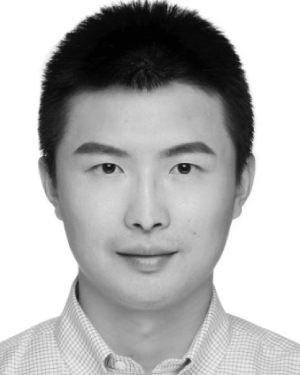 Xu Hongliang合作论文数Engineering Research Center of Agricultural Microbiology Technology, Ministry of Education & Heilongjiang Provincial Key Laboratory of Ecological Restoration and Resource Utilization for Cold Region, Heilongjiang University6
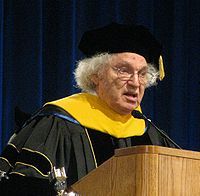 Herbert A. Hauptman合作论文数5Yoshio Osawa合作论文数4Robert H. Blessing合作论文数Hauptman-Woodward Medical Research Institute4
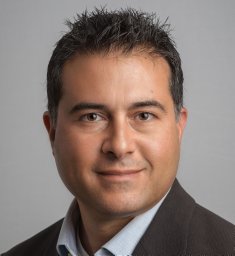 Steven M. Gallo合作论文数Center for Computational Research, SUNY at Buffalo4Me Wolff合作论文数3
 George Sheldrick合作论文数University of Göttingen3
 Isabel Usón合作论文数Institut für Anorganische Chemie der, Universität Göttingen3Jonathan J. Bednasz合作论文数3Catherine L. Ruby合作论文数3William Furey合作论文数Crystallography, University of Pittsburgh Pittsburgh3
 Mark R. Green合作论文数Morgan Stanley Smith Barney LLC3M. Manoharan合作论文数2G. Minasov合作论文数2Mj Kane合作论文数2MP PASTORE合作论文数2Hongliang Xu合作论文数2Mary D. Menachery合作论文数2M A Maier合作论文数2Rf Raffauf合作论文数2
 P. Lynne Howell合作论文数Department of Biochemistry, Temerty Faculty of Medicine, University of Toronto2
 Madhusudhan Govindaraju合作论文数SUNY, State University of New York2
 Martin Egli合作论文数Department of Biochemistry, School of Medicine, Vanderbilt University2Kenyu Shibata合作论文数2Valentina Tereshko合作论文数2Haoyun An合作论文数2Phillip Dan Cook合作论文数2Charles J. Kelley合作论文数2Vladimir Z. Pletnev合作论文数2Ruslan Sanishvili (Nukri)合作论文数King Mongkut's University of Technology Thonburi2G.David Smith合作论文数2
 David Hawke合作论文数Department of Molecular Pathology, The University of Texas M.D. Anderson Cancer Center2Anil C. Ghosh合作论文数2Dorita A. Norton合作论文数2Douglas C Rohrer合作论文数2Marianna Teplova合作论文数Department of Biological Sciences, Vanderbilt University2Ken Chiu合作论文数Computer Science Department at SUNY Binghamton;Grid Computing Research Laboratory2Braja G. Hazra合作论文数2Takuo Makino合作论文数2TA BEERMAN合作论文数1O.V. Dominguez合作论文数1A. Segaloff合作论文数1G.T. Campbell合作论文数1B. Little合作论文数1




