The ultrahigh-frequency (UHF) maps are often used as an important basis to evaluate the insulation status. However, the current research is mostly driven by pure data, making it difficult to judge the actual status of defects through UHF maps. Multiscale simulation technologies are adopted to simulate the UHF maps of surface defects from physical mechanisms. The microprocess of surface discharge is simulated using the plasma model, and the electromagnetic (EM) signal amplitudes are calculated based on the finite-difference time-domain (FDTD) method, using the current in the microsimulation as an excitation. Then, the segmented equivalent parameters of the circuit model are solved using the microsimulation results. The phases of the UHF pulses are simulated in the circuit model, and the UHF maps are obtained combined with the signal amplitude. It is found that the undischarged segment resistance determines the voltage recovery time, which is a key parameter that affects the UHF maps. The random settings of the simulation are important factors making the simulation results more reasonable. The relationship between the microprocess of surface discharge and the UHF maps is established theoretically, providing a basis for the accurate assessment of the insulation defect status of power equipment.
Corona discharge theory has been widely applied in various industrial fields, including power transmission and transformation project, gas purification, and particle charging. However, its microphysical mechanism remains a hot research topic. Currently, the theoretical analysis of corona discharge lacks consensus on the influence mechanism of oxygen--nitrogen components in air on its luminescent characteristics. This study aims to elucidate the underlying microphysical mechanisms through extensive experimental investigations. Based on our established high-time-resolution experiment platform for plasma imaging with quantum detection technology, we have conducted experiments on corona discharge under different nitrogen--oxygen ratios at a high time resolution. Our results show that in nitrogen, air, and oxygen environments, the luminescent features and development trends of corona discharge are generally consistent but exhibit differences in intensity and development speed depending on the gas environment. Upon analyzing both amplitude characteristics and temporal characteristics of the discharge luminescence, this study proposes an influence mechanism of oxygen components in air on corona discharge luminescence.
Non-intrusive load monitoring (NILM) is one of the important technologies in home energy management and power demand response scenario. However, the presence of multi-mode appliances and appliances with close power values have affected in diminishing the accuracy of identification based NILM algorithms. To tackle these challenges, the work proposes a resident load decomposition method combining multi-scale attention mechanism and convolutional neural network. At the first stage, the attention scores of the normal load data at the previous few moments of the attention model are smoothed dynamically against the abnormal scores at the current moment. The load identification attention model is optimized by constraint factors. Then, on this basis, convolution filters of different sizes are used to model the mixed load data of different electrical equipment, to mine more abundant characteristic information. Finally, to illustrate the proposed processes and validate its effectiveness, taking the PLAID data set as an example, the method proposed in the article is compared with respect to the existing NILM techniques. The experimental results show that the method based on the multi-scale attention mechanism in this paper can greatly improve the effect of load decomposition. Moreover, it reduces the confusion problem of electrical appliance identification with similar load characteristics.
配电网设备量多,覆盖面广,拓扑关系复杂,影响状态的因素众多,引入大数据随机矩阵的分析方法,通过免机理模型的方式挖掘多源因素影响下的配电网运行信息,利用随机矩阵圆环率理论,通过调整输入矩阵的数据类型与规模,对配电网整体运行态势与节点运行相关性进行分析,得到数据模型指标;结合物理指标与数据模型指标各自的特点,形成配电网运行可靠性综合评估方法.算例分析证明该方法能从宏观与微观的角度全面、快速地分析配电网的运行可靠性,满足未来配电网可靠、优质运行的需求.
在物联网与智能电网相结合的背景下,如何构建泛在电力物联网,使其更为高效与经济,是需要首先解决的一个问题.而复杂网络由于其出众的拓扑建模与分析能力,与该研究内容非常契合,因此考虑将复杂网络理论应用于泛在电力物联网的规划与设计之中,通过网络效率、凝聚度等网络评估指标,节点度、节点介数、效率损失系数、凝聚度变化率等节点评估指标,研究一种针对给定电力网络设计其泛在电力物联网感应层与网络层的方法,为泛在电力物联网的规划提供参考与依据.
The severity evaluation of UHF signals of partial discharge in GIS is helpful to formulate a maintenance strategy in time, and improve the reliability of power system operation. Most of the evaluation methods are based on structured data, which cannot fully characterize the state of the equipment. In this paper, a method for evaluating the severity of UHF signals of partial discharge in GIS based on semantic analysis is presented. It comprehensively considers the influence of structured data and unstructured text data on the state of equipment, including measured data on partial discharge, relevant information of defects, and equipment operating parameters. Firstly, the severity of UHF signals of partial discharge is defined. According to the on-site detection of substations, a data set containing equipment detection reports and PRPS data is established. Aiming at semantic analysis, Word Embedding is used to associate and encode textual information to reduce the subjectivity of the encoding. Measured data on partial discharge is also combined and analyzed for evaluation. The method proposed is used for case analysis and compared with other methods. The results show that the comprehensive utilization of structured data and unstructured text data can reflect the state of equipment more comprehensively and truthfully, and improve the accuracy of the results.
流注放电是一个复杂的非线性动力学过程,会受到众多因素的影响,目前针对放电微观过程受温度的影响机理研究较少.因此,该文利用流注放电的流体模型仿真研究了大气压下针板空气间隙的流注放电过程,提出流注放电流体模型中的温度控制关键参数体系及其计算方法.对比理论计算与实验结果,验证了该仿真方法的合理性.对大气压下不同温度变化的流注放电仿真结果表明,温度升高导致带电粒子运动速度加快,从而使流注发展速率显著升高、放电电流及电流变化率增大;温度升高对电离过程影响较小,且会使流注头部电子浓度及场强有下降趋势.该文提出的温度控制参数体系综合考虑了电离、附着与漂移过程受温度的影响,得到了温度对流注放电微观过程的影响机理.
Recently, the intelligent construction of distribution station is still in its infancy. Information is not fused between different monitoring systems. The current investment in distribution network detection means is large, which does not match the low-cost characteristics of distribution network equipment. So information isolation and high cost are the two main restrains of condition monitoring. Aiming at solving these problems, this paper proposes a new monitoring system for power distribution station in the context of the ubiquitous power Internet of things. Firstly, the overall design of the system is studied. A highly integrated comprehensive monitoring terminal is developed, based on the idea of integrated perception. It can reduce monitoring and communication costs through the flexible access and efficient processing of key state parameters such as sound, light, electricity, and heat. Secondly, algorithms are developed for evaluation and diagnosis of power distribution equipment. Artificial intelligence and big data analysis methods were used for condition evaluation and anomaly detection. It improves the efficiency of fault handling. Finally, the monitoring systems are applied in some power distribution stations. After a period of application, the system cross-professional data are fully integrated and multiple state parameters are obtained in real time for comprehensive application. In conclusion, this work can provide new solutions for the construction of intelligent power distribution stations.
Automatic recognition of foreign body intrusion and human behavior provides an effective means to eliminate hidden dangers for power grid.Considering the low accuracy of traditional power image recognition,this paper proposes a generative adversarial convolution neural network algorithm for foreign body recognition of power grid.In view of the shortage and imbalance of abnormal image sample data,first,images with abnormal features are obtained by using the zero-sum game and confrontation training of the generative adversarial network.And then,the convolution neural network is used to analyze the real samples and extend images to perform the target detection task.Finally,the proposed algorithm is used to detect the anomaly intrusion and personnel behavior images.The results show that it can effectively improve the recognition accuracy of power foreign bodies.
运行条件下气体绝缘组合电器(gasinsulatedswitchgears,GIS)的局部放电检测已取得了大量的应用,但对于检测到局部放电信号的严重程度评估仍然是亟待解决的难题。利用变电站现场GIS的局部放电检测数据,结合长短时记忆网络(long short-term memory network,LSTM)和Bagging集成学习方法,提出一种运行条件下GIS局部放电严重程度评估方法。先明确了用GIS设备未来1个月内的故障概率来定义局部放电严重程度,并基于该定义对大量的变电站现场检测数据确定了数据标签,建立了数据集。针对数据样本不均衡,利用Bagging集成学习方法将N个LSTM深度网络构建成适用于局部放电严重程度评估的集成学习模型。通过对由局部放电数据特征值、局部放电技术影响因素、设备运行信息等组成的特征向量进行分析,模型最终可以输出局部放电严重程度评估结果。通过与普通LSTM网络、反向传播神经网络(backpropagationneuralnetwork,BPNN)以及Bagging-BPNN方法的对比,以及变电站现场检测案例分析,结果表明所提方法可以有效地对运行条件下GIS局部放电进行严重程度评估,易于实施,与普通LSTM、BPNN和Bagging-BPNN相比评估结果的可信度更高。
Abstract Power transformer state parameter prediction analysis can provide strongly technical support for equipment state assessment. The available transformer state parameter prediction models are mainly based on the very limited number of state parameters for analysis and judgment. So, the stability and the intelligence of prediction still need improvement. Based on the large amount of information of transformer equipment state, the data of environmental meteorological and grid operation, this paper proposes a transformer state parameter prediction method using deep mining of complex associations with the grid long short-term memory network (GLSTM). Association relationships captured from GLSTM are used to correct the prediction of state parameters. Finally, the method is applied to the top oil temperature trend prediction of a 500 kV transformer. The results show that the proposed method can mine and analyze the relationship between the influencing factors of equipment state. Compared with the prediction methods without considering the correlation and the traditional methods, the association relation extracted by GLSTM improves the stability of the prediction model and reduces the prediction error.
With the accumulation of partial discharge (PD) detection data from substation, case-based reasoning (CBR), which computes the match degree between detected PD data and historical case data provides new ideas for the interpretation and evaluation of partial discharge data. Aiming at the problem of partial discharge data matching, this paper proposes a data matching method based on a variational autoencoder (VAE). A VAE network model for partial discharge data is constructed to extract the deep eigenvalues. Cosine distance is then used to calculate the match degree between different partial discharge data. To verify the advantages of the proposed method, a partial discharge dataset was established through a partial discharge experiment and live detections on substation site. The proposed method was compared with other feature extraction methods and matching methods including statistical features, deep belief networks (DBN), deep convolutional neural networks (CNN), Euclidean distances, and correlation coefficients. The experimental results show that the cosine distance match degree based on the VAE feature vector can effectively detect similar partial discharge data compared with other data matching methods.
电力变压器状态参数预测分析可以为设备状态评估提供有力技术支撑。现有变压器状态参量预测模型主要基于单一或少数状态参量进行分析和判断,预测稳定性和科学性都有待提高。文中结合变压器设备大量状态信息、电网运行和环境气象数据,提出了一种考虑复杂关联关系深度挖掘的变压器状态参量预测方法,通过栅格长短时记忆网络提取各参量之间蕴含的内在规律和关联关系,用以修正状态参量的预测结果。将该方法用于某500kV变压器顶层油温趋势预测中,结果表明所提出的栅格长短时记忆网络能挖掘分析设备状态影响因素之间的关联关系,与未考虑关联性的预测方法及传统方法相比,通过参量序列间关联性提高了预测模型的稳定性,降低了预测误差。
泛在电力物联网背景下,电力设备多源信息复杂相关性与状态关联性亟需研究.该文运用大数据技术和区间集理论,深度挖掘电力设备大量数据信息中的内在联系与变化规律,运用基于密度的聚类简化多维数据间的联系,提出了基于区间集理论和密度聚类的状态异常检测模型及方法.最后,将其应用于电力公司提供的变压器状态评估实例中,结果表明该方法能快速有效地检测出电力设备的状态异常,可作为电网故障检修的决策依据.
The state of transformer equipment is usually manifested through a variety of information. The characteristic information will change with different types of equipment defects/faults, location, severity, and other factors. For transformer operating state prediction and fault warning, the key influencing factors of the transformer panorama information are analyzed. The degree of relative deterioration is used to characterize the deterioration of the transformer state. The membership relationship between the relative deterioration degree of each indicator and the transformer state is obtained through fuzzy processing. Through the long short-term memory (LSTM) network, the evolution of the transformer status is extracted, and a data-driven state prediction model is constructed to realize preliminary warning of a potential fault of the equipment. Through the LSTM network, the quantitative index and qualitative index are organically combined in order to perceive the corresponding relationship between the characteristic parameters and the operating state of the transformer. The results of different time-scale prediction cases show that the proposed method can effectively predict the operation status of power transformers and accurately reflect their status.
The purpose of analyzing the dissolved gas in transformer oil is to determine the transformer's operating status and is an important basis for fault diagnosis. Accurate prediction of the concentration of dissolved gas in oil can provide an important reference for the evaluation of the state of the transformer. A combined predicting model is proposed based on kernel principal component analysis (KPCA) and a generalized regression neural network (GRNN) using an improved fruit fly optimization algorithm (FFOA) to select the smooth factor. Firstly, based on the idea of using the dissolved gas ratio of oil to diagnose the transformer fault, gas concentration ratios are also used as characteristic parameters. Secondly, the main parameters are selected from the feature parameters using the KPCA method, and the GRNN is then used to predict the gas concentration in the transformer oil. In the training process of the network, the FFOA is used to select the smooth factor of the neural network. Through a concrete example, it is shown that the method proposed in this paper has better data fitting ability and more accurate prediction ability compared with the support vector machine (SVM) and gray model (GM) methods.
随着局部放电检测案例的累积,将疑似局部放电数据与历史案例中的数据进行匹配获取相似案例,是大数据背景下对局部放电数据进行深度挖掘的一种思路。因此,提出了一种基于变分贝叶斯自编码器(auto-encodingvariational Bayes,AEVB)的局部放电数据匹配方法。构建了适用于局部放电数据的AEVB网络模型,利用AEVB提取局部放电数据特征值,然后基于余弦距离计算不同局部放电数据之间的匹配度。为验证方法的有效性,通过局部放电模拟实验和变电站现场带电检测建立了局部放电数据集,并对所提方法和其他特征提取与匹配方法进行了对比分析,包括统计特征值、深度信念网络、深度卷积网络、主成分分析、线性判别分析的特征提取方法和欧氏距离、最佳熵的匹配度计算方法。实验结果表明,基于AEVB和余弦算法的数据匹配方法相比其他数据匹配方法可以更有效的检出相似局部放电数据。
Forecasting the accurate dissolved gases content in power transformer oil can provide important basis for transformer condition assessment. In this paper, a new forecasting model based on long short-term memory networks is proposed. The sequence data of gas dissolved in oil are trained by long short-term memory network to explore the forecast characteristic. The characteristics contain the correlations between historical status monitoring information and the gases content in the forecasting time. The development trend of gases content is automatically extracted. The case studies show that the proposed method can effectively forecast gases content dissolved in transformer oil. The model achieves greater forecasting accuracy than grey model, back propagation network model and support vector machine model. It overcomes drawbacks of low stability in traditional methods and shortcoming of considering only one characteristic gas.
This paper aims to improve recognition accuracies of partial discharge (PD) of complex data sources by employing deep convolutional neural network (DCNN). First, a dataset with complex data sources is established, which contains PD experiments data, substation live detection data and inference data. During the PD experiments, data are acquired from five types of artificial defect models on a real gas insulated switchgear (GIS) platform, using different PD detection instruments. Substation live detection data are collected from the running GIS in more than 30 substations, using two types of portable PD detection devices. Typical inference data in PD detection are also employed for algorithm validation. Second, a DCNN based PD pattern recognition method is presented. In the proposed method, all of the PD data are normalized into a uniform format of phase resolved pulse sequence (PRPS). A DCNN model is employed to automatically extract the features of a complex data set. The results are obtained by a Softmax classifier. Third, the DCNN based PD pattern recognition method is applied to the dataset with complex data sources and achieves 89.8% accuracy. The back-propagation neural network (BPNN) and support vector machine (SVM) methods with traditional statistical features are compared with the developed method. The result shows that accuracy is improved by the method proposed in this paper. With the enlargement of the data set and a more complex data sample, the improved value will further increase, thus the proposed method is more suitable for the engineering application of a big data platform.
Dissolved gas analysis (DGA) of insulating oil can provide an important basis for transformer fault diagnosis.To improve diagnosis accuracy,this paper studies a transformer fault diagnosis method based on rectified linear units deep belief networks (ReLU-DBN).By analyzing relationship between the gases dissolved in transformer oil and fault types,non-code ratios of the gases are determined as characteristic parameters of ReLU-DBN model.ReLU-DBN adopts multi-layer and multi-dimension mapping to extract more detailed differences of fault types.In this process,the parameters of diagnosis model are pre-trained,and adjusted with back propagation algorithm with sample labels.Performances of the ReLU-DBN diagnosis model are analyzed with different characteristic parameters,different training dataset and sample dataset.Besides,influence of discharge and overheating multiple-fault on diagnosis model is studied.Diagnosis effect of the model with non-code ratios as characteristic parameters is better than those of the models with IEC ratios,Rogers ratios and Domenburg ratios.Compared with the results derived from support vector machine (SVM) and back propagation neural network (BPNN),the proposed ReLU-DBN method significantly improves accuracy for power transformer fault diagnosis.Diagnosis effect of the model considering multiple-fault is better than that of the model without multiple-fault.With increase of sample dataset,the diagnostic accuracy is improved.
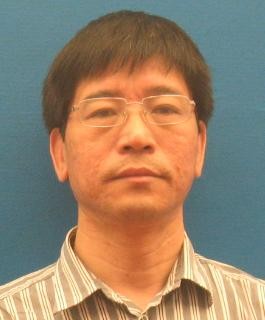 Xiuchen Jiang (江秀臣)合作论文数School of Electrical Engineering, Shanghai Jiaotong University15
 Hui Song (宋晖)合作论文数College of Computer Science and Technology, Donghua University8
 Lingen Luo (罗林根)合作论文数School of Electrical Engineering, Shanghai Jiao Tong University6
 Yingjie Yan (严英杰)合作论文数School of Electrical Engineering, Shanghai Jiao Tong University3
 Zhaoqi Zhang合作论文数3
 Yingbing TENG (滕莹冰)合作论文数3陈玉峰合作论文数3
 Yadong Liu (刘亚东)合作论文数School of Ocean and Civil Engineering, Shanghai Jiao Tong University3MENG Xianglin (孟祥麟)合作论文数2Yueming GONG (龚越明)合作论文数2ZHAO Yiyi (赵熠旖)合作论文数2Ming Zong (宗明)合作论文数2Xiaoqi Wan合作论文数1Wang Jianyi合作论文数1LI Hantang (李瀚堂)合作论文数1Xie Jing合作论文数1Qiang Liu合作论文数1Jun-hu YANG (杨军虎)合作论文数1Bin Wu (吴滨)合作论文数1Jing XIE (谢婧)合作论文数1Chenli Qiu合作论文数Fudan Univ, Shanghai Publ Hlth Clin Ctr, Shanghai 201508, Peoples R China1Yue Ma合作论文数1Wenjuan Jiang (姜文娟)合作论文数1Zhongmin Yu合作论文数1Yuan Ma合作论文数1Kai BI (毕凯)合作论文数1ZongJie Liu (刘宗杰)合作论文数1Yi Yang (杨祎)合作论文数1
 Hui Xing (邢辉)合作论文数National Center for AIDS/STD Control and Prevention, Chinese Center for Disease Control and Prevention1
 Yiming Shao (邵一鸣)合作论文数School of Medicine, Nankai University;National Center for AIDS/STD Control and Prevention, China CDC1Chuan Huang (黄川)合作论文数1Zhe Li (李喆)合作论文数School of Naval Architecture, Ocean & Civil Engineering, Shanghai Jiao Tong University1
 Guibo Yang (杨贵波)合作论文数STD Control and Prevention, China CDC;National Center for AIDS1




