We study the Brillouin instability and the transverse mode instability in a combined computational model for fiber amplifiers. We find the optimal core diameter, which leads to the highest power threshold and output power.
We investigate directional bending sensors using negative curvature fibers with asymmetric nested tubes. The bend direction and radius can be determined by tracking the high-loss peaks at different transmission bands.
We report efficient visible supercontinuum (SC) generated from a dispersion-tailored air-suspended-core photonic crystal fiber, using an 800-nm Ti:sapphire laser with a pulse duration of ~29 fs and a repetition rate of 80 MHz. The conversion efficiency of pump-to-visible SC has been measured to be as high as 29 % in a 10-cm long fiber, with the visible SC power of 28.4 mW. The spectral interference measurement indicates that the generated SC possesses a high degree of coherence greater than 0.91, which is supported by the numerical simulations. The highly coherent SC is due to the combination of ultrafast femtosecond pump, dispersion–tailored photonic crystal fiber, and the ultra-high shot-to-shot phase stability of the pump.
We proposed and experimentally demonstrated a free-space optical stealth communication system that hides the stealth signal in wide-band spontaneous emission noise. Spontaneous emission light sources have been widely used for illuminations and has been recently deployed for short distance and indoor free-space optical communications, such as LiFi. Since free-space optical communication is a broadcasting network, the users’ privacy is exposed to eavesdropping attacks. In this paper, stealth communication is achieved by taking advantage of the existing properties of spontaneous emission light sources, random phase fluctuations, and protects users’ privacy in free-space communication networks. The keys to hide and recover the stealth signal are the optical delays at the transmitter and receiver. Only by matching the delay length with the pre-shared keys can the authorized receiver recover the stealth signal. Without the right key, the eavesdropper receives a constant power that is the same as illumination light sources and cannot detect the existence of the stealth signal.
Highly coherent visible supercontinuum (SC) sources are demanded for many applications such as bio-sensing and imaging. Either dispersion management on the fiber or optimizing ultrafast pulsed pump parameters can work for achieving broadband coherent fiber SC. Normally, highly coherent SC with medium bandwidth can be obtained in an all-normal-dispersion (ANDi) nonlinear photonic crystal fiber (PCF), which has normal dispersion for all the wavelengths by tailoring the structure parameters of the microstructured cladding to sub-wavelength scale. Hence, such an ANDi fiber requires a submicron core diameter, and it makes precise fabrication challenging. Instead, using a standard anomalous dispersion pumping scheme and an ultrafast pulsed pump source, broadband SC with a high degree of coherence can also be obtained. In this study, we report broadband visible SC with a high degree of coherence approaching unity in a low-index borosilicate glass air-suspended PCF with a micrometer-core diameter, by the anomalous dispersion pumping scheme. The pulse duration of the 800 nm Ti:sapphire femtosecond laser is 29 fs. The experimental results are in good agreement with the numerical simulations, indicating that ultrashort pump pulses are the primary cause for the high degree of the generated visible SC, while the weak Raman effect of the borosilicate glass host plays a non-negligible but secondary role in the procedure of coherent SC generation.
We computationally study leakage loss in negative curvature fibers made with silica, chalcogenide, tellurite, and ZBLAN glasses. Fibers with different glasses should be adopted for applications in different wavelengths.
Avoided crossings are important in many waveguides and resonators. That is particularly the case in modern-day solid-core and air-core optical fibers that often have a complex geometry. The study of mode coupling at avoided crossings often leads to a complicated analysis. In this tutorial, we aim to explain the basic features of avoided crossings in a simple slab waveguide structure so that the modes can be found analytically with simple sinusoidal and exponential forms. We first review coupled-mode theory for the guided mode in a slab waveguide, which has a higher index in the core. We study the effective index of the guided true mode for a five-layer slab waveguide including two core layers with higher indices compared to the indices in the three cladding layers. Then, we study the same structure by using the overlap between approximate modes confined in the two individual core slabs. When the two individual core slabs are not near each other, the avoided crossing using the true modes within the two-slab waveguide agrees well with the results using the overlap between the two approximate modes. We also study coupled-mode theory and avoided crossings for leaky modes in an antiresonant slab waveguide. We obtain good agreement between the results using the true leaky mode and the results using the overlap between approximate modes. We then discuss examples of avoided crossings in solid-core and air-core optical fibers. We describe the similarities and differences between the optical fibers and simple slab waveguides that we have analyzed in detail.
We computationally compare piecewise parabolic and PRBS phase modulation schemes on the SBS threshold power. For power fractions inside a fixed bandwidth greater than 85%, we find that piecewise parabolic modulation produces a higher threshold.
We study negative curvature fibers with truncated cladding tubes. The fiber with truncated cladding tubes has lower bend loss compared to the un-truncated fiber when the bend radius is between 4 cm and 7 cm.
We study piecewise parabolic sawtooth and triangle phase modulation for the suppression of stimulated Brillouin scattering. We compare different modulation schemes and show threshold enhancement using piecewise parabolic phase modulation.
We propose using piecewise parabolic phase modulation of the seed laser for suppressing stimulated Brillouin scattering (SBS) in a fiber amplifier. Simulations are run with a 9 m passive fiber. Compared with random phase modulation and 0-π pseudo-random phase modulation, the piecewise parabolic phase waveform yields a higher SBS threshold per unit bandwidth. If the bandwidth is defined as the range of frequencies containing 85% of the total power, the threshold for parabolic phase modulation is 1.4 times higher than the threshold for the five- or seven-bit pseudo-random modulation format. If the bandwidth is defined more tightly, e.g., the range of frequencies containing 95% of the total power, the threshold for parabolic phase modulation is three times higher. For both cases, achieving a bandwidth of 1.5 GHz requires a maximum phase shift of ~30 radians. All of the waveforms are compared on the basis of the bandwidth required of the phase moduator. The coherence functions are calculated in order to compare their suitability for coherent combining.
We study the geometry of chalcogenide negative curvature fibers with different numbers of tubes and different core diameters. We optimize the design of chalcogenide negative curvature fibers for CO 2 laser transmission.
Get PDF Email Share Share with Facebook Tweet This Post on reddit Share with LinkedIn Add to CiteULike Add to Mendeley Add to BibSonomy Get Citation Copy Citation Text C. Wei, J. T. Young, C. R. Menyuk, and J. Hu, "Impact of the Glass Thickness in Fluid-Filled Negative Curvature Fibers for Temperature Sensing," in Frontiers in Optics + Laser Science APS/DLS, OSA Technical Digest (Optica Publishing Group, 2019), paper JW4A.5. Export Citation BibTex Endnote (RIS) HTML Plain Text Citation alert Save article
We computationally investigate a novel temperature sensor that uses liquid-filled negative curvature optical fibers. Both the core and cladding tubes are infiltrated with a liquid that has a temperature-sensitive refractive index. The high-loss resonant wavelengths are sensitive to the liquid's change of the refractive index. The refractive index of the liquid decreases and the resonant wavelengths increase when the temperature increases. The temperature sensitivity is 1.1 nm/degrees C as the temperature changes from 15 degrees C to 35 degrees C using negative curvature optical fibers that are filled with liquid that has a refractive index of 1.36. The temperature sensitivity rises from 0.82 nm/degrees C to 2.48 nm/degrees C when different liquids are used with a refractive index from 1.30 to 1.42, and we use the third resonant peak in the fiber. The temperature sensitivity can be increased by 38% by using the second resonant peak. An analytical formula for the temperature sensitivity is derived, which can give an accurate prediction for the temperature sensitivity of this sensor. The relatively large size of the air core and cladding tubes, on the order of 10 mu m, should make the infiltration procedure easier compared to other photonic crystal fibers with smaller holes. With temperature sensors based on liquid-filled negative curvature optical fibers, there is no need for any special post-processing, such as the liquid filling of selected air holes or inscription of fiber gratings. (C) 2019 Optical Society of America under the terms of the OSA Open Access Publishing Agreement
In this paper, we review the recent progress on chalcogenide negative curvature fibers, including gaps to increase confinement, tube structures to suppress higher-order modes, parameters to decrease bend loss, and the experimental demonstration of chalcogenide negative curvature fibers. The advances in negative curvature fibers using chalcogenide glasses enable many applications in the mid-infrared region.
We propose a polarization-filtering and polarization-maintaining negative curvature fiber in which two nested resonant tubes are added to a standard negative curvature fiber with one ring of tubes. The coupling between the glass modes in the nested resonant tubes and the fundamental core modes is used to increase the birefringence and differential loss for the fundamental core modes in the two polarizations. We show computationally that the birefringence and the loss ratio between the modes in the two polarizations can reach 10-5 and 850, respectively. Meanwhile, the low-loss mode has a loss that is lower than 0.02 dB/m. The relatively simple design of this polarization-maintaining negative curvature fiber will be useful in hollow-core fiber devices that are sensitive to polarization effects, such as fiber lasers, fiber interferometers, and fiber sensors.
We report efficient visible supercontinuum (SC)generated from an air-suspended-core microstructured optical fiber. The conversion efficiency of pump-to-SC was measured to be 25.4%, while the fraction of the visible SC was as high as 67.3%.
We propose a new temperature sensor based on fluid-filled negative curvature fibers. The temperature sensitivity increases from 0.8 nm/°C to 2.5 nm/°C when the refractive index of the fluid increases from 1.30 to 1.42.
We design a polarization-filtering negative curvature fiber. The loss ratio between the two polarizations is more than 100. This simple design will be useful in hollow-core fiber devices that are sensitive to polarization effects.
We study the impact of geometry on leakage loss in negative curvature fibers made with As 2 Se 3 chalcogenide and As 2 S 3 chalcogenide glasses for carbon dioxide (CO 2 ) laser transmission. The minimum leakage loss decreases when the core diameter increases both for fibers with six and for fibers with eight cladding tubes. The optimum gap corresponding to the minimum loss increases when the core diameter increases for negative curvature fibers with six cladding tubes. For negative curvature fibers with eight cladding tubes, the optimum gap is always less than 20 μ m when the core diameter ranges from 300 μ m to 500 μ m. The influence of material loss on fiber loss is also studied. When material loss exceeds 10 2 dB/m, it dominates the fiber leakage loss for negative curvature fiber at a wavelength of 10.6 μ m.
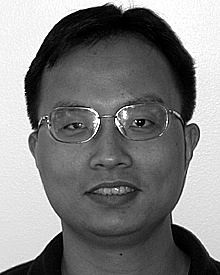 Jonathan Hu合作论文数34
 Fow-Sen Choa合作论文数Department of Computer Science and Electrical Engineering, College of Engineering and Information Technology, University of Maryland, Baltimore County;Technology Research Center, University of Maryland, Baltimore County29
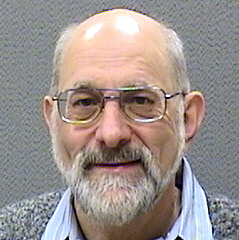 Curtis R. Menyuk合作论文数Department of Computer Science and Electrical Engineering, College of Engineering and Information Technology, University of Maryland26
 Xing Chen合作论文数20
 Dingkai Guo合作论文数18
 Joshua T. Young合作论文数Baylor Univ8
 Claire Gmachl合作论文数Department of Electrical and Computer Engineering, School of Engineering and Applied Science, Princeton University7Jen-Yu Fan合作论文数7terry worchesky合作论文数6
 Xiaojun Wang合作论文数School of Electronic Engineering, Dublin City University6Francois Chenard合作论文数5
 Zhijun Liu (刘志军)合作论文数电子科技大学光电信息学院5
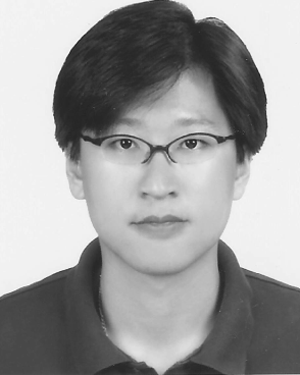 Jiun-Yun Li合作论文数5
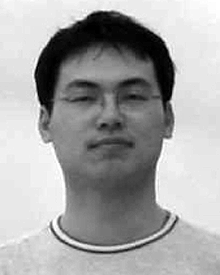 Ji, Xiaoming合作论文数4
 Yange Liu (刘艳格)合作论文数College of Electronic Information and Optical Engineering, Nankai University4Fred Towner合作论文数4
 Xian Feng (冯宪)合作论文数School of Physics and Electronic Engineering, Jiangsu Normal University3J Sanghera合作论文数3Feng Han合作论文数3R. Joseph Weiblen合作论文数3
 Jindan Shi合作论文数Optoelectronics Research Centre, University of Southampton3
 Zhi Wang (王志)合作论文数College of Electronic Information and Optical Engineering, Nankai University3
 Jeffrey O. White合作论文数University of Illinois Frederick Seitz Materials Research Laboratory3
 Alexey Belyanin合作论文数Department of Physics & Astronomy, College of Arts & Sciences, Texas A&M University3Douglas Janssen合作论文数2Rich Leavitt合作论文数2Xibao Zheng合作论文数2
 Daniel Wasserman合作论文数Department of Electrical and Computer Engineering, Cockrell School of Engineering, University of Texas at Austin2
 John Bradshaw合作论文数2sudhir trivedi合作论文数2Ruth Choa合作论文数2Guoyun Ru合作论文数2
 Tingting Han合作论文数Hefei University of Technology, Hefei University of Technology2
 Jianxin Cai合作论文数2
 Jacob Khurgin合作论文数Department of Electrical and Computer Engineering, Whiting School of Engineering, Johns Hopkins University2
 Anthony Hoffman合作论文数Department of Electrical Engineering, College of Engineering, University of Notre Dame2Rafael R. Gattass合作论文数2John D. Bruno合作论文数2
 Brandon Shaw合作论文数United States Naval Research Laboratory2Sheng Liu合作论文数1
 Yordan Kostov合作论文数1david shyu合作论文数1Oseas Alvarez合作论文数1Leonid V. Alekseyev合作论文数1
 Zhifang Wu (吴志芳)合作论文数1
 Kevin M. Lascola合作论文数Thorlabs Quantum Elect, 10335 Guilford Rd, Jessup, MD 20794 USA1Yao Yang (杨尧)合作论文数1
 Yang Qi合作论文数1
 Jianxin Chen (陈建新)合作论文数Shanghai Institute of Technical Physics, Chinese Academy of Sciences;University of Chinese Academy of Sciences1




