Robotic foundation models require reasoning over complex visual scenes to execute adaptive actions in dynamic environments. While recent studies on latent-reasoning Vision-Language-Action (VLA) models have demonstrated the capability to capture fine-grained physical dynamics, they remain predominantly confined to static imitation learning, severely limiting their adaptability and generalization. In this paper, we present LaST-R1, a novel reinforcement learning (RL) post-training framework designed to effectively harness "latent reasoning-before-acting" policies. Specifically, we propose Latent-to-Action Policy Optimization (LAPO), a core RL algorithm that jointly optimizes the latent reasoning process and the action generation. By explicitly embedding latent Chain-of-Thought (CoT) reasoning directly within the RL optimization loop, LAPO stimulates profound physical world modeling, which in turn drives robust execution in interactive environments. Furthermore, an adaptive latent CoT mechanism is introduced, allowing the policy to dynamically modulate its reasoning horizon based on diverse environment states. Experiments show that LaST-R1 achieves a near-perfect 99.9
Vision-Language-Action (VLA) models have recently shown strong generalization, with some approaches seeking to explicitly generate linguistic reasoning traces or predict future observations prior to execution. However, explicit reasoning typically incurs non-negligible inference latency, which constrains the temporal resolution required for robotic manipulation. Moreover, such reasoning is confined to the linguistic space, imposing a representational bottleneck that struggles to faithfully capture ineffable physical attributes. To mitigate these limitations, we propose LaST_0, a framework that enables efficient reasoning before acting through a Latent Spatio-Temporal Chain-of-Thought (CoT), capturing fine-grained physical and robotic dynamics that are often difficult to verbalize. Specifically, we introduce a token-efficient latent CoT space that models future visual dynamics, 3D structural information, and robot proprioceptive states, and further extends these representations across time to enable temporally consistent implicit reasoning trajectories. Furthermore, LaST_0 adopts a dual-system architecture implemented via a Mixture-of-Transformers design, where a reasoning expert conducts low-frequency latent inference and an acting expert generates high-frequency actions conditioned on robotics-oriented latent representations. To facilitate coordination, LaST_0 is trained with heterogeneous operation frequencies, enabling adaptive switching during deployment. Across 10 real-world tasks spanning tabletop, mobile, and dexterous hand manipulation, LaST_0 improves mean success rates by 13
Vision-Language-Action (VLA) models have recently emerged as a promising paradigm for robotic manipulation, in which reliable action prediction critically depends on accurately interpreting and integrating visual observations conditioned on language instructions. Although recent works have sought to enhance the visual capabilities of VLA models, most approaches treat the LLM backbone as a black box, providing limited insight into how visual information is grounded into action generation. Therefore, we perform a systematic analysis of multiple VLA models across different action-generation paradigms and observe that sensitivity to visual tokens progressively decreases in deeper layers during action generation. Motivated by this observation, we propose DeepVision-VLA, built on a Vision-Language Mixture-of-Transformers (VL-MoT) framework. This framework enables shared attention between the vision foundation model and the VLA backbone, injecting multi-level visual features from the vision expert into deeper layers of the VLA backbone to enhance visual representations for precise and complex manipulation. In addition, we introduce Action-Guided Visual Pruning (AGVP), which leverages shallow-layer attention to prune irrelevant visual tokens while preserving task-relevant ones, reinforcing critical visual cues for manipulation with minimal computational overhead. DeepVision-VLA outperforms prior state-of-the-art methods by 9.0% and 7.5% on simulated and real-world tasks, respectively, providing new insights for the design of visually enhanced VLA models.
Despite strong generalization capabilities, Vision-Language-Action (VLA) models remain constrained by the high cost of expert demonstrations and limited real-world interaction. While online reinforcement learning (RL) has shown promise, its application to real-world VLA manipulation is hindered by low exploration efficiency and restricted exploration coverage. Through systematic real-world experiments, we observe that the effective exploration space of online RL is largely constrained by the trajectory distribution induced during supervised fine-tuning (SFT). Motivated by this observation, we propose TwinRL, a digital twin-real-world collaborative post-training framework that expands and guides RL exploration for VLA models through three stages: SFT warm-up, twin RL warm-up, and real-world RL. TwinRL first reconstructs a high-fidelity digital twin from smartphone-captured scenes. During the SFT stage, we introduce an exploration space expansion strategy that expands the support of the trajectory distribution beyond real demonstrations, reshaping the exploration space for more effective RL. Rather than treating the twin as a data augmentation tool, we propose a twin RL warm-up strategy that enables it to act as an exploration guide for real-world RL. Specifically, TwinRL performs efficient parallel RL in the digital twin to generate interactive trajectories that populate the replay buffer and stabilize subsequent real-world RL learning. This process also identifies failure-prone yet informative configurations, enabling targeted human-in-the-loop rollouts to further improve on-robot efficiency. Across four tasks, TwinRL achieves near-100
Recently, Vision-Language-Action (VLA) models have demonstrated strong generalization across diverse tasks. However, effective robotic manipulation in physical environments fundamentally requires geometric understanding and spatial reasoning. While some VLA approaches attempt to incorporate 3D information, they are constrained by limited data availability and geometric information loss in current 3D encoding pipelines, and fail to jointly capture 3D geometry and temporally structured actions in dynamic environments. To address these limitations, we introduce Lift3D-VLA, a unified VLA framework that equips models with explicit 3D point cloud reasoning and enables temporally coherent action generation. First, building upon our previous work Lift3D, an enhanced 2D model-lifting strategy is proposed to geometrically align 3D points with pretrained 2D positional embeddings. This design enables direct point-cloud encoding within the VLA vision encoder while minimizing spatial information loss. Based on explicit 3D inputs, we propose Geometry-Centric Masked Autoencoding (GC-MAE), a dual-objective self-supervised framework that reconstructs the current point cloud while predicting its future geometric evolution. This formulation allows the 2D vision encoder to internalize both 3D structure and physical dynamics. To fully exploit 3D representations, we further design layer-wise temporal action modeling, which leverages multiple layers of the LLM to collaboratively predict action chunks, enabling temporally consistent predictions. Across 22 simulated tasks and 8 real-world manipulation tasks, Lift3D-VLA achieves 10.8
Human-hand demonstrations provide a direct and scalable source of physical interaction data for robot learning. While manual retargeting is indispensable for establishing kinematic action correspondence across different morphologies, robust transfer requires going beyond geometry to address the underlying alignment of physical dynamics between human and robot manipulation. To address this, we introduce LaST-HD, a novel human-to-robot action learning paradigm that extends reasoning-before-acting VLA by aligning human-hand and robot demonstrations in a shared latent reasoning space. Rather than mimicking human kinematics, LaST-HD trains an auxiliary action-conditioned world model on unpaired human-hand and robot trajectories to synthesize unified latent targets. After aligning cross-embodiment representations in this shared forward-dynamics space, these targets supervise LaST-HD's latent reasoning process, enabling it to internalize shared physical dynamics and drive efficient human-hand action learning. Moreover, we develop Out-of-Lab (OOL) Glove, a low-cost motion-capture glove tailored to LaST-HD for human-hand data collection. The captured human data provide precise keypoints and serve as universal action supervision across grippers and dexterous hands. Armed with the aligned latent space and high-fidelity human-hand data, we develop a progressive mixed-to-human training recipe comprising mixed human-robot co-training and human-hand online correction post-training. Through mixed co-training, LaST-HD improves generalization to novel objects, scenes, and positions using only human-hand demonstrations. With online correction, LaST-HD further adapts to novel environments and achieves over 90% accuracy using only 20 minutes of OOL glove data.
Generalized policy and execution efficiency constitute the two critical challenges in robotic manipulation. While recent foundation policies benefit from the common-sense reasoning capabilities of internet-scale pretrained vision-language models (VLMs), they often suffer from low execution frequency. To mitigate this dilemma, dual-system approaches have been proposed to leverage a VLM-based System 2 module for handling high-level decision-making, and a separate System 1 action module for ensuring real-time control. However, existing designs maintain both systems as separate models, limiting System 1 from fully leveraging the rich pretrained knowledge from the VLM-based System 2. In this work, we propose Fast-in-Slow (FiS), a unified dual-system vision-language-action (VLA) model that embeds the System 1 execution module within the VLM-based System 2 by partially sharing parameters. This innovative paradigm not only enables high-frequency execution in System 1, but also facilitates coordination between multimodal reasoning and execution components within a single foundation model of System 2. Given their fundamentally distinct roles within FiS-VLA, we design the two systems to incorporate heterogeneous modality inputs alongside asynchronous operating frequencies, enabling both fast and precise manipulation. To enable coordination between the two systems, a dual-aware co-training strategy is proposed that equips System 1 with action generation capabilities while preserving System 2’s contextual understanding to provide stable latent conditions for System 1. For evaluation, FiS-VLA outperforms previous state-of-the-art methods by 8% in simulation and 11% in real-world tasks in terms of average success rate, while achieving a 117.7 Hz control frequency with action chunk set to eight. Project web page: https://fast-in-slow.github.io.
3D semantic occupancy prediction is a crucial task in visual perception, as it requires the simultaneous comprehension of both scene geometry and semantics. It plays a crucial role in understanding 3D scenes and has great potential for various applications, such as robotic vision perception and autonomous driving. Many existing works utilize planar-based representations such as Bird's Eye View (BEV) and Tri-Perspective View (TPV). These representations aim to simplify the complexity of 3D scenes while preserving essential object information, thereby facilitating efficient scene representation. However, in dense indoor environments with prevalent occlusions, directly applying these planar-based methods often leads to difficulties in capturing global semantic occupancy, ultimately degrading model performance. In this paper, we present a new vertical slice representation that divides the scene along the vertical axis and projects spatial point features onto the nearest pair of parallel planes. To utilize these slice features, we propose SliceOcc, an RGB camera-based model specifically tailored for indoor 3D semantic occupancy prediction. SliceOcc utilizes pairs of slice queries and cross-attention mechanisms to extract planar features from input images. These local planar features are then fused to form a global scene representation, which is employed for indoor occupancy prediction. Experimental results on the EmbodiedScan dataset demonstrate that SliceOcc achieves a mIoU of 15.45 % across 81 indoor categories, setting a new state-of-the-art performance among RGB camera-based models for indoor 3D semantic occupancy prediction.
Recently, mobile manipulation has attracted increasing attention for enabling language-conditioned robotic control in household tasks. However, existing methods still face challenges in coordinating mobile base and manipulator, primarily due to two limitations. On the one hand, they fail to explicitly model the influence of the mobile base on manipulator control, which easily leads to error accumulation under high degrees of freedom. On the other hand, they treat the entire mobile manipulation process with the same visual observation modality (e.g., either all 2D or all 3D), overlooking the distinct multimodal perception requirements at different stages during mobile manipulation. To address this, we propose the Adaptive Coordination Diffusion Transformer (AC-DiT), which enhances mobile base and manipulator coordination for end-to-end mobile manipulation. First, since the motion of the mobile base directly influences the manipulator's actions, we introduce a mobility-to-body conditioning mechanism that guides the model to first extract base motion representations, which are then used as context prior for predicting whole-body actions. This enables whole-body control that accounts for the potential impact of the mobile base's motion. Second, to meet the perception requirements at different stages of mobile manipulation, we design a perception-aware multimodal conditioning strategy that dynamically adjusts the fusion weights between various 2D visual images and 3D point clouds, yielding visual features tailored to the current perceptual needs. This allows the model to, for example, adaptively rely more on 2D inputs when semantic information is crucial for action prediction, while placing greater emphasis on 3D geometric information when precise spatial understanding is required. We validate AC-DiT through extensive experiments on both simulated and real-world mobile manipulation tasks.
While data-driven imitation learning has revolutionized robotic manipulation, current approaches remain constrained by the scarcity of large-scale, diverse real-world demonstrations. Consequently, the ability of existing models to generalize across long-horizon bimanual tasks and mobile manipulation in unstructured environments remains limited. To bridge this gap, we present RoboMIND 2.0, a comprehensive real-world dataset comprising over 310K dual-arm manipulation trajectories collected across six distinct robot embodiments and 739 complex tasks. Crucially, to support research in contact-rich and spatially extended tasks, the dataset incorporates 12K tactile-enhanced episodes and 20K mobile manipulation trajectories. Complementing this physical data, we construct high-fidelity digital twins of our real-world environments, releasing an additional 20K-trajectory simulated dataset to facilitate robust sim-to-real transfer. To fully exploit the potential of RoboMIND 2.0, we propose MIND-2 system, a hierarchical dual-system frame-work optimized via offline reinforcement learning. MIND-2 integrates a high-level semantic planner (MIND-2-VLM) to decompose abstract natural language instructions into grounded subgoals, coupled with a low-level Vision-Language-Action executor (MIND-2-VLA), which generates precise, proprioception-aware motor actions.
A fundamental objective of manipulation policy design is to endow robots to comprehend human instructions, reason about scene cues, and execute generalized actions in dynamic environments. Recent autoregressive vision-language-action (VLA) methods inherit common-sense reasoning capabilities from vision-language models (VLMs) for next action-token prediction. However, these methods quantize actions into discrete bins, which disrupts the continuity required for precise control. In contrast, existing diffusion-based VLA methods incorporate an additional diffusion head to predict continuous actions solely conditioned on feature representations extracted by the VLM, without fully leveraging the VLM's pretrained reasoning capabilities through token-level generation. To address these limitations, we introduce HybridVLA, a unified framework that absorbs the continuous nature of diffusion-based actions and the contextual reasoning of autoregression within a single large language model. To mitigate interference between the two generation paradigms, we propose a collaborative training recipe that seamlessly incorporates diffusion denoising into the next-token prediction process. With this recipe, we find these two action prediction methods not only reinforce each other but also exhibit varying strength across different tasks. Therefore, we design a collaborative action ensemble mechanism that adaptively fuses both predictions, leading to more robust control. HybridVLA outperforms previous state-of-the-art VLA methods by 14% and 19% in mean success rate on simulation and real-world tasks, respectively, while demonstrating stable manipulation in unseen configurations.
In this paper, we introduce RoboMIND (Multi-embodiment Intelligence Normative Data for Robot Manipulation), a dataset containing 107k demonstration trajectories across 479 diverse tasks involving 96 object classes. RoboMIND is collected through human teleoperation and encompasses comprehensive robotic-related information, including multi-view observations, proprioceptive robot state information, and linguistic task descriptions. To ensure data consistency and reliability for imitation learning, RoboMIND is built on a unified data collection platform and a standardized protocol, covering four distinct robotic embodiments: the Franka Emika Panda, the UR5e, the AgileX dual-arm robot, and a humanoid robot with dual dexterous hands. Our dataset also includes 5k real-world failure demonstrations, each accompanied by detailed causes, enabling failure reflection and correction during policy learning. Additionally, we created a digital twin environment in the Isaac Sim simulator, replicating the real-world tasks and assets, which facilitates the low-cost collection of additional training data and enables efficient evaluation. To demonstrate the quality and diversity of our dataset, we conducted extensive experiments using various imitation learning methods for single-task settings and state-of-the-art Vision-Language-Action (VLA) models for multi-task scenarios. By leveraging RoboMIND, the VLA models achieved high manipulation success rates and demonstrated strong generalization capabilities. To the best of our knowledge, RoboMIND is the largest multi-embodiment teleoperation dataset collected on a unified platform, providing large-scale and high-quality robotic training data. Our project is at https://x-humanoid-robomind.github.io/.
3D geometric information is essential for manipulation tasks, as robots need to perceive the 3D environment, reason about spatial relationships, and interact with intricate spatial configurations. Recent research has increasingly focused on the explicit extraction of 3D features, while still facing challenges such as the lack of large-scale robotic 3D data and the potential loss of spatial geometry. To address these limitations, we propose the Lift3D framework, which progressively enhances 2D foundation models with implicit and explicit 3D robotic representations to construct a robust 3D manipulation policy. Specifically, we first design a task-aware masked autoencoder that masks task-relevant affordance patches and reconstructs depth information, enhancing the 2D foundation model’s implicit 3D robotic representation. After self-supervised fine-tuning, we introduce a 2D model-lifting strategy that establishes a positional mapping between the input 3D points and the positional embeddings of the 2D model. Based on the mapping, Lift3D utilizes the 2D foundation model to directly encode point cloud data, leveraging large-scale pretrained knowledge to construct explicit 3D robotic representations while minimizing spatial information loss. In experiments, Lift3D consistently outperforms previous state-of-the-art methods across several simulation benchmarks and real-world scenarios.
Recent advancements in imitation learning have shown promising results in robotic manipulation, driven by the availability of high-quality training data. To improve data collection efficiency, some approaches focus on developing specialized teleoperation devices for robot control, while others directly use human hand demonstrations to obtain training data.However, the former requires both a robotic system and a skilled operator, limiting scalability, while the latter faces challenges in aligning the visual gap between human hand demonstrations and the deployed robot observations.To address this, we propose a human hand data collection system combined with our hand-to-gripper generative model, which translates human hand demonstrations into robot gripper demonstrations, effectively bridging the observation gap.Specifically, a GoPro fisheye camera is mounted on the human wrist to capture human hand demonstrations.We then train a generative model on a self-collected dataset of paired human hand and UMI gripper demonstrations, which have been processed using a tailored data pre-processing strategy to ensure alignment in both timestamps and observations.Therefore, given only human hand demonstrations, we are able to automatically extract the corresponding SE(3) actions and integrate them with high-quality generated robot demonstrations through our generation pipeline for training robotic policy model.In experiments, the robust manipulation performance demonstrates not only the quality of the generated robot demonstrations but also the efficiency and practicality of our data collection method.More demonstrations can be found at: https://rwor.github.io/
3D geometric information is essential for manipulation tasks, as robots need to perceive the 3D environment, reason about spatial relationships, and interact with intricate spatial configurations. Recent research has increasingly focused on the explicit extraction of 3D features, while still facing challenges such as the lack of large-scale robotic 3D data and the potential loss of spatial geometry. To address these limitations, we propose the Lift3D framework, which progressively enhances 2D foundation models with implicit and explicit 3D robotic representations to construct a robust 3D manipulation policy. Specifically, we first design a task-aware masked autoencoder that masks task-relevant affordance patches and reconstructs depth information, enhancing the 2D foundation model's implicit 3D robotic representation. After self-supervised fine-tuning, we introduce a 2D model-lifting strategy that establishes a positional mapping between the input 3D points and the positional embeddings of the 2D model. Based on the mapping, Lift3D utilizes the 2D foundation model to directly encode point cloud data, leveraging large-scale pretrained knowledge to construct explicit 3D robotic representations while minimizing spatial information loss. In experiments, Lift3D consistently outperforms previous state-of-the-art methods across several simulation benchmarks and real-world scenarios.
 Shanghang Zhang (仉尚航)合作论文数Institute for Visual Technology, School of Computer Science, Peking University;Institute for Artificial Intelligence, Peking University8
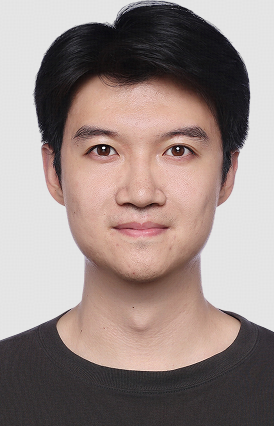 Jiaming Liu (刘家铭)合作论文数National Key Laboratory for Multimedia Information Processing, School of Computer Science, Peking University7
 Renrui Zhang合作论文数Multimedia Laboratory, The Chinese University of Hong Kong5
 Sixiang Chen合作论文数4
 Cloris (Xiaoqi) Li合作论文数School of Computer Science, Peking University4
 Zhuoyang Liu合作论文数3
 Chengkai Hou合作论文数3
 Zhongyuan Wang (王仲远)合作论文数Kuaishou Technology;Beijing Academy of Artificial Intelligence3
 Pengwei Wang (王鹏伟)合作论文数东华大学计算机软件与理论系3Mengzhen Liu合作论文数2Yueru Jia合作论文数2
 Pengju An合作论文数2
 Pheng Ann Heng (王平安)合作论文数Department of Computer Science and Engineering, The Chinese University of Hong Kong2Xiaoqi Li合作论文数1Han Jiang合作论文数1Siyuan Qian合作论文数1Xiao He合作论文数1Yu-Kai Wang合作论文数1Jingli Wei合作论文数1Ruolin Liu合作论文数1Shangqing Mao合作论文数1Longzan Luo合作论文数1Zhilve Wang合作论文数1Liu, Juntao合作论文数1Hao Chen (陈浩)合作论文数The Chinese University of Hong Kong1Jianing Li (李家宁)合作论文数School of Electronic Science and Engineering, Nanjing University1Mengdi Zhao合作论文数1Liang Heng合作论文数1
 Yulin Luo合作论文数Peking University1
 Kun Wu合作论文数Syracuse University College of Engineering and Computer Science1
 Rui Zhao (赵睿)合作论文数Institute of Digital Media, School of Computer Science, Peking University1
 Hao Wang合作论文数iSING Lab, Hong Kong University of Science and Technology1
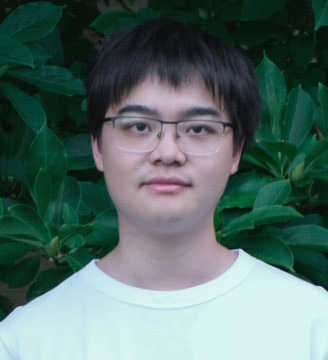 Zhiyuan Xu合作论文数MIDEA Group1
 Lixuan Chen合作论文数School of Electronic and Computer Engineering, Peking University, Shenzhen, China1
 Li Du (杜力)合作论文数School of Electronic Science and Engineering, Nanjing University;School of Integrated Circuits, Nanjing University1
 Yinuo Zhao合作论文数Department of Computer Science, Beijing Institute of Technology;Midea Home Service Robotic Labs1
 Yandong Guo合作论文数OPPO Research Institute1
 Hao Dong (董豪)合作论文数Center on Frontiers of Computing Studies, School of Computer Science, Peking University1
 Qiang Zhang (张强)合作论文数School of Computer Science and Technology, Dalian University of Technology1
 Wenzhao Zheng (郑文钊)合作论文数Department of EECS, University of California, Berkeley1
 Ming Lu (陆鸣)合作论文数Intel Lab1
 Chi-Wing Fu合作论文数Department of Computer Science and Engineering, Faculty of Engineering, Chinese University of Hong Kong1
 Ning Liu合作论文数Midea Group1
 Jian Tang (唐剑)合作论文数Department of Electrical Engineering and Computer Science, College of Engineering, Syracuse University1
 Zhengping Che (车正平)合作论文数Beijing Innovation Center of Humanoid Robotics1
 Zhenyu Wang (王振宇)合作论文数1




