Present agricultural research is focused on addressing dual issues of food security and environmental sustainability in the wake of changing climate. While intensive agricultural practices have managed to achieve food security, they are also associated with negative effects of environmental damage, biodiversity loss and land degradation. The negative effects highlight issues of loss in functional diversity of agricultural lands. Thus, necessitate changes in land management practices like inclusion of integrated and organic nutrient management for achieving long term ecological balance. These ecofriendly land management practices make positive impacts on soil microbiome which in turn benefit plant metabolic processes and bio-geo chemical cycles. Problems of low crop yields due to biotic and abiotic factors can be overcome by optimizing plant–microbe interactions. Microbes are generally studied using traditional techniques and are being utilized in the form of biofertilizers, bioremediation/biocontrol agents and biostimulants for decades. However, only handful of microbes' functionalities are known (as less than 1% are cultivable in lab) and majority of microbes are largely uncharacterized. Microbial genomics is set of cultivation-independent methods accompanied by reductions in cost, technical advances in sequencing technologies and new computational developments which have markedly increased our knowledge on functionality of microbial communities in variety of environments. Genomic analyses are yielding unprecedented insights into microbial evolution, diversity and ecosystem services. Elucidation of the functions of entire genome sequences to understand the inner workings of an organism and give biochemical, physiological, and ecological meaning to the information present in sequences. Microbial genomic tools are being used to study functional characterization of genome sequences, horizontal gene transfers to understand different evolutionary lineages and for functional annotation by reconstruction of metabolic pathways to shed light on role of microbes in plant nutrition and biogeochemical cycles. Recent genomic studies are beginning to reveal the specific microbial strains that contain metabolic pathways favorable for plant nutrition. Rhizosphere microbiome research describes the communities and their dynamics due to changes in environmental conditions. The understanding of microbiome functionality by using the highly promising genomic approaches is helping in exploring promising microbial candidates for sustainable crop production.
The study was conducted to identify the present status of existing practices and its impacts on farmer’s livelihood by comparing organic, inorganic and integrated farming in Jammu region. Three stage sampling procedure was followed and a total of 120 farmers (40 organic, farming, 40 inorganic and 40 integrated farming) were selected from the study area of Jammu district on the basis of having interventions from the different SKUATS institutes. Descriptive statistics were derived and calculated for analyzing the socio-economic data. Propensity score matching (PSM) was applied with kernel matching and radius matching methods to assess the impact of organic, inorganic and integrated farming on farmer’s employment creation and income generation. The result of baseline survey showed that out of 12 sample farmers: less than 0.02 ha of cultivated land are landless (15%), marginal (18%) small (44%) medium (14%) and large (09%) were present. The highest employment duration for male was 152.5 man days/year for farming system C-L-P-H under integrated farms and 125.5 and 104.5 man days /years for organic and inorganic farms respectively. The higher returns from pulse-mustard-wheat the cropping system with B:C ratio 2.03 and rice-maize-vegetable was 1.97. Average calorie intake of food secure households was 2910kcal, 2793 kcal and 2854 kcal for organic, inorganic and integrated farming. To assess the livelihood pattern through asset pentagon approach, net worthy improvement was derived based on different capitals of farm households practicing integrated farming in comparison to organic and inorganic farming. Finally a constraints facing index was calculated based on different problems faced by the farmers in order to suggest policy recommendation.
Aim: Organic farming is considered as a solution to environmental ills associated with modern agriculture. Survey covered crop, livestock, homestead, agro forestry systems with data pertaining to 120 farmers from 06 villages of Sambha district in Jammu division. Data refer to the input output details and other socio-economic characteristics of farm households in the crop year 2019-2020. Study Design: Descriptive statistics like sum, average, percentage and ratio were calculated to examine the socioeconomic characteristics of the sample farmers. Place and Duration of Study: Survey covered crop, livestock, homestead, agro forestry systems with data pertaining to 120 farmers from 06 villages of Sambha district in Jammu division. Methodology: Random sampling technique has been used for collecting data. A combination of descriptive statistics, mathematical and statistical techniques was used to analyse the data collected. Results: Out of 120 sample farmers, the highest percentage of farmers was in small farm category followed by marginal, landless, medium and large. Average farm size for landless, marginal, small, medium and large were 0.02 ha, 0.71 ha, 1.43 ha, 2.65 ha and 4.80 ha, respectively. All the five categories of farmers showed little variation in terms of the age of households of the farmer. Farmer’s age, literacy and farm size are factors having impact on decision making processes in farming. Own cultivated land for marginal, small, medium and large were 0.53 ha, 1.21 ha, 2.23 ha and 4.21 ha, respectively whereas using above formula total cultivated land for marginal, small, medium and large were 0.71ha, 1.43ha, 2.65ha, and 4.80 ha respectively. Among the six major farming systems, the highest number of farmers practiced Crop+Livestock+Poultry (C-L-P) system. C-L-P was followed by Crop+Livestock+Poultry+Agroforestry (C-L-P-A), Crop+Livestock+Kitchen gardening (C-L-K), Crop +Vegetables (C-V), Crops+Horticulture (C-H) and Vegetable+Horticulture (V-H) systems. Cereals were major crops of the region followed by pulses in high land areas and horticultural crops. Out of five cropping patterns, net returns was the highest in Rice-maize-vegetable cultivation (Rs.120344 ha-1) followed by Maize-Potato-Wheat (Rs.103380 ha-1), Pulse-Mustard-Wheat (Rs.101100ha-1), Rice-Pulses-Wheat (Rs. 98000 ha-1) and Rice-Wheat system (Rs.88950 ha-1). The overall food security index in case of integrated farming practicing households was 1.13. However, food security indices of food secure households and food insecure households were 1.37 and 0.87, respectively. From the index it can be seen that even though the farmers are practicing integrated farming Conclusion: The study reveals that crop–livestock–poultry–homestead farming system was the most popular in integrated farming systems. Integrated farming has the potential of increasing farmers’ income and employment creation over the mixed and traditional farming practices in the study areas. The extent of food security situation was much better among the integrated farm households when compared to others. Farm households practicing organic in integrated farming were more economically self-sustainable having different modules comprising of livestock, horticulture, poultry and crop. In UT of Jammu where land is scarce, effort should be taken to increase production through integration of various production components in agriculture for efficient utilization of resources. It would result in production of diversified products from minimum area and help in increasing the income of the farmers
ABSTRACT Information on phosphorus (P) dynamics in soil is crucial for careful management of phosphorus fertilization in respect to the sustainable development of agriculture in IGP regions. The sorption and desorption of phosphate, different fractions of phosphate, dehydrogenase activity, acid and alkaline phosphatase activity were studied in soils under organic inorganic and integrated nutrient management practices in four different cropping systems. The P adsorption maxima of long-term organic soil was highest (77.52 µg P g−1) under coarse rice-barley-green gram cropping system. The bonding energy of phosphorus in the soil solution varies from 0.38 to 0.20 ml µ−1. Average across the cropping systems, the bonding energy of adsorb P were 68.54% and 39.05% higher under organic and integrated nutrient-managed plots respectively as compared to the inorganic nutrient management. Maximum buffering capacity of phosphate was observed (29.59 ml g−1 soil) under Coarse rice-barley-green gram cropping systems in organic nutrient management practice. Application of organic nutrient management practice increases 26.04% higher water-soluble phosphorus (WSP) as compared to the inorganic nutrient management practice, average across the cropping systems. All other fractions of phosphorus in the soil were higher under inorganic nutrient management that leads to higher amount of total of phosphorus, average across the cropping systems. Long-term application of organic for 14 years increases the bonding energy and adsorption capacity for P in soil but decreased its desorption potential, increasing P availability to the plant and leading to higher P uptake irrespective of cropping systems.
There is a need of hour to study the effect of organics on physiology and yield components of various crops to boost up the productivity. Therefore, this investigation was undertaken to find out the suitable organics for increasing the production potential in cluster bean. A field experiment was conducted at the Main Research Station, College of Agriculture, University of Agricultural Sciences, Dharwad during kharif 2009-10 to study the influence of organics on growth, development and various growth parameters of cluster bean genotypes. The investigation was carried out in three genotypes namely Local, an improved variety (Pusa Navbahar) and an hybrid (SARPAN-101). The result revealed that genotype SARPAN-101 (hybrid) with the treatment of organic poultry manure recorded significantly higher growth and yield parameters viz., total dry weight (135.27 g plant-1), number of pods per plant (109.38) and pod yield (85.86 q ha-1). Absolute growth rate (0.71 g plant-1 day-1), crop growth rate (6.33 g m-2 day-1) and net assimilation rate (111.86 mg dm-2 day-1) was higher in local genotype with the combination of FYM treatment which may be due to the inconsistent difference in overall growth of the crop in a month. This reflects the variable growth of the crop before pod formation stages which negatively affects the yield. Whereas biomass duration (3983.66 g days) was found higher in SARPAN-101 (hybrid) with the poultry manure treatment, it indicates the maximum biomass accumulation at harvest. Local genotype with FYM recorded the lowest biomass duration (3006.10 g days).
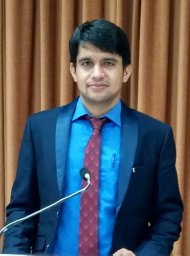 Jairam Choudhary合作论文数Indian Institute of Farming Systems Research (IIFSR), ICAR5
 Amrit Lal Meena合作论文数Vel Tech Rangarajan Dr. Sagunthala R&D Institute of Science and Technology5
 Lalit Krishan Meena合作论文数3
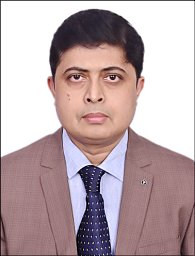 Debashis Dutta合作论文数Division of Agricultural Chemicals, Indian Agricultural Research Institute3
 Arvind Panwar合作论文数3
 Chandra Bhanu合作论文数2
 P. C. Ghasal合作论文数Indian Institute of Farming Systems Research (IIFSR), ICAR2
 Poonam Kashyap合作论文数2
 Rajendra P. Mishra合作论文数2Peyush Punia合作论文数National Bureau of Fish Genetic Resources (ICAR), Canal Ring Road, P.O. Dilkusha, Lucknow 226 002, UP, India2R. B. Tewari合作论文数1Ankur Kumar合作论文数1BB Channppagoudar合作论文数1N. K. Jat合作论文数1
 Mahipal Choudhary合作论文数ICAR Vivekananda Parvatiya Krishi Anusandhan Sans1
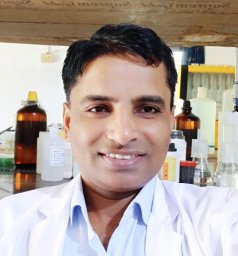 Raghuveer Singh合作论文数ICAR Research Complex for NEH Region, Arunachal Pradesh Centre1
 Ekta Narwal合作论文数Div Microbiol, ICAR Indian Agr Res Inst1
 M. K. Meena合作论文数Dept Seed Sci & Technol, Univ Agr Sci1
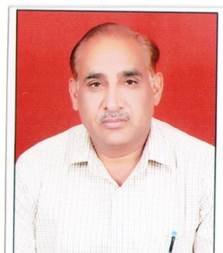 L. R. Meena合作论文数ICAR Indian Inst Farming Syst Res1
 Amit Kumar合作论文数School of Hydrology and Water Resources, Nanjing University of Information Science & Technology1
 Kumar Vaibhav合作论文数International Institute of Information Technology Hyderabad1
 Sunil Kumar合作论文数Chemical Biology Centre, Imperial College London1Saritha M.合作论文数Division of Microbiology, Indian Agricultural Research Institute1
 Rk Naresh合作论文数Environmental Medicine Laboratory, Indian Veterinary Research Institute1




