•Enhanced biochar is a major driver of soil nitrogen and pH in barely field trial.•Effects on yields, nutrients and microbes depend on exposure time.•Contrasting responses were observed between bulk soil and rhizosphere microbes.
Dramatic changes in molecular structure, degradation pathway, and porosity of biochar are observed at pyrolysis temperatures ranging from 250 to 550 °C when bamboo biomass is pretreated by iron-sulfate-clay slurries (iron-clay biochar), as compared to untreated bamboo biochar. Electron microscopy analysis of the biochar reveals the infusion of mineral species into the pores of the biochar and the formation of mineral nanostructures. Quantitative (13)C nuclear magnetic resonance (NMR) spectroscopy shows that the presence of the iron clay prevents degradation of the cellulosic fraction at pyrolysis temperatures of 250 °C, whereas at higher temperatures (350-550 °C), the clay promotes biomass degradation, resulting in an increase in both the concentrations of condensed aromatic, acidic, and phenolic carbon species. The porosity of the biochar, as measured by NMR cryoporosimetry, is altered by the iron-clay pretreatment. In the presence of the clay, at lower pyrolysis temperatures, the biochar develops a higher pore volume, while at higher temperature, the presence of clay causes a reduction in the biochar pore volume. The most dramatic reduction in pore volume is observed in the kaolinite-infiltrated biochar at 550 °C, which is attributed to the blocking of the mesopores (2-50 nm pore) by the nonporous metakaolinite formed from kaolinite.
At present, there is little commercial sale of biochar, since farmers find they can not gain a return on their investment in this amendment in the first few years after its application, because of the high cost associated with large application rates. To overcome this constraint, development of artificially aged enriched biochar-mineral complexes (BMCs), having a higher mineral content, surface functionality, exchangeable cations, high concentration of magnetic iron (Fe) nanoparticles, and higher water-extractable organic compounds has been undertaken by a combined team of researchers and a commercial company. Two biochars produced under different pyrolysis conditions were activated with a phosphoric acid treatment. A mixture of clay, chicken litter, and minerals were added to the biochar, and then this composite was torrefied at either 180 or 220 °C. In this study a pot experiment was carried out in glasshouse conditions to determine the effects of four different BMCs, with different formulations applied at rates of 100 and 200 kg ha−1, on the mycorrhizal colonisation, wheat growth and nutrient uptake, and soil quality improvement. It was found that the phosphorus (P) and nitrogen uptake in wheat shoots were significantly greater for a low application rate of BMCs (100 kg ha−1). The present formulation of BMC was effective in enhancing growth of wheat at low application rate (100 kg ha−1). The increase in growth appeared due to an increase in P uptake in the plants that could be partly attributed to an increase in mycorrhizal colonisation and partly due to the properties of the BMC.
Biochars are complex heterogeneous materials that consist of mineral phases, amorphous C, graphitic C, and labile organic molecules, many of which can be either electron donors or acceptors when placed in soil. Biochar is a reductant, but its electrical and electrochemical properties are a function of both the temperature of production and the concentration and composition of the various redox active mineral and organic phases present. When biochars are added to soils, they interact with plant roots and root hairs, micro-organisms, soil organic matter, proteins and the nutrient-rich water to form complex organo-mineral-biochar complexes Redox reactions can play an important role in the development of these complexes, and can also result in significant changes in the original C matrix. This paper reviews the redox processes that take place in soil and how they may be affected by the addition of biochar. It reviews the available literature on the redox properties of different biochars. It also reviews how biochar redox properties have been measured and presents new methods and data for determining redox properties of fresh biochars and for biochar/soil systems.
•Enriched biochar (EB) was synthesized by mixing biochar with clay and minerals.•Microstructure of EB was studied with SEM and TEM.•Interactions between the organic and mineral phase were observed.•The half-life of enriched biochar-C was estimated to be 104 years.•The cumulative mineralization rate of EB is lower compared to high ash biochars.
Carbonized materials are responsible for maintaining a high level of fertility and soil organic matter in soils such as the Amazonian Dark Earths, also known as Terra Preta. It is hypothesized that an enriched biochar, which will have long term stability similar to Terra Preta, can be synthesized by mixing biochars with manures, minerals and clays and heating the mixture at low temperatures. This treatment will promote bonding between the mineral and the organic phases, which may occur naturally after several years of aging in soil. This paper describes the characterization of an enriched biochar by a range of analytical methods. Examination of the enriched biochar showed that it has high concentrations of exchangeable cations, available phosphorus and high acid neutralizing capacity. Structural analysis of the enriched biochar reveals a microstructure that suggests that bonding has indeed occurred between the biochar and mineral phases. Using natural 13C abundance and a two-pool exponential model, the half-life of enriched biochar-C was estimated to be 104 years in a clayey soil.
Heavy metal contamination in croplands has been a serious concern because of its high health risk through soil-food chain transfer. A field experiment was conducted in 2010-2012 in a contaminated rice paddy in southern China to determine if bioavailability of soil Cd and Pb could be reduced while grain yield was sustained over 3 years after a single soil amendment of wheat straw biochar. Contaminated biochar particles were separated from the biochar amended soil and microscopically analyzed to help determine where, and how, metals were immobilized with biochar. Biochar soil amendment (BSA) consistently and significantly increased soil pH, total organic carbon and decreased soil extractable Cd and Pb over the 3 year period. While rice plant tissues' Cd content was significantly reduced, depending on biochar application rate, reduction in plant Pb concentration was found only in root tissue. Analysis of the fresh and contaminated biochar particles indicated that Cd and Pb had probably been bonded with the mineral phases of Al, Fe and P on and around and inside the contaminated biochar particle. Immobilization of the Pb and Cd also occurred to cation exchange on the porous carbon structure.
Many biochars have a complex carbon lattice structure with aromatic and aliphatic domains, acidic and basic groups, vacancies, metallic and non-metallic elements, and free radicals. Biochars also have separate mineral oxide, silicate and salt phases, and small and large organic molecules. In the rhizosphere, such constituents can be involved in chemical and biological processes along a soil-microbe-plant continuum, including nutrient cycling, metal chelation and stabilization, redox reactions, and free radical scavenging. It is hypothesized that the greater the amount of these nanoparticles and dissolved components, the greater will be plant and microbial responses. We provide suggestions for developing low-dose, high-efficiency biochar-nanoparticle composites, as well as initial field trial results and detailed characterization of such a biochar-fertilizer composite, to highlight the potential of such biochars.
Recent interest in biochar characterisation has been driven by its effectiveness as a soil additive, where it can act as a carbon sink, a detoxification agent, and as a means to improve crop yields, especially when prepared as a char–mineral composite. Optimising biochar performance, raw material selection and manufacturing conditions, demands an understanding of structure and chemistry in these complex materials that typically comprise numerous minerals and organic phases. This study presents techniques to successfully image these challenging materials using Fourier transform infrared (FTIR) spectroscopy and Raman spectroscopy. The FTIR and Raman results are presented with results from scanning electron microscopy with energy dispersive X-ray spectroscopy (SEM–EDX), and X-ray photoelectron spectroscopy (XPS). We demonstrate that millimetre-scale organic phases are present in Acacia saligna biochar particles. Mineral enrichment of this biochar with bentonite-iron oxide generates new chemical phases, most likely through acid catalysed dehydration.
Extended abstract of a paper presented at Microscopy and Microanalysis 2012 in Phoenix, Arizona, USA, July 29 – August 2, 2012.
Black carbon (BC) is one of the most stable forms of soil organic matter. Its surface functional groups and structure have been well characterized by a range of analytical methods. However, little is known about the mechanisms of interactions between the BC particles and the surrounding mineral matter. In this paper a range of microscopy techniques, such as transmission electron microscopy and scanning transmission electron microscopy, were used to investigate the possible reactions of BC particles within microaggregates (<2 mm) found in Amazonian dark Earth. Attention is given to the interactions that occur at the interfacial regions between the organic and inorganic phases. Examination of Amazonian dark Earth showed that the carbon-rich phase detected within the BC particles has a significant calcium concentration and a high density of micropores was found at the BCmineral interface. These observations provide evidence to support suggested mechanisms of interaction between these phases.
Interactions between biochar, soil, microbes, and plant roots may occur within a short period of time after application to the soil. The extent, rates, and implications of these interactions, however, are far from understood. This review describes the properties of biochars and suggests possible reactions that may occur after the addition of biochars to soil. These include dissolution-precipitation, adsorption-desorption, acid-base, and redox reactions. Attention is given to reactions occurring within pores, and to interactions with roots, microorganisms, and soil fauna. Examination of biochars (from chicken litter, greenwaste, and paper mill sludges) weathered for 1 and 2 years in an Australian Ferrosol provides evidence for some of the mechanisms described in this review and offers an insight to reactions at a molecular scale. These interactions are biochar- and site-specific. Therefore, suitable experimental trials—combining biochar types and different pedoclimatic conditions—are needed to determine the extent to which these reactions influence the potential of biochar as a soil amendment and tool for carbon sequestration.
 Paul Munroe合作论文数School of Materials Science and Engineering, Faculty of Science, The University of New South Wales13
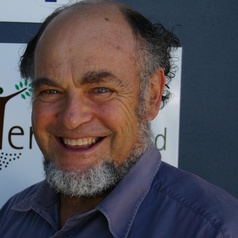 Stephen D. Joseph合作论文数University of Wollongong;New England University;Nanjing Agricultural University;School of Materials Science and Engineering, University of NSW8
 Scott Donne合作论文数School of Environmental and Life Sciences, The University of Newcastle;College of Engineering, Science and Environment, The University of Newcastle7
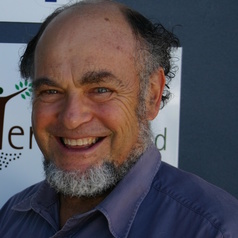 Stephen Joseph合作论文数Australian Institute of Energy6
 Nielsen Shaun J合作论文数Ctr Marine Bioinnovat, Univ New South Wales5Yun Lin合作论文数5James M. Hook合作论文数University of New South Wales, University of New South Wales5
 Torsten Thomas合作论文数School of Biological, Earth & Environmental Sciences, Faculty of Science, The University of New South Wales5
 Ellen R. Graber合作论文数Institute of Soil, Water and Environmental Sciences, Agricultural Research Organization4
 Lukas Van Zwieten合作论文数NSW Department of Primary Industries4
 Christopher Marjo合作论文数UNSW Analytical Centre, University of New South Wales4Rawal Aditya合作论文数3
 Genxing Pan (潘根兴)合作论文数College of Resources and Environmental Sciences, Nanjing Agricultural University3
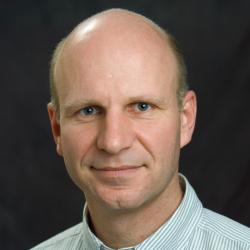 Johannes Lehmann合作论文数School of Integrative Plant Science, College of Agriculture and Life Sciences, Cornell University2
 Jun Ye合作论文数Australian Centre for Ecogenomics, University of Queensland2
 Bin Gong合作论文数2Stephen Kimber合作论文数Environmental Centre of Excellence, Department of Primary Industries, 1243 Bruxner Highway, Wollongbar, NSW 2477, Australia2
 Lianqing Li (李恋卿)合作论文数南京农业大学资源环境科学学院2Joseph Horvat合作论文数1Ben Pace合作论文数1Pierre Thor Elliot Taylor合作论文数1
 Bhupinder Pal Singh合作论文数1
 Jessica A Allen合作论文数1Jianli Wang合作论文数1Sarasadat Taherymoosavi合作论文数1Paul Blackwell合作论文数1yingxi lin合作论文数1
 Husson Olivier合作论文数1
 Balwant Singh合作论文数School of Life and Environmental Sciences, Faculty of Science, The University of Sydney1LiQiang Cui (崔立强)合作论文数1
 Xiaoyu Liu (刘晓雨)合作论文数College of Resources and Environmental Sciences, Nanjing Agricultural University1
 Ronald J. Smernik合作论文数School of Agriculture, Food and Wine, The University of Adelaide1
 David R G Mitchell合作论文数Australian Institute for Innovative Materials, University of Wollongong;Electron Microscopy Centre, University of Wollongong1
 Helen Rutlidge合作论文数School of Civil & Environmental Engineering, Faculty of Engineering, The University of New South Wales1Rongjun Bian合作论文数1
 Afeng Zhang (张阿凤)合作论文数College of Natural Resources and Environment, Northwest A&F University1
 Adriana Downie合作论文数1
 Paul Richard Munroe合作论文数School of Materials Science and Engineering, Faculty of Science, The University of New South Wales1James E. Amonette合作论文数1
 Xiaorong Fan (范晓荣)合作论文数College of Resources and Environmental Sciences,Nanjing Agricultural University1David Phelan合作论文数1
 J. Horvat合作论文数Institute for Superconducting and Electronic Materials;University of Wollongong;Institute for Superconducting and Electronic Materials, University of Wollongong1
 Zakaria Solaiman合作论文数School of Earth and Environmental Sciences, The University of Adelaide1
 Huolin Xin合作论文数Department of Physics Astronomy, University of California, Irvine1
 Md Anawar Hossain合作论文数Ariban Agrienviro Engineering Ltd.1Anne M. Rich合作论文数1
 Pj Storer合作论文数Department of Botany;University of Western;Department of Botany, University of Western1
 Annette Cowie合作论文数School of Environmental and Rural Science, University of New England;NSW Department of Primary Industries1
 Marta Camps Arbestain合作论文数1




