Categorical perception was evaluated for a nine-token voice onset time (VOT) continuum with endpoint tokens /feil/veil/. The synthetic speech continuum was presented in a random-level noise masker at different signal-to-noise ratios (SNR = 0, +6, +12 dB) and overall presentation levels (50 and 70 dB HL). Overall labelling performance deteriorated as the SNR was reduced. Labelling results for the +12-dB-SNR condition reflected a category boundary at 87 ms for listeners with normal hearing sensitivity. The companion two-step discrimination function revealed better-than-chance performance between pairs of tokens labelled fail, chance performance between pairs of tokens labelled vail, and a slight performance peak at the labelling boundary between fail and vail, Listeners with high-frequency audiometric deficits produced labelling results for the +12-dB-SNR condition that were similar to normal functions measured for the 0-dB-SNR condition. These listeners were unable to discriminate two-step differences in voicing duration, but they produced a normal temporal labelling boundary. To try to understand the noncategorical discrimination data, a psychoacoustic analog for the speech continuum was evaluated. Relative onset time (ROT) difference limens (DLs) were measured as a function of the temporal onset delay of a low-frequency sawtooth waveform relative to the onset of a high-frequency noise burst. The ROT cue was used only when absolute stimulus duration could not be relied upon as a consistent cue, under conditions where a large range of random overall duration was presented to the listener. The ROT DLs were relatively invariant over a range of standard delays from 50 to 110 ms. The average DL was about 30 ms, which is consistent with the small performance peak in the synthetic speech discrimination function.
The paper shows that an adaptive weighted recursive least squares algorithm with a variable forgetting factor (WRLS-VFF) will adjust the size of the data segment to be analyzed according to its time-varying characteristics, as during the transitions between vowels and consonants. The algorithm can accurately estimate the vocal tract formants, anti-formants, and their bandwidths, be used for glottal inverse filtering, perform voiced (V)/unvoiced (U)/silent (S) classification of speech segments, estimate the input excitation (either white noise or periodic pulse trains), and estimate the instant of glottal closure
The purpose of this study was to model features of the glottal volume-velocity waveform for three voice types: modal voice, vocal fry, and breathy voice. The study analyzed data measured from two sustained vowels and one sentence uttered by nine adult, male subjects who represented examples of the three voice types. The primary analysis procedure was glottal inverse filtering, which estimated the glottal volume-velocity waveform. The estimated glottal volume-velocity waveform was then fit to an LF model waveform. Four parameters of the LF model were adjusted to minimize the mean-squared error between the estimated glottal waveform and the LF model waveform. Statistical averages and standard deviations of the four parameters of the LF glottal waveform model were calculated using the data for each voice type. The four LF model parameters characterize important low-frequency features of the glottal waveform, namely, the glottal pulse width, pulse skewness, abruptness of closure of the glottal pulse, and the spectral tilt of the glottal pulse. Statistical analysis included ANOVA and multiple linear regression analysis. The ANOVA results demonstrated that there was a difference in three of the four LF model parameters for the three voice types. The linear regression analysis between the four LF model parameters and a formal rating by a listening test of the quality of the three voice types was used to determine the most significant LF model parameters for each voice type. A simple rule was devised for synthesizing the three voice types with a formant synthesizer using the LF glottal waveform model. Listener evaluations of the synthesized speech tended to confirm the results determined by the analysis procedures.
This paper describes a linear predictive (LP) speech synthesis procedure that resynthesizes speech using a 6th-order polynomial waveform to model the glottal excitation. The coefficients of the polynomial model form a vector that represents the glottal excitation waveform for one pitch period. A glottal excitation code book with 32 entries for voiced excitation is designed and trained using two sentences spoken by different speakers. The purpose for using this approach is to demonstrate that quantization of the glottal excitation waveform does not significantly degrade the quality of speech synthesized with a glottal excitation linear predictive (GELP) synthesizer. This implementation of the LP synthesizer is patterned after both a pitch-excited LP speech synthesizer and a code excited linear predictive (CELP) speech coder. In addition to the glottal excitation codebook, we use a stochastic codebook with 256 entries for unvoiced noise excitation. Analysis techniques are described for constructing both codebooks. The GELP synthesizer, which resynthesizes speech with high quality, provides the speech scientist a simple speech synthesis procedure that uses established analysis techniques, that is able to reproduce all speed sounds, and yet also has an excitation model waveform that is related to the derivative of the glottal flow and the integral of the residue. It is conjectured that the glottal excitation codebook approach could provide a mechanism for quantitatively comparing the differences in glottal excitation codebooks for male and female speakers and for speakers with vocal disorders and for speakers with different voice types such as breathy and vocal fry voices. Conceivably, one could also convert the voice of a speaker with one voice type, e.g., breathy, to the voice of a speaker with another voice type, e.g., vocal fry, by synthesizing speech using the vocal tract LP parameters for the speaker with the breathy voice excited by the glottal excitation codebook trained for vocal fry.
The quality of synthetic speech is affected by two factors: intelligibility and naturalness. At present, synthesized speech may be highly intelligible, but often sounds unnatural. Speech intelligibility depends on the synthesizer's ability to reproduce the formants, the formant bandwidths, and formant transitions, whereas speech naturalness is thought to depend on the excitation waveform characteristics for voiced and unvoiced sounds. Voiced sounds may be generated by a quasiperiodic train of glottal pulses of specified shape exciting the vocal tract filter. It is generally assumed that the glottal source and the vocal tract filter are linearly separable and do not interact. However, this assumption is often not valid, since it has been observed that appreciable source-tract interaction can occur in natural speech. Previous experiments in speech synthesis have demonstrated that the naturalness of synthetic speech does improve when source-tract interaction is simulated in the synthesis process. The purpose of this paper is two-fold: 1) to present an algorithm for automatically measuring source-tract interaction for voiced speech, and 2) to present a simple speech production model that incorporates source-tract interaction into the glottal source model. This glottal source model controls: 1) the skewness of the glottal pulse, and 2) the amount of the first formant ripple superimposed on the glottal pulse. A major application of the results of this paper is the modeling of vocal disorders.
The purpose of this research was to develop quantitative measures for the assessment of laryngeal function using speech and electroglottographic (EGG) data. We developed two procedures for the detection of laryngeal pathology: 1) a spectral distortion measure using pitch synchronous and asynchronous methods with linear predictive coding (LPC) vectors and vector quantization (VQ) and 2) analysis of the EGG signal using time interval and amplitude difference measures. The VQ procedure was conjectured to offer the possibility of circumventing the need to estimate the glottal volume velocity wave-form by inverse filtering techniques. The EGG procedure was to evaluate data that was "nearly" a direct measure of vocal fold vibratory motion and thus was conjectured to offer the potential for providing an excellent assessment of laryngeal function. A threshold based procedure gave 75.9 and 69.0% probability of pathological detection using procedures 1) and 2), respectively, for 29 patients with pathological voices and 52 normal subjects. The false alarm probability was 9.6% for the normal subjects.
The authors consider the synthesis of speech with various vocal characteristics, such as modal, creaky, breathy, rough, and hoarse. The relationships between the acoustical parameters of the glottal source pulses and these vocal characteristics were reviewed. Based on the acoustical parameters needed to model these vocal characteristics, a novel unified glottal source model was developed. This source model was tested with a formant synthesizer for its ability to synthesize speech with various vocal characteristics. Informal listening tests were conducted to evaluate the performance of this source model. The preliminary results are encouraging, and more rigorous testing of this model and further development of the glottal source model for each vocal characteristic are underway. Applications of this work include high-quality speech synthesis and the modeling of vocal disorders
The purpose of this research was to investigate the potential effectiveness of digital speech processing and pattern recognition techniques for the automatic recognition of gender from speech segments. In this paper "coarse" acoustic coefficients (autocorrelation, linear prediction, cepstrum, and reflection) were used to form test and reference templates for vowels, voiced fricatives, and unvoiced fricatives. The effects of different distance measures, filter orders, recognition schemes, and vowels and fricatives were comparatively assessed to determine their effectiveness for the task of gender recognition from speech segments. The results showed that most of the acoustic parameters worked well for gender recognition. A within-gender and within-subject averaging technique was important for generating appropriate test and reference templates. The Euclidean distance measure appeared to be the most robust as well as the simplest of the distance measures. The results from this study implied that the gender information is time invariant, phoneme independent, and speaker independent for a given gender. One recognition scheme achieved 100% correct speaker gender classification for a database of 52 talkers (27 male and 25 female). In part II of this paper [D.G. Childers and K. Wu, J. Acoust. Soc. Am. 90, 1841-1856 (1991); hereafter referred to as paper II] the detailed features of ten vowels that appeared responsible for distinguishing a speaker's gender were examined statistically. Included in paper II is a replication of part of the classical study of Peterson and Barney [J. Acoust. Soc. Am. 24, 175-184 (1952)] of vowel characteristics.
The purpose of this research was to investigate the potential effectiveness of digital speech processing and pattern recognition techniques for the automatic recognition of gender from speech. In part I Coarse Analysis [K. Wu and D. G. Childers, J. Acoust. Soc. Am. 90, 1828-1840 (1991)] various feature vectors and distance measures were examined to determine their appropriateness for recognizing a speaker's gender from vowels, unvoiced fricatives, and voiced fricatives. One recognition scheme based on feature vectors extracted from vowels achieved 100% correct recognition of the speaker's gender using a database of 52 speakers (27 male and 25 female). In this paper a detailed, fine analysis of the characteristics of vowels is performed, including formant frequencies, bandwidths, and amplitudes, as well as speaker fundamental frequency of voicing. The fine analysis used a pitch synchronous closed-phase analysis technique. Detailed formant features, including frequencies, bandwidths, and amplitudes, were extracted by a closed-phase weighted recursive least-squares method that employed a variable forgetting factor, i.e., WRLS-VFF. The electroglottograph signal was used to locate the closed-phase portion of the speech signal. A two-way statistical analysis of variance (ANOVA) was performed to test the differences between gender features. The relative importance of grouped vowel features was evaluated by a pattern recognition approach. Numerous interesting results were obtained, including the fact that the second formant frequency was a slightly better recognizer of gender than fundamental frequency, giving 98.1% versus 96.2% correct recognition, respectively. The statistical tests indicated that the spectra for female speakers had a steeper slope (or tilt) than that for males. The results suggest that redundant gender information was imbedded in the fundamental frequency and vocal tract resonance characteristics. The feature vectors for female voices were observed to have higher within-group variations than those for male voices. The data in this study were also used to replicate portions of the Peterson and Barney [J. Acoust. Soc. Am. 24, 175-184 (1952)] study of vowels for male and female speakers.
The authors have modified Klatt's formant synthesizer and have implemented it in software. The user can configure the filter bank(s) by simple parameter specifications. This flexible formant synthesizer has been tested by synthesizing segments of sounds with a variable number of formant tracks and also with unsmooth and discontinuous formant tracks. This synthesizer can be used as tool in experiments with speech analysis-by-synthesis and rule-based speech synthesis
The purpose of this study was to examine several factors of vocal quality that might be affected by changes in vocal fold vibratory patterns. Four voice types were examined: modal, vocal fry, falsetto, and breathy. Three categories of analysis techniques were developed to extract source-related features from speech and electroglottographic (EGG) signals. Four factors were found to be important for characterizing the glottal excitations for the four voice types: the glottal pulse width, the glottal pulse skewness, the abruptness of glottal closure, and the turbulent noise component. The significance of these factors for voice synthesis was studied and a new voice source model that accounted for certain physiological aspects of vocal fold motion was developed and tested using speech synthesis. Perceptual listening tests were conducted to evaluate the auditory effects of the source model parameters upon synthesized speech. The effects of the spectral slope of the source excitation, the shape of the glottal excitation pulse, and the characteristics of the turbulent noise source were considered. Applications for these research results include synthesis of natural sounding speech, synthesis and modeling of vocal disorders, and the development of speaker independent (or adaptive) speech recognition systems.
The electroglottogram (EGG) is known to be related to vocal fold motion. A major hypothesis undergoing examination in several research centers is that the EGG is related to the area of contact of the vocal folds. This hypothesis is difficult to substantiate with direct measurements using human subjects. However, other supporting evidence can be offered. For this study we made measurements from synchronized ultra high-speed laryngeal films and from EGG waveforms collected from subjects with normal larynges and patients with vocal disorders. We compare certain features of the EGG waveform to (a) the instant of the opening of the glottis, (b) the instant of the closing of the glottis, and (c) the instant of the maximum opening of the glottis. In addition, we compare both the open quotient and the relative average perturbation measured from the glottal area to that estimated from the EGG. All of these comparisons indicate that vocal fold vibratory characteristics are reflected by features of the EGG waveform. This makes the EGG useful for speech analysis and synthesis as well as for modeling laryngeal behavior. The limitations of the EGG are discussed.
Techniques for the quantitative assessment and classification of vocal disorders are described. Models for vocal disorders using speech synthesis are examined. Methods for characterizing the electroglottography (EGG) waveform and the assessment of vocal quality using acoustic and EGG signal features are discussed.< >
We have investigated the relationship between various voice qualities and several acoustic measures made from the vowel /i/ phonated by subjects with normal voices and patients with vocal disorders. Among the patients (pathological voices), five qualities were investigated: overall severity, hoarseness, breathiness, roughness, and vocal fry. Six acoustic measures were examined. With one exception, all measures were extracted from the residue signal obtained by inverse filtering the speech signal using the linear predictive coding (LPC) technique. A formal listening test was implemented to rate each pathological voice for each vocal quality. A formal listening test also rated overall excellence of the normal voices. A scale of 1–7 was used. Multiple linear regression analysis between the results of the listening test and the various acoustic measures was used with the prediction sums of squares (PRESS) as the selection criteria. Useful prediction equations of order two or less were obtained relating certain acoustic measures and the ratings of pathological voices for each of the five qualities. The two most useful parameters for predicting vocal quality were the Pitch Amplitude (PA) and the Harmonics-to-Noise Ratio (HNR). No acoustic measure could rank the normal voices.
A nine-token synthetic VOT continuum for /feɪl/-veɪl/ was constructed with 10-ms steps in fricative voicing. Perceptual studies revealed better-than-chance discrimination between pairs of tokens labeled /feɪl/, chance discrimination between pairs of tokens labeled /veɪl/, and a slight peak in the discrimination function at the labeling boundary between /feɪl/ and /veɪl/. To better understand the noncategorical discrimination data, relative onset time (ROT) difference limens were measured for a range of durations of a 100-Hz sawtooth waveform, which served as the analog for voicing in the speech continuum. ROT difference limens increased systematically with increasing duration of the standard sawtooth waveform. The ROT data suggest that better-than-chance discrimination near the /feɪl/-endpoint and chance discrimination near the /veil/-end-point reflect larger absolute difference limens for onset of voicing as voicing duration was increased from /feɪl/ to /veɪl/. Traditional phonetic processes presumably account for the slight peak in the discrimination function at the labeling boundary between the /feɪl/ and /veɪl/categories. [Research supported by NIH.]
An algorithm is presented for automatically classifying speech into four categories: silent and speech produced by three types of excitation, namely, voiced, unvoiced, and mixed (a combination of voiced and unvoiced). The algorithm uses two-channel (speech and electroglottogram) signal analysis and has been tested on data from six speakers (three male and three female), each speaking five sentences. An overall correct classification accuracy of approximately 98.2% was achieved when compared to skilled manual classification. This is superior to previously reported automatic classification schemes. If word boundary errors, including the beginning and ending of sentences, are excluded, then the algorithm's performance improves to 99.5%
The authors describe analysis and synthesis methods for improving the quality of speech produced by D.H. Klatt's (J. Acoust. Soc. Am., vol.67, p.971-95, 1980) software formant synthesizer. Synthetic speech generated using an excitation waveform resembling the glotal volume-velocity was found to be perceptually preferred over speech synthesized using other types of excitation. In addition, listeners ranked speech tokens synthesized with an excitation waveform that simulated the effects of source-tract interaction higher in neutralness than tokens synthesized without such interaction. A series of algorithms for silent and voiced/unvoiced/mixed excitation interval classification, pitch detection, formant estimation and formant tracking was developed. The algorithms can utilize two channels of input data, i.e., speech and electroglottographic signals, and can therefore surpass the performance of single-channel (acoustic-signal-based) algorithms. The formant synthesizer was used to study some aspects of the acoustic correlates of voice quality, e.g., male/female voice conversion and the simulation of breathiness, roughness, and vocal fry.< >
We describe some experiments in voice-to-voice conversion that use acoustic parameters from the speech of two talkers (source and target). Transformations are performed on the parameters of the source to convert them to match as closely as possible those of the target. The speech of both talkers and that of the transformed talker is synthesized and compared to the original speech. The objective of this research is to develop a model for (1) creating new synthetic voices, (2) studying factors responsible for synthetic voice quality, and (3) determining methods for speaker normalization.
An adaptive filter approach that tracks the time-varying parameters of the vocal tract and updates the parameters during the glottal closed phase interval can reduce the formant estimation error. The authors describe three adaptive algorithms for estimating time-varying vocal track parameters: weighted recursive least squared (WRLS), WRLS with variable forgetting factor (WRLS-VFF), and weighted least squared lattice (WLSL). A recursive equation to update the forgetting factor in the WRLS-VFF algorithm is derived, and experimental results for both synthetic and real speech for the above algorithms are given. Results show that the WRLS-VFF algorithm offers a more accurate formant estimation and a faster formant tracking ability than either the WLSL or the WRLS algorithm
Two algorithms are given for automatically recognizing the gender of a speaker using acoustic parameters extracted from the speaker's speech. The speech data used for developing the algorithms were taken from a large data set. Only acoustic parameters for vowels and fricatives were used to develop and test the algorithms because the authors wanted the gender classification to be achieved rapidly using only a brief data record
 Nathan W. Perry合作论文数15D.M. Hicks合作论文数7Lalwani A L合作论文数6Ke Wu合作论文数4Moore G P合作论文数4
 B. Yegnanarayana合作论文数International Institute of Information Technology, Hyderabad4Alsaka, Y.A.合作论文数3
 Ira Fischler合作论文数3neal b pinto合作论文数2A. Antonio Arroyo合作论文数2Keun Sung Bae合作论文数2Ting, Y.T.合作论文数2
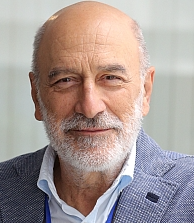 José Príncipe合作论文数Computational NeuroEngineering Laboratory, University of Florida;Department of Electrical & Computer Engineering, University of Florida2Os Halpeny合作论文数2
 Charles Formby合作论文数2Teera Achariyapaopan合作论文数2L. Eskenazi合作论文数2Moore, G.合作论文数1Hicks, D.合作论文数1Ananth, A.合作论文数1Ww Dawson合作论文数1Min-Tai Pao合作论文数1
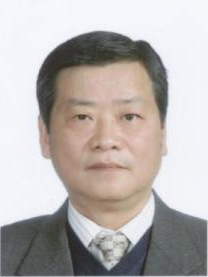 Minsoo Hahn合作论文数School of Electrical Engineering, Korea Advanced Institute of Science and Technology1T Boaz合作论文数1Paige, A.合作论文数1Chun-Fan Wong合作论文数1Brinck A G合作论文数1Raney J J合作论文数1William W. Dawson合作论文数1C. Lee合作论文数1J. N. Larar合作论文数1L. C. Westphal合作论文数1J. M. Naik合作论文数1W Mesa合作论文数1Sachio Senmoto合作论文数1Timothy C. Doyle合作论文数1




