Photonic crystal fiber (PCF) based surface plasmon resonance (SPR) sensors are emerging as a promising technology for ultrasensitive detection of various biological and chemical analytes. This paper presents a novel D-shaped PCF based SPR sensor, which has shown great potential for highly sensitive detection of refractive index (RI) changes. The D-shaped configuration is achieved through the polishing of the upper side of the PCF fiber. To enhance sensitivity, a 0.1 mu m silver layer is strategically placed between the fiber and analyte, intensifying light-matter interactions. Additionally, a 0.05 mu m titanium dioxide (TiO2) layer is employed not only to further boost sensitivity but also to shield the metal from oxidation, ensuring the longevity and stability of the sensor. The finite element method (FEM) is employed to optimize the structural parameters of the sensor design. The findings demonstrate that the proposed SPR sensor is sensitive to RI changes in the 1.31-1.35 range, achieving a peak wavelength sensitivity of 30000 nm RIU-1 and an amplitude sensitivity of -185.33 RIU-1. The sensor holds promise for diverse applications, including chemical and biological sensing, making it a versatile tool with promising implications for advancing sensing technologies in various domains.
The speed of electrical circuits is the major hurdle of concern in high-speed communication. To overcome conventional computing limitations, the electrical components are replaced by photonic components. All-optical switching characteristics are used to construct various logic gates output using SOA nonlinear effects. This article analyzes the switching characteristics of all-optical logic gates in terms of extinction ratio, eye diagram, and BER using different modulation formats. Tailoring the important parameter of SOA proves the feasibility of the analysis and provides optimum performance.
An index-guiding novel solid-core photonic crystal fiber (SC-PCF) formed by a hexagonal lattice of circular-shaped air holes arranged in silicon background is realized. By varying the radius ‘r’ of the air holes from 0.1a to 0.5a (where ‘a’ is defined as the lattice constant), the characteristic electromagnetic modes of the low loss Terahertz (THz) fiber were solved through eigenmode analysis using finite element method (FEM). The effective mode area and the nonlinearity of the proposed PCF are calculated for different radii of the air holes and it is found that the effective mode area decreases when the radius of the air holes is increased. On the other hand, the nonlinearity increases for an increase in the air holes radii. At 1 THz, the confinement loss of the proposed fiber is in the order of 10 −23 dB/m and transmittance efficiency above 96% has been attained. As 5-G technology emanates, THz wave propagation becomes essential and the designed hexagonal lattice SC-PCF will be useful for the advancement of communication systems, sensing devices and several medical applications.
This paper presents the design, fabrication, and characterization of a novel single layer nonabsorbing metasurface with a broadband epsilon near zero (ENZ) property and its application in-band gain enhancement of triple notch band ultra-wideband (UWB) antenna.The proposed metasurface is made up of non-resonant metamaterial unit cells consisting of half ring slots in a circular patch on an FR4 dielectric substrate.Metasurface with unit cells arranged in a 2 × 2 lattice pattern is suspended 4 mm above the triple notch band antenna.The transmission and reflection properties of the metamaterial unit cell are analysed and optimised to ensure the coherent transmission from the metasurface.The non-absorbing property of the metasurface results in the minimal loss of electromagnetic waves.The proposed antenna system with metasurface has a size of 28 × 28 × 7.2 mm 3 .The measured results of fabricated antenna are compared with the simulated ones and are in good match.The results show that the gain of the antenna was enhanced by 1.3 dB, 2.8 dB, and 4 dB at 5 GHz, 7 GHz, and 9 GHz, respectively.
Highly infectious viral diseases are a serious threat to mankind as they can spread rapidly among the community, possibly even leading to the loss of many lives. Early diagnosis of a viral disease not only increases the chance of quick recovery, but also helps prevent the spread of infections. There is thus an urgent need for accurate, ultrasensitive, rapid, and affordable diagnostic techniques to test large volumes of the population to track and thereby control the spread of viral diseases, as evidenced during the COVID-19 and other viral pandemics. This review paper critically and comprehensively reviews various emerging nanophotonic biosensor mechanisms and biosensor technologies for virus detection, with a particular focus on detection of the SARS-CoV-2 (COVID-19) virus. The photonic biosensing mechanisms and technologies that we have focused on include: (a) plasmonic field enhancement via localized surface plasmon resonances, (b) surface enhanced Raman scattering, (c) nano-Fourier transform infrared (nano-FTIR) near-field spectroscopy, (d) fiber Bragg gratings, and (e) microresonators (whispering gallery modes), with a particular emphasis on the emerging impact of nanomaterials and two-dimensional materials in these photonic sensing technologies. This review also discusses several quantitative issues related to optical sensing with these biosensing and transduction techniques, notably quantitative factors that affect the limit of detection (LoD), sensitivity, specificity, and response times of the above optical biosensing diagnostic technologies for virus detection. We also review and analyze future prospects of cost-effective, lab-on-a-chip virus sensing solutions that promise ultrahigh sensitivities, rapid detection speeds, and mass manufacturability.
In WSN, DoS (denial of service) attack makes shortcoming system. The packets travel over and over in the sensor network. By that, all the assets like data transmission, memory, and vitality are squandered by this attack. However, the attacker ought to optimize its attacker plan for request to boost the impact on the system performance because of the deficiency of vitality at the aggressor side. Denial of service (DoS) attack on the Internet has become a squeezing issue. By staying away from these sorts of attacks, network performance can be improved. Therefore, security is a fundamental requirement for these networks. Effective routing is necessary in order to overcome the issued faced by the crosslayer in the DOS attack of the WSN network for the purpose of good transmission. This research work mainly focuses on performance evaluation using optimization methods. To establish the efficient path in the crosslayer against DoS attack, this paper has proposed enhanced lion optimization with an efficient path routing equalization technique (LOEPRE). If any failure node occurs in the network, then the node is recognized and the transfer of the data packet is done to the other node. Retransmission of data causes overload in the network. The proposed model focuses on these issues and overcomes these issues by improving the path efficiently with robust security. It consists of three phases: the initial phase includes the route discovery in the network. In the second phase, the transfer of data is done in the high router path for security purposes. Finally, the efficient path routing equalization technique is used for minimizing the overload in the network; it provides the equalized path length in the network and is highly efficient. Hence, the proposed LOEPRE technique is used to achieve energy efficiency in wireless network for prolonged network lifetime and minimum packet latency and minimize consumption of energy. Moreover, the simulation outcome of the proposed LOEPRE method is highly robust while comparing to the existing methods EFCRS, SSPRA ELOER, EFLOR, and TSTP. It achieves better performance than existing algorithms in comparing metric connectivity ratio, end-to-end delay, overhead, throughput, and packet delivery ratio.
In this paper, the finite-difference time-domain, pulse wave expansion method are the major methods used to study characteristics of photonic band gaps in photonic crystals. The 2D structure of photonic crystals comprises of nonlinear rods with different types of geometrical shapes with lattices on air or plasma background. The embedded dielectric rod containing Kerr effect which is a nonlinear property has relative permittivity which is a function of the external light intensity, but this demands a high amount of optical intensities. The simulation results show the transmission efficiency, and the optical field distributions for both TE and TM modes can be obtained.
In the current scenario, optical computing is the highly demanded technology needed in high-speed signal processing applications. As this demand is increasing day by day, the focus is emphasized more on reliability, switching speed and minimal power consumption. In this paper, we proposed the experimental setup for a secured transition encoder based on the Hamming distance algorithm. It is used to encrypt the data using a control bit and also minimize the power consumption by reducing the number of transitions between the successive elements. The major components of this setup are designed using Semiconductor optical amplifiers and are simulated by selecting frequencies in inverse intermodulation products. The dependence of the probe power, channel spacing are examined for nonlinear elements such as fiber and semiconductor optical amplifiers. The obtained observations confirmed that the suggested setup is capable of operating at minimal power with a good extinction ratio and quality factor.
Silicon-based photonic modulators are a primary choice for on-chip optical devices with CMOS fabrication compatibility. The phase shifter in a silicon photonics modulator plays a significant role in determining the efficiency of the modulator to meet the optical data communication's future demands. Obtaining high extinction ratio (ER) and with acceptable bit error rate (BER) at low voltage and low loss was kept as the primary objective for the proposed PIN phase shifter in an unbalanced silicon Mach-Zehnder modulator. The phase shifter length was kept at 2 mm, and the carrier doping region was reduced to decrease the carrier absorption loss. The concentration of P and N in the phase shifter was set to 7 × 1017 cm−3 and 5 × 1017 cm−3, and the intrinsic gap was varied (50, 100, 150, 200, 250, 300, 350 and 450 nm) for the study to obtain the optimum gap to meet the objective. For 200 Gbps, the proposed modulator with intrinsic gap 150 nm obtained 18.68 dB ER having VπL = 0.8 V.cm. Insertion loss obtained for the phase shifter was 3.421 dB/cm. The proposed design is expected to enhance the performance of silicon optical modulators for commercial applications, and also other applications such as optical switches, delay lines, and optical interconnect.
In this paper, we investigate the suitability of two commonly used rare earth ions viz. Erbium and Ytterbium for building a solar pumped fiber amplifier. Based on the solar spectrum and the absorption cross section for the rare earth ions we find that the Ytterbium is more suitable since it has a larger net absorption over the solar spectrum.
A non-resonant metamaterial unit cell is proposed to design a metasurface for ultrawideband (UWB) gain enhancement and radar cross section (RCS) reduction of an UWB antenna. Epsilon near zero (ENZ) property and negative refractive index of metamaterial is achieved to ensure low loss and amplification of electromagnetic waves (EM) passing through it. The proposed metamaterial is designed on a 6 mm x 6 mm FR4 substrate with dielectric constant 4.4, height 1.6 mm and loss tangent 0.01. The unit cell is simulated with periodic boundary condition to get the properties of periodically arranged unit cells in one plane called metasurface. A Metasurface is designed by planar arrangement of 5x5 unit cells of proposed metamaterial unit cell and is kept at height of 2 mm above an ultrawideband planar microstrip antenna. Antenna system with metasurface has physical and electrical dimensions of 32 x 32 x 5.2 mm(3) and 0.34 lambda(0) x 0.34 lambda(0) x 0.05 lambda(0) respectively, where lambda(0) is the free-space wavelength at 3.2 GHz. The bandwidth of UWB patch antenna (3.1-10.6 GHz) is unaffected by the presence of metasurface. The analysis of radiation mechanism shows the phase difference of EM waves passing through metasurface with and without reflection is 300 degrees-400 degrees. This indicates emergence of coherent waves from metasurface and contributes in gain enhancement. Maximum gain is 5.7 dB at 6.8 GHz with radiation efficiency of 88.5% and maximum gain enhancement is 10.1 dB at 9.8 GHz. The reflection phase analysis of normal incident wave predicts the frequency for maximum RCS reduction as 6.4 GHz. Maximum RCS reduction of antenna with application of metasurface is 21 dB at 6.7 GHz. Significant gain enhancement and reduction of RCS is achieved for ultrawideband. The proposed antenna system metasurface with enhanced gain and reduced RCS is a good candidate for application in stealth and military platforms. (C) 2020 Elsevier GmbH. All rights reserved.
All-optical signal processing in optical technology is the most reliable process that mitigates the limitations of speed and processing power in electronics by replacing the electronic components with the equivalent optical switching components. All-optical switches are very important in communication and computing, as most communication around the globe is carried on optical fibers. Optical switching is effectively performed in high data rate systems through all-optical gates. The nonlinear signal processing in semiconductor optical amplifier (SOA) is the key element for implementing various optical gate logics. In this paper, combination of optical gates such as all-optical AND, OR, NOT, XOR, NOR and XNOR operations are successfully simulated in single structure. The performance analysis of each gate and its cascaded feature is analyzed by varying the structural and functional parameters of SOA’s active region. The simulation results confirm that the proposed design can be implemented at high data rate of more than 10Gbps with good quality factor and extinction ratio of around 12 dB.
Abstract The demand for larger bandwidth to carry high capacity data in optical networks is increasing. Thus, it is expected to replace all digital logic with optical logic soon. Privacy and data security are also of utmost importance in all-optical networks. Generally, all-optical encryption has been carried out using (i) highly nonlinear fiber (HNLF) and (ii) Semiconductor Optical Amplifier (SOA) with interferometric structures. However, the former is limited by the requirement of a lengthy fiber and the latter one with more number of nonlinear components. In this work, an all-optical encryption process using nonlinear effects and four-wave mixing (FWM) in SOA without interferometric structure is presented for different number systems. The basic idea of the proposed system is to use delay operations which are carried out by duo binary modulation units whereas the encryption using single SOA is possible by FWM nonlinear effect. This combination of novel design for different number systems is optimized through SOA structural parameters, pump and probe signal power, and wavelength. Through optimization, the performance improvement is assured by a good extinction ratio of 11.5 dB for the active region length of less than 200 µm. Compared to the existing techniques, the quality factor is 2.28 times and 1.52 times better than HNLF and SOA-MZI, respectively.
Reading the memristor memory cell without changing its resistance state is one of the potential problems to be addressed in the memristor-based memory design. This paper presents a novel read scheme that achieves a non-destructive read operation, consumes less power, provides high endurance and adapts itself based on the process variations. The proposed scheme uses built-in self-tuning circuitry to obtain the optimum amplitude and width of the refresh pulse required to completely retrieve the state of the memristor after the read cycle. As the scheme uses refresh pulse only when needed, the scheme saves nearly 50% of average power when compared with a conventional fixed pulse read method. The self-tuning circuits are validated by a generic, accurate, and efficient “voltage threshold adaptive memristor” model. The validation results prove that the proposed tuning circuitry achieves optimum refresh pulse size under various read disturbance faults.
In this paper, we have proposed a blocking probability-based admission control technique for QoS provisioning on in WDM networks, for this, we estimate the blocking probability for an arriving connection request. The probability that there is at least one free wavelength at the specified book-ahead time that remains idle for the whole connection duration. Next to this an admission control scheme used in each group for deterministic QoS provisioning. The admission control scheme has its root from network calculus which can derive deterministic bounds on throughput and delay rather than statistical averages. Along with the delay metric, the blocking probability is also considered as the main constraints for admission control. The scheme allocates the aggregate token bucket for each class of traffic based on its bandwidth share.
In the applications of Wireless Sensor Network, sensor nodes broadcast the data towards the destination. Localization is considered as the most important and interesting area in WSN as identifying the location of sensor nodes is needful for many situations. The proposed work, points on discovering the sensor node location and promotes cross layer effective routing path searching for the reliable data transmission in the network. The proposed work consists of three main phases. The initial phase includes the cross-layer link establishment. The second phase includes, identifying the fuzziness of wireless sensors. It tracks the location of sensor nodes and analyzes the behaviour. This can be done with the algorithm namely; Fuzziness based Contiguous nodes Refining Algorithm. Since the characteristics of nodes may vary often, the algorithm finds the unsuitable communication node in the routing path and removes it. Source node controls the activities of the intermediate nodes in the routing path. After identifying and removing the unsuitable nodes, in final phase, an effective routing path is established by using the scheme called Efficient Fuzziness based Contiguous node refining with cross-layer routing Scheme (EFCRS) is proposed. This selects the routing nodes from starting node to ending node with the lesser energy usage. At last, destination node acquires the enhanced throughput and reduced consumption of energy. It also obtains minimum packet latency. Simulation is carried out and found it, achieves better performance than existing algorithms in comparing metrics end to end delay, overhead, connectivity ratio, throughput and energy consumption.
Memristor is an attractive candidate to replace the present computation and storage devices due to its novel features namely nanoscale size, low power, non-volatility, high compatibility with CMOS, and multi-bit operations. However, the memristor memories need to overcome the design challenges such as process variations, non-deterministic switching characteristics, and unreliable operation. This study suggests a built-in self-configurable architecture to detect the weak (unstable) cells of the memristor-based memories. The proposed techniques were validated by "voltage threshold adaptive memristor" (VTEAM) model by injecting various resistive faults. Additionally, this study presents the necessary mathematical analysis for the methodology. The results confirm that the investigated architecture is capable to differentiate unstable and stable memory cell.
A novel planar broadband metasurface using the unique reflection phase properties of two different artificial magnetic conductors (AMC) to reduce the radar cross section (RCS) in Ku-band (12-18 GHz) is proposed in this paper. The first unit cell consists of square patch with a four-cut ring and second has crossed pick axe shape. The precise design of unit cells gives 180° ± 30° phase difference for a wide bandwidth of 9.9-19.8 GHz (66%). These two unit cells have been arranged to create the checkerboard metasurface that provides 10dB RCS reduction for 10-18GHz (57%) compared to perfect electric conductor (PEC) surface by cancellation of scattered fields along the normal direction and redirecting the towards four quadrants. Bistatic RCS of the checkerboard surface has been simulated and compared with PEC surface at different elevation angles for broadside incidence.
SummaryIn Free Space Optic Mobile Ad hoc Networks (FSO MANET), during data transmission through hierarchical routing protocol, the route failure may either occur if the node has expired due to energy drain or if the node is not positioned with the succeeding hop node owing to mobility. To circumvent these obstacles, in this work, a cross layered reconfigurable protocol for routing with multiple transceivers called as optical sphere in FSO MANET is developed in NS‐2. In this protocol, the nodes are clustered, and the cluster head is selected using network source connector. If any of the cluster member expire due to energy drain and if the alternate path is not available in the routing table, then the source will perform route reconfiguration to change the orientation and transmission radius of the node resulting in direct transmission of packet to cluster head. During data transmission through re‐configured route, if the node interface is positioned with respect to the succeeding hop node, then the packet can be delivered. Otherwise, per‐flow buffer algorithm is used for re alignment. Results simulated show that the proposed protocol surpasses the existing works in terms of delay, delivery ratio, and residual energy.
In the paper, a minimal constraint based cuckoo search (CS) algorithm is proposed for solving transmission congestion problem by considering both increase and decrease in generation power. Thus, the proposed algorithm is used to optimise the real power changes of generator while transmission congestion occurred. Then, the power loss, generator sensitivity factor and congestion management cost of the system is evaluated by the proposed algorithm according to the transmission congestion. The proposed method is implemented in MATLAB working platform and their congestion management performance is analysed. The performance of the proposed method is compared with the other existing methods such as fuzzy adaptive bacterial foraging (FABF), simple bacterial foraging (SBF), particle swarm optimisation (PSO), and artificial neural network (ANN)-CS respectively. The congestion management cost is reduced up to 26.169%. Through the analysis of comparison, it is shown that the proposed technique is better and outperforms other existing techniques in terms of congestion management measures.
 Sivasubramanian A.合作论文数16
 Mani, B.合作论文数Dept. of Electron. & Commun. Eng., Anna Univ.;c;Dept. of Electron. & Commun. Eng., Anna Univ.8
 V. Sasikala合作论文数Sri SaiRam Engineering College6S. Meena合作论文数6
 A. Jawahar合作论文数Barts, The London NHS Trust6R. Elavarasan合作论文数4
 Priyanka Usha合作论文数School of Electronics Engineering, Vellore Institute of Technology Chennai Campus4Muthukumaran K合作论文数3C. N. Gnanaprakasam合作论文数3
 Palani Thanaraj Krishnan合作论文数Dept Elect & Instrumentat Engn, Anna Univ3
 Prabakaran M P合作论文数Department of Mechanical Engineering, Erode Sengunthar Engineering College3
 Bala Srinivasan合作论文数Department of Mechanical Engineering, Indian Institute of Technology Madras3Parvathavarthini Balasubramanian合作论文数2Sivasubramanian Arunagiri合作论文数2
 Kavitha Balamurugan合作论文数2
 c selvakumar合作论文数St Josephs Coll Engn, Dept Elect & Elect Engn, Chennai, Tamil Nadu, India2N. Chidambararaj合作论文数2
 Ravi V合作论文数Sch Elect Engn, Vellore Inst Technol2Senkumar Maduraiveeran Radhakrishnan合作论文数2V. C. Ravichandran合作论文数2
 S. R. S. Prabaharan合作论文数Faculty of Engineering, Nottingham University2
 Shien-Kuei Liaw (廖顯奎)合作论文数Department of Electronic and Computer Engineering, College of Electrical Engificering and Computer Science, National Taiwan University of Science and Technology2A. Sivanantha Raja合作论文数1Ravi K. Jain合作论文数1Balaji Srinivasan合作论文数1Stefka Sharon R合作论文数1
 Niraj Kumar合作论文数1
 E. Ahila Devi合作论文数St. Joseph's College of Engineering1J Sivakumar合作论文数1
 Jesuwanth Sugesh合作论文数School of Electronics Engineering, Vellore Institute of Technology1
 Aashika Suresh合作论文数1m p prabakaran合作论文数1
 J. Divya合作论文数1
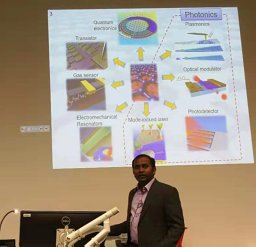 Dr. Shivananju B N合作论文数Soochow Univ, Inst Funct Nano & Soft Mat FUNSOM, Jiangsu Key Lab Carbon Based Funct Mat & Devices, 199 Ren Ai Rd, Suzhou 215123, Jiangsu, Peoples R China1
 Amsalu Gosu Adigo合作论文数Coll Biol & Chem Engn, Addis Ababa Sci & Technol Univ1
 S. Selvendran合作论文数1
 Radha Sankararajan合作论文数1
 Han Zhang (张晗)合作论文数College of Physics and Optoelectronic Engineering, Shenzhen University1
 S. Asokan合作论文数1
 Kristian Helmerson合作论文数Monash University1
 Qiaoliang Bao (鲍桥梁)合作论文数Department of Materials Science and Engineering, Monash University;Institute of Functional Nano and Soft Materials, Soochow University1




