In this paper, the properties of quartic linear normal (LN) curves are studied. In particular, we present necessary and sufficient conditions for quartic LN curves to be regular. Using these conditions, we obtain an approximation method for convex curves by quartic regular LN curves which are G2 Hermite interpolation of convex curves. We show that the approximation order of our approximation method is six. In the approximation method, a convex curve is approximated by a piecewise G2 quartic regular LN curve. Each of the pieces approximates the convex curve as long as possible within the tolerance. Consequently, the G2 spline curves consist of the minimum number of quartic regular LN curves that approximate the convex curve. The algorithm for our approximation method has been implemented and has been used to approximate convex curves.
We present an approximation method for offset curves of polygons on an oblate ellipsoid using implicit algebraic surfaces. The polygon on the ellipsoid is given by a set of vertices, i.e. points on the ellipsoid. The edges are the shortest geodesic paths connecting two consecutive points. The offset curve of the polygon consists of two parts. The offset curve of an edge is the set of points that are at the same distance from each point on the edge, in the normal direction of the edge. The offset curve of a vertex is the set of points that are at the same geodesic distance from the vertex. Our offset approximation method uses plane section curves for offset curves of edges and prolate ellipsoids for offset curves of vertices. Since our offset approximation curve is constructed from implicit algebraic surfaces, it is easy to check whether a given point on the oblate ellipsoid has intruded into the inside of the offset curve. Moreover our method achieves extremely small approximation errors. We apply our method to numerical examples on the Earth.
In this paper we present an approximation method for a geodesic circle passing through three points on an oblate ellipsoid. Our method uses a prolate ellipsoid passing through the three points, and the new approximation curve is the intersection of the oblate and prolate ellipsoids, which can be obtained algebraically without iterations. The advantage of our approximation method is that it yields a significantly smaller approximation error. Compared to the plane section curve passing through the three points on the oblate ellipse, our method reduces the approximation error by at least 98 % when the radii of geodesic circles are 100 km similar to 1000 km on the surface of the Earth. We illustrate the results using numerical examples.
In this paper, we are concerned with geometric constraint solvers, i.e., with programs that find one or more solutions of a geometric constraint problem. If no solution exists, the solver is expected to announce that no solution has been found. Owing to the complexity, type or difficulty of a constraint problem, it is possible that the solver does not find a solution even though one may exist. Thus, there may be false negatives, but there should never be false positives. Intuitively, the ability to find solutions can be considered a measure of solver's competence. We consider static constraint problems and their solvers. We do not consider dynamic constraint solvers, also known as dynamic geometry programs, in which specific geometric elements are moved, interactively or along prescribed trajectories, while continually maintaining all stipulated constraints. However, if we have a solver for static constraint problems that is sufficiently fast and competent, we can build a dynamic geometry program from it by solving the static problem for a sufficiently dense sampling of the trajectory of the moving element(s). The work we survey has its roots in applications, especially in mechanical computer-aided design (MCAD). The constraint solvers used in MCAD took a quantum leap in the 1990s. These approaches solve a geometric constraint problem by an initial, graph-based structural analysis that extracts generic subproblems and determines how they would combine to form a complete solution. These subproblems are then handed to an algebraic solver that solves the specific instances of the generic subproblems and combines them.
We report on 3D printing of artifacts with a structured, inhomogeneous interior. The interior is decomposed into cells defined by a 3D Voronoi diagram and their sites. When printing such objects, most slices the printer deposits are topologically the same and change only locally in the interior. The slicing algorithm capitalizes on this coherence and minimizes print head moves that do not deposit material. This approach has been implemented on a client/server architecture that computes the slices on the geometry side. The slices are printed by fused deposition, and are communicated upon demand.
The objective of solid modeling is to represent, manipulate, and reason about the 3D shape of solid physical objects, by computer. As an application-oriented field, the scope of solid modeling, as well as the relative emphasis on its parts, change over time. Since its inception, [RV82, Bra75], in the 1970’s, the focus on modeling shape alone has continued to expand to integrate widening domains of physical properties. Monographs of the subject appeared in the late 1980’s and include [Chi88, Hof89, Män88]. The expansion was and continues to be driven by major applications that include manufacturing, architecture, construction, computer vision, materials science, medicine, biological engineering, graphics, and virtual reality. With the integration of new applications, and with the availability of inexpensive, powerful computing platforms, the relative importance of specific shape representations can change. Along with such shifts, new modeling and analysis techniques are added. As a result, the field draws on very diverse technologies, including numerical analysis, symbolic algebraic computation, approximation theory, point set and algebraic topology, differential geometry, algebraic geometry, and computational geometry. In this chapter, we first review the major representations of solids in Section 59.1. They include constructive solid geometry, boundary representation, spatial subdivisions of various types, and medial surface representations. With changing scope and focus, different representations enter and exit center stage. For instance, polygonal meshes and voxel-based representations became relatively marginal in the late 1990’s only to gain renewed interest and importance recently with the advent of 3D printing, because they allow representing a structured interior of modeled shapes. Procedural and declarative representations are becoming more popular as geometric programming methods are increasingly used for creating complex solid models and assemblies in architecture and additive manufacturing. For decades modeled solids were generally assumed to have a homogeneous interior. This fact reflected common manufacturing applications and manufacturing processes that separated the production of raw materials from subsequent processing of those materials into parts, assemblies, etc. With the advent of additive manufacturing, that is, machinery that builds physical objects by additive processes, laying down material layer by layer, there is growing interest in building solids that have a complex interior structure. An efficient and comprehensive representation of heterogeneous interior has not yet emerged. Along with explorations of printer technologies and of what can or should be built there is a wide-ranging, diverse body of research, that we will comment on in Section 59.1.7, tracing this development. Next, major layers of abstraction in a typical solid modeling system are characterized in Section 59.2. The lowest level of abstraction comprises a substratum
We present an approximation method of circular arcs using linear-normal (LN) Bézier curves of even degree, four and higher. Our method achieves Gm continuity for endpoint interpolation of a circular arc by a LN Bézier curve of degree 2m, for m=2,3. We also present the exact Hausdorff distance between the circular arc and the approximating LN Bézier curve. We show that the LN curve has an approximation order of 2m+2, for m=2,3. Our approximation method can be applied to offset approximation, so obtaining a rational Bézier curve as an offset approximant. We derive an algorithm for offset approximation based on the LN circle approximation and illustrate our method with some numerical examples.
The problem of geometric (model and system) interoperability is conceptualized as a non-trivial generalization of the problem of part interchangeability in mechanical assemblies. Interoperability subsumes the problems of geometric model quality, exchange, and interchangeability, as well as system integration. Until now, most of the interoperability proposals have been data-centric. Instead, we advocate a query-centric approach that can deliver interoperable solutions to many common geometric tasks in computer aided design and manufacturing, including model acquisition and exchange, metrology, and computer aided design/analysis integration.
This paper derives expressions for the arc length and the bending energy of quadratic Bézier curves. The formulas are in terms of the control point coordinates. For fixed start and end points of the Bézier curve, the locus of the middle control point is analyzed for curves of fixed arc length or bending energy. In the case of arc length this locus is convex. For bending energy it is not. Given a line or a circle and fixed end points, the locus of the middle control point is determined for those curves that are tangent to a given line or circle. For line tangency, this locus is a parallel line. In the case of the circle, the locus can be classified into one of six major types. In some of these cases, the locus contains circular arcs. These results are then used to implement fast algorithms that construct quadratic Bézier curves tangent to a given line or circle, with given end points, that minimize bending energy or arc length.
The problem of packing circles into a domain of prescribed topology is considered. The circles need not have equal radii. The Collins-Stephenson algorithm computes such a circle packing. This algorithm is parallelized in two different ways and its performance is reported for a triangular, planar domain test case. The implementation uses the highly parallel graphics processing unit (GPU) on commodity hardware. The speedups so achieved are discussed based on a number of experiments.
Malfattiʼs problem, first published in 1803, is commonly understood to ask fitting three circles into a given triangle such that they are tangent to each other, externally, and such that each circle is tangent to a pair of the triangleʼs sides. There are many solutions based on geometric constructions, as well as generalizations in which the triangle sides are assumed to be circle arcs. A generalization that asks to fit six circles into the triangle, tangent to each other and to the triangle sides, has been considered a good example of a problem that requires sophisticated numerical iteration to solve by computer. We analyze this problem and show how to solve it quickly.
We consider the design of parametric curves from geometric constraints such as distance from lines or points and tangency to lines or circles. We solve the Hermite problem with such additional geometric constraints. We use a family of curves with linearly varying normals, LN curves, over the parameter interval [0, u]. The nonlinear equations that arise can be of algebraic degree 60. We solve them using the GPU on commodity graphics cards and achieve interactive performance. The family of curves considered has the additional property that the convolution of two curves in the family is again a curve in the family, assuming common Gauss maps, making the class more useful to applications. We also remark on the larger class of LN curves and how it relates to Bézier curves.
We present a method for G2 end-point interpolation of offset curves using rational Bézier curves. The method is based on a G2 end-point interpolation of circular arcs using quadratic Bézier biarcs. We also prove the invariance of the Hausdorff distance between two compatible curves under convolution. Using this result, we obtain the exact Hausdorff distance between an offset curve and its approximation by our method. We present the approximation algorithm and give numerical examples.
We present an approximation method for geodesic circles on a spheroid. Our approximation curve is the intersection of two spheroids whose axes are parallel, and it interpolates four points of the geodesic circle. Our approximation method has two merits. One is that the approximation curve can be obtained algebraically, and the other is that the approximation error is very small. For example, our approximation of a circle of radius 1000 km on the Earth has error 1.13 cm or less. We analyze the error of our approximation using the Hausdorff distance and confirm it by a geodesic distance computation.
ABSTRACTWe present a technique to parameterize skin deformation by skeletal motion and to transfer the deformation style from one character to another. We decompose skin deformation into time‐varying signals and basis matrices by using dimension reduction techniques and then approximate the time‐varying signals by using radial basis functions with respect to joint angles that define skeletal motion. This decomposition reduces the size of deformation data to a small number of time‐varying signals that represent the complex role of muscle action. The subsequent parameterization yields a fast and intuitive control of characters; thus, it allows us to construct faithful skin deformations quickly as skeletal bones move. The representation of our parameterization allows us to capture and transfer a derived deformation style to another skeleton–skin structure without considering the input dimension of the deformation data. This style transfer can be used as a basis for realistically animating variants of sample characters that have the same skeletal topology. Parameterization of skin deformation and its style transfer can be performed within a small amount of error once the preprocessing time and control of the deformation is carried out in real time by our graphics processing unit implementation. Copyright © 2011 John Wiley & Sons, Ltd.
With parametric Computer-Aided Design (CAD) software, designers can create geometric models that are easily updated (within limits) by modifying the values of controlling parameters. These numeric and non-numeric parameters control the geometry in two ways: (i) parametric operations, and (ii) geometric constraint solving. This paper examines the advances over the last decade in the representation of parametric operations and of solving geometric constraint problems. An extensive literature has grown up surrounding geometric constraint solving and there has been substantial progress in the types of objects and constraints that can be handled robustly. Yet parametric operations have remained largely within the same conceptualization and begin to limit the flexibility of CAD systems, and so they still do not align well with a systematic design process.
In this paper we present an approximation method for the convolution of two planar curves using pairs of compatible cubic Bezier curves with linear normals (LN). We characterize the necessary and sufficient conditions for two compatible cubic Bezier LN curves with the same linear normal map to exist. Using this characterization, we obtain the cubic spline approximation of the convolution curve. As illustration, we apply our method to the approximation of a font where the letters are constructed as the Minkowski sum of two planar curves. We also present numerical results using our approximation method for offset curves and compare our method to previous results.
In geometric constraint solving, constructing circles with indeterminate radius is an important sub problem. Such constructions are both sequential, meaning that we seek a circle tangent to three known geometric entities, as well as simultaneous, when several sets of entities, among them variable-radius circles, must be determined together. In Part I of our investigation, we considered sequential constructions in which a single circle had to be constructed from required tangencies to known geometric entities. In Part II, we develop hardware-assisted techniques to solve the simultaneous construction problems of variable-radius circles. We utilize the graphics hardware to determine the solutions. For Part I, this could be accomplished relying fundamentally on constructing distance maps. Here, we need to construct and sample surfaces from configuration space.
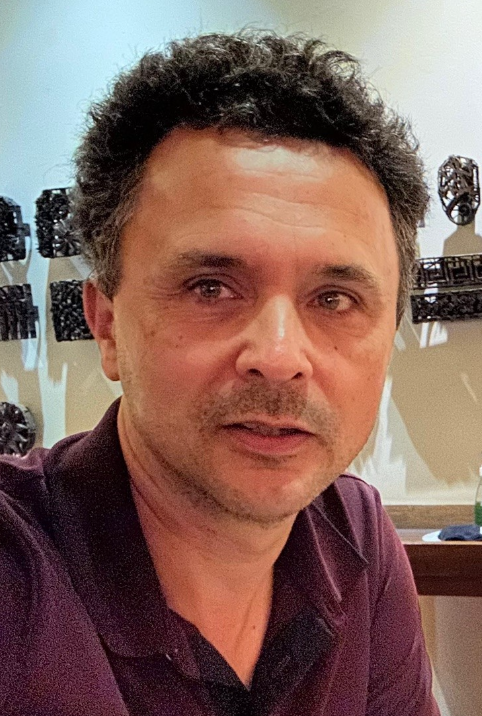 Voicu Popescu合作论文数Department of Computer Science, Purdue University;College of Science, Purdue University;College of Engineering, Purdue University15
 Young Joon Ahn合作论文数11
 Paul A. Rosen合作论文数Jet Propulsion Laboratory, California Institute of Technology11
 John E. Hopcroft (约翰·霍普克罗夫特)合作论文数Department of Computer Science, Cornell University6
 Ioannis Fudos合作论文数Department of Computer Science5
 Xiangping Chen合作论文数4Ching-Shoei Chiang合作论文数Mathematics Subject Classification: 68 — Computer science4Pamela J. Vermeer合作论文数4
 Ayhan Irfanoglu合作论文数Purdue University4Zygmunt Pizlo合作论文数Department of Psychological Sciences, School of Electrical and Computer Engineering, Purdue University4Meera Sitharam合作论文数3
 Young Kim合作论文数Medtronic3
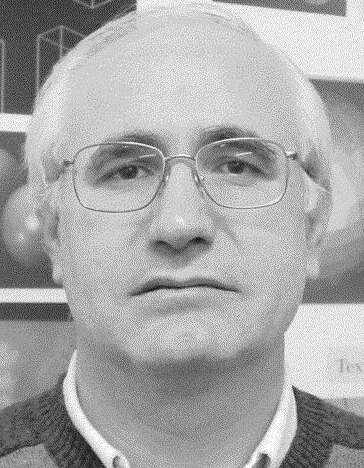 Robert Joan-Arinyo合作论文数Departament de Ciències de la Computació, Escola Tècnica Superior d'Enginyeria Industrial de Barcelona, Universitat Politècnica de Catalunya;Department de Llenguatages i Sistemes Informatics, Escola Tècnica Superior d'Enginyeria Industrial de Barcelona, Universitat Politècnica de Catalunya3
 Sami Kilic合作论文数Purdue University3
 John Timothy Korb合作论文数3george vanĕcek合作论文数2Cassiano Durand合作论文数2
 Jian Cui合作论文数Purdue University2Bo Yuan合作论文数2
 Paul Rosen合作论文数Scientific Computing and Imaging Institute, Kahlert School of Computing, University of Utah2Andreas Weber合作论文数2
 C. P. Schnorr合作论文数Department of Mathematics, Johann Wolfgang Goethe-University;Department of Computer Science, Johann Wolfgang Goethe-University2
 Vadim Shapiro合作论文数Department of Mechanical Engineering, University of Wisconsin-Madison2
 Zvi Galil合作论文数College of Computing, School of Computer Science, Georgia Institute of Technology2
 Ananth Grama合作论文数Department of Computer Science, College of Science, Purdue University2
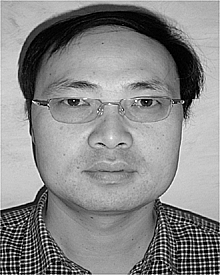 Seong-Dong Kim合作论文数2
 Susanne E. Hambrusch合作论文数Department of Computer Science, College of Engineering, Purdue University2
 Jung-Hong Chuang合作论文数Institute of Data Science and Engineering2Eugene M. Luks合作论文数Comput.&Inf. Sci., Oregon Univ., Eugene, OR, USA2Mark Haugan合作论文数2J. D. Walrath合作论文数2Andrew Lomonosov合作论文数2
 Debasish Dutta合作论文数Rutgers University-New Brunswick2philip j emmerman合作论文数2Laura Arns合作论文数1M Sozen合作论文数1
 Vinod Kumar合作论文数1Jaroslaw R. Rossignac合作论文数1
 varun ramachandran合作论文数missouri university of science and technology1b f caviness合作论文数1C Moler合作论文数1Michael J. O'Donnell合作论文数1
 Ku-Jin Kim合作论文数Sch Comp Sci & Engn, Kyungpook Natl Univ1Johannes` Kepler合作论文数1
 Ulas Yaman合作论文数1
 Jorg Peters合作论文数Computer and Information Sciences, University of Florida1
 Jarek Rossignac合作论文数Institute for People and Technologyr, College of Computing, Georgia Institute of Technology;GVU Center, College of Computing, Georgia Institute of Technology;School of Interactive Computing, College of Computing, Georgia Institute of Technology;Machine Learning, College of Computing, Georgia Institute of Technology1
 Pere Brunet合作论文数Department of Software,Technical University of Catalonia;Visualitzacio, Realitat Virtual i Interaccio Grafica Center1




