Sustaining a consortium involves delivering results, and ongoing processes of adjusting and adapting. A consortium should only persist as long as the parties are accomplishing together what they cannot do separately. The sustaining phase often faces predictable challenges, such as leadership dynamics and resource challenges, as well as complex issues around the potential for dissolution. Instead of disbanding, consortia may transform their mission, structure, and operations into something sustainable. Consortia in the twenty-first century will have a massive impact, but they are less likely to become household names in the same way as organizations since they have smaller, more agile structures.
The elements of the stakeholder alignment model on structuring are the focus, which includes a shared vision, charter, and metrics. Charter elements typically include the preamble, values, stakeholder value prepositions, shared vision, and governance of a consortium. The specification of key performance indicators (KPIs) goes beyond throughput measures, such as the number of participants attending workshops, to include societal impacts. KPIs are a crucial source of feedback for any organization. The evolution of the Protein Data Bank (PDB), governed through a consortium, illustrates how changes in the underlying science impact the evolution of the consortium.
Wildfire events are becoming increasingly common across many areas of the United States, including North Carolina (NC). Wildfires can cause immediate damage to properties, and wildfire smoke conditions can harm the overall health of exposed communities. It is critical to identify communities at increased risk of wildfire events, particularly in areas with that have sociodemographic disparities and low socioeconomic status (SES) that may exacerbate incurred impacts of wildfire events. This study set out to: (1) characterize the distribution of wildfire risk across NC; (2) implement integrative cluster analyses to identify regions that contain communities with increased vulnerability to the impacts of wildfire events due to sociodemographic characteristics; (3) provide summary-level statistics of populations with highest wildfire risk, highlighting SES and housing cost factors; and (4) disseminate wildfire risk information via our online web application, ENVIROSCAN. Wildfire hazard potential (WHP) indices were organized at the census tract-level, and distributions were analyzed for spatial autocorrelation via global and local Moran’s tests. Sociodemographic characteristics were analyzed via k-means analysis to identify clusters with distinct SES patterns to characterize regions of similar sociodemographic/socioeconomic disparities. These SES groupings were overlayed with housing and wildfire risk profiles to establish patterns of risk across NC. Resulting geospatial analyses identified areas largely in Southeastern NC with high risk of wildfires that were significantly correlated with neighboring regions with high WHP, highlighting adjacent regions of high risk for future wildfire events. Cluster-based analysis of SES factors resulted in three groups of regions categorized through distinct SES profiling; two of these clusters (Clusters 2 and 3) contained indicators of high SES vulnerability. Cluster 2 contained a higher percentage of younger (<5 years), non-white, Hispanic and/or Latino residents; while Cluster 3 had the highest mean WHP and was characterized by a higher percentage of non-white residents, poverty, and less than a high school education. Counties of particular SES and WHP-combined vulnerability include those with majority non-white residents, tribal communities, and below poverty level households largely located in Southeastern NC. WHP values per census tract were dispersed to the public via the ENVIROSCAN application, alongside other environmentally-relevant data.
Abstract Research increasingly relies on interrogating large-scale data resources. The NIH National Heart, Lung, and Blood Institute developed the NHLBI BioData CatalystⓇ (BDC), a community-driven ecosystem where researchers, including bench and clinical scientists, statisticians, and algorithm developers, find, access, share, store, and compute on large-scale datasets. This ecosystem provides secure, cloud-based workspaces, user authentication and authorization, search, tools and workflows, applications, and new innovative features to address community needs, including exploratory data analysis, genomic and imaging tools, tools for reproducibility, and improved interoperability with other NIH data science platforms. BDC offers straightforward access to large-scale datasets and computational resources that support precision medicine for heart, lung, blood, and sleep conditions, leveraging separately developed and managed platforms to maximize flexibility based on researcher needs, expertise, and backgrounds. Through the NHLBI BioData Catalyst Fellows Program, BDC facilitates scientific discoveries and technological advances. BDC also facilitated accelerated research on the coronavirus disease-2019 (COVID-19) pandemic.
Urgent responses to the COVID‐19 pandemic depend on increased collaboration and sharing of data, models, and resources among scientists and researchers. In many scientific fields and disciplines, institutional norms treat data, models, and resources as proprietary, emphasizing competition among scientists and researchers locally and internationally. Concurrently, long‐standing norms of open data and collaboration exist in some scientific fields and have accelerated within the last two decades. In both cases—where the institutional arrangements are ready to accelerate for the needed collaboration in a pandemic and where they run counter to what is needed—the rules of the game are “on the table” for institutional‐level renegotiation. These challenges to the negotiated order in science are important, difficult to study, and highly consequential. The COVID‐19 pandemic offers something of a natural experiment to study these dynamics. Preliminary findings highlight: the chilling effect of politics where open sharing could be expected to accelerate; the surprisingly conservative nature of contests and prizes; open questions around whether collaboration will persist following an inflection point in the pandemic; and the strong potential for launching and sustaining pre‐competitive initiatives.
Transdisciplinary research teams are essential to scientific advancement, and successful transdisciplinary teams rely on effective communication. Overcoming barriers to foster productive team dynamics requires communication strategies and tools. We combine our practical experience to offer a succinct protocol, including only the essentials, to help teams quickly establish an agile communication platform during project start-up (https://doi.org/10.17605/OSF.IO/N5GFP).
This poster provides an overview of an initial effort to examine the development of data interoperability from an infrastructural perspective applied to two geoscience examples, the International Geosample Number (IGSN) and EarthCube. Both activities represent efforts to develop data interoperability as part of computer supported cooperative work. In the case of the IGSN, the data interoperability provided by the cyberinfrastructure is arguably reaching the point of becoming a substrate for scientists. In the case of EarthCube, data interoperability through the envisaged cyberinfrastructure remains elusive. Recent themes in CSCW literature examine questions of infrastructure and infrastructuring [17]. A goal of this poster is to illustrate the potential to use analysis of geoscience infrastructure to add to these discussions. The relevance of data interoperability is significant given the large amounts of funding and effort being put towards this goal and the potential for data interoperability to foster new scientific insights. Finally, examining this topic is even more salient given the recent emphasis on "FAIR data."
Technological advances have enabled massive quantities of data collection for studying earth system changes and hydrologic natural disasters (ie, hurricane, flood, drought). These data sets still need to be leveraged at the community-scale to improve existing disaster response with anticipatory planning, which demands fundamentally new ways of storing, accessing and processing hydrologic data and community interaction with the information for resource management. Operational cyberinfrastructure that maintains data provenance and cybersecurity of historic data and real-time input-output, is needed in disaster-driven extreme event research (hydrologic science, environmental, and related population health research). This requires a mode of knowledge transfer that extends beyond the scope of most domain-specific science programs and advances data ownership, security, privacy, and accessibility of shared …
This paper discusses xDCI, a Data Cyberinfrastructure environment that accelerates deployment of Science Gateways. Recognizing the growing importance of Science Gateways, xDCI builds on their elements in making it efficient for individuals and organizations to launch and sustain customizable Science Gateways while growing their respective communities and accelerating resultant science.
This paper introduces xDCI, a Data Science Cyber-infrastructure to support research in a number of scientific domains including genomics, environmental science, biomedical and health science, and social science. xDCI leverages open-source software packages such as the integrated Rule Oriented Data System and the CyVerse Discovery Environment to address significant challenges in data storage, sharing, analysis and visualization. We provide three example applications to evaluate xDCI for different domains: analysis of 3D images of mice brains, videos analysis of neonatal resuscitation, and risk analytics. Finally, we conclude with a discussion of potential improvements to xDCI.
An analysis of more than 50 collaborations shows the secrets of success, write Joel Cutcher-Gershenfeld and colleagues from the Stakeholder Alignment Collaborative.
2000 words Recovery efforts from natural disasters can be more efficient with data-driven information on current needs and future risks. We aim to advance open-source software infrastructure to support scientific investigation and data-driven decision making with a prototype system using a water quality assessment developed to investigate post-Hurricane Maria drinking water contamination in Puerto Rico. The widespread disruption of water treatment processes and uncertain drinking water quality within distribution systems in Puerto Rico poses risk to human health. However, there is no existing digital infrastructure to scientifically determine the impacts of the hurricane. After every natural disaster, it is difficult to answer elementary questions on how to provide high quality water supplies and health services. This project will archive and make accessible data on environmental variables unique to Puerto Rico …
This paper describes a multi-institution effort to develop a “data science as a service” platform. This platform integrates advanced federated data management for small to large datasets, access to high performance computing, distributed computing and advanced networking. The goal is to develop a platform that is flexible and extensible while still supporting domain research and avoiding the walled garden problem. Some preliminary lessons learned and next steps will also be outlined.
 Ray Idaszak合作论文数University of North Carolina at Chapel Hill11
 Stan Ahalt合作论文数Department of Computer Science, College of Arts and Sciences, The University of North Carolina at Chapel Hill;School of Data Science and Society, The University of North Carolina at Chapel Hill;Renaissance Computing Institute, The University of North Carolina;North Carolina Translational and Clinical Sciences Institute11
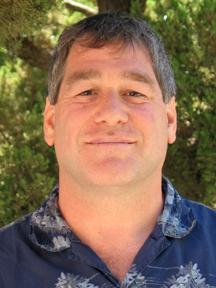 Robert Downs合作论文数Department of Geosciences, College of Science, The University of Arizona8
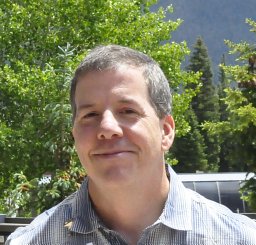 Bruce E. Wilson合作论文数Department of Pediatrics and Human Development, Michigan State University7Robert S. Chen合作论文数6
 Karl Benedict合作论文数University of Massachusetts Medical School, Worcester Polytechnic Institute6
 Kerstin A. Lehnert合作论文数Lamont-Doherty Earth Observatory, Columbia University6Jimmy Phuong合作论文数Univ Washington, Dept Biomed & Hlth Informat, Seattle, WA 98195 USA5
 Christina Bandaragoda合作论文数Department of Civil & Environmental Engineering, University of Washington5
 Ashok Krishnamurthy合作论文数Department of Computer Science, College of Arts and Sciences, The University of North Carolina at Chapel Hill5
 Robert B. Cook合作论文数Oak Ridge National Laboratory5
 Brian O. Blanton合作论文数Department of Marine Sciences, University of North Carolina at Chapel Hill5
 Erin Robinson合作论文数Lantern Corporation;Washington University;Lantern Corporation, Washington University5
 Giri Palanisamy合作论文数Oak Ridge National Laboratory5
 Jeffery S. Horsburgh合作论文数Utah Water Research Laboratory, Utah State University4Marcia L. Branstetter合作论文数Computer Science and Mathematics Division, Oak Ridge National Laboratory4
 Mark Schildhauer合作论文数National Center for Ecological Analysis and Synthesis, University of California, Santa Barbara4Jerry Pan合作论文数3Barbara Mittleman合作论文数3Christine Kirkpatrick合作论文数San Diego Supercomp Ctr3Bradford Kira C合作论文数3
 Nicholas Berente合作论文数Case Western Reserve University3Namchul Shin合作论文数Information Systems Department
Ivan G. Seidenberg School of Computer Science and Information Systems
Pace University3Jason Coposky合作论文数3
Nicholas Berente合作论文数Case Western Reserve University3Namchul Shin合作论文数Information Systems Department
Ivan G. Seidenberg School of Computer Science and Information Systems
Pace University3Jason Coposky合作论文数3 Line Pouchard合作论文数Center for Data Driven Discovery, Brookhaven National Laboratory3
 Susan Winter合作论文数Florida Atlantic University3
 Erkan Istanbulluoglu合作论文数Department of Civil and Environmental Engineering, College of Engineering , University of Washington3
 Stephanie Hampton合作论文数Department of Environmental Science & Policy, University of California, Davis3
 Joel Cutcher-Gershenfeld合作论文数Engineering Systems Division3
 Shih-Chieh Kao合作论文数Oak Ridge National Laboratory3
 John Leslie King合作论文数School of Information, University of Michigan3Frank Timmes合作论文数2Barry L. Shumpert合作论文数2L.A. Hook合作论文数2Karl Gustafson合作论文数2Mike Conway合作论文数2Kelsey J Pieper合作论文数Civil and Environmental Engineering, Northeastern University2Michael Stealey合作论文数2Miguel Leon合作论文数2
 Shelley Stall合作论文数American Geophysical Union in Washington DC, USA; and member of the Stakeholder Alignment Collaborative.2
 Scott E Page合作论文数Center for the Study of Complex Systems, College of Literature, Science, and the Arts, University of Michigan;Santa Fe Institute2
 Laura Christopherson合作论文数University of North Carolina at Chapel Hill2Shrestha, B.合作论文数Environ. Sci. Div., Oak Ridge Nat. Lab.;c2Gabriel Gershenfeld合作论文数2
 Greg Tucker合作论文数Department of Geological Sciences, College of Arts and Sciences, University of Colorado Boulder2
 Charles Langmuir合作论文数Department of Earth and Planetary Sciences, Harvard University2Charles McElroy合作论文数2Michael Haberman合作论文数2William J. Rhoads合作论文数2




