With more and more applications providing semantic data to improve interoperability, the amount of available RDF datasets is constantly increasing. The SPARQL query language is a W3C recommendation to provide query capabilities on such RDF datasets. Yet as the coverage of RDF datasets with efficient and available SPARQL endpoints is still limited, integration of data from different RDF sources is a bottleneck that has mostly to be done in RDF consuming clients. We tackle this bottleneck by introducing SPARQ λ , an extension to the SPARQL 1.1 query language. SPARQ λ enables dynamic injection of RDF datasets during evaluation of the query, and by this lifts SPARQL to a tool to write templates for RDF producing functions in functional programming style. This is an important step to reduce the effort to write SPARQL queries that work on data from various sources. SPARQ λ is moreover suitable to directly translate to an RDF described Web service interface, which allows to lift integration of data and re-provisioning of integrated results from clients to cloud environments.
Although mereotopological relationship theories and their qualification problems have been extensively studied in R-2, the qualification of mereotopological relations in R-3 remains challenging. This is due to the limited availability of topological operators and high costs of boundary intersection tests. In this paper, a novel qualification technique for mereotopological relations in R-3 is presented. Our technique rapidly computes RCC-8 base relations using precomputed signed distance fields, and makes no assumptions with regards to complexity or representation method of the spatial entities under consideration.
With more and more applications providing semantic data to improve interoperability, the amount of available RDF datasets is constantly increasing. The SPARQL query language is a W3C recommendation to provide query capabilities on such RDF datasets. Data integration from different RDF sources is up to now mostly task of RDF consuming clients. However, from a functional perspective, data integration boils down to a function application that consumes input data as parameters, and based on these, produces a new set of data as output. Following this notion, we introduce SPARQ λ , an extension to the SPARQL 1.1 query language. SPARQ λ enables dynamic injection of RDF datasets during evaluation of the query, and by this lifts SPARQL to a tool to write templates for RDF producing functions, an important step to reduce the effort to write SPARQL queries that work on data from various sources. SPARQ λ is moreover suitable to directly translate to an RDF described Web service interface, which allows to lift integration of data and re-provisioning of integrated results from clients to cloud environments, and by this solving the bottleneck of RDF data integration on client side.
The use of autonomous robots in both industry and every day life has increased significantly in the recent years. A growing number of robots is connected to and operated from networks, including the World Wide Web. Consequently, the Robotics community is exploring and adopting REST (Representational State Transfer) architectural principles and considers the use of Linked Data technologies as fruitful next step. However, we observe a lack of concise and stable specifications of how to properly leverage the RESTful paradigm and Linked Data concepts in the Robotics domain. Introducing the notion of Linked Robotic Things, we provide a minimalistic, yet well-defined specification covering a minimal set of requirements with respect to the use of HTTP and RDF.
 René Schubotz合作论文数German Research Center for Artificial Intelligence7Dmitri Rubinstein合作论文数Saarland University4Torsten Spieldenner合作论文数4
 Felix Leif Keppmann合作论文数Karlsruhe Institute of Technology (KIT),3
 Andreas Harth合作论文数School of Business, Economics and Society, Friedrich-Alexander-Universität Erlangen-Nürnberg;Fraunhofer IIS3Konrad Zürl合作论文数2
 Frieder Pankratz合作论文数Institute for Emergency Medicine, LMU, Munich, Germany2
 Andre Antakli合作论文数German Res Ctr Artificial Intelligence, DFKI Agents & Simulated Real Dept, Saarland Univ Campus, D-66123 Saarbrucken, Germany2
 Tobias Käfer合作论文数Karlsruhe Institute of Technology2Hilko Hoffmann合作论文数Fraunhofer Institute for Industrial Engineering2Werner Schreiber合作论文数1Roland Stechow合作论文数1Andreas Weinmann合作论文数1Matthias Roth合作论文数1Ulrich Canzler合作论文数1Richard Sauerbier合作论文数1Roland Krzikalla合作论文数1Volker Enderlein合作论文数1Julian Meder合作论文数1
 Sebastian Lampe合作论文数Volkswagen Grp Res, D-38436 Wolfsburg, Germany1
 Johannes Tumler合作论文数1Wirsching Hans-Joachim合作论文数1
 Michael Otto合作论文数Laboratory of Bacteriology, National Institute of Allergy and Infectious Diseases, National Institutes of Health;Laboratory of Human Bacterial Pathogenesis, National Institute of Allergy and Infectious Diseases, National Institutes of Health1
 Eduard Jundt合作论文数1
 Alexander Löffler合作论文数Computer Graphics Lab, Saarland University1
 Oliver Wasenmüller合作论文数Technische Hochschule Mannheim;CeMOS - Research and Transfer Center1
 Beat Brüderlin合作论文数Institute of Computer Science, Technische Universität Ilmenau1
 Peter Keitler合作论文数1Holger Dammertz合作论文数1Ulrich Bockholt合作论文数1
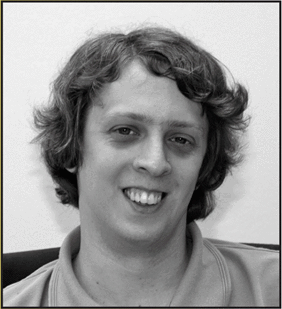 Manuel Huber合作论文数Technische Universität München1Ingo Zinnikus合作论文数DFKI GmbH1
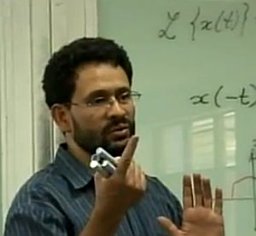 Pablo Alvarado-Moya合作论文数Instituto Tecnológico de Costa Rica;Technische Universität Hamburg-Harburg;Instituto Tecnológico de Costa Rica, Technische Universität Hamburg-Harburg1Jochen Willneff合作论文数1Roland Blach合作论文数1
 Gerrit Voss合作论文数Centre for Advanced Media Technology, Nanyang Technological University1




