Adaptation is critical for biodiversity to persist under global change. Within ecological communities, species often face trade-offs between adapting to shifting abiotic conditions and navigating the complex selective pressures imposed by interaction networks. We hypothesize that network architectures characterized by high interaction diversity and overlap constrain coevolutionary dynamics, with asymmetric outcomes for exploiters and victims. Specifically, we predict that exploiters, subject to spread and conflicting selection imposed by their victims, will evolve more slowly and show reduced capacity to track victims' evolutionary responses, with these constraints strongest for generalist exploiters. In contrast, victims will show more variable dynamics depending on the coherence of selection (i.e., whether pressures from different exploiters push the victim's trait in the same vs. different directions). To test this, we simulated trait evolution in coevolving communities of exploiters and victims across 91 empirical networks, and in artificial networks designed to isolate specific structural effects. Our results show that higher connectance, species richness, nestedness, and centrality homogenize biotic effects and increase fluctuations in trait matching, ultimately weakening coevolutionary coupling. Under these conditions, exploiters face conflicting selection that slows evolution, whereas victims either benefit from aligned selection that accelerates evolution or are constrained by multiple pressures. Together, our findings suggest that network architecture plays a fundamental role in shaping coevolution and adaptation, and raises broader questions about its influence on eco-evolutionary processes in more complex and environmentally variable systems.
Understanding how ecological communities respond to environmental change remains a key challenge for biodiversity monitoring. To characterize such responses, we need tools that capture how coherently species respond across a community, and to predict their consequences, we must account for ecological interactions. We first introduce the Ecological Coherence (EC) framework, which describes how species’ co-responses are structured within a community. Building on this foundation, we extend it to Ecological Network Coherence (ENC), which embeds co-responses within the network of interactions by restricting them to interacting species. Both are expressed through two complementary representations: a response correlation matrix and the distribution of its values. The first can reveal aspects such as coherent or incoherent modules and the roles species play in shaping coherence, whereas the second provides a profile whose shape may serve as an early-warning indicator of instability. These can be applied to both intrinsic responses (environmental performance) and realized responses (abundance dynamics), derived from currently available monitoring data. We illustrate this approach in two empirical systems: a tropical pollination network, where interacting mutualists were more coherent in their temperature responses than the broader community, and a marine food web, where coherence in abundance trends shifted during collapse. Using a Lotka–Volterra model, we further show that ENC distributions with higher variance—reflecting stronger positive and negative co-responses—increase the risk of instability or amplification in dynamics. We also find that species influential in both the correlation matrix and the interaction matrix are key drivers of major dynamic shifts. These results point to the importance of further exploring ENC distributions as potential early-warning indicators of ecological disruption. ### Competing Interest Statement The authors have declared no competing interest. Financial support was provided by the NSERC - CREATE Training program in computational biodiversity science and the NSERC Discovery Grant to DG.
Understanding how phylogenetic signal in ecological networks—the tendency for closely related species to resemble one another in ecological roles—emerges and persists remains a central challenge in community ecology. Here, we simulate food web evolution to track how the correspondence between phylogeny and trophic structure changes as communities assemble and niche space fills. By simulating trait evolution coupled with trait-matching for ecological interactions, we quantify how phylogenetic signal in trophic structure changes through time and examine how species’ network positions relate to their phylogenetic distinctiveness and diversification dynamics. We find that the signal declines over time, driven by emergent feedbacks between node extinction, link reorganization, and trait divergence. Species with high phylogenetic distinctiveness tend to be more specialized and occupy peripheral network positions, particularly in late-stage communities. Centrality consistently constrains diversification in intermediate consumers, emerges as a limiting factor for top predators after niche saturation, and shows nonlinear effects in basal species’ diversification. Applying our framework to empirical food webs from the Galápagos Islands, we find partial support for these predictions: phylogenetic signal in foraging and vulnerability roles declines with island age, but shows contrasting trends with island area and elevation. We also detect discrepancies between distance-based and clustering-based measures of phylogenetic signal, highlighting the need for robust methods to compare phylogenetic and network structures. Together, our results reveal how trophic interactions mediate the erosion of phylogenetic structure during community assembly and offer testable predictions for systems at different stages of diversification. ### Competing Interest Statement The authors have declared no competing interest. Financial support was provided by the NSERC - CREATE Training program in computational biodiversity science and the NSERC Discovery Grant to DG.
Understanding how communities respond to environmental change requires assessing not just overall variability but also the structure of co-variation among taxa. We frame this idea under the Ecological Coherence (EC) framework, which generalizes previous notions such as community synchrony or coherence. EC captures the structure of co-responses among taxa within assemblages and can be expressed through two complementary objects: (1) the co-response matrix C , which contains all pairwise correlations between taxa and can be used to identify clusters of taxa with coherent responses as well as the contributions of individual species to community-wide coherence; and (2) the EC distribution , which summarizes the overall profile of co-responses by capturing their shape, spread, and central tendency across the community. By combining these two views, EC moves beyond single summary metrics and provides a richer picture of how coherence is organized within communities. Analyzing the EC distribution across 341 terrestrial and 105 marine assemblages worldwide, we found a general prevalence of weak correlations and a few strong, directional correlations. We also found that it varies with community composition, sampling effort, and biogeographic region. Moreover, the C matrix consistently identified a small subset of taxa with strong correlations to many others, suggesting a promising path to detecting those that may play central roles in amplifying or buffering community responses to environmental change. Our findings on EC pave the way for deeper investigations into what drives the diversity of ecological responses to environmental changes and how it shapes community dynamics, while also underscoring the need for strategically distributing ecological monitoring across trophic guilds and functional roles. ### Competing Interest Statement The authors have declared no competing interest. Financial support was provided by the NSERC - CREATE Training program in computational biodiversity science and the NSERC Discovery Grant to DG.
Aim Geographic variation in metabolic resources necessary for functional trait expression can set limits on species distributions. For species that need to produce and maintain biomineralized traits for survival, spatial variation in mineral macronutrients may constrain species distributions by limiting the expression of biomineralized traits. Here, we examine whether Oreohelix land snails that express heavily biomineralized shell ornaments are restricted to CaCO3 rock regions, if they incorporate greater amounts of CaCO3 rock carbon in their shell than less biomineralized smooth forms, and if ornamentation increases shell strength.Location Western United States.Taxon Oreohelix land snails.Methods We used random forest classification models at multiple spatial resolutions to evaluate the contribution of topographic, vegetation, climate, and geologic variables in predicting the presence of heavily biomineralized shell ornaments across the range of Oreohelix. We then measured and compared shell biometric variables, C-14/C-12 ratios, and peak force for fracture for ornamented and smooth forms from calcareous and non-calcareous substrates.Results Distance to CaCO3 rock was the most important variable in all models and closer proximity to CaCO3 rock was associated with greater probability of local ornamentation classification. Pairwise comparisons of C-14/C-12 ratios in closely occurring ornamented vs. smooth population pairs revealed ornamented forms incorporate greater CaCO(3 )rock carbon than smooth forms. Ornamented types measured in this study were generally heavier and required greater peak force for fracture than smooth forms, except when comparing ornamented forms to smooth forms sampled from CaCO3 rock.Main Conclusions Biomineralization expression, species distribution, and trait function appear to be constrained by mineral supply in a highly diverse group of land snails. This trait-environment relationship provides a basis for future investigations of CaCO3 macronutrient constraints on shell form and species distribution in other terrestrial molluscs and has a direct impact on the management of Oreohelix species.
The impacts of disease on host vital rates can be demonstrated using longitudinal studies, but these studies can be expensive and logistically challenging. We examined the utility of hidden variable models to infer the individual effects of infectious disease from population-level measurements of survival when longitudinal studies are not possible. Our approach seeks to explain temporal deviations in population-level survival after introducing a disease causative agent when disease prevalence cannot be directly measured by coupling survival and epidemiological models. We tested this approach using an experimental host system (Drosophila melanogaster) with multiple distinct pathogens to validate the ability of the hidden variable model to infer per-capita disease rates. We then applied the approach to a disease outbreak in harbor seals (Phoca vituline) that had data on observed strandings but no epidemiological data. We found that our hidden variable modeling approach could successfully detect the per-capita effects of disease from monitored survival rates in both the experimental and wild populations. Our approach may prove useful for detecting epidemics from public health data in regions where standard surveillance techniques are not available and in the study of epidemics in wildlife populations, where longitudinal studies can be especially difficult to implement.
Abstract Background Calcareous outcrops, rocky areas composed of calcium carbonate (CaCO3), often host a diverse, specialized, and threatened biomineralizing fauna. Despite the repeated evolution of physiological and morphological adaptations to colonize these mineral rich substrates, there is a lack of genomic resources for calcareous rock endemic species. This has hampered our ability to understand the genomic mechanisms underlying calcareous rock specialization and manage these threatened species. Results Here, we present a new draft genome assembly of the threatened limestone endemic land snail Oreohelix idahoensis and genome skim data for two other Oreohelix species. The O. idahoensis genome assembly (scaffold N50: 404.19 kb; 86.6% BUSCO genes) is the largest (~ 5.4 Gb) and most repetitive mollusc genome assembled to date (85.74% assembly size). The repetitive landscape was unusually dominated by an expansion of long terminal repeat (LTR) transposable elements (57.73% assembly size) which have shaped the evolution genome size, gene composition through retrotransposition of host genes, and ectopic recombination. Genome skims revealed repeat content is more than 2–3 fold higher in limestone endemic O. idahoensis compared to non-calcareous Oreohelix species. Gene family size analysis revealed stress and biomineralization genes have expanded significantly in the O. idahoensis genome. Conclusions Hundreds of threatened land snail species are endemic to calcareous rock regions but there are very few genomic resources available to guide their conservation or determine the genomic architecture underlying CaCO3 resource specialization. Our study provides one of the first high quality draft genomes of a calcareous rock endemic land snail which will serve as a foundation for the conservation genomics of this threatened species and for other groups. The high proportion and activity of LTRs in the O. idahoensis genome is unprecedented in molluscan genomics and sheds new light how transposable element content can vary across molluscs. The genomic resources reported here will enable further studies of the genomic mechanisms underlying calcareous rock specialization and the evolution of transposable element content across molluscs.
A fragmented landscape, which contains a patchwork of vegetated hospitable areas and a barren intervening matrix, may reduce gene flow in a population and over time result in an increase in population structure. We tested this prediction in crab spiders ( Mecaphesa celer (Hentz, 1847)) inhabiting isolated habitat patches in the lava matrix of Craters of the Moon National Monument and Preserve, Idaho, USA. Using reduced‐representation genomic sequencing, we did not find evidence of population structure due to a reduction in gene flow among habitat patches. Instead, our results show strong evidence of panmixia likely due to abundant juvenile dispersal and possible connectivity to outer regions surrounding the lava flows despite the species' habitat specificity.
It seems intuitively obvious that species diversity promotes functional diversity: communities with more plant species imply more varied plant leaf chemistry, more species of crops provide more kinds of food, etc. Recent literature has nuanced this view, showing how the relationship between the two can be modulated along latitudinal or environmental gradients. Here we show that even without such effects, the evolution of functional trait variance can erase or even reverse the expected positive relationship between species- and functional diversity. We present theory showing that trait-based eco-evolutionary processes force species to evolve narrower trait breadths in more tightly packed, species-rich communities, in their effort to avoid competition with neighboring species. This effect is so strong that it leads to an overall reduction in trait space coverage whenever a new species establishes. Empirical data from land snail communities on the Galápagos Islands are consistent with this claim. The finding that the relationship between species- and functional diversity can be negative implies that trait data from species-poor communities may misjudge functional diversity in species-rich ones, and vice versa.
Snails have occupied an important role in the ideology and religion of the ancient American peoples, who considered them to be magical and used them in ritual ceremonies as ornaments, musical instruments, and architectural elements. Today, they are a valuable study system for understanding biodiversity and evolution due to their remarkable ecological and morphological diversity. Given that many endemic snails are of conservation concern, and that most South American species are poorly studied, there is a need to engage the public through understandable and scientifically based language, conveying the importance of biodiversity. However, not all biodiversity can be seen with the naked eye. Herein, we describe how we utilize snails and their shells to engage citizens and train teachers to promote the many different facets of biodiversity. Through design-based research oriented toward educational innovation, we created a teaching–learning sequence with immersive technology through the following stages of work: (1) produce a teaching–learning sequence and accompanying mobile device application (for Android on GooglePlay), (2) evaluate the impact of the educational resource, and (3) conduct research through a pre- and posttest design on the learning outcomes of participants. In this work, we first present the field experience where scientists, teachers, and pre-service teachers worked together to find snails from northern Chile to Chiloé Island. Some results from this research stage are: criteria for designing a teaching–learning sequence (e.g., how to utilize place as an opportunity for learning science with developmentally appropriate technologies identified for every phase of the sequence), modeling relevant phenomena about biodiversity and ecosystems through snails, scaffolding for teachers implementing the sequence, and activities that enhance STEM education. A teaching–learning sequence that addresses snails as study objects for 4th grade is presented and validated, allowing us to continue the next phase of our research with schools. A second article will propose results from implementation, iterations, and their implications.
Aim The accumulation of functional diversity in communities is poorly understood. Conveniently, the general dynamic model of island biogeography (GDM) makes predictions for how such diversity might accumulate over time. In this multiscale study of land snail communities on 10 oceanic archipelagos located in various regions of the globe, we test hypotheses of community assembly in systems where islands serve as chronosequences along island ontogeny. Location Ten volcanic archipelagos. Time period From 23 Ma to the present. Major taxa studied Endemic land snails. Methods Initially, we assembled geological island characteristics of area, isolation and ontogeny for all studied islands. We then characterized island-scale biotic variables, including the species diversity and functional diversity of snail communities. From these data, we assessed relationships between island and snail community variables as predicted by the GDM, focusing initially on the islands of the Galapagos archipelago and thereafter with a broader analysis of 10 archipelagoes. Results As in other studies of island assemblages, in Galapagos we find a hump-shaped curve of species richness, with depauperate snail faunas on early-ontogeny islands, increasing species richness on mid-ontogeny islands and low species richness on islands in late ontogeny. We find exceptionally low functional diversity on early-ontogeny islands that increases through mid-ontogeny, whereas late-ontogeny islands exhibit a range of functional diversity. The analysis including all 10 archipelagos indicates a major role of archipelago-specific factors. In both sets of analyses, functional diversity is exceptionally low on early-ontogeny islands, and island ontogeny is a significant predictor of morphology. Main conclusions Consistent patterns of functional diversity across island ontogeny on all examined archipelagos indicate a common role for habitat filtering, ecological opportunity and competition in a diversity of systems, leading to predictable changes in functional diversity and average morphology through island ontogeny, whereas patterns of species richness appear subject to archipelago-specific factors.
Abstract We sought to assess effects of fragmentation and quantify the contribution of ecological processes to community assembly by measuring species richness, phylogenetic, and phenotypic diversity of species found in local and regional plant communities. Specifically, our fragmented system is Craters of the Moon National Monument and Preserve, Idaho, USA. CRMO is characterized by vegetated islands, kipukas, that are isolated in a matrix of lava. We used floristic surveys of vascular plants in 19 kipukas to create a local species list to compare traditional dispersion metrics, mean pairwise distance, and mean nearest taxon distance (MPD and MNTD), to a regional species list with phenotypic and phylogenetic data. We combined phylogenetic and functional trait data in a novel machine‐learning model selection approach, Community Assembly Model Inference (CAMI), to infer probability associated with different models of community assembly given the data. Finally, we used linear regression to explore whether the geography of kipukas explained estimated support for community assembly models. Using traditional metrics of MPD and MNTD neutral processes received the most support when comparing kipuka species to regional species. Individually no kipukas showed significant support for overdispersion. Rather, five kipukas showed significant support for phylogenetic clustering using MPD and two kipukas using MNTD. Using CAMI, we inferred neutral and filtering models structured the kipuka plant community for our trait of interest. Finally, we found as species richness in kipukas increases, model support for competition decreases and lower elevation kipukas show more support for habitat filtering models. While traditional phylogenetic community approaches suggest neutral assembly dynamics, recently developed approaches utilizing machine learning and model choice revealed joint influences of assembly processes to form the kipuka plant communities. Understanding ecological processes at play in naturally fragmented systems will aid in guiding our understanding of how fragmentation impacts future changes in landscapes.
The accumulation of species through time has been proposed to have a hump‐shaped relationship on volcanic islands (highest species richness during intermediate stages of an island's lifespan). Change in topographic complexity (TC) of islands over time is assumed to follow the same relationship. However, TC can be measured in different ways and may not have the same impact across taxonomic groups. Here, we quantify TC across the Galápagos Islands and test the assumption that TC follows a predictable trajectory with island age. Subsequently, we ask whether including TC improves statistical models seeking to explain variation in species richness across islands.
Biodiversity accumulates hierarchically by means of ecological and evolutionary processes and feedbacks. Within ecological communities drift, dispersal, speciation, and selection operate simultaneously to shape patterns of biodiversity. Reconciling the relative importance of these is hindered by current models and inference methods, which tend to focus on a subset of processes and their resulting predictions. Here we introduce massive ecoevolutionary synthesis simulations (MESS), a unified mechanistic model of community assembly, rooted in classic island biogeography theory, which makes temporally explicit joint predictions across three biodiversity data axes: (i) species richness and abundances, (ii) population genetic diversities, and (iii) trait variation in a phylogenetic context. Using simulations we demonstrate that each data axis captures information at different timescales, and that integrating these axes enables discriminating among previously unidentifiable community assembly models. MESS is unique in generating predictions of community-scale genetic diversity, and in characterizing joint patterns of genetic diversity, abundance, and trait values. MESS unlocks the full potential for investigation of biodiversity processes using multidimensional community data including a genetic component, such as might be produced by contemporary eDNA or metabarcoding studies. We combine MESS with supervised machine learning to fit the parameters of the model to real data and infer processes underlying how biodiversity accumulates, using communities of tropical trees, arthropods, and gastropods as case studies that span a range of data availability scenarios, and spatial and taxonomic scales.
The use of unconventional DNA sources has increased because the acquisition of traditional samples can be invasive, destructive, or impossible. Mollusks are one group for which novel genetic sources are crucial, but methodology remains relatively undeveloped. Many species are important ecologically and in aquaculture production. However, mollusks have the highest number of extinctions of any taxonomic group. Traditionally, mollusk shell material was used for morphological research and only recently has been used in DNA studies. In the present article, we review the studies in which shell DNA was extracted and found that effective procedures consider taxon-specific biological characteristics, environmental conditions, laboratory methods, and the study objectives. Importantly, these factors cannot be considered in isolation because of their fundamental, sometimes reciprocal, relationships and influence in the long-term preservation and recovery of shell DNA. Successful recovery of shell DNA can facilitate research on pressing ecological and evolutionary questions and inform conservation strategies to protect molluscan diversity.
Adaptive radiation plays a fundamental role in our understanding of the evolutionary process. However, the concept has provoked strong and differing opinions concerning its definition and nature among researchers studying a wide diversity of systems. Here, we take a broad view of what constitutes an adaptive radiation, and seek to find commonalities among disparate examples, ranging from plants to invertebrate and vertebrate animals, and remote islands to lakes and continents, to better understand processes shared across adaptive radiations. We surveyed many groups to evaluate factors considered important in a large variety of species radiations. In each of these studies, ecological opportunity of some form is identified as a prerequisite for adaptive radiation. However, evolvability, which can be enhanced by hybridization between distantly related species, may play a role in seeding entire radiations. Within radiations, the processes that lead to speciation depend largely on (1) whether the primary drivers of ecological shifts are (a) external to the membership of the radiation itself (mostly divergent or disruptive ecological selection) or (b) due to competition within the radiation membership (interactions among members) subsequent to reproductive isolation in similar environments, and (2) the extent and timing of admixture. These differences translate into different patterns of species accumulation and subsequent patterns of diversity across an adaptive radiation. Adaptive radiations occur in an extraordinary diversity of different ways, and continue to provide rich data for a better understanding of the diversification of life.
Newly arrived species on young or remote islands are likely to encounter less predation and competition than source populations on continental landmasses. The associated ecological release might facilitate divergence and speciation as colonizing lineages fill previously unoccupied niche space. Characterizing the sequence and timing of colonization on islands represents the first step in determining the relative contributions of geographical isolation and ecological factors in lineage diversification. Herein, we use genome-scale data to estimate timing of colonization in Naesiotus snails to the Galápagos islands from mainland South America. We test inter-island patterns of colonization and within-island radiations to understand their contribution to community assembly. Partly contradicting previously published topologies, phylogenetic reconstructions suggest that most Naesiotus species form island-specific clades, with within-island speciation dominating cladogenesis. Galápagos Naesiotus also adhere to the island progression rule, with colonization proceeding from old to young islands and within-island diversification occurring earlier on older islands. Our work provides a framework for evaluating the contribution of colonization and in situ speciation to the diversity of other Galápagos lineages.
 Stefano Spaccapietra合作论文数École Polytechnique Fédérale de Lausanne104
 Esteban Zimányi合作论文数Department of Computer and Decision Engineering57
 Nick Craswell合作论文数Microsoft Research46
 Amarnath Gupta合作论文数San Diego Supercomputer Center, University of California San Diego46
 Christian S. Jensen合作论文数Department of Computer Science, Aalborg University42
 Gerhard Weikum合作论文数Department of Databases and Information Systems, Max-Planck Institute for Informatics41
 Jiashun Jin合作论文数Department of Statistics and Data Science, Dietrich College of Humanities and Social Sciences, Carnegie Mellon University;School of Statistics & Data Science, Southeast University41Kaladhar Voruganti合作论文数40
 Kazuo Goda合作论文数40B. Carminati合作论文数University of Insubria38
 Grigorios Antoniou合作论文数School of Built Environment, Engineering and Computing, Leeds Beckett University37Lukasz Golab合作论文数37Ronald Peikert合作论文数37Ethan Zhang合作论文数37Sugato Basu合作论文数37Peter Revesz合作论文数37Hiroshi Yoshida合作论文数37Arthur Zimek合作论文数37Arie Shoshani合作论文数37Harald Naumann合作论文数37Don Chamberlin合作论文数37Keir Fraser合作论文数37Thomas Neumann合作论文数37Bernd Reiner合作论文数37Michel Scholl合作论文数37Yi Zhang合作论文数37Kazimierz Subieta合作论文数37Agnès Voisard合作论文数37Peer Krögerand合作论文数37Erik Vee合作论文数37Karl Hahn合作论文数37
 Panos Ipeirotis合作论文数Department of Technology, Operations, and Statistics, Leonard N. Stern School of Business, New York University37George Anadiotis合作论文数37Panos Kalnis合作论文数37Tok Wang Ling合作论文数37
 Cristina Sirangelo合作论文数Institut de Recherche en Informatique Fondamentale, Université Paris Cité37David W. Embley合作论文数37Markus Schneider合作论文数37Athena Vakali合作论文数37
 Ramesh Govindan合作论文数Thomas Lord Department of Computer Science, Viterbi School of Engineering, University of Southern California;Ming Hsieh Department of Electrical and Computer Engineering, Viterbi School of Engineering, University of Southern California37
 Mitch Cherniack合作论文数Brandeis University37
 David B. Lomet合作论文数DB Engine Perf LLC37
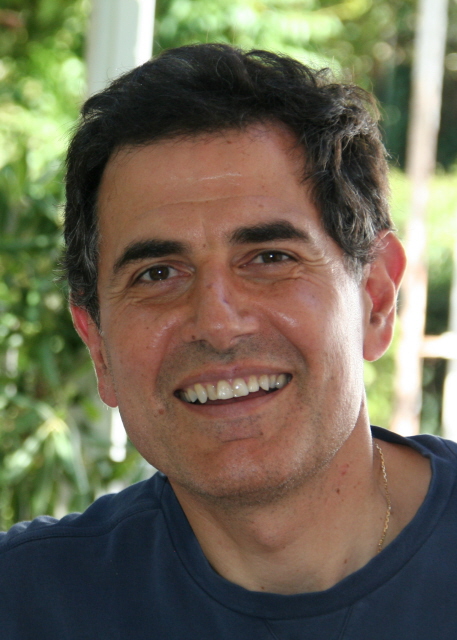 Vassilis J. Tsotras合作论文数Department of Computer Science and Engineering, Bourns College of Engineering, University of California, Riverside;Data Science Center, University of California, Riverside37
 Mario Nascimento合作论文数Khoury College of Computer Sciences, Northeastern University37
 Srikanta Tirthapura合作论文数Stealth37
 Jianyong Wang (王建勇)合作论文数Department of Computer Science and Technology, Tsinghua University37
 Mohamed Sharaf合作论文数College of Information Technology, United Arab Emirates University37
 Yannis Velegrakis合作论文数37
 Stavros Harizopoulos合作论文数Google37




