Spin and polarization are central to precision tests of fundamental physics and for interpreting radiation from astrophysical sources and ultraintense laser-matter experiments. Predictive modeling therefore requires not only energy spectra, but also angle-, spin-, and polarization-resolved particle distributions. Here, we demonstrate that a key assumption underlying current strong-field quantum electrodynamics (QED) models, i.e., that emission can be treated as an instantaneous random event sampled from a local differential rate, breaks down once emission angles, electron spin, and/or photon polarization are resolved. Namely, the resulting fully differential distribution can deviate strongly from the true result and can even yield inconsistent probabilities that take negative values. The physical reason is simple: a photon emission probability builds up over a finite length of the electron trajectory, the formation region, during which the electron direction changes by roughly the same small angle that defines the radiation cone. We therefore integrate over this formation region analytically to obtain a physically consistent electron spin and photon polarization model whose implementation is compatible with existing Monte Carlo and particle-in-cell (PIC) workflows. Simulations of a GeV-class electron-laser collision and of emission in a pulsar-like magnetic field reveal spin and polarization patterns that differ even qualitatively from state-of-the-art local models. In particular, our new model predicts substantial angle-dependent circular photon polarization where the standard approach yields none, and a pronounced helicity bias in the recoiling electrons absent from current predictions. These findings have direct implications for upcoming strong-field QED experiments and for interpreting polarized radiation from extreme astrophysical environments.
The use of high-precision measurements of the g factor of single-electron ions is considered as a detailed probe for physics beyond the standard model. The contribution of the exchange of a hypothetical force-carrying scalar boson to the g factor is calculated for the ground state of H-like ions and used to derive bounds on the parameters of that force. Similarly to the isotope shift, we employ the nuclide shift, i.e., the difference for elements with different proton and/or neutron numbers, in order to increase the experimental sensitivity to the new physics contribution. In particular we find, combining available measurements with current precision with different ions, that the coupling constant for the interaction between an electron and a proton can be constrained up to 3 orders of magnitude better than with the best current atomic data and theory.
Radiation during strong-field tunneling ionization is investigated. The spontaneous as well as the coherent components of the radiation are calculated describing the ionization dynamics via the strong-field approximation, and the role of the quantum dynamics at tunneling is analyzed. The competition between different mechanisms in different spectral regions is examined. Transitionlike radiation (Brunel radiation) is dominant at low frequencies, Thomson scattering at the laser frequency, and radiative recombination via the three-step process at high-order harmonics. To distinguish the role of the quantum dynamics, simple man Drude models are developed for coherent as well as for spontaneous radiation; the models are based on the electron trajectory out of the tunneling barrier. The quantum dynamics is shown to modify the coherent Brunel radiation for near-zero frequencies in asymmetric laser pulses. The significant role of free-free transitions is demonstrated for spontaneous radiation in the low-frequency region.
Relativistic electrons colliding with intense counterpropagating laser pulses are expected to lose energy through radiation reaction. However, we reveal a counterintuitive regime where reflected leptons (including incident electrons, generated electrons, and positrons) gain significant energies when an ultraintense laser pulse interacts with counterpropagating electrons. Because of strong radiation reaction, these particles can be halted and reflected near the laser peak. The subsequent asymmetric laser field then accelerates the reflected leptons to energies far exceeding their initial values. Using three-dimensional particle-in-cell simulations, we demonstrate the generation and acceleration of quasimonoenergetic positrons to multi-GeV energies with a high number conversion efficiency employing forthcoming multipetawatt lasers, which provide conceptually a simple single-stage solution for positron creation and acceleration. The proposed mechanism of lepton acceleration is scalable to the astrophysical scenario and can be related to the origin of ultrahigh-energy cosmic rays in environments with intense fast radio bursts.
Generating ever-shorter and brighter light pulses is a central goal of ultrafast science, enabling coherent control and observation of electron dynamics on their natural timescale. State-of-the-art isolated attosecond pulse generation currently achieves pulse durations of 40-50 attoseconds. Here we demonstrate isolated attosecond light pulses with durations of 18 attoseconds, via high-order harmonic generation driven by a post-compressed industrial-grade Yb laser system. The high-harmonic spectrum spans photon energies from 50 to 320 eV, covering the carbon K-edge, with a calibrated photon flux exceeding 1012 photons per second. Pulse durations were characterized by angle-resolved photoelectron streaking in helium and optimized using a series of filters with different thicknesses to compensate the attochirp. We further developed a robust, fast-converging pulse-retrieval algorithm capable of reconstructing broadband isolated attosecond pulses and double pulses. These results establish Yb-laser-driven high-order harmonic generation as a powerful platform for bright isolated attosecond sources and next-generation ultrafast spectroscopy.
Future applications of the spectrally narrow x-ray resonances in Mössbauer nuclei require x-ray sources with exceptionally high peak and average spectral flux. Here, we introduce a superradiant parametric Mössbauer radiation (SPMR) source, which utilizes the scattering of spatially microstructured electron bunches produced in x-ray free-electron laser (XFEL) accelerators on crystals. The spatial structuring leads to a coherent add-up of the radiation from different electrons, thereby enhancing the Mössbauer radiation by many orders of magnitude. We find that the performance is optimized at qualitatively different operation conditions than considered so far. For a focused electron beam with parameters based on the European XFEL facility, our approach predicts the generation of more than 900 SPMR photons per pulse within one linewidth of the _{26}^{57}Fe Mössbauer resonance. This opens up new opportunities for precision metrology, and for hard x-ray pump-probe spectroscopy techniques via the parallel use of the bunched XFEL electron and photon beams.
Axionlike particles and similar new pseudoscalar as well as vector bosons coupled to nucleons and electrons are predicted to lead to spin-dependent forces in atoms and ions. We argue that hyperfine structure measurements in hydrogenlike and lithiumlike charge states are a sensitive probe to this effect. Employing specific differences of these splittings reduces uncertainties due to nuclear effects in hyperfine structure calculations and measurements. Using this, we show that existing measurements on Be provide competitive limits in the region m_{ϕ}≳100 keV, confirming, or improving by up to a factor of 2, existing constraints for pseudoscalar couplings, depending on the nuclear model. We also find that future measurements on Cs have a further factor of 2-2.5 improved discovery potential for pseudoscalars and an order of magnitude for new vector bosons when compared with the corresponding current constraints.
Self-energy and vacuum polarization effects in quantum electrodynamics (QED) are calculated for the supercritical Coulomb field, where Dirac energy levels become embedded in the negative-energy continuum. In this regime, the quantum vacuum becomes unstable, resulting in spontaneous electron-positron pair creation. By calculating the imaginary part of the QED correction, we gain access to an unexplored channel of vacuum instability: radiative spontaneous pair creation. Our results show that this radiative channel is greatly enhanced in the vicinity of the threshold of the supercritical regime, providing evidence for nonperturbative effects with respect to the fine-structure constant α. We therefore conjecture that the total probability of spontaneous pair creation could differ significantly from the predictions of Dirac theory, especially near the supercritical threshold.
Radiation reaction, the force experienced by an accelerated charge due to radiation emission, has long been the subject of extensive theoretical and experimental research. Experimental verification of a quantum, strong-field description of radiation reaction is fundamentally important, and has wide-ranging implications for astrophysics, laser-driven particle acceleration, next-generation particle colliders and inverse-Compton photon sources for medical and industrial applications. However, the difficulty of accessing regimes where strong field and quantum effects dominate inhibited previous efforts to observe quantum radiation reaction in charged particle dynamics with high significance. We report a high significance ( > 5σ) observation of strong-field radiation reaction on electron spectra where quantum effects are substantial. We obtain quantitative, strong evidence favouring the quantum-continuous and quantum-stochastic models over the classical model; the quantum models perform comparably. The lower electron energy losses predicted by the quantum models account for their improved performance. Model comparison was performed using a novel Bayesian framework, which has widespread utility for laser-particle collision experiments, including those utilising conventional accelerators, where some collision parameters cannot be measured directly.
The coordinate scaling method, previously developed for the numerical solution of the time-dependent Schrodinger equation, is generalized for the numerical treatment of the atomic ionization problem in relativistically strong laser fields, developing the prototype of the method for a one-dimensional case. To enable the the scaling method in relativistic settings, the Foldy-Wouthuysen transformation is employed in Silenko's within the quasiclassical approximation, reducing the one-dimensional time-dependent Dirac equation (TDDE) to the square root Klein-Gordon-like equation. We demonstrate the computational advantage of the relativistic scaling method over the standard direct implementation of the TDDE solution, especially in the case of an applied non-uniform mesh.
Magnetic moments of bound-electron systems are a sensitive tool for testing fundamental interactions. The g factors of lithium-like ions have been rigorously studied in recent years, enabling insights into the relativistic interelectronic effects. In this work, we present the g-factor measurement of lithium-like tin, accurate to 0.5 parts per billion, as well as ab initio theoretical calculations that include an advanced treatment of the interelectronic interaction. We further improved the prediction by using the experimental result for the hydrogen-like tin g factor, inferring from it the unknown higher-order quantum electrodynamic (QED) effects. The observed agreement independently confirms the revised theory at a previously inaccessible high atomic number Z of 50, where QED effects are considerably larger.
Transient plasma evolution with spin polarization dynamics in radiation reaction dominated magnetic reconnection is investigated using particle-in-cell simulations. We identify a condensation of plasmoids accumulated into multiple tiny islands within the reconnection layer, where electrons are strongly polarized while emitting energetic γ-ray photons to undergo radiative spin flips. Nonlinear analyses elucidate that the condensation is caused by a spiral attractor appearing in the electron's phase space due to radiation reaction. The spiral rotation and contraction of the attractor leads to the electrons' polarization being almost instantaneously parallel with respect to the magnetic field, which results in a γ-ray emission with an anomalous linear polarization perpendicular to the electron's moving plane. Our studies with around 10^{10} G magnetic fields demonstrate that spin-polarized condensed plasmoids may be realized in extreme power laser facilities and intrinsically exist in extreme astrophysical reconnection scenarios, potentially explaining atypical polarization features in observed high-energy cosmic radiation.
Mössbauer spectroscopy is widely used to study structure and dynamics of matter with remarkably high energy resolution, provided by the narrow nuclear resonance line widths. However, the narrow width implies low count rates, such that experiments commonly average over extended measurement times or many x-ray pulses (“shots”). This averaging impedes the study of non-equilibrium phenomena. It has been suggested that X-ray free-electron lasers (XFELs) could enable Mössbauer single-shot measurements without averaging, and a proof-of-principle demonstration has been reported. However, so far, only a tiny fraction of all shots resulted in signal-photon numbers which are sufficiently high for a single-shot analysis. Here, we demonstrate coherent nuclear-forward-scattering of self-seeded XFEL radiation, with up to 900 signal-photons per shot. We develop a sorting approach which allows us to include all data on a single-shot level, independent of the signal content of the individual shots. It utilizes the presence of different dynamics classes, i.e. different nuclear evolutions after each excitation. Each shot is assigned to one of the classes, which can then be analyzed separately. Our approach determines the classes from the data without requiring theory modeling nor prior knowledge on the dynamics, making it also applicable to unknown phenomena. We envision that our approach opens up new grounds for Mössbauer science, enabling the study of out-of-equilibrium transient dynamics of the nuclei or their environment.
This study presents calculations of rate coefficients, resonance strengths, and cross sections for the dielectronic recombination (DR) of Y^+, Sr^+, Te^2+, and Ce^2+-low-charge ions relevant to kilonovae and non-local thermodynamic equilibrium (non-LTE) plasmas. Using relativistic atomic structure methods, we computed DR rate coefficients under conditions typical of these environments. These DR rate coefficients and cross sections were calculated using the Flexible Atomic Code (FAC). The DR resonance features were identified by comparing theoretical resonance energies, estimated as the difference between NIST excitation energies and Dirac binding energies, with dominant autoionizing states confirmed through analysis of autoionization rates. Our results highlight the critical role of low-lying DR resonances in shaping rate coefficients at kilonova temperatures (∼ 10^4 K) and regulating charge-state distributions. Pronounced near-threshold DR resonances significantly influence the evolving ionization states and opacity of neutron star merger ejecta. Comparisons with previous studies emphasize the necessity of including high-n Rydberg states for accurate DR rate coefficients, especially for complex heavy ions with dense energy levels. Discrepancies with existing datasets underscore the need for refined computational techniques to minimize uncertainties. These results provide essential input for interpreting spectroscopic observations of neutron star mergers, including James Webb Space Telescope data. We also put forward suitable candidates for experimental studies, recognizing the challenges involved in such measurements. The data presented here have the potential to refine models of heavy-element nucleosynthesis, enhance plasma simulation accuracy, and improve non-LTE plasma modeling in astrophysical and laboratory settings.
A comprehensive reevaluation of the root-mean-square nuclear charge radius is presented for the doubly magic ^{208}Pb extracted from muonic spectroscopy measurements. By integrating rigorous theoretical quantum electrodynamics calculations, state-of-the-art numerical methods, and a systematic reanalysis of the uncertainties, we reduced the long-standing muonic fine-structure anomaly and improved the goodness of fit by a factor of 20. The resulting value of 5.5062(5) fm for a Fermi distribution is fairly consistent with the previously reported muonic spectroscopy value, and 3 standard deviations larger than the commonly used compilation data, which indicates that the current value and its uncertainty could be significantly underestimated. Attributing the remaining discrepancy to theory errors which cannot be rigorously calculated, we suggest the rms charge radius with reduced model dependence to be 5.5062(17) fm. This Letter sets an improved benchmark for charge radius extraction in heavy nuclei and paves a path for systematic reevaluations across the nuclear chart.
Interference is a powerful tool for measuring and control. In Mössbauer science, interference effects are essential to most applications, due to the coherent scattering nature. However, Mössbauer interferometry remains challenging, due to stability requirements imposed by the short x-ray wavelength. Here, we put forward a “dark fringe” interferometer with vanishing transmission in the empty state, thereby facilitating sensitive measurements. The relative interferometer phase can dynamically be tuned by displacing a Mössbauer target. We experimentally demonstrate the tuning capabilities of this interferometer by controlling the transmitted x-ray intensity on nanosecond time scales. Then, we demonstrate sensitive measurements by observing the propagation of impulsively launched sound waves in the target over ∼ 10 μs. The interferometer concept opens avenues towards polarization-sensitive phase measurements, the generation of coherent multi-pulse sequences for controlling nuclear dynamics, and the implementation of feedback loops to adaptively optimize the interferometer, thereby fueling the further development of nuclear quantum optics.
The spin polarization of photoelectrons in tunneling ionization is investigated using numerical solutions of the time-dependent Schrödinger equation in companion with our analytic treatment via the spin-resolved strong-field approximation and classical trajectory Monte Carlo simulations. We demonstrate a nontrivial spin texture of photoelectrons in momentum space, exhibiting a vortex structure relative to the laser polarization axis. The momentum-resolved polarization stems from the emergence of spin-correlated quantum orbits in the continuum. For direct electrons in few-cycle pulses, the nonvanishing initial transverse velocity of the electron is responsible for the polarization, while in long pulses, the spin texture is essentially shaped by recollisions. Furthermore, the interference between direct and rescattering ionization leads to spin-polarized electron holography, offering an alternative method to extract atomic fine structural information.
The observed millisecond-scale duration is an essential yet mysterious feature of fast radio bursts (FRBs). In this Letter, we link the observed soft gamma-ray counterpart of FRB 200428 to electron-positron pair cascades driven by Compton scattering and the Breit-Wheeler process. We demonstrate that such pair cascades can truncate FRBs to durations down to millisecond-scale, thereby establishing millisecond-scale upper bounds on their durations. The physical processes involved in the truncation mechanism occur during the propagation of FRBs after their production. Consequently, this mechanism is independent of the specific production mechanism or origin of the FRBs, suggesting that it could potentially operate in all FRBs. Our results lift the constraint on FRB production mechanisms that they must inherently generate bursts lasting only milliseconds.
As a fundamental QED process, linear Breit-Wheeler (LBW) pair production predicted 90 years ago has not yet been demonstrated in experiments with real photons. Here, we propose an experimentally advantageous scheme to detect the LBW signal by irradiating a foil target with a single 10 PW-level laser. Our integrated QED particle-in-cell simulations demonstrate that the LBW signal can be explicitly distinguished from the Bethe-Heitler (BH) signal by comparing positron energy spectra behind the target at varying target thicknesses. The LBW positrons are created at the front of the target and subsequently experience both laser vacuum acceleration and sheath field acceleration to gain high energies, while BH positrons, originating within the target bulk, are only subjected to sheath field acceleration. As a result, the invariance of the high-energy tail of positron spectra with respect to the target thickness serves as a distinct signature of the LBW process. Notably, this scheme remains viable even when the BH yield dominates over the LBW yield.
In this Letter, we present mass-ratio measurements on highly charged Yb$^{42+}$ ions with a precision of $4\times 10^{-12}$ and isotope-shift measurements on Yb$^{+}$ on the $^{2}$S$_{1/2}$ $\to$ $^{2}$D$_{5/2}$ and $^{2}$S$_{1/2}$ $\to$ $^{2}$F$_{7/2}$ transitions with a precision of $4\times 10^{-9}$ for the isotopes $^{168,170,172,174,176}$Yb. We present a new method that allows us to extract higher-order changes in the nuclear charge distribution along the Yb isotope chain, benchmarking ab-initio nuclear structure calculations. Additionally, we perform a King plot analysis to set bounds on a fifth force in the keV$/c^2$ to MeV$/c^2$ range coupling to electrons and neutrons.
 Karen Z. Hatsagortsyan合作论文数Max-Planck-Institut fur Kernphysik139
 Z. Harman合作论文数Max-Planck-Institut fur Kernphysik126
 Antonino Di Piazza合作论文数Max-Planck-Institut fur Kernphysik66
 Jörg Evers合作论文数Max Planck Institute for Nuclear Physics;Fakultät für Physik und Astronomie, Universität Heidelberg59
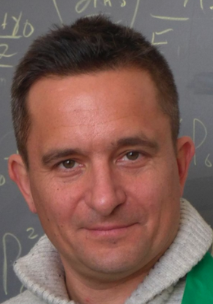 Ulrich D. Jentschura合作论文数Department of Physics, Missouri University of Science and Technology41
 Michael Klaiber合作论文数38
 José R. Crespo López-Urrutia合作论文数Max-Planck-Institut für Kernphysik Heidelberg36
 Natalia S. Oreshkina合作论文数Max Planck Institute for Nuclear Physics35
 Joachim H. Ullrich合作论文数Physikalisch-Technische Bundesanstalt34
 Adriana Palffy合作论文数Institut fur Theoretische32
 Matteo Tamburini合作论文数Max-Planck-Institut für Kernphysik, Saupfercheckweg 1, D-69117 Heidelberg, Germany.30Carsten Muller合作论文数29
 Heiko Bauke合作论文数28
 Thomas Pfeifer合作论文数Max-Planck Institute for Nuclear Physics27
 Jianxing Li (栗建兴)合作论文数School of Physics, Xi'an Jiaotong University26Vladimir A. Yerokhin合作论文数26
 Peter Knight合作论文数Department of Physics, Faculty of Natural Sciences, Imperial College London25
 Klaus Blaum合作论文数Max Planck Institute for Nuclear Physics;Department of Physics and Astronomy, Ruprecht-Karls-University Heidelberg24
 Ilya Tupitsyn合作论文数Department of Physics;St . Petersburg State University;Department of Physics, St . Petersburg State University22Mihai Macovei合作论文数21
 Cavaletto Stefano M合作论文数Max-Planck-Institut für Kernphysik, Saupfercheckweg 1, 69117 Heidelberg, Germany.21Joerg Evers合作论文数18h tawara合作论文数17Markus C. Kohler合作论文数Max-Planck-Institut fur Kernphysik17
 Yousef I. Salamin合作论文数American University of Sharjah, United Arab Emirates16
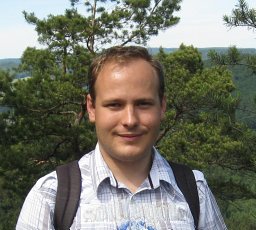 Andrey V. Volotka合作论文数St . Petersburg State University;Institut fur Theoretische Physik;Institut fur Theoretische Physik, St . Petersburg State University16Chunhai Lyu合作论文数15
 Sturm Sven合作论文数Max Planck Inst Kernphys15Sebastian Meuren合作论文数Max-Planck-Institut für Kernphysik, Saupfercheckweg 1, D-69117 Heidelberg, Germany.14Yueyue Chen合作论文数14
 Gianluca Sarri合作论文数Centre for Plasma Physics;University Belfast;Centre for Plasma Physics, Queen ' s University Belfast14Guido R. Mocken合作论文数14Zatorski Jacek合作论文数Max Planck Institute for Nuclear Physics, Heidelberg, Germany. jacek.zatorski@mpi-hd.mpg.de13
 Matt Zepf合作论文数Helmholtz Institut Jena;Abbe Center of Photonics, University of Jena13Christian Buth合作论文数13
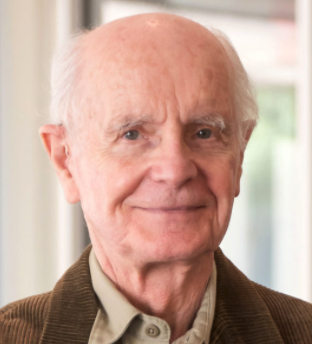 Marlan Scully (司嘉理)合作论文数Department of Physics and Astronomy, Texas A&M University;Princeton University13
 Antonio Javier Gonzalez Martinez合作论文数13Benjamin J. Galow合作论文数13Lm Narducci合作论文数12R. Soria Orts合作论文数12
 H. Cakir合作论文数Max Planck Inst Nucl Phys11
 V. Debierre合作论文数Max Planck Inst Kernphys11P. H. Mokler合作论文数11
 Naveen Kumar合作论文数11
 Vladimir M. Shabaev合作论文数Division of Quantum Mechanics, Saint Petersburg State University11
 Dominik Lentrodt合作论文数Max Planck Inst Kernphys10Bruhns H合作论文数10Christian Beilmann合作论文数10
 Martin Kiffner合作论文数Technische Universitat Munchen10




