We developed a flexible infectious disease model framework that combines a detailed individual-based model of arrival pathways (quarantine model) and an individual-based model of the arrivals environment (community model) to inform border risk assessments. The work was motivated by Australia's desire to safely increase international arrival volumes, which had been heavily constrained since early 2020 as a result of the COVID-19 pandemic. These analyses supported decisions on quarantine and border policy in the context of the Australian government's national reopening plan in late 2021. The quarantine model provides a detailed representation of transmission within quarantine and time-varying infectiousness and test sensitivity within individuals, to characterize the likelihood and infectiousness of breaches from quarantine. The community model subsequently captures the impact on these infectious individuals in the presence of varying vaccination coverage, arrival volumes, public health and social measures (PHSMs) and test-trace-isolate-quarantine system effectiveness in the Australian context. Our results showed that high vaccination coverage would be required to safely reopen with support from ongoing PHSMs, and quarantine pathways have minimal impact on infection dynamics in the presence of existing local transmission. The modelling pipeline we present can be flexibly adapted to a range of scenarios, and thus provides a useful framework for generating timely risk assessments in the event of future pandemics.
Forecasting ecosystem changes due to disturbances or conservation interventions is essential to improve ecosystem management and anticipate unintended consequences of conservation decisions. Mathematical models allow practitioners to understand the potential effects and unintended consequences via simulation. However, calibrating these models is often challenging due to a paucity of appropriate ecological data. Ensemble ecosystem modelling (EEM) is a quantitative method used to parameterize models from theoretical ecosystem features rather than data. Two approaches have been considered to find parameter values satisfying those features: a standard accept–reject algorithm, appropriate for small ecosystem networks, and a sequential Monte Carlo (SMC) algorithm that is more computationally efficient for larger ecosystem networks. In practice, using SMC for EEM generation requires advanced statistical and mathematical knowledge, as well as strong programming skills, which might limit its uptake. In addition, current EEM approaches have been developed for only one model structure (generalised Lotka–Volterra). To facilitate the usage of EEM methods, we introduce EEMtoolbox, an R package for calibrating quantitative ecosystem models. Our package allows the generation of parameter sets satisfying ecosystem features by using either the standard accept–reject algorithm or the novel SMC procedure. Our package extends the existing EEM methodology, originally developed for the generalised Lotka–Volterra model, to two additional model structures (the multispecies Gompertz and the Bimler–Baker model) and additionally allows users to define their own model structures. We demonstrate the usage of EEMtoolbox by simulating changes in species abundance immediately after the release of the sihek ( Todiramphus cinnamominus , extinct‐in‐the‐wild species) on Palmyra Atoll in the Pacific Ocean. With its simple interface, our package facilitates straightforward generation of EEM parameter sets, thus unlocking advanced statistical methods supporting conservation decisions using ecosystem network models.
Skin disorders rank sixth in the non-fatal burden of disease within Australia and fourth worldwide. Despite this burden of disease for skin conditions, local data pertaining to the management, treatment, outcomes and quality of life of this patient group are limited. The Australasian Dermatology Registry will monitor and evaluate current and emerging therapies, provide real world evidence on the impact skin disorders have on patients living with these conditions and provide a platform for dermatology research.
BACKGROUND:Smoking is a modifiable risk factor that increases the likelihood of developing psoriasis and the severity of the disease. In recent years, biological therapies have transformed the management of psoriasis. There is conflicting evidence about whether smoking affects the efficacy of biologics. The aim of this study was to assess drug survival and the efficacy of the first biologic for psoriasis in smokers compared with non-smokers. METHODS:This was a retrospective cohort study using data from the Australasian Psoriasis Registry. Participants with psoriasis who met Pharmaceutical Benefits Scheme eligibility criteria for a biologic (n = 395) were included. Associations between smoking and drug survival or Psoriasis Area and Severity Index (PASI) response were assessed using univariable and multivariable Cox Proportional Hazards regression, controlling for confounders including sex, obesity, psoriatic arthritis, biologic class and baseline PASI. RESULTS:The prevalence of current smoking was 24.6% and former smoking was 18.5%. On univariable analysis, smokers were 34% more likely to discontinue treatment compared with non-smokers (p = 0.039), were 27% less likely to attain PASI90 (p = 0.037) and 33% less likely to attain PASI100 (p = 0.038). On multivariable analysis, the association between smoking and reduced drug survival was no longer statistically significant. Multiple factors, including obesity, female sex, psoriatic arthritis and higher PASI scores, were risk factors for drug discontinuation. CONCLUSIONS:This analysis illustrated that multiple factors are involved in drug survival, and smoking was not an independent risk factor for drug discontinuation. This study provides a rationale for future studies examining the effect of lifestyle modification on the efficacy of biological therapies in psoriasis.
With its chronicity and varied symptomatology, moderate to severe atopic dermatitis (AD) remains a significant challenge for both patients and health care professionals. Novel targeted therapies, including the JAK inhibitors (JAKi) offer significant hope. There are many systematic reviews and meta-analyses of the use of JAKi for the management of atopic dermatitis, but few offer practical advice for the clinician. The aim of this consensus development was to place the current literature for JAKi use in atopic dermatitis within the clinical context of practice in Australasia. The Australasian Medical Dermatology Group (AMDG) reviewed the evidence for the use of JAKi in the management landscape of atopic dermatitis, adding in their cumulative experience, and used an eDelphi process to agree on best practice. In the first round of 133 eDelphi clinical practice statements, consensus was achieved in 117 (88%-complete 27.8%, close 60.1%), with no consensus in 16 (12.0%) of the statements. The 16 clinical practice statements that did not reach consensus were reviewed and revised to 15 statements and then subjected to a second round: complete consensus was achieved in 5/15 statements, close consensus in 6/15, and no consensus in 4/15. Over the two eDelphi rounds, consensus was achieved in 128/132 (97%-complete 32%, close 64%) and no consensus in 4/132 (3%). Statements regarding screening for prior varicella infection, age-appropriate cancer screening intervals, and management of flares did not reach full consensus. This study highlights areas where further research is needed to assist practicing dermatologists in safe prescribing and management of atopic dermatitis with JAK inhibitors.
Marine invasive species can cause irreparable change in new environments, though not all non‐native species inevitably cause negative impacts to recipient ecosystems. Knowing which non‐native species could establish and have harmful impacts is vital to ensure the efficient use of limited resources for monitoring and surveillance, especially in less accessible regions such as the Southern Ocean. We used ensemble ecosystem modelling to predict an ensemble of plausible future scenarios of introduction and potential establishment of marine non‐native species to a known food web near Casey Station, East Antarctica. These scenarios explore potential impacts of successful invasions by five non‐native species. Non‐native species varied in their capacity to establish in the current food web following a single introduction event, though all could establish in at least some scenarios. Where the non‐native species did establish, their abundances mostly increased by between 10 and 1000 times, though some scenarios resulted in a million‐fold increase. Although most scenarios showed native species abundances only changed within 10% of the initial abundance, the establishment of an invasive species could plausibly cause substantial abundance declines to all native species. Synthesis and applications . This analysis helps us to better understand the potential range of impacts on native species and aids in developing strategies to help prevent or manage their introduction. We highlight the need for rapid detection methods, such as eDNA, to ensure any non‐native species are identified quickly in this ecosystem, particularly for those species we identified as having a high potential for negative impacts and fast population growth.
Contact tracing is an important public health measure used to reduce transmission of infectious diseases. Contact tracers typically conduct telephone interviews with cases to identify contacts and direct them to quarantine, with the aim of preventing onward transmission. However, in situations where caseloads exceed the capacity of the public health system, timely interviews may not be feasible for all cases. Here we present a modelling framework for assessing the impact of different case interview prioritisation strategies on disease transmission. Our model is based on Australian contact tracing procedures and informed by contact tracing data on COVID-19 cases notified in Australia from 2020 to 2021. Our results demonstrate that last-in-first-out strategies (where cases with the most recent swab or notification dates are interviewed first) are more effective at reducing transmission than first-in-first-out strategies (where cases with the oldest swab or notification dates are interviewed first) or strategies with no explicit prioritisation. To maximise the public health benefit from a given case interview capacity, public health practitioners may consider our findings when designing case interview prioritisation protocols for outbreak response.
Introduction Following widespread exposure to Omicron variants, SARS-CoV-2 has transitioned to endemic circulation. Populations now have diverse infection and vaccination histories, resulting in heterogeneous immune landscapes. Careful consideration of the value of ongoing vaccination is required through the post-Omicron phase of COVID-19 management to minimise disease burden. We demonstrate the utility of a modelling approach to address this question, supporting recommendations for targeted vaccine use across different country settings.Methods We integrated immunological, transmission, clinical and cost-effectiveness models and simulated populations with different characteristics and immune landscapes over the early post-Omicron period. We calculated the expected number of infections, hospitalisations and deaths for different vaccine scenarios. Costs (from a healthcare perspective) were estimated for exemplar country income-level groupings in the Western Pacific Region using pandemic-era vaccine prices and healthcare-seeking behaviour assumptions. We assessed the impact and cost-effectiveness of targeted vaccination strategies. Results are reported as incremental costs and disability-adjusted life years averted compared with no additional vaccination. Parameter and stochastic uncertainty were captured through scenario and sensitivity analysis.Results Across different population demographics and income levels, we consistently found that annual elder-targeted boosting strategies are most likely to be cost-effective or cost-saving (>75% probability of being cost-effective among older, high-income settings; >50% probability of being cost-effective in younger, middle-income settings), while paediatric programmes are unlikely to be cost-effective. Results remained broadly consistent while accounting for uncertainties in the epidemiological and economic models, although they were sensitive to the cost of home-based care and vaccination. Use of pandemic-era vaccine prices may underestimate current vaccine prices available in upper-middle-income and high-income settings, potentially overestimating the cost-effectiveness of boosting in these settings. Half-yearly boosting may only be cost-effective in higher income settings with older population demographics and higher cost-effectiveness thresholds.Conclusion Competing health priorities and resource constraints mean COVID-19 vaccine allocation needs to be carefully considered in context. These results, reflecting modelling conducted on the early post-Omicron period, demonstrate the value of continued booster vaccinations to protect against severe COVID-19 disease outcomes across high-income and middle-income settings and show that the biggest health gains relative to vaccine costs are achieved by targeting older age groups.
Delays remain in patients receiving effective treatment strategies that have potential to clear their skin of psoriasis, improve their quality of life (QoL) and change the psoriatic disease course, which, if uncontrolled, can irreversibly alter an individual’s life course (i.e. cumulative life course impairment [CLCI]). This study explored current international awareness and consideration of the potential impact of psoriasis over the life course within clinical assessments and decisions about its management. Cross-sectional surveys collated insights from people with psoriasis and healthcare professionals (HCPs) treating psoriasis (dermatologists and primary care physicians [PCPs]) across 29 countries. Data were collected from 487 people with psoriasis, 574 dermatologists and 618 PCPs. Despite people with psoriasis highlighting a range of daily activities that are ‘very frequently’ or ‘always’ affected by their psoriasis, 37
BACKGROUND:Treatment goals have been established in Australia to facilitate the management of adults with moderate to severe psoriasis. The Australasian College of Dermatologists sought to determine if and how these adult treatment goals could be modified to accommodate the needs of paediatric and adolescent patients. METHODS:A modified Delphi approach was used. Comprehensive literature review and guideline evaluation resulted in the development of statements and other questions to establish current clinical practices. Two rounds of anonymous voting were undertaken, with a collaborative meeting held in between to discuss areas of discordance. Overall, consensus was defined as achievement of ≥75% agreement in the range 7-9 on a 9-point scale (1 strongly disagree; 9 strongly agree). RESULTS:Consensus was achieved on 23/29 statements in round 1 and 17/18 statements in round 2. There was a high level of concordance with treatment criteria in the adult setting. The limitations of applying assessment tools developed for use in adult patients to the paediatric setting were highlighted. Treatment targets in the paediatric setting should include objective metrics for disease severity and psychological impact on the patients and their family, and be based on validated, age-appropriate tools. CONCLUSION:While the assessment, classification and management of moderate to severe psoriasis in paediatric patients aligns with metrics established for adults, it is vital that nuances in the transition from childhood to adolescence be taken into account. Future research should focus on psoriasis severity assessment scales specific to the paediatric setting.
Information about species’ locations can influence what happens to them—from supporting habitat protection to exposing poaching targets. Debate about releasing locations when new species are found highlights the trade‐off between the risk of loss and the benefits of funding and public support. No research so far has collected data on how such decisions are made, and no decision tools easily compare a range of decision‐making scenarios. Here, we present a method to compare the costs and benefits of decisions about the disclosure of information about newly discovered species and populations. We implement our method for seven species where information is completely or partially secret. We ask decision‐makers to estimate the costs and benefits associated with these case studies and apply our method. Results show a range of implications from choices that are always better, to others that depend on risk attitude, and demonstrate that the process of decision‐making can be transparent and easily communicated.
BACKGROUND:Since the emergence of SARS-CoV-2 (COVID-19), there have been multiple waves of infection and multiple rounds of vaccination rollouts. Both prior infection and vaccination can prevent future infection and reduce severity of outcomes, combining to form hybrid immunity against COVID-19 at the individual and population level. Here, we explore how different combinations of hybrid immunity affect the size and severity of near-future Omicron waves.METHODS:To investigate the role of hybrid immunity, we use an agent-based model of COVID-19 transmission with waning immunity to simulate outbreaks in populations with varied past attack rates and past vaccine coverages, basing the demographics and past histories on the World Health Organization Western Pacific Region.RESULTS:We find that if the past infection immunity is high but vaccination levels are low, then the secondary outbreak with the same variant can occur within a few months after the first outbreak; meanwhile, high vaccination levels can suppress near-term outbreaks and delay the second wave. Additionally, hybrid immunity has limited impact on future COVID-19 waves with immune-escape variants.CONCLUSIONS:Enhanced understanding of the interplay between infection and vaccine exposure can aid anticipation of future epidemic activity due to current and emergent variants, including the likely impact of responsive vaccine interventions.
Infectious disease forecasting has become increasingly important in public health, as demonstrated during the COVID-19 pandemic. However, forecasting tools for emergency animal diseases, particularly those offering real-time decision support when parameters governing disease dynamics are unknown, remain limited. We introduce a generalised modelling framework for near-real-time forecasting of the temporal and spatial spread of infectious livestock diseases using data from the early stages of an outbreak. We applied the framework to the 2007 equine influenza outbreak in Australia, generating prediction targets at three timepoints across four regional clusters. Our targets included future daily case counts, outbreak size, peak timing and duration, and spatial distributions of future spread. We evaluated how well the forecasts predicted daily cases and the spatial distribution of case counts, using skill scores as a benchmark for future model improvements. Forecast accuracy, certainty, and skill improved significantly after the outbreak's peak, while early predictions were more variable, suggesting that pre-peak forecasts should be interpreted with caution. Spatial forecasts maintained positive skill throughout the outbreak, supporting their use in guiding response priorities. This framework provides a tool for real-time decision-making during livestock disease outbreaks and establishes a foundation for future refinements and applications to other animal diseases. ### Competing Interest Statement The authors have declared no competing interest.
Population dynamic models can forecast changes in the abundances of multiple interconnected species, which makes them potentially powerful tools for managing ecological communities, yet they remain largely under-utilised in applied settings. High data requirements and the ability to only model a narrow range of ecological interactions and/or trophic levels together limits their usefulness when faced with complex and data-poor systems, where beneficial (e.g. mutualism) and harmful (e.g. competition) interactions may operate simultaneously within and between species. We present a model of population dynamics that can describe a wide range of ecological interaction outcomes with a simple, unified structure. Species growth rates are constrained by a maximum growth rate parameter which prevents the risk of population explosions even in the case of mutualism. Species interactions are defined by two, not mutually-exclusive interactions matrices that describe the effects of beneficial and harmful interactions respectively, together providing the potential for the net effect of interactions between one species and another to switch from beneficial to harmful as population density increases. This model recreates classic dynamics in two-species mutualistic, competitive, and predator-prey scenarios, allowing us to model a wide range of trophic levels and interaction types together within the same equation. The maximum growth rate parameter, theoretically based in intrinsic constraints on reproduction, can be parameterised from a wide range of sources including natural history, historical data, and breeding programs. We illustrate the potential of this model with a data-poor case study of a threatened species and two interacting predators. This new model is generaliseable to a wide range of natural ecological communities. Its model structure lowers data requirements whilst remaining intuitive and biologically realistic, making it an accessible option for predicting community-wide population changes in applied contexts where data is sparse and/or uncertain. ### Competing Interest Statement The authors have declared no competing interest.
 Peter Foley合作论文数Department of Medicine, Faculty of Medicine, Dentistry and Health Sciences, The University of Melbourne;St Vincent's Hospital;Probity Medical Research;Skin Health Institute35
 Michael Bode合作论文数Astrophysics Research Institute;Liverpool John Moores University;Astrophysics Research Institute, Liverpool John Moores University15
 Jodie McVernon合作论文数Department of Infectious Diseases, Melbourne Medical School, Faculty of Medicine, Dentistry and Health Sciences, The University of Melbourne10
 Marius Rademaker合作论文数Dept Dermatol, Waikato Hosp10
 John Sullivan合作论文数9
 Eve McDonald Madden合作论文数School of Earth and Environmental Sciences, Faculty of Science, The University of Queensland9Kurt Gebauer合作论文数9
 Monisha Gupta合作论文数8Lynda Spelman合作论文数8Thao P. Le合作论文数7Diana Rubel合作论文数Medical School, College of Health and Medicine, The Australian National University7Matthew Holden合作论文数School of Mathematics and Physics, Faculty of Science, The University of Queensland7
 Michaela Plein合作论文数7Eamon Conway合作论文数Royal Melbourne Hosp6Robert Sinclair合作论文数6
 Trish Campbell合作论文数Division Medicine, Dentistry and Health Sciences, The University of Melbourne;The Peter Doherty Institute for Infection and Immunity, The University of Melbourne6
 James McCaw合作论文数Centre for Epidemiology and Biostatistics, Melbourne School of Population and Global Health, Faculty of Medicine, Dentistry and Health Sciences, The University of Melbourne6Gillian Marshman合作论文数6Stephen Shumack合作论文数6
 Iadine Chades合作论文数CSIRO Sustainable Ecosystems6Camelia R. Walker合作论文数5Isobel Abell合作论文数Melbourne Centre for Data Science, The University of Melbourne5Gerard Edward Ryan合作论文数Melbourne School of Population and Global Health, The University of Melbourne5
 Kate J. Helmstedt合作论文数School of Mathematical Sciences, Queensland University of Technology5Shearer Freya M合作论文数Emergency Department, St John of God Murdoch Hospital5
 Nic Geard合作论文数Department of Computing and Information Systems at The University of Melbourne5
 Michael Lydeamore合作论文数Department of Econometrics and Business Statistics, Business School, Monash University5Megan Andrews合作论文数4Li-Chuen Wong合作论文数4Charlie Wang合作论文数4
 Pablo Fernandez Penas合作论文数Dermatology, Sydney Medical School, Faculty of Medicine and Health, The University of Sydney4Mueller Ivo合作论文数4Kerrie Mengersen合作论文数4Katherine S Armour合作论文数4Morton Rawlin合作论文数3Amelia James合作论文数3Julie Armstrong合作论文数3Madeleine Supranowicz合作论文数3Andrew Potter合作论文数3
 Elena Tartaglia合作论文数CSIRO3Sara Vogrin合作论文数Department of Medicine, University of Melbourne3Howard Bondell合作论文数School of Mathematics and Statistics, Faculty of Science, The University of Melbourne3
 David Price合作论文数Department of Infectious Diseases, Melbourne Medical School, Faculty of Medicine, Dentistry and Health Sciences, The University of Melbourne3
 Nick Golding合作论文数School of Population Health, Faculty of Health Sciences, Curtin University;The Kids Research Institute Australia;School of Physics, Mathematics and Computing, The University of Western Australia3Agnew K L合作论文数3
 Kevin Burrage合作论文数Centre for Data Science, Queensland University of Technology;School of Mathematical Sciences, Faculty of Science, Queensland University of Technology3
 Scott Sisson合作论文数School of Mathematics & Statistics, University of New South Wales Sydney3
 Walter Curran Jr合作论文数Department of Radiation Oncology, School of Medicine, Emory University3
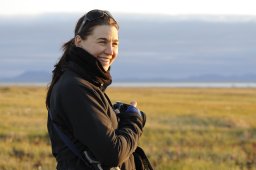 Justine D. Shaw合作论文数Centre for Invasion Biology Private Bag, Stellenbosch University3




