SMS messages have become a popular tool of voter mobilization by political campaigns and advocacy groups in the United States, yet empirical evidence of their impact is inconclusive. We engage 7.1 million voters in one of the largest GOTV experiments in the academic literature in order to assess the impact of SMS content and timing on voter file-validated turnout. Our pre-registered study is conducted with a non-partisan partner organization during the 2018 U.S. Midterm election, varying content and timing of messages sent to women voters and likely voters of color. Results show that assignment to receive any SMS mobilization increases turnout by 0.25
After hundreds of field experiments assessing their effectiveness, voter mobilization tactics are often considered “settled science.” In this research note, we posit that this assumption is incorrect, due to inconsistent and insufficient attention to electoral salience in the literature. Researchers often conduct mobilization field experiments in low-salience elections due to limited resources and the need for adequate statistical power. However, practitioners often apply these findings in high-salience contexts. Theory suggests that effects of mobilization tactics will attenuate in high-salience elections due to heightened attention. We present refined meta-analytic estimates of common mobilization tactics in U.S. elections—canvassing, phone calls, direct mail, and SMS messages—based on electoral salience. Results show that effects of tactics attenuate 33%–62% from low-to high-salience contexts. We translate all findings into intent-to-treat (ITT) estimates to highlight the impact of declining contact rates. Finally, we identify significant gaps in the research and offer solutions.
What is the relationship between governance and security? What impact, if any, does state presence have on civilians’ perceptions of security in militarized conflict zones? The existing literature suggests that government control over a restive region means order and security for the local population. We propose a ‘mental mapping’ framework for the relationship between state presence and security perceptions in militarized ethnic peripheries, drawing on prior research in urban planning about how attitudes are shaped by living environments. We use a survey experiment to measure the effect of the physical presence of government institutions on civilians’ sense of how safe they imagine their city to be, demonstrating a mental mapping mechanism between the physical presence of the state and perceptions of safety. We show that residents who encounter images of state institutions on a map of Srinagar – the largest city and summer capital of Jammu and Kashmir, India – are more likely to perceive their city as less secure than those who encounter a map without images or a placebo map. This experimental evidence implies that government security presence is not always perceived as security by the civilian population.
According to the burgeoning voter mobilization field experiments literature, impersonal contact has little-to-no effect. A conversation with a computer is, by definition, an impersonal interaction. However, chatbots are form of communication wherein a computer imitates conversations by interacting using natural language. Human-to-chatbot interactions are often perceived as similar to human-to-human interactions. How ubiquitous are chatbots? Just ask Siri, Cortana, Bixby, or Alexa, or ask for help on any e-commerce website (these are each chatbots). A simple voter mobilization treatment reminding users of a political chatbot (Resistbot) to vote and providing information about polling locations and hours increased turnout by 1.8 percentage points in a 2019 election. The results replicate previously unpublished field experiments by Resistbot in 2018 that found smaller but statistically significant increases in turnout.
This paper presents the design and results of a voter mobilization field-experiment conducted during the 2019 election in conjunction with Vote.org. To test the effect of non-partisan voter mobilization billboards fitted with Election Day information, maps of study areas in four states were overlaid with a grid (or “fishnet”) containing 3-mile by 3-mile cells. Cells were randomly selected to be in the treatment or control group. All available billboards in the treatment cells that met certain criteria were purchased and fitted with a reminder to vote. Across the four states, 207 billboards were treated and 142 served as control billboards for the weeks leading up to Election Day. Results indicated that registered voters living in treated cells had a probability of voting that was higher than those living in control cells. The effect size was similar in magnitude to comparable mobilization treatments and was strongest among mid-propensity voters.
This paper is the result of a nationwide study of polling place dynamics in the 2016 presidential election. Research teams, recruited from local colleges and universities and located in twenty-eight election jurisdictions across the United States, observed and timed voters as they entered the queue at their respective polling places and then voted. We report results about four specific polling place operations and practices: the length of the check-in line, the number of voters leaving the check-in line once they have joined it, the time for a voter to check in to vote (i.e., verify voter's identification and obtain a ballot), and the time to complete a ballot. Long lines, waiting times, and times to vote are closely related to time of day (mornings are busiest for polling places). We found the recent adoption of photographic voter identification (ID) requirements to have a disparate effect on the time to check in among white and nonwhite polling places. In majority-white polling places, scanning a voter's driver's license speeds up the check-in process. In majority nonwhite polling locations, the effect of strict voter ID requirements increases time to check in, albeit modestly.
Automatic voter registration (AVR) is a recent innovation in voter registration in the United States, passed by 18 states plus DC in the last 4 years. AVR has generally escaped partisan polarization about election reform, having passed in Republican and Democratic controlled states. Using a survey experiment in the 2018 Cooperative Congressional Election Study, we investigate effects of source cues about support of AVR from different party elites and from election administrators on the public’s expectations about AVR’s impact on turnout, voter fraud, fairness, and election problems. Our experimental results show an asymmetric partisan effect. When AVR is endorsed by Democratic leaders, Republicans (and independents) expect AVR to reduce the fairness and legitimacy of elections, while Democrats are generally resistant to partisan cues.
A multitude of laboratory experiments show that subtle shifts in framing can induce individuals to participate in political activity. Using four randomized field experiments, we tested whether exposure to messages framing public policy proposals negatively increased political action relative to exposure to messages framing the proposal positively. Three experiments use a type of political participation novel to the field experiments literature: phone calls recruiting people to contact elected officials. Contrary to expectations from prior laboratory experiments on intention to participate in collective action in politics, we find scant evidence that messages framed negatively about the policy returns from participation are more effective than messages framed positively about the policy returns from participation at motivating real-world political behavior.
Should materials aimed at increasing Latino voter turnout be in English or bilingual? Credible, theoretical arguments can be made both ways: bilingual materials may be more effective if signaling cultural awareness or less effective if seen as pandering. We tested these competing hypotheses with two rounds of randomized field experiments in New Jersey and Virginia in 2015, and North Carolina in 2016. While some GOTV experiments have used bilingual mailers, previous scholarship has not tested whether bilingual mailers are more effective than English-language materials. In the 2015 elections, both treatments increased turnout, and the monolingual English version was more effective at increasing turnout than the bilingual version. These results are replicated in the high salience 2016 election in North Carolina. These results indicate that further research is needed about bilingual communication across political and demographic contexts and about how household composition may condition the effects of bilingual communication.
We address the frequent critique that voter registration is a barrier to participation in the US. Institutional reforms to voter registration produce only small impacts on participation. We show the registration barrier can be reduced without changing laws or administrative processes using official communication seeking to change individual political behavior. In collaboration with state election agencies in two states, we conducted large-scale field experiments using low cost postcards aimed at increasing registration among eligible but unregistered citizens. The experiments find statistically and substantively significant effects on registration and turnout in subsequent elections. The research partnership with election officials is unusual and important for understanding electoral participation. Further, the population targeted for registration is broader than prior experiments on voter registration in the US. The results provide important insights about voter registration as a barrier to political participation, plus practical guidance for election officials to reduce this barrier.
ABSTRACTGood education requires student experiences that deliver lessons about practice as well as theory and that encourage students to work for the public good—especially in the operation of democratic institutions (Dewey 1923; Dewy 1938). We report on an evaluation of the pedagogical value of a research project involving 23 colleges and universities across the country. Faculty trained and supervised students who observed polling places in the 2016 General Election. Our findings indicate that this was a valuable learning experience in both the short and long terms. Students found their experiences to be valuable and reported learning generally and specifically related to course material. Postelection, they also felt more knowledgeable about election science topics, voting behavior, and research methods. Students reported interest in participating in similar research in the future, would recommend other students to do so, and expressed interest in more learning and research about the topics central to their experience. Our results suggest that participants appreciated the importance of elections and their study. Collectively, the participating students are engaged and efficacious—essential qualities of citizens in a democracy.
During the past two decades, the movement toward eGoverment has shifted many government services online. Despite initial hopes that the Internet could be leveraged to increase voter participation, eGovernment has changed little about the voting process. Our field experiment compares two treatments sent to voters via postal mail prior to the 2010 general election in Maine: (1) recruitment to request a mail ballot via Maine's new online system and (2) recruitment to request a mail ballot using Maine's traditional paper application. We find that recruitment to vote by mail using a traditional paper ballot application significantly increased turnout. Contrary to the expectations of advocates of eGovernment, the mailer encouraging voters to use Maine's innovative new online ballot request system generated no significant increase in overall voter turnout. Our findings indicate why eGovernment continues to contribute less to democratic participation than anticipated.
We demonstrate the centrality of high quality personal interactions for successfully overcoming the collective action problem of voter mobilization, and highlight the need for attention to treatment quality before making substantive inferences from field experiments. We exploit natural variation in the quality of voter mobilization phone calls across call centers to examine how call quality affects voter mobilization in a large-scale field experiment conducted during the 2010 Election. High quality calls (from call centers specializing in calling related to politics) produced significant increases in turnout. In contrast, low quality calls (from multi-purpose commercial call centers) failed to increase turnout. Furthermore, we offer caution about using higher contact rates as an indication of delivery quality. Our treatment conditions with higher contact rates had no impact on turnout, suggesting an unfavorable trade-off between quantity of contacts and call quality.
This article outlines a new method for surveys to study elections and voter attitudes. Pre-election surveys often suffer from an inability to identify and survey the likely electorate for the upcoming election. We propose a new and inexpensive method to conduct representative surveys of the electorate. We demonstrate the performance of our method in producing a representative sample of the future electorate that can be used to study campaign dynamics and many other issues. We compare pre-election outcome forecasts to election outcomes in seven primary and general election surveys conducted prior to the 2008 and 2010 primary and general elections in three states. The results indicate that the methodology produces representative samples, including in low-turnout elections such as primaries where traditional methods have difficulty consistently sampling the electorate. This new methodology combines Probability Proportional to Size (PPS) sampling, mailed invitation letters, and online administration of the questionnaire. The PPS sample is drawn based on a model employing variables from the publicly available voter file to produce a probability of voting score for each individual voter. The proposed method provides researchers a valuable tool to study the attitudes of the voting public.
The quadrennial presidential nominating conventions are the biggest campaign events of the election cycle. Previous studies find that conventions significantly impact national-level candidate preferences; however, scholars have not yet specified the effects that such large campaign events have on residents of the host areas. As fairly uniform and one-sided interventions across years and parties, the conventions offer an opportunity for a cross time, cross-sectional analysis of the local effect of campaign events. We develop a difference-in-difference analysis to show conventions significantly affect the presidential candidates’ county-level vote shares. Individual-level data from panel surveys from before and after the 2000 and 2004 conventions are used to validate the aggregate-level findings. Beyond providing strong evidence of meaningful campaign event effects, the results demonstrate how campaign effects can be conditional on local political characteristics and geography. Overall, we find Democrats are more likely to gain support in convention host communities than Republicans.
presidential election makes subjects in the treatment group substantially more likely to vote than subjects in the control group. The stage is now set for a variety of other investigations. Does voting appear to be habit forming – are subjects assigned to the treatment group more likely to vote in subsequent elections than subjects in the control group? Do the effects of a strong intervention spillover to other voters in the same household or neighborhood? Are public officials more interested in the political concerns of citizens whose voter turnout has increased exogenously?
 Robert M. Stein合作论文数Department of Political Science, School of Social Sciences, Rice University4
 Charles Stewart III合作论文数MIT Institute for Data, Systems, and Society/Department of Political Science, MIT4
 Costas Panagopoulos合作论文数New York University3
 Rachel VanSickle-Ward合作论文数2Rachael V. Cobb合作论文数2Brian Janssen合作论文数2Haley Simmons合作论文数2Thomas C. Ellington合作论文数2
 Abby K. Wood合作论文数Law Polit Sci & Publ Policy, Univ Southern Calif2
 Min Hee Seo合作论文数Washington Univ St Louis2
 rachel m sondheimer合作论文数Dept Social Sci, US Mil Acad2
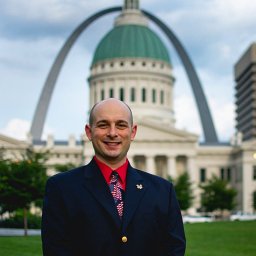 David R. Miller合作论文数Ctr Study Democrat Inst, Vanderbilt Univ2elena llaudet合作论文数Suffolk Univ2
 Lindsay Nielson合作论文数Bucknell Univ2Gayle Alberda合作论文数2
 Yu Ouyang合作论文数2
 Joshua Boston合作论文数Polit Sci, Bowling Green State Univ2
 Julie Wronski合作论文数Dept Polit Sci, Univ Mississippi2
 Katherine Haenschen合作论文数Dept Polit Sci, Northeastern Univ2Francisco Cantú合作论文数Dept Polit Sci, Univ Houston2
 Matthew R. Miles合作论文数Brigham Young University2
 Andrew Reeves合作论文数Washington University in St. Louis.2
 Nathaniel a Birkhead合作论文数2
 David C. Kimball合作论文数University of Missouri-St;Department of Political Science;Department of Political Science, University of Missouri-St2Frederick J. Boehmke合作论文数University of Iowa2Emily Beaulieu合作论文数University of Kentucky2Casey A. Klofstad合作论文数University of Miami2Corwin D. Smidt合作论文数2
 Michael Gilbert合作论文数Google Inc2
 David Darmofal合作论文数Department of Political Science;University of South Carolina;Department of Political Science, University of South Carolina2Charles A. Kromkowski合作论文数University of Virginia2
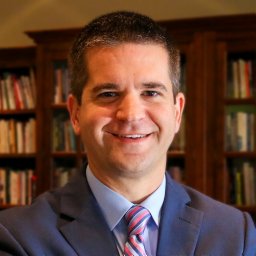 Charles J. Finocchiaro合作论文数Department of Political Science;University of South Carolina;Department of Political Science, University of South Carolina2David W. Nickerson合作论文数1tiffany davenport合作论文数1
 Arthur Simon合作论文数1Natalie Adona合作论文数1Farhan Kawsar合作论文数1Barry Burden合作论文数1
 Stephanie L. DeMora合作论文数Univ Calif Riverside1
 Matthew D. Atkinson合作论文数Dept Hist & Polit Sci, Long Beach City Coll1
 Michael Barber合作论文数Brigham Young Univ1
 Santiago Olivella合作论文数Department of Political Science, College of Arts and Sciences, The University of North Carolina at Chapel Hill1
 Vin Arceneaux合作论文数Department of Political Science, Temple University1
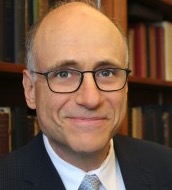 Donald P. Green合作论文数Department of Political Science, Columbia University1
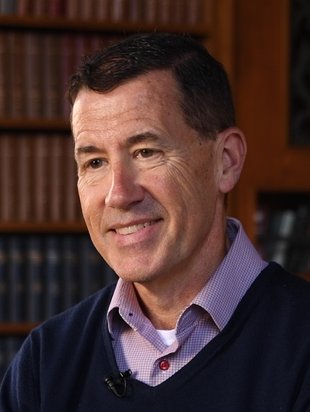 R. Michael Alvarez合作论文数Division of the Humanities and Social Sciences, California Institute of Technology1
 J. Quin Monson合作论文数Department of Political Science;Center for the Study of Elections and Democracy;Department of Political Science|Center for the Study of Elections and Democracy1
 Lisa A. Bryant合作论文数Department of Political Science, College of Social Sciences, University of New Mexico1Michael C. Herron合作论文数Northwestern University1Kenneth R. Mayer合作论文数Department of Political Science;University of Wisconsin-Madison;Department of Political Science, University of Wisconsin-Madison1




