Finely preserved fossil assemblages (lagerstätten) provide crucial insights into evolutionary innovations in deep time. We report an exceptionally preserved Early Triassic fossil assemblage, the Guiyang Biota, from the Daye Formation near Guiyang, South China. High-precision uranium-lead dating shows that the age of the Guiyang Biota is 250.83 +0.07/–0.06 million years ago. This is only 1.08 ± 0.08 million years after the severe Permian-Triassic mass extinction, and this assemblage therefore represents the oldest known Mesozoic lagerstätte found so far. The Guiyang Biota comprises at least 12 classes and 19 orders, including diverse fish fauna and malacostracans, revealing a trophically complex marine ecosystem. Therefore, this assemblage demonstrates the rapid rise of modern-type marine ecosystems after the Permian-Triassic mass extinction.
Knowledge of the early evolution of post-Palaeozoic crinoids mainly relies on the well-preserved and abundant mate-rial sampled in Triassic Konservat-Lagerstatten such as those from the Anisian Muschelkalk (Middle Triassic) of the Germanic Basin. These crinoid-bearing Lagerstatten have been central to understanding the rapid evolution and diver-sification of crinoids after the dramatic Permian/Triassic Boundary biological crisis that led the class to near-extinction. The Encrinida are the emblematic crinoids of the Triassic. They are mainly known from rich fossil deposits where their abundant ossicles are at the origin of the extensive crinoidal limestone beds of the German Upper Muschelkalk. So far, they were first represented in the Middle Triassic by the family Dadocrinidae and genus Dadocrinus. In the present work, a new species Dadocrinus montellonis sp. nov., is described based on a well-preserved, almost complete articulated spec-imen from the Spathian (Lower Triassic) of Nevada (USA). The new species differs from other species ofDadocrinus by its palaeobiogeographic position but also by its earlier stratigraphic occurrence and ancestral morphology. It represents the first reported occurrence of Dadocrinus outside the Germanic Basin prior to the Middle Triassic and also the oldest firm evidence of its presence in the Early Triassic (middle-late Spathian). This discovery sheds new light on the origin of post-Palaeozoic crinoids. It suggests a much wider distribution than commonly assumed for the genus Dadocrinus and implies that the first dadocrinids originated either in the Panthalassa or Tethys oceans, and then dispersed over long distances in a relative short period of time.
Mantis shrimps (Stomatopoda) are marine benthic predators well known for their raptorial claws that have, through time, evolved into unique structures with exceptional stunning, piercing or even dismembering functions. Known since the Carboniferous, Stomatopoda fossils have started providing insights into the rise of these predators, however, major gaps in the fossil record remain. In particular, neither Permian, nor Triassic specimens have ever been uncovered. Such a long hiatus strongly hinders our understanding of their evolutionary history, especially regarding the transition between Palaeozoic and Mesozoic forms. We here report two mantis shrimp specimens from the Early Triassic Paris Biota of Idaho, USA, formally described as Triassosculda ahyongi gen. et sp. nov., partially closing an over 100 myr gap in the fossil record. Despite being incomplete, these specimens present distinct and well-preserved diagnostic characters on the posterior trunk and the tail fan. The telson shows a triangular shape closely resembling that of Palaeozoic mantis shrimps. The broadness of both the pleon and anterior rim of the telson, however, differs from that of most Palaeozoic forms, which have an overall narrow telson, and is more similar to that of modern representatives of Stomatopoda. Additionally, the uropodal exopods of Triassosculda ahyongi gen. et sp. nov. presents a considerable number of movable spines that are common among Jurassic and more recent taxa, but that have never been reported among Palaeozoic Stomatopoda. These features further support and above all, allow temporal refinement of previously suggested evolutionary scenarios. In the latter, and as for other major clades of crustaceans, Stomatopoda are assumed to have evolved from a shrimp -like morphology with a narrow triangular telson to a more lobster -like one with a broad and rather square -shaped telson. Triassosculda ahyongi gen. et sp. nov. indicates this transition was underway by the Early Triassic.
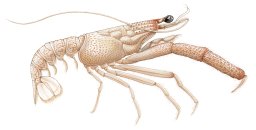
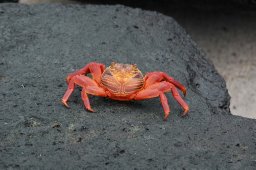
We describe here the early Spathian (Early Triassic) Paris Biota decapod fauna from the western USA basin. This fauna contains two taxa of Aegeridae (Dendobranchiata), namely Anisaeger longirostrus n. sp. and Aeger sp. that are the oldest known representatives of their family, thus extending its temporal range by 5 Myr back into the Early Triassic. This fauna also includes two representatives of Glypheida (Pleocyemata) with Litogaster turnbullensis and Pemphix krumenackeri n. sp., confirming for the former and extending for the latter the temporal ranges of their respective superfamilies back to the Early Triassic. Overall, the Paris Biota decapods are some of the oldest known representatives of Decapoda, filling in an important gap in the evolutionary history of this group, especially during the Triassic that marks the early diversification of this clade. Additionally, we compile and provide overviews for all known Triassic decapods, which leads to the revision of four species of Middle and Late Triassic Aegeridae, and to a revised family assignment of a Middle Triassic Glypheida. Based on this refined dataset, we also investigate decapod diversity throughout the Triassic. We show that the apparent increase in decapod taxonomic richness is probably driven by the heterogeneity of the fossil record and/or sampling effort, and that the decapod alpha diversity is actually relatively high as soon as the Early Triassic and remains rather stable throughout the Triassic. UUID: http://zoobank.org/0f435f27-1767-473d-955c-57fe869faa0f
Thylacocephala (Euarthropoda: Eucrustacea?) is a group of enigmatic fossil euarthropods, known from at least the Silurian to the Cretaceous. The Triassic is considered to be the period during which thylacocephalans were the most diversified with 17 species reported from 19 localities in nine countries. However, Thylacocephala were assumed to be rare during the Early Triassic until recent discoveries in Japan, Nevada and Idaho, U.S.A. Our study focuses on thylacocephalans from the Early Triassic, especially from Madagascar and Idaho. The revision of previously known taxa from Madagascar provides new important information. A new kind of ornamentation is reported for Paraostenia ambatolokobensis nov. comb., previously assigned to Ostenocaris ambatolokobensis. In addition, Ankitokazocaris acutirostris and Paraostenia ambatolokobensis are only the third and fourth thylacocephalan taxa for which possible cephalic appendages are described. New occurrences of Thylacocephala in Nevada and Idaho, U.S.A., lead to the description of one new taxon and to the reassignement of Parisicaris triassica to Ankitokazocaris triassica nov. comb. Those occurrences provide a significant contribution to the knowledge of Thylacocephala taxonomic diversity and geographic distribution during the Early Triassic. An important revision of Early Triassic thylacocephalan taxa from Japan and China is also performed, including Ankitokazocaris chaohuensis, Ankitokazocaris parva nov. comb., Ankitokazocaris utatsuensis nov. comb. and Paraostenia sp. Overall, the taxonomic diversity of Triassic thylacocephalans has likely been slightly over-estimated (17 species before, 15 now). However, the Triassic represents the richest period in terms of thylacocephalan-bearing outcrops (19 localities from nine countries).
The mass extinction characterizing the Permian/Triassic boundary (PTB; ~ 252 Ma) corresponds to a major faunal shift between the Palaeozoic and the Modern evolutionary fauna. The temporal, spatial, environmental, and ecological dynamics of the associated biotic recovery remain highly debated, partly due to the scarce, or poorly-known, Early Triassic fossil record. Recently, an exceptionally complex ecosystem dated from immediately after the Smithian/Spathian boundary (~ 3 myr after the PTB) was reported: the Paris Biota (Idaho, USA). However, the spatiotemporal representativeness of this unique assemblage remained questionable as it was hitherto only reported from a single site. Here we describe three new exceptionally diverse assemblages of the same age as the Paris Biota, and a fourth younger one. They are located in Idaho and Nevada, and are taxonomic subsets of the Paris Biota. We show that the latter covered a region-wide area and persisted at least partially throughout the Spathian. The presence of a well-established marine fauna such as the Paris Biota, as soon as the early Spathian, indicates that the post-PTB biotic recovery and the installation of complex ecosystems probably took place earlier than often assumed, at least at a regional scale.
Ammonite soft body remains are rarely preserved. One of the biggest enigmas is the morphology of the ammonite brachial crown that has, up till now, never been recovered. Recently, mysterious hook-like structures have been reported in multiple specimens of Scaphitidae, a large family of heteromorph Late Cretaceous ammonites. A previous examination of these structures revealed that they belong to the ammonites. Their nature, however, remained elusive. Here, we exploit tomographic data to study their arrangement in space in order to clarify this matter. After using topological data analyses and comparing their morphology, number, and distribution to other known cephalopod structures, in both extant and extinct taxa, we conclude that these hook-like structures represent part of the brachial crown armature. Therefore, it appears that there are at least three independent evolutionary origins of hooks: in belemnoids, oegospids, and now in ammonites. Finally, we propose for the first time a hypothetical reconstruction of an ammonite brachial crown.
Le Paris Biota (Spathien, Trias inférieur) : à l'aube des faunes marines modernes? La crise Permien/Trias (PT ; ~252 Ma) est sans aucun doute l'extinction de masse la plus sévère du Phanérozoïque avec la disparition de plus de 90 % des espèces marines, et environ 70 % des vertébrés continentaux. Cet événement a également marqué l'un des changements fauniques les plus importants du Phanérozoïque avec la transition des Faunes Evolutives Paléozoïques, aux Faunes Evolutives Modernes de Sepkoski. Cette transition n'a pas été instantanée mais plutôt progressive tout du long le Trias inférieur. Durant ce court intervalle, l'environnement resta très instable, entraînant une succession de crises biotiques de plus petite ampleur. Celles-ci sont souvent considérées comme ayant retardé la récupération biotique post-PT. La plus importante de ces crises biotiques s'est produite autour de la limite Smithian/Spathian (SS). Malheureusement, bien que le Trias inférieur soit relativement bien caractérisé environnementalement-parlant par de nombreux indicateurs biogéochimiques, ses archives fossiles sont quant à elles particulièrement pauvres, laissant encore de nombreuses questions ouvertes sur la récupération biotique post-PT. Dans un tel contexte, un assemblage fossile diversifié et complexe datant d'immédiatement après la limite SS a été récemment découvert dans le bassin ouest des États-Unis. Dénommé le Paris Biota, ses composants ouvrent une nouvelle fenêtre exceptionnelle sur les écosystèmes du Trias inférieur et sur l'essor des Faunes Evolutives Modernes. Composé de taxons Lazares aussi bien que de nouveaux taxons, jusqu’alors non répertoriés du Trias, cet assemblage reflète une communauté diversifiée et complexe peu de temps après la crise PT, et au lendemain de la crise de la limite SS. Le Paris Biota constitue également un écosystème pleinement fonctionnel et donc « rétabli », contrastant nettement avec d'autres faunes connues du Trias inférieur. Ainsi, les nombreuses nouvelles informations apportées par le Paris Biota alimentent le débat déjà très animé sur les modalités et le rythme de la récupération biotique post-PT.
 Arnaud Brayard合作论文数6
 Nicolas Olivier合作论文数Laboratory for Optics and Biosciences (LOB),, Institut Polytechnique de Paris4
 Gilles Escarguel合作论文数Laboratoire Paléoenvironnements and Paléobiosphère, Université Claude Bernard Lyon I4
 Sylvain Charbonnier合作论文数centre de recherche sur la paléobiodiversité et les paléoenvironnements, Muséum national d’histoire naturelle4
 Emmanuel Fara合作论文数4
 Kevin G Bylund合作论文数, Spanish Fork3
 Thomas Laville合作论文数3James F. Jenks合作论文数3
 Jeremie Bardin合作论文数Pierre-and-Marie-Curie University, Sorbonne University;National Museum of Natural History (MNHN), Paris, France;The National Center for Scientific Research (CNRS),;Pierre-and-Marie-Curie University, Sorbonne University2
 Jia Yan合作论文数1Paul Aubier合作论文数1
 Miao Luyi合作论文数1Cao Yiran (曹怡然)合作论文数1Shouyi Jiang合作论文数1
 Maxime Tremblin合作论文数1
 Ruoyu Bai合作论文数1
 L.J. Krumenacker合作论文数1
 Morgann Gwenva Perrot合作论文数GEOTOP, Université du Québec à Montréal1Xu Dai合作论文数China Univ Geosci, Sch Earth Sci, State Key Lab Biogeol & Environm Geol, Wuhan 430074, Peoples R China1Mingtao Li合作论文数1
 Zhiwei Yuan合作论文数1
 Xiaokang Liu合作论文数School of Earth Sciences, China University of Geosciences1
 Fengyu Wang合作论文数1
 Marie-Beatrice Forel合作论文数Museum Natl Hist Nat1
 Joshua H.F.L. Davies合作论文数Section of Earth and Environmental Science, Université de Genève, Genève 1205, Switzerland1Loïc Villier合作论文数1
 Wei Guo (郭伟)合作论文数中国地质大学(武汉)生物地质与环境地质国家重点实验室1
 Daoliang Chu (楚道亮)合作论文数School of Earth Sciences, China University of Geosciences1
 Huyue Song (宋虎跃)合作论文数State key Laboratory of Biogeology and Environmental Geology, China University of Geosciences, Wuhan1
 Li Tian合作论文数1Gueriau Pierre合作论文数MNHN, UPMC;IPANEMA;USR 3461 CNRS, MCC1
 Michael Hautmann合作论文数Paläontologisches Institut und Museum1
 GuangHui Xu (徐光辉)合作论文数Institute of Vertebrate Paleontology and Paleoanthropology, Chinese Academy of Sciences1
 Jacopo Dal Corso合作论文数1Christophe Durlet合作论文数1
 Isabelle Kruta合作论文数Div Paleontol, Amer Museum Nat Hist1Neil H. Landman合作论文数1
 Emmanuelle Vennin合作论文数UMR 5561, CNRS1Delphine Desmares合作论文数1Bruno Turcq合作论文数1
 Daniel A. Stephen合作论文数1
 Nicolas Goudemand合作论文数Paläontologisches Institut und Museum der Universität Zürich1
 Thomas Saucede合作论文数Laboratoire de Géologie des Chaînes Alpines, Université de Grenoble-I1
 Maria Ovtcharova合作论文数Section des Sciences de la Terre et de l'environnement, Université de Genève1
 Delphine Dissard合作论文数Alfred Wegener Institute for Polar and Marine Research1Klaus-Uwe Richter合作论文数1
 Carrie E. Schweitzer合作论文数Dept Geol, Kent State Univ Stark1
 Haijun Song (宋海军)合作论文数School of Earth Sciences, China University of Geosciences, Wuhan1Mathieu Thoury合作论文数Scientific Research Department, National Gallery of Art1




