Artificial intelligence (AI) and hardware (HW) are advancing at unprecedented rates, yet their trajectories have become inseparably intertwined. The global research community lacks a cohesive, long-term vision to strategically coordinate the development of AI and HW. This fragmentation constrains progress toward holistic, sustainable, and adaptive AI systems capable of learning, reasoning, and operating efficiently across cloud, edge, and physical environments. The future of AI depends not only on scaling intelligence, but on scaling efficiency, achieving exponential gains in intelligence per joule, rather than unbounded compute consumption. Addressing this grand challenge requires rethinking the entire computing stack. This vision paper lays out a 10-year roadmap for AI+HW co-design and co-development, spanning algorithms, architectures, systems, and sustainability. We articulate key insights that redefine scaling around energy efficiency, system-level integration, and cross-layer optimization. We identify key challenges and opportunities, candidly assess potential obstacles and pitfalls, and propose integrated solutions grounded in algorithmic innovation, hardware advances, and software abstraction. Looking ahead, we define what success means in 10 years: achieving a 1000x improvement in efficiency for AI training and inference; enabling energy-aware, self-optimizing systems that seamlessly span cloud, edge, and physical AI; democratizing access to advanced AI infrastructure; and embedding human-centric principles into the design of intelligent systems. Finally, we outline concrete action items for academia, industry, government, and the broader community, calling for coordinated national initiatives, shared infrastructure, workforce development, cross-agency collaboration, and sustained public-private partnerships to ensure that AI+HW co-design becomes a unifying long-term mission.
Robotics foundation models (RFMs) are making general-purpose robots increasingly practical for factory deployments. While RFM serving systems are central to this vision, existing systems are largely shaped by a single-robot, single-model assumption: inference is treated as an edge-computing problem handled by an on-robot or dedicated nearby GPU, and the serving objective is to minimize the latency of a single action model. In this paper, we propose ROSA, an RFM serving system for robot factories designed around three key principles. First, ROSA adopts shared GPU-pool serving, allowing a fleet of robots to access powerful server-class GPUs over the network in order to improve inference performance, battery duration, and GPU utilization. Second, ROSA provides a robotics-aware programming abstraction and system design that supports multi-model pipelines, per-task performance requirements, and failure handling. Third, ROSA uses factory-objective-driven scheduling to maximize SLO-qualified factory productivity rather than minimizing individual request latency. We implement ROSA on top of Ray Serve for distributed orchestration, with vLLM, PyTorch, and JAX as model-serving backends, and evaluate it on both real robots and synthetic large-scale workloads. The results show that ROSA improves factory productivity by up to 12.06x over conventional dedicated serving systems.
Top-k sparse attention makes long-context LLM decoding cheap to compute: each step reads only a few thousand selected KV entries rather than the full context. Serving systems, however, typically keep the entire KV cache in GPU HBM so that every position stays selectable, so a request's memory bill still grows with its full context length–decoding hits a capacity wall long before it runs out of compute, and a context whose KV cache exceeds HBM cannot be served at all. We present HiSparse, an exact, indexer-agnostic hierarchical KV cache for sparse-attention serving. HiSparse keeps each request's full KV history in host memory and bounds its decode footprint with a small, fixed-size GPU cache; a fused CUDA kernel resolves each layer's selections–hit detection, LRU replacement, and host-to-device fetches–inside the decode CUDA graph; and, for models that share selections across layers, exact layer-wise prefetching hides roughly half of the remaining miss overhead. Because only KV placement changes, model outputs are unchanged. HiSparse is merged into upstream SGLang and evaluated across three sparse-attention families (DSA, NSA, and Quest) on H200, B200, and GH200 platforms: it improves peak generation throughput by up to 4.7x on long-context workloads while preserving comparable per-token latency and reducing time-to-first-token at high load–and a no-IO oracle shows the resolution mechanism itself adds no measurable per-token cost, leaving host-device IO as the only price of bounded residency.
GPUs have become an increasingly attractive platform for accelerating analytical workloads due to their massive parallelism and high memory bandwidth. Recent studies show that in systems with fast CPU-GPU interconnects and networks, query processing within the GPU, rather than data movement, is the dominant bottleneck. This highlights the need for more efficient relational operators on GPUs than the widely used library, cuDF. While offering rich functionality, cuDF commits to a single, statically chosen implementation for most operators and barely uses runtime information about the data, limiting performance across diverse workloads and GPUs. We present Eiger, a high-performance library for GPU-based data analytics that improves single-GPU query processing through runtime workload adaptivity. Adaptivity in Eiger rests on two principles. First, Eiger provides multiple implementation variants and tunable knobs for most operators, covering not only joins and group-bys but also expensive yet often overlooked operations, such as expression evaluation, string processing, and multi-key sorting, for which it contributes new optimization techniques. Second, Eiger profiles intermediate data during query execution using lightweight statistics, such as value ranges and HyperLogLog++ sketches, and uses them to select implementations, tune knobs, and compress data on the fly, overcoming the limitations of traditional static query optimization. The breadth of operators and variants also enables a more comprehensive performance analysis, covering more operations and workloads than previous work. We evaluate Eiger with operator microbenchmarks on two GPU architectures and the complete TPC-H benchmark (up to scale factor 100). Across the 22 queries, Eiger reduces total runtime by up to 1.8x compared to the state-of-the-art cuDF library; for individual queries, Eiger achieves up to 6.1x better performance.
LLM-based coding agents can generate functionally correct GPU kernels, yet their performance remains far below hand-optimized libraries on critical computations such as matrix multiplication, attention, and Mixture-of-Experts (MoE). Peak GPU performance requires coordinated reasoning over tightly coupled optimizations, including tiling, shared-memory staging, software pipelining, and instruction scheduling, while existing agents rely on sparse pass/fail feedback, leaving them unable to diagnose global constraint violations. We present Argus, an agentic framework that addresses this through data-flow invariants: compile-time specifications encoding how data must be choreographed throughout kernel execution. Argus introduces a tile-based, Pythonic DSL exposing hardware instructions and compiler policies while hiding low-level representations. The DSL provides tag functions to propagate symbolic annotations through data and control flow, and tag assertions to enforce relational constraints at use sites. When violations occur, the compiler returns concrete counterexamples identifying the thread, data element, and program point, enabling dense, structured feedback for targeted fixes. Invariants are verified at compile time via abstract interpretation over a layout algebra and SMT solving, with zero runtime overhead. An in-context reinforcement learning planner learns to select optimizations and synthesize effective invariants, supported by a curated knowledge base of GPU optimization techniques. We evaluate Argus on the AMD MI300X GPU across GEMM, flash attention, and MoE kernels accounting for over 90
As large language models scale, training them requires thousands of GPUs over extended durations–making frequent failures an inevitable reality. While checkpointing remains the primary fault-tolerance mechanism, existing methods fall short when applied to Mixture-of-Experts (MoE) models. Due to their substantially larger training state, MoE models exacerbate checkpointing overheads, often causing costly stalls or prolonged recovery that severely degrade training efficiency. We present MoEtion, a distributed, in-memory checkpointing system tailored for MoE models. MoEtion is built on three key ideas: (1) sparse checkpointing, which incrementally snapshots subsets of experts across iterations to reduce overhead; (2) a sparse-to-dense checkpoint conversion mechanism that incrementally reconstructs consistent dense checkpoints from sparse snapshots; and (3) upstream logging of activations and gradients at pipeline-stage boundaries, enabling localized recovery without re-executing unaffected workers. Evaluations across diverse MoE models with up to 64 experts show that MoEtion reduces checkpointing overhead by up to 4× and recovery overhead by up to 31× compared to state-of-the-art approaches, sustaining consistently high Effective Training Time Ratios (ETTR) of up to ≥ 0.94 even under frequent failures (MTBF as low as 10 minutes) and delivering up to 8× overall training speedup, all without compromising synchronous training semantics. Overall, MoEtion offers a robust and scalable fault-tolerance solution for the next generation of sparsely activated models.
GPUs play an increasingly important role in modern software. However, the heterogeneous host-device execution model and expanding software stacks make GPU programs prone to memory-safety and concurrency bugs that evade static analysis. While fuzz-testing, combined with dynamic error checking tools, offers a plausible solution, it remains underutilized for GPUs. In this work, we identify three main obstacles limiting prior GPU fuzzing efforts: (1) kernel-level fuzzing leading to false positives, (2) lack of device-side coverage-guided feedback, and (3) incompatibility between coverage and sanitization tools. We present cuFuzz, the first CUDA-oriented fuzzer that makes GPU fuzzing practical by addressing these obstacles. cuFuzz uses whole program fuzzing to avoid false positives from independently fuzzing device-side kernels. It leverages NVBit to instrument device-side instructions and merges the resultant coverage with compiler-based host coverage. Finally, cuFuzz decouples sanitization from coverage collection by executing host- and device-side sanitizers in separate processes. cuFuzz uncovers 43 previously unknown bugs (19 in commercial libraries) across 14 CUDA programs, including illegal memory accesses, uninitialized reads, and data races. cuFuzz achieves significantly more discovered edges and unique inputs compared to baseline approaches, especially on closed-source targets. Moreover, we quantify the execution time overheads of the different cuFuzz components and add persistent-mode support to improve the overall fuzzing throughput. Our results demonstrate that cuFuzz is an effective and deployable addition to the GPU testing toolbox. cuFuzz is publicly available at https://github.com/NVlabs/cuFuzz/.
Mixture-of-Experts (MoE) has become a dominant architecture for scaling large language models (LLMs). However, the execution characteristics of MoE inference are changing rapidly and increasingly mismatch the assumptions underlying existing Processing-in-Memory (PIM) systems. Prior PIM systems for LLMs rely on static rules to offload memory-bound operations to PIM, without accounting for the combined effects of load imbalance and inter-GPU communication. Meanwhile, modern MoE models activate fewer experts out of increasingly many, creating a bimodal expert distribution: a small set of experts receives many tokens, while a long tail of experts receives only one or a few. We identify a trend in modern MoE models toward increasingly bimodal token-to-expert distributions, quantify the resulting disparity in arithmetic intensity across experts, and show that this disparity dramatically reduces the efficiency of state-of-the-art PIM systems for LLMs. To address this problem, we propose a scheduler for serving MoE models on multi-GPU systems with attached HBM-PIM stacks. Our scheduler partitions expert execution between GPU and PIM based on runtime token-to-expert distributions, while jointly considering interconnect overhead, memory bandwidth, GPU throughput, and PIM throughput. Moreover, we propose Sieve, a runtime framework that employs the scheduler to coordinate execution across GPUs and their attached HBM-PIM stacks. Sieve overlaps GPU computation, PIM computation, and intra- and inter-device communication while preserving cross-device dependencies induced by expert parallelism. Sieve is evaluated on our cycle-accurate simulator based on Ramulator 2.0. Compared to state-of-the-art PIM systems for MoE, Sieve improves both throughput and interactivity by 1.3x, 1.3x, and 1.6x on Qwen3.5-397B-A17B, GPT-OSS-120B, and Qwen3-30B-A3B, respectively.
Computer-use agents (CUA) automate tasks specified with natural language such as "order the cheapest item from Taco Bell" by generating sequences of calls to tools such as click, type, and scroll on a browser. Current implementations follow a sequential fetch-screenshot-execute loop where each iteration requires an LLM call, resulting in high latency and frequent errors from incorrect tool use. We present agent just-in-time (JIT) compilation, an alternative that compiles task descriptions directly into executable code that is free to include LLM calls, tool calls, and parallelization. Our approach comprises three components: (1) JIT-Planner, which generates multiple code plans, validates each against tool specifications, and selects the minimum-cost candidate; (2) JIT-Scheduler, which explores parallelization strategies via Monte Carlo cost estimation from learned latency distributions; and (3) an invariant-enforcing tool protocol specifying precondition and postcondition state requirements that reduce the rate of generating plans with incorrect tool use. Across 5 web applications, JIT-Planner achieves 10.4× speedup and +28% accuracy over Browser-Use, while JIT-Scheduler achieves 2.4× speedup and +9% accuracy over OpenAI CUA.
Performance modeling is central to hardware design and software optimization, yet constructing these models requires structured reasoning about computation, data reuse, storage, and movement. We introduce PerfReasoning, a benchmark that evaluates LLMs both as direct performance reasoners and as generators of analytical performance-model code. Given workload, architecture, and mapping specifications, models compare mappings and predict off-chip traffic and buffer requirements. The strongest closed-source models exceed 90
How fast could a deep-learning model run on target hardware, and how far is today's implementation from that limit? These questions are central to software, hardware, and algorithm optimizations. Speed-of-Light (SOL) analysis answers them by computing a workload's theoretical minimum execution time on a given architecture. Yet deriving SOL bounds remains manual, error-prone, and disconnected from rapid model development. To close this gap, we introduce SOLAR, a framework that automatically derives validated SOL bounds from PyTorch and JAX source code. SOLAR leverages both generative and deterministic components in its flow: an LLM frontend translates any source programs into an executable Affine Loop IR, validated by output comparison; a deterministic flow lifts the IR into an einsum graph; and an analytical backend computes unfused, fused, and cache-aware SOL bounds. SOLAR provides comprehensive operator and language coverage, produces validated bounds with zero observed SOL violations, and offers multi-fidelity analysis that tightens bounds and surfaces optimization insights. We evaluate SOLAR across KernelBench, JAX/Flax models, and robotics workloads. These experiments demonstrate four use cases: headroom analysis at multiple fidelity levels, identifying optimization opportunities, cross-platform exploration, and inverse-roofline hardware provisioning.
Optimizing CUDA code across multiple generations of GPU architectures is challenging, as achieving peak performance requires an extensive exploration of an increasingly complex, hardware-specific optimization space. Traditional compilers are constrained by fixed heuristics, whereas finetuning Large Language Models (LLMs) can be expensive. However, agentic workflows for CUDA code optimization have limited ability to aggregate knowledge from prior exploration, leading to biased sampling and suboptimal solutions. We propose KernelBlaster, a Memory-Augmented In-context Reinforcement Learning (MAIC-RL) framework designed to improve CUDA optimization search capabilities of LLM-based GPU coding agents. KernelBlaster enables agents to learn from experience and make systematically informed decisions on future tasks by accumulating knowledge into a retrievable Persistent CUDA Knowledge Base. We propose a novel profile-guided, textual-gradient-based agentic flow for CUDA generation and optimization to achieve high performance across generations of GPU architectures. KernelBlaster guides LLM agents to systematically explore high-potential optimization strategies beyond naive rewrites. Compared to the PyTorch baseline, our method achieves geometric mean speedups of 1.43x, 2.50x, and 1.50x on KernelBench Levels 1, 2, and 3, respectively. We release KernelBlaster as an open-source agentic framework, accompanied by a test harness, verification components, and a reproducible evaluation pipeline.
Recent methods expose intra-request parallelism in LLM outputs, allowing independent branches to decode concurrently. Existing serving systems execute these branches eagerly or under fixed caps. We show that both are brittle: eager admission inflates the shared decode step, degrading co-batched requests in serial stages, while conservative fixed caps forgo the throughput that motivated exposing branches in the first place. We call the excess step latency caused by admitted branches the branch externality and show that the safe width depends on batch composition, context lengths, and accumulated slack, all of which change continuously over a workload trace. We introduce TAPER, a per-step admission controller that treats extra branches as opportunistic work, admitted only when the predicted branch externality fits within the batch's current slack budget. Per-step regulation is practical because branch-level scheduling decouples compute from memory: branches share the request's prefix KV, so expanding or contracting width requires no memory reclamation. On Qwen3-32B, TAPER improves goodput by 1.77× over IRP-Off and by 1.48× over IRP-Eager, while maintaining over 95% SLO attainment.
Mixture-of-Experts (MoE) models have become a widely-adopted solution to continue scaling model sizes without a corresponding linear increase in compute. During MoE model training, each input token is dynamically routed to a subset of experts – sparsely-activated feed-forward networks – within each transformer layer. The distribution of tokens assigned to each expert varies widely and rapidly over the course of training. To handle the wide load imbalance across experts, current systems are forced to either drop tokens assigned to popular experts, degrading convergence, or frequently rebalance resources allocated to each expert based on popularity, incurring high state migration overheads. To break this performance-accuracy tradeoff, we introduce SYMI, an adaptive MoE training system. The key insight of SYMI is to decouple the placement of expert parameters from their large optimizer state. SYMI statically partitions the optimizer of each expert across all training nodes. Meanwhile, SYMI dynamically adjusts the placement of expert parameters by repurposing existing weight updates, avoiding migration overheads. In doing so, SYMI right-sizes the GPU resources allocated to each expert, on a per-iteration basis, with minimal overhead. Compared to state-of-the-art MoE training systems, DeepSpeed and FlexMoE, SYMI is able to achieve a 30.5
Datacenter GPUs have seen an order-of-magnitude increase in memory bandwidth with the adoption of newer generations of HBM. Meanwhile, GPU database systems are gaining traction, many building on cuDF, an open-source library of GPU relational operators. Previously, query performance was bound by memory bandwidth, but the increase in memory bandwidth has not resulted in a proportional speedup of cuDF kernels. To investigate why performance has not kept up, we built Valk, a performance analysis tool that combines data from multiple profilers. We profile cuDF running TPC-H in-memory on two extremes of hardware capability, the L4 and GH200 GPUs. The GH200 has 13.4× the memory bandwidth and 2.5× the instruction throughput of the L4, yet is only 5.2× faster in running TPC-H. Our analysis shows that when memory bandwidth is increased, kernels become compute bound. From our analysis, we make three recommendations to fully utilize the GPUs' potential for relational workloads when the memory wall is removed: kernels need to 1) make more efficient use of caches, and 2) increase occupancy and/or instruction level parallelism, and 3) execute fewer instructions per memory access.
Optimizing GPU kernels with LLM agents is an iterative process over a large design space. Every candidate must be generated, compiled, validated, and profiled, so fewer trials will save both runtime and cost. We make two key observations. First, the abstraction level that agents operate at is important. If it is too low, the LLM wastes reasoning on low-impact details. If it is too high, it may miss important optimization choices. Second, agents cannot easily tell when they reach the point of diminishing returns, wasting resources as they continue searching. These observations motivate two design principles to improve efficiency: (1) a compact domain-specific language (DSL) that can be learned in context and lets the model reason at a higher level while preserving important optimization levers, and (2) Speed-of-Light (SOL) guidance that uses first-principles performance bounds to steer and budget search. We implement these principles in μCUTLASS, a DSL with a compiler for CUTLASS-backed GPU kernels that covers kernel configuration, epilogue fusion, and multi-stage pipelines. We use SOL guidance to estimate headroom and guide optimization trials, deprioritize problems that are near SOL, and flag kernels that game the benchmark. On 59 KernelBench problems with the same iteration budgets, switching from generating low-level code to DSL code using GPT-5-mini turns a 0.40x geomean regression into a 1.27x speedup over PyTorch. Adding SOL-guided steering raises this to 1.56x. Across model tiers, μCUTLASS + SOL-guidance lets weaker models outperform stronger baseline agents at lower token cost. SOL-guided budgeting saves 19-43
As agentic AI systems become increasingly capable of generating and optimizing GPU kernels, progress is constrained by benchmarks that reward speedup over software baselines rather than proximity to hardware-efficient execution. We present SOL-ExecBench, a benchmark of 235 CUDA kernel optimization problems extracted from 124 production and emerging AI models spanning language, diffusion, vision, audio, video, and hybrid architectures, targeting NVIDIA Blackwell GPUs. The benchmark covers forward and backward workloads across BF16, FP8, and NVFP4, including kernels whose best performance is expected to rely on Blackwell-specific capabilities. Unlike prior benchmarks that evaluate kernels primarily relative to software implementations, SOL-ExecBench measures performance against analytically derived Speed-of-Light (SOL) bounds computed by SOLAR, our pipeline for deriving hardware-grounded SOL bounds, yielding a fixed target for hardware-efficient optimization. We report a SOL Score that quantifies how much of the gap between a release-defined scoring baseline and the hardware SOL bound a candidate kernel closes. To support robust evaluation of agentic optimizers, we additionally provide a sandboxed harness with GPU clock locking, L2 cache clearing, isolated subprocess execution, and static analysis based checks against common reward-hacking strategies. SOL-ExecBench reframes GPU kernel benchmarking from beating a mutable software baseline to closing the remaining gap to hardware Speed-of-Light.
Vision-Language-Action (VLA) models have recently demonstrated impressive capabilities across various embodied AI tasks. While deploying VLA models on real-world robots imposes strict real-time inference constraints, the inference performance landscape of VLA remains poorly understood due to the large combinatorial space of model architectures and inference systems. In this paper, we ask a fundamental research question: How should we design future VLA models and systems to support real-time inference? To address this question, we first introduce VLA-Perf, an analytical performance model that can analyze inference performance for arbitrary combinations of VLA models and inference systems. Using VLA-Perf, we conduct the first systematic study of the VLA inference performance landscape. From a model-design perspective, we examine how inference performance is affected by model scaling, model architectural choices, long-context video inputs, asynchronous inference, and dual-system model pipelines. From the deployment perspective, we analyze where VLA inference should be executed – on-device, on edge servers, or in the cloud – and how hardware capability and network performance jointly determine end-to-end latency. By distilling 15 key takeaways from our comprehensive evaluation, we hope this work can provide practical guidance for the design of future VLA models and inference systems.
The input data pipeline is an essential component of each machine learning (ML) training job. It is responsible for reading massive amounts of training data, processing batches of samples using complex transformations, and loading them onto training nodes at low latency and high throughput. Performant input data systems are becoming increasingly critical, driven by skyrocketing data volumes and training throughput demands. Unfortunately, current input data systems cannot fully leverage key performance optimizations, resulting in hugely inefficient infrastructures that require significant resources - or worse - underutilize expensive accelerators. To address these demands, we present cedar, an optimized and unified programming framework for ML input data pipelines. cedar allows users to define input data pipelines using composable operators that support arbitrary ML frameworks and libraries. cedar introduces an extensible optimizer that systematically applies a complex combination of optimizations (e.g., offloading, caching, prefetching, fusion, and reordering). It orchestrates processing across a customizable set of local and distributed compute resources in order to improve processing performance and efficiency, all without user input. Across eight pipelines, cedar improves performance by up to 1.87x to 10.65x compared to state-of-the-art input data systems.
In our VLDB 2022 publication (Skiadopoulos, 2022), we presented the rationale for a DBMS-oriented operating system and reported a series of experiments supporting this approach. This paper provides a comprehensive update on the project, which evolved as a research initiative for two additional years before transitioning into a venture-capital-backed startup over the past 18 months. During this period, we developed a provenance system and a programming environment integrating Python and TypeScript, accompanied by detailed performance evaluations. Furthermore, we outline the modifications made to the research prototype to support the demands of commercialization.
 Kunle Olukotun合作论文数Department of Electrical Engineering, Stanford University;Computer Science Department, School of Engineering, Stanford University;SambaNova Systems;Migo46
 Christina Delimitrou合作论文数Department of Electrical Engineering and Computer Science, Massachusetts Institute of Technology27
 Brian D. Carlstrom合作论文数Computer Science at Stanford University22
 Jaewoong Chung合作论文数Atto Research;School of Computing, Korea Advanced Institute of Science and Technology19
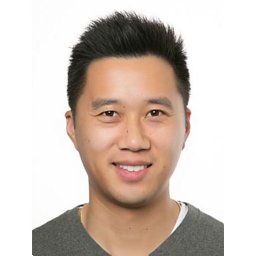 Chi Cao Minh合作论文数Computer Systems Laboratory;Stanford University;Computer Systems Laboratory, Stanford University19
 Mark Horowitz合作论文数Department of Electrical Engineering, Stanford University;Department of Computer Science, School of Engineering, Stanford University17
 Austen McDonald合作论文数Meta17
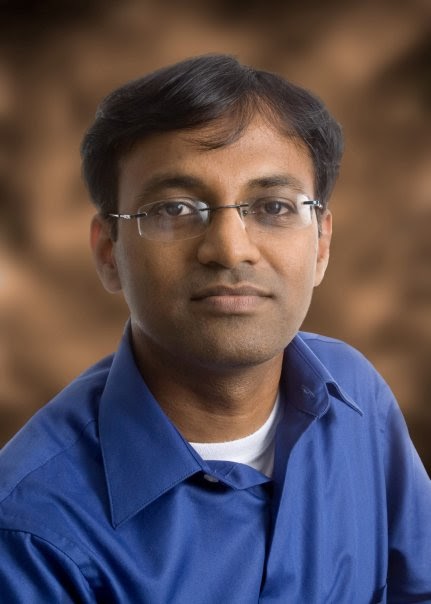 Parthasarathy Ranganathan合作论文数Google Research16
 Ana Klimovic合作论文数Efficient Architectures and Systems Lab, ETH Zurich;Department of Computer Science, ETH Zurich15
 Kostis Kaffes合作论文数Stanford University14
 Daniel Sanchez合作论文数Electrical Engineering & Computer Science Department, School of Engineering, Massachusetts Institute of Technology14
 Hassan Chafi合作论文数Oracle Labs14
 Mark Zhao合作论文数College of Engineering and Applied Science, University of Colorado Boulder13
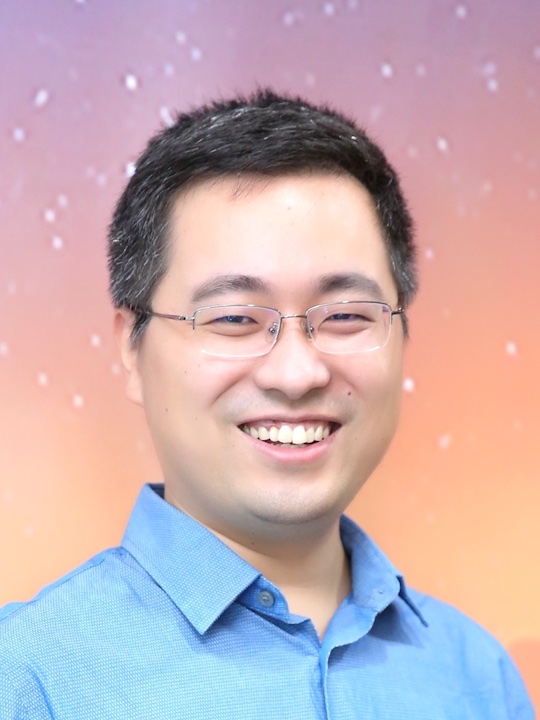 Mingyu Gao (高鸣宇)合作论文数Institute for Interdisciplinary Information Sciences, Tsinghua University13
 Matei Zaharia合作论文数Department of Electrical Engineering and Computer Sciences, University of California, Berkeley;Databricks13
 Qian Li合作论文数Wuhan Institute of Technology12
 Neeraja J. Yadwadkar合作论文数Department of Electrical and Computer Engineering, Cockrell School of Engineering, The University of Texas at Austin12
 Francisco Romero合作论文数Stanford Univ, Stanford, CA 94305 USA11
 Heiner Litz合作论文数Computer Science & Engineering Department, Baskin School of Engineering, University of California, Santa Cruz;ARM11
 Hari Kannan合作论文数Pure Storage10
 David A. Patterson合作论文数Department of Electrical Engineering and Computer Sciences, University of California, Berkeley;Google10
 Lance Hammond合作论文数fields of computer architecture and digital VLSI design10Jacob Leverich合作论文数Stanford University10
 Woongki Baek合作论文数Stanford University9
 Nathan Bronson合作论文数Stanford University9Michael Dalton合作论文数8
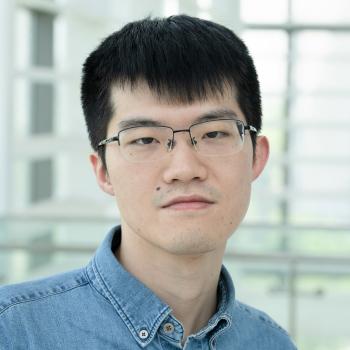 Zhiqiang Xie合作论文数Department of Computer Science, Stanford University8Jared Casper合作论文数NVIDIA8
 Swapnil Gandhi合作论文数Stanford University7Jack Tigar Humphries合作论文数Stanford University7
 Philip Levis合作论文数Department of Electrical Engineering, Stanford University;Department of Computer Science, Stanford University;Kumu Networks7
 Sriram Sankar合作论文数Microsoft Corporation7
 Maria A. Kazandjieva合作论文数Graft7
 Adam Belay合作论文数Computer Science & Artificial Intelligence Laboratory, Department of Electrical Engineering and Computer Science, Schwarzman College of Computing, Massachusetts Institute of Technology7
 Michael Stonebraker合作论文数Department of Electrical Engineering and Computer Sciences, University of California, Berkeley7
 Edouard Bugnion合作论文数School of Computer and Communication Sciences, Ecole Polytechnique Federale de Lausanne7
 Brandon Heller合作论文数Forward Networks7Athinagoras Skiadopoulos合作论文数6
 Katherine Yelick合作论文数Department of Electrical Engineering and Computer Sciences, University of California, Berkeley;Lawrence Berkeley National Laboratory6Rehan Hameed合作论文数Stanford University6
 Mark Oskin合作论文数Department of Electrical & Computer Engineering, Paul G. Allen School of Computer Science and Engineering, University of Washington;PetraVM6
 Kushagra Vaid合作论文数Microsoft Corporation6
 Carole-Jean Wu合作论文数Meta6
 Mike Cafarella合作论文数Computer Science & Artificial Intelligence Laboratory, Schwarzman College of Computing, Massachusetts Institute of Technology6
 David Mazières合作论文数Computer Science Department, Stanford University6Vicky Wong合作论文数5
 Grant Ayers合作论文数Stanford Univ, Stanford, CA 94305 USA5
 Yawen Wang合作论文数Google5
 David Lo合作论文数Google5