Hard negative sampling improves recommendation performance by accelerating convergence and sharpening the decision boundary. However, most existing methods rely on heuristic strategies, selecting negatives from a fixed candidate pool. Lacking semantic awareness, these methods often misclassify items that align with users' semantic interests as negatives, resulting in False Hard Negative Samples (FHNS). Such FHNS inject noisy supervision and hinder the model's optimal performance. To address this challenge, we propose HNLMRec, a generative semantic negative sampling framework. Leveraging the semantic reasoning capabilities of Large Language Models (LLMs), HNLMRec directly generates negative samples that are behaviorally distinct yet semantically relevant with respect to user preferences. Furthermore, we integrate collaborative filtering signals into the LLM via supervised fine-tuning, guiding the model to synthesize more reliable and informative hard negatives. Extensive experiments on multiple real-world datasets demonstrate that HNLMRec significantly outperforms traditional methods and LLM-enhanced baselines, while effectively mitigating popularity bias and data sparsity, thereby improving generalization.
Graph Contrastive Learning (GCL) leverages data augmentation techniques to produce contrasting views, enhancing the accuracy of recommendation systems through learning the consistency between contrastive views. However, existing augmentation methods, such as directly perturbing interaction graph (e.g., node/edge dropout), may interfere with the original connections and generate poor contrasting views, resulting in sub-optimal performance. In this article, we define the views that share only a small amount of information with the original graph due to poor data augmentation as noisy views (i.e., the last 20% of the views with a cosine similarity value less than 0.1 to the original view). We demonstrate through detailed experiments that noisy views will significantly degrade recommendation performance. Further, we propose a model-agnostic Symmetric Graph Contrastive Learning (SGCL) method with theoretical guarantees to address this issue. Specifically, we introduce symmetry theory into graph contrastive learning, based on which we propose a symmetric form and contrast loss resistant to noisy interference. We provide theoretical proof that our proposed SGCL method has a high tolerance to noisy views. Further demonstration is given by conducting extensive experiments on three real-world datasets. The experimental results demonstrate that our approach substantially increases recommendation accuracy, with relative improvements reaching as high as 12.25% over nine other competing models. These results highlight the efficacy of our method. The code is available at https://github.com/user683/SGCL.
Heuristic negative sampling enhances recommendation performance by selecting negative samples of varying hardness levels from predefined candidate pools to guide the model toward learning more accurate decision boundaries. However, our empirical and theoretical analyses reveal that unobserved environmental confounders (e.g., exposure or popularity biases) in candidate pools may cause heuristic sampling methods to introduce false hard negatives (FHNS). These misleading samples can encourage the model to learn spurious correlations induced by such confounders, ultimately compromising its generalization ability under distribution shifts. To address this issue, we propose a novel method named Causal Negative Sampling via Diffusion (CNSDiff). By synthesizing negative samples in the latent space via a conditional diffusion process, CNSDiff avoids the bias introduced by predefined candidate pools and thus reduces the likelihood of generating FHNS. Moreover, it incorporates a causal regularization term to explicitly mitigate the influence of environmental confounders during the negative sampling process, leading to robust negatives that promote out-of-distribution (OOD) generalization. Comprehensive experiments under four representative distribution shift scenarios demonstrate that CNSDiff achieves an average improvement of 13.96
Diffusion models (DMs) have emerged as the new state-of-the-art family of deep generative models. To gain deeper insights into the limitations of diffusion models in recommender systems, we investigate the fundamental structural disparities between images and items. Consequently, items often exhibit distinct anisotropic and directional structures that are less prevalent in images. However, the traditional forward diffusion process continuously adds isotropic Gaussian noise, causing anisotropic signals to degrade into noise, which impairs the semantically meaningful representations in recommender systems. Inspired by the advancements in hyperbolic spaces, we propose a novel \textbf{H}yperbolic \textbf{D}iffusion \textbf{R}ecommender \textbf{M}odel (named HDRM). Unlike existing directional diffusion methods based on Euclidean space, the intrinsic non-Euclidean structure of hyperbolic space makes it particularly well-adapted for handling anisotropic diffusion processes. In particular, we begin by constructing a geometrically latent space grounded in hyperbolic geometry, incorporating interpretability measures to define the latent anisotropic diffusion processes. Subsequently, we propose a novel hyperbolic latent diffusion process specifically tailored for users and items. Drawing upon the natural geometric attributes of hyperbolic spaces, we restrict both radial and angular components to facilitate directional diffusion propagation, thereby ensuring the preservation of the original topological structure in user-item interaction graphs. Extensive experiments on three benchmark datasets demonstrate the effectiveness of HDRM. Our code is available at \url{https://anonymous.4open.science/status/HDRM-ECFA}.
Recently, there has been an emergence of self-supervised recommendation methods that integrate knowledge graphs. Upon conducting a comprehensive review of contrastive learning (CL) in recommender systems, we conclude that existing methods solely focus on data view generation (the first phase) while neglecting the equally pivotal data view alignment (the second phase). However, due to the complexity and variability of real-world graph data, regardless of the graph augmentation strategy employed, it may be unrealistic to expect all entities to benefit from CL. In this article, we propose a Hierarchical Enhanced Knowledge-Aware Contrastive Learning (HEK-CL) method for recommendation. Overall, we aim to hierarchically carry out enhancement strategies in both the first and second phases of knowledge-aware CL: (1) From the perspective of enhancing data view generation, we focus on combining non-Euclidean representation learning with graph denoising modules. Owing to the unified space's ability to learn the ideal curvature from data distributions, the quality of embeddings for graph data has seen enhancements; (2) From the perspective of enhancing data view alignment, we propose a hyperbolic robust contrastive loss, named HRCL. Through rigorous theoretical analysis and experiments, we demonstrate that HRCL provides a more balanced and equitable training process for all entities than InfoNCE. Numerous experiments on the three real-world datasets show that our HEK-CL outperforms state-of-the-art baselines.
Exploiting the hierarchical dependence behind user behaviour is critical for click-through rate (CRT) prediction in recommender systems. Existing methods apply attention mechanisms to obtain the weights of items; however, the authors argue that deterministic attention mechanisms cannot capture the hierarchical dependence between user behaviours because they treat each user behaviour as an independent individual and cannot accurately express users' flexible and changeable interests. To tackle this issue, the authors introduce the Bayesian attention to the CTR prediction model, which treats attention weights as data-dependent local random variables and learns their distribution by approximating their posterior distribution. Specifically, the prior knowledge is constructed into the attention weight distribution, and then the posterior inference is utilised to capture the implicit and flexible user intentions. Extensive experiments on public datasets demonstrate that our algorithm outperforms state-of-the-art algorithms. Empirical evidence shows that random attention weights can predict user intentions better than deterministic ones.
Popularity bias is a massive challenge for autoencoder-based models, which decreases the level of personalization and hurts the fairness of recommendations. User reviews reflect their preferences and help mitigate bias or unfairness in the recommendation. However, most existing works typically incorporate user (item) reviews into a long document and then use the same module to process the document in parallel. Actually, the set of user reviews is completely different from the set of item reviews. User reviews are heterogeneous in that they reflect a variety of items purchased by users, while item reviews are only related to the item itself and are thus typically homogeneous. In this article, a novel asymmetric attention network fused with autoencoders is proposed, which jointly learns representations from the user and item reviews and implicit feedback to perform recommendations. Specifically, we design an asymmetric attentive module to capture rich representations from user and item reviews, respectively, which solves data sparsity and explainable problems. Furthermore, to further address popularity bias, we apply a noise-contrastive estimation objective to learn high-quality “de-popularity” embedding via the decoder structure. A series of extensive experiments are conducted on four benchmark datasets to show that leveraging user review information can eliminate popularity bias and improve performance compared to various state-of-the-art recommendation techniques.
The autoencoder network has been proven to be one of the powerful techniques for recommender systems. Currently, the ways of utilizing autoencoder in recommender systems can be divided into two categories: modeling user-item interaction rely solely on autoencoder and integrating autoencoder with other models. Most existing methods based on autoencoder assume that all features of model's input are equally the same contributing to the final prediction, which can be regarded as attention weight vectors; however, this hypothesis is not reliable, especially when exploring users' interaction frequency with different items. Moreover, combining autoencoder with traditional methods, the usual strategy is to leverage a linear kernel of the inner product of user and item vectors to predict user preferences, which will lead to insufficient expression power and hurt the performance of recommendation when facing data sparsity and cold start problems. To tackle the above two problems, we propose a novel hybrid deep learning model for top-n recommendation, called attentive stacked sparse autoencoder (A-SAERec), which can capture attention weights vector of a user for items, and then combined with the neural matrix factorization to improve the performance of recommender model. Extensive experiments on four real-world datasets show that our A-SAERec algorithm has significant improvements over state-of-the-art algorithms.
Currently, graph convolutional networks (GCN) have achieved significant progress in recommender systems, due to its remarkable capability on representation learning and the ability to integrate complex auxiliary information. However, the graph convolution operation is prone to cause over-smoothing due to the use of the graph Laplacian operator, so that the node embeddings become very similar after the multi-layer graph convolution, which leads to a decrease in recommendation performance. The recently proposed model based on simplified GCN can relieve this issue to a certain extent; however, they still only design the model from the viewpoint of GCN. Inspired by the recent developments of label propagation algorithms (LPA), in this paper, we propose a new recommender model that unifies graph convolutional networks and label propagation algorithms. Specifically, we utilize the GCN to build a basic recommendation prediction model, and unify the LPA to provide regularization of training edge weights, which has been proven to effectively alleviate the over-smoothing problem. In addition, we introduce an attention network to capture the attention weight of each user-item pair, which takes into account the fact that users attach different degrees of importance to various relationships of items. Extensive experiments on three real-world datasets demonstrate that the proposed algorithm has a significant improvement over other state-of-the-art recommendation algorithms.
Currently, recommender systems based on knowledge graph (KG) consider various aspects of the item to provide accurate recommendations. Many studies have shown that exploiting the rich semantics of KG is effective to improve recommendation performance, and can solve data sparsity and provide interpretable recommendation. However, most existing KG-based recommender systems ignore the fact that users attach different degrees of importance to various relationships of items. To tackle this problem, we propose a knowledge graph recommender model based on adaptive relational attention (KGARA), which can capture the attention of various users to different relationships of items. Specifically, we introduce the relation embedding to model the semantic information of KG, and capture the user’s attention on each relation of the targeted item with the attention mechanism. In addition, we introduce receptive fields to select neighbor nodes of the target node in the KG, which greatly alleviate computational burden. Extensive experiments on three real-world datasets demonstrate that the proposed algorithm has significant improvements over other state-of-the-art algorithms.
Currently, collaborative filtering technology has been widely used in personalized recommender systems. The problem of data sparsity is a severe challenge faced by traditional collaborative filtering methods based on matrix factorization techniques. A lot of improved collaborative filtering methods have been proposed to alleviate the data sparsity problem; However, due to the sparsity of the user rating matrix, the latent factor learned by these improved methods may be not efficient. In this paper, we propose a novel recommendation algorithm named SSAERec by integrating stacked sparse auto-encoder into matrix factorization for rating prediction, which can learn effective representation from user-item rating matrix. Extensive experiments on three real-world datasets demonstrate the proposed method outperforms other baselines in the rating prediction task.
 Meng Yuan合作论文数Institute of Artificial Intelligence, Beihang University8
 Yihao Zhang (张宜浩)合作论文数重庆大学软件学院6
 Mian Chen合作论文数5Jianzhe Zhao (赵健晢)合作论文数3
 Xiao-Yang Liu合作论文数Department of Electrical Engineering, Columbia University3
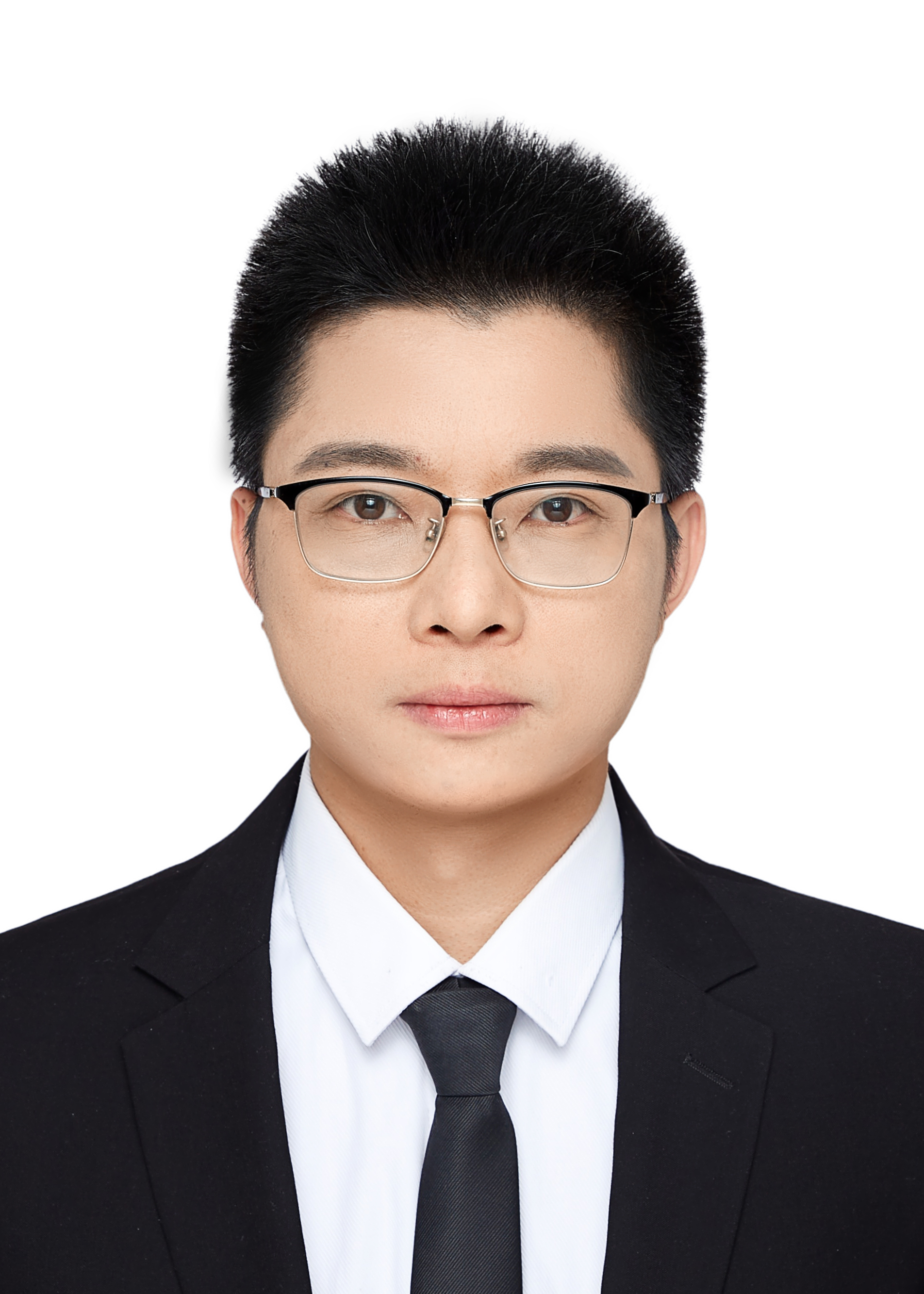 Guibing Guo (郭贵冰)合作论文数Software College, Northeastern University3
 Enneng Yang合作论文数Sun Yat-sen University2
 Fuzhen Zhuang (庄福振)合作论文数Research Center for Intelligent Perception and Cognition, Institute of Artificial Intelligence, Beihang University2
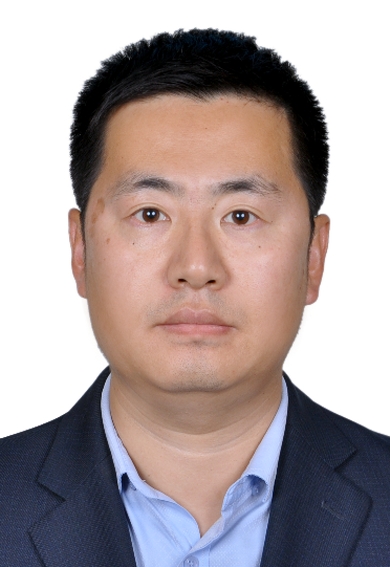 Deqing Wang (王德庆)合作论文数School of Computer Science and Engineering, Beihang University2Yutian Xiao合作论文数1
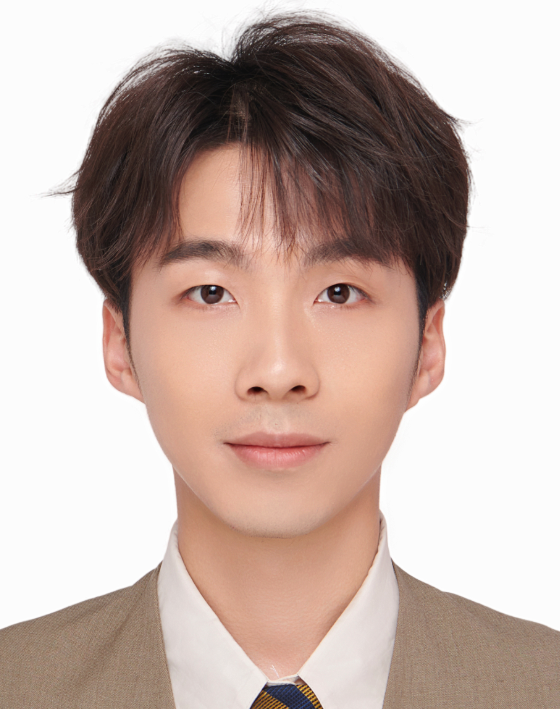 Yizhou Dang (党翌洲)合作论文数Software College, Northeastern University1Yuliang Liang合作论文数1Yuting Liu合作论文数1Weiwen Liao合作论文数1Ruizhen Chen合作论文数1
 Zhao Zhang (张钊)合作论文数State Key Laboratory of Complex and Critical Software Environment, School of Computer Science and Engineering, Beihang University1
 Wei Zhou合作论文数1
 Zhu Sun (孙竹)合作论文数School of Computing, Macquarie University;Centre for Frontier AI Research, Agency for Science, Technology and Research;Institute of High Performance Computing, Agency for Science, Technology and Research1
 Wei Chen (陈卫)合作论文数1
 Xingwei Wang (王兴伟)合作论文数School of Computer Science and Engineering, Northeastern University1
 Rui Liu合作论文数1




