QASMTrans is a lightweight, high-performance, C++-based quantum compiler that bridges abstract quantum algorithms to device-level control and is designed for just-in-time (JIT) deployment on QPU testbeds with tightly integrated FPGAs or CPUs. We focus on achieving fast transpilation times on circuits of interest, we find more than 100x faster compilation than Qiskit in some circuits with similar circuit quality, enabling transpilation of large, high-depth circuits in seconds. Unlike existing tools, QASMTrans offers end-to-end device-pulse compilation and direct quantum control integration with QICK, closing the gap between logical circuits and hardware control enabling closed-loop optimization. QASMTrans supports latency-aware Application-tailored Gate Sets (AGS) at the pulse level, identifying high-impact gate sequences on the circuit critical path and synthesizing optimized pulse schedules using pre-defined robust circuit ansatz. Validated through integrated QuTiP pulse-level simulation, this is found to significantly reduce execution latency and can improve final-state fidelity by up to 12
Dynamical System Units (DSUs), leveraging CMOScompatible electronics and natural energy evolution, represent a promising post-Moore computing paradigm with potentially 105 energy-efficiency gains. However, the absence of standardized abstraction layers severely limits their programmability and broad adoption. In this paper, we present a fundamental effort to establish the first Instruction Set Architecture (ISA) for DSUs. This is achieved by comprehensively analyzing DSU execution patterns and fundamental functional operations across various application scenarios. Our analysis identifies a unified loadlock-evolve-store execution model. Based on this model, we propose a 9-instruction ISA that provides the desired abstraction and flexibility. Building on this ISA, we propose a supporting microarchitecture for DSU control. In particular, this work introduces a new group-based execution model and a two-level masking scheme to support effective resource sharing and unique execution patterns. By providing the ISA and the supporting microarchitecture, this work lays the foundation for constructing a software stack for DSUs.
Amidst the rapid advancement of camera-based autonomous driving technology, effectiveness is often prioritized with limited attention to computational efficiency. To address this issue, this paper introduces LRHPerception, a real-time monocular perception package for autonomous driving that uses single-view camera video to interpret the surrounding environment. The proposed system combines the computational efficiency of end-to-end learning with the rich representational detail of local mapping methodologies. With significant improvements in object tracking and prediction, road segmentation, and depth estimation integrated into a unified framework, LRHPerception processes monocular image data into a five-channel tensor consisting of RGB, road segmentation, and pixel-level depth estimation, augmented with object detection and trajectory prediction. Experimental results demonstrate strong performance, achieving real-time processing at 29 FPS on a single GPU, representing a 555
The growing integration of Virtual and Augmented Reality (VR/AR) in various fields makes fast 3D scene reconstruction increasingly important. Although generalizable 3D synthesis methods offer promising performance in generating 3D scenes from multiple viewpoints, they remain limited by slow adaptation to new scene categories, which can take minutes. In this paper, we introduce PT-GS, a novel approach based on prompt tuning to enable rapid domain transfer in generalizable 3D synthesis models. By tuning only 3.18% extra parameters and keeping the core network frozen, we achieve rapid domain transfer with significantly reduced training time. To further boost efficiency, we incorporate two prompt-side mechanisms: (i) Token Ranking, which selectively retains most relevant tokens to suppress redundant pre-trained information, and (ii) Runtime Token Filtering, which prunes low-contribution tokens on the fly. Experiments show that our method achieves up to 20.3× speedup in cross-domain adaptation and reaches over 29 dB PSNR within 10 seconds. Meanwhile, it reduces memory usage by up to 2.1× and adaptation energy by up to 7.0× compared with full fine-tuning, paving the way toward eventual real-time AR/VR applications.
The training of large language models (LLMs) faces significant computational cost challenges, limiting their scalability toward artificial general intelligence (AGI) and broader adoption. With model sizes doubling approximately every 3.4 months and training costs escalating from 64 million USD for GPT-4 in 2020 to 191 million USD for Gemini Ultra in 2023, the economic burden has become unsustainable. While techniques such as quantization offer incremental improvements, they fail to address the fundamental computational bottleneck. In this work, we introduce DS-LLM, a novel framework that leverages dynamical system (DS)-based machines, which exploit Natural Annealing to rapidly converge to minimal energy states, yielding substantial efficiency gains. Unlike traditional methods, DS-LLM maps LLM components to optimization problems solvable via Hamiltonian configurations and utilizes continuous electric current flow in DS-machines for hardware-native gradient descent during training. We mathematically demonstrate the equivalence between conventional LLMs and DS-LLMs and present a method for transforming a trained LLM into a DS-LLM. Experimental evaluations across multiple model sizes demonstrate orders-of-magnitude improvements in speed and energy efficiency for both training and inference while maintaining consistent accuracy. Additionally, we provide an in-depth analysis of the challenges and potential solutions associated with this emerging computing paradigm, aiming to lay a solid foundation for future research.
Graph learning on dynamical systems has recently surfaced as an emerging research domain. By leveraging a novel electronic Dynamical System (DS), various graph learning challenges have been effectively tackled through a rapid, spontaneous natural annealing process. This method has attracted increasing attention due to its orders-of-magnitude improvements in speed and energy efficiency compared to traditional Graph Neural Network (GNN) approaches for inference tasks. However, (1) the current DS hardware only supports inference, missing its native solution for training; while relying on conventional hardware is likely more expensive than GNNs. (2) The current DS architecture only allows linear interactions among its nodes, limiting training accuracy. In thiswork, we present aDynamical-System Training-Processing Unit (DS-TPU) developed through algorithm-architecture co-design to tackle the two major challenges: (1) An on-device lifelong learning mechanism that leverages feedback electric current as the loss function in response to the observed training data, allowing electron-speed refinement on the present model parameters. (2) A nonlinear DS node interaction mechanism constructed from Chebyshev polynomials to significantly improve the compatibility between the DS hardware and the embedded relation of graph data. Extensive evaluations using six real-world graph learning applications demonstrate that for accuracy, DS-TPU achieves 10.8% MAE reduction over the best results of five widely used GNNs. In terms of training performance, the 5-Watt DS-TPU architecture achieves on-average 810x speedup over the offline training for DS on an Nvidia A100 GPU, and 640x over GNN training on the same GPU. In terms of inference performance, DS-TPU achieves 2548x over the A100 GPU and 115x over the best state-of-the-art GNN accelerators.
Time-Independent Differential Equations (TIDEs) are central to modeling equilibrium behavior across a wide range of scientific and engineering domains. Conventional numerical solvers offer reliable solutions but incur significant computational costs due to fine-grained discretization and iterative procedures. Machine learning-based approaches address this by replacing iterative solving with one-time inference; however, they inevitably sacrifice accuracy and incur even higher costs once the training of sophisticated models is taken into account. Consequently, designing a TIDE solver that achieves high accuracy, broad applicability, and exceptional computational efficiency remains a fundamental challenge. In this paper, we propose DS-TIDE, a novel hardware solver that is inspired by, and subsequently leverages, the intrinsic connection between Dynamical Systems (DS) and Differential Equations (DE) to efficiently and accurately solve TIDEs. DS-TIDE employs a CMOS-compatible DS-based processor, whose physical states evolve under carefully designed DE-driven dynamics and naturally converge to equilibria - the solutions of the target TIDE within +/- 1 mu s To enhance expressivity, DS-TIDE incorporates Heterogeneous Dynamics with Temporal Layering (HDTL), which solves TIDEs through a three-stage DS evolution - conditioning, solving, and decoding - each governed by specialized dynamics. The entire evolution process is analogous to an infinitely deep neural network temporally unrolled, offering the system the capability of representing complex equations. Furthermore, DS-TIDE is equipped with an on-device DS-DE alignment mechanism that dynamically adapts intrinsic hardware dynamics within milliseconds, effectively aligning the system's dynamics to diverse target DEs. Experimental results across TIDEs from a wide range of scientific and engineering domains demonstrate that DS-TIDE achieves +/- 103 x efficiency improvement while delivering competitive or superior accuracy compared to state-of-the-art numerical and ML-based solvers.
Spatial-Temporal Graph Learning (ST-GL) is a prominent research area due to its unique capability to effectively learn real-world graphs. Applications of ST-GL pose stringent and various demands on not only real-time inference with low energy cost and high accuracy but also fast training. Unfortunately, as Moore's Law approaches its limits and ST-GL model complexity drastically grows, the gap between digital hardware's computational power and STGL application demands is widening. In response, this paper introduces Nature-GL, a nature-powered graph learning paradigm that exploits the principle of entropy increase to advance graph learning. In particular, Nature-GL transforms both the training and inference of real-valued ST-GL into electron-speed natural annealing processes of a parameterized dynamical system that represents the target graphs. Experimental results across four real-world applications with six datasets demonstrate that Nature-GL achieves orders-of-magnitude speedups in both training and inference, delivering higher accuracy compared to Graph Neural Networks.
Time-series modeling is broadly adopted to capture underlying patterns present in historical data, allowing prediction of future values. However, one crucial aspect of such modeling is often overlooked: in highly dynamic environments, data distributions can shift drastically within a second or less. Under these circumstances, traditional predictive models, and even online learning methods, struggle to adapt to the ultra-fast and complex distribution shifts present in highly dynamic scenarios. To address this, we propose InstaTrain, a novel learning approach that enables ultra-fast model updates for real-world prediction tasks, thereby keeping pace with rapidly evolving data distributions. In this work, (1) we transform the slow and expensive training process into an ultra-fast natural annealing process within a dynamical system. (2) Leveraging a recently proposed electronic dynamical system, we augment the system with parameter update modules, extending its capabilities to encompass both rapid training and inference. Experimental results on highly dynamic datasets demonstrate that our method achieves orders-of-magnitude improvements in training speed and energy efficiency while delivering superior accuracy compared to baselines running on GPUs.
The rapid development of AI highlights the pressing need for sustainable energy, a critical global challenge for decades. Nuclear fusion, generally seen as a promising solution, has been the focus of intensive research for nearly a century, with investments reaching hundreds of billions of dollars. Recent advancements in Inertial Confinement Fusion (ICF) have drawn significant attention to fusion research, in which Laser-Plasma Interaction (LPI) is critical for ensuring fusion stability and efficiency. However, the complexity of LPI makes analytical approaches impractical, leaving researchers dependent on extremely computationally intensive Particle-in-Cell (PIC) simulations to generate data, posing a significant bottleneck to the advancement of fusion research. In response, this work introduces Diff-PIC, a novel framework that leverages conditional diffusion models as a computationally efficient alternative to PIC simulations for generating high-fidelity scientific LPI data. In this work, physical patterns captured by PIC simulations are distilled into diffusion models associated with two tailored enhancements: (1) To effectively capture the complex relationships between physical parameters and their corresponding outcomes, the parameters are encoded in a physically informed manner. (2) To further enhance efficiency while maintaining physical validity, the rectified flow technique is employed to transform our model into a one-step conditional diffusion model. Experimental results show that Diff-PIC achieves a $\sim$16,200$\times$ speedup compared to traditional PIC on a 100 picosecond simulation, while delivering superior accuracy compared to other data generation approaches.
Diffusion models have become essential generative tools for tasks such as image generation, video creation, and inpainting, but their high computational and memory demands pose challenges for efficient deployment. Contrary to the traditional belief that full-precision computation ensures optimal image quality, we demonstrate that a fine-grained mixed-precision strategy can surpass full-precision models in terms of image quality, diversity, and text-to-image alignment. However, directly implementing such strategies can lead to increased complexity and reduced runtime performance due to the overheads of managing multiple precision formats and casting operations. To address this, we introduce DM-Tune, which replaces complex mixed-precision quantization with a unified low-precision format, supplemented by noise-tuning, to improve both image generation quality and runtime efficiency. The proposed noise-tuning mechanism is a type of fine-tuning that reconstructs the mixed-precision output by learning adjustable noise through a parameterized nonlinear function consisting of Gaussian and linear components. Key steps in our framework include identifying sensitive layers for quantization, modeling quantization noise, and optimizing runtime with custom low-precision GPU kernels that support efficient noise-tuning. Experimental results across various diffusion models and datasets demonstrate that DM-Tune not only significantly improves runtime but also enhances diversity, quality, and text-to-image alignment compared to FP32, FP8, and state-of-the-art mixed-precision methods. Our approach is broadly applicable and lays a solid foundation for simplifying complex mixed-precision strategies at minimal cost.
Function learning forms the foundation of numerous scientific and engineering tasks. While modern machine learning (ML) methods model complex functions effectively, their escalating complexity and computational demands pose challenges to efficient deployment. In contrast, natural dynamical systems exhibit remarkable computational efficiency in representing and solving complex functions. However, existing dynamical system approaches are limited by low expressivity and inefficient training. To this end, we propose EADS, an Expressive and self-Adaptive Dynamical System capable of accurately learning a wide spectrum of functions with extraordinary efficiency. Specifically, (1) drawing inspiration from biological dynamical systems, we integrate hierarchical architectures and heterogeneous dynamics into EADS, significantly enhancing its capacity to represent complex functions. (2) We propose an efficient on-device training method that leverages intrinsic electrical signals to update parameters, making EADS self-adaptive at negligible cost. Experimental results across diverse domains demonstrate that EADS achieves higher accuracy than existing works, while offering orders-of-magnitude speedups and energy efficiency over traditional neural network solutions on GPUs for both inference and training, showcasing its broader impact in overcoming computational bottlenecks across various fields.
The power grid is a critical dynamical system that forms the backbone of modern society, powering everything from household appliances to complex industrial machinery. However, this essential system is not without vulnerabilities as electricity travels at lightspeed, unanticipated failures can cause catastrophic consequences such as country-wide blackouts in a cascading manner. In response to such threats, we introduce NP-NDS, a nature-powered nonlinear dynamical system designed to accurately and rapidly predict power grids as macroscopic dynamical systems in the real world. In particular, NP-NDS is established through a Hamiltonian-Hardware co -design: First, NP-NDS employs a hardware friendly serial-additive Hamiltonian based on Chebyshev series for accurately capturing highly nonlinear interactions among power grid nodes, coupled with node-relation-aware training for high accuracy. Second, NP-NDS features a fully CMOS-based hardware dynamical system governed by the proposed Hamiltonian, facilitating inferences with "speed of electrons". Results show that NP-NDS achieves, on average, 2.3 x 10(3) speedup and 10(5) x energy reduction versus GNNs on GPU with 23.6% and 28.2% decrease in MAE and RMSE compared to GNNs on power grid forecasting datasets.
With the scale of vision Transformer-based models continuing to grow, finetuning these large-scale pretrained models for new tasks has become increasingly parameter-intensive. Visual prompt tuning is introduced as a parameter-efficient finetuning (PEFT) method to this trend. Despite its successes, a notable research challenge persists within almost all PEFT approaches: significant performance degradation is observed when there is a substantial disparity between the datasets applied in pretraining and finetuning phases. To address this challenge, we draw inspiration from human visual cognition, and propose the Visual Fourier Prompt Tuning (VFPT) method as a general and effective solution for adapting large-scale transformer-based models. Our approach innovatively incorporates the Fast Fourier Transform into prompt embeddings and harmoniously considers both spatial and frequency domain information. Apart from its inherent simplicity and intuitiveness, VFPT exhibits superior performance across all datasets, offering a general solution to dataset challenges, irrespective of data disparities. Empirical results demonstrate that our approach outperforms current state-of-the-art baselines on two benchmarks, with low parameter usage (e.g., 0.57% of model parameters on VTAB-1k) and notable performance enhancements (e.g., 73.20% of mean accuracy on VTAB-1k). Our code is avaliable at https://github.com/runtsang/VFPT.
Communication switches have sometimes been augmented to process collectives, e.g., in the IBM BlueGene and Mellanox SHArP switches. In this work, we find that there is a great acceleration opportunity through the further augmentation of switches to accelerate more complex functions that combine communication with computation. We consider three types of such functions. The first is fully-fused collectives built by fusing multiple existing collectives like Allreduce with Alltoall. The second is semi-fused collectives built by combining a collective with another computation. The third are higher-order collectives built by combining multiple computations and communications, such as to perform matrix-matrix multiply (PGEMM). In this work, we propose a framework called SmartFuse to accelerate fused collective functions. The core of SmartFuse is a reconfigurable smart switch to support these operations. The semi/fully fused collectives are implemented with a CGRA-like architecture, while higher-order collectives are implemented with a more specialized computational unit that can also schedule communication. Supporting our framework is software to evaluate and translate relevant parts of the input program, compile them into a control data flow graph, and then map this graph to the switch hardware. The proposed framework, once deployed, has the strong potential to accelerate existing HPC applications transparently by encapsulation within an MPI implementation. Experimental results show that this approach improves the performance of the PGEMM kernel, miniFE, and AMG by, on average, 94%, 15%, and 13%, respectively.
Deep Neural Networks (DNNs) have achieved tremendous success in the past few years. However, their training and inference demand exceptional computational and memory resources. Quantization has been shown as an effective approach to mitigate the cost, with the mainstream data types reduced from FP32 to FP16/BF16 and recently FP4 in the latest NVIDIA B100 GPUs. With increasingly aggressive quantization, however, the conventional floating-point formats suffer from limited precision in representing numbers around zero. Recently, NVIDIA demonstrated the potential of using a Logarithmic Number System (LNS) for the next generation of tensor cores. While LNS mitigates the hurdles in representing small numbers, in this work we observed a mismatch between LNS and the emerging Large Language Models (LLM), where LLM exhibits significant outliers when directly adopting the LNS format. In this paper, we present a data-format/architecture codesign to bright this gap. On the format side, we propose a dynamic LNS format to flexibly represent outliers at a higher precision, by exploiting asymmetry in the LNS representation and identifying outliers through a per-block basis. On the architecture side, for demonstration, we realize the dynamic LNS format in a systolic array, which can handle the irregularity of the outliers at runtime. We implement our approach on an Alveo U280 FPGA as a prototype. Experimental results show that our design can effectively handle the outliers and resolve the mismatch between LNS and LLM, contributing to an accuracy improvement of 15.4% and 16% over the floating-point and the original LNS baselines, with up to 15.3% over the state-of-the-art quantization methods using four LLM models. Our observation and design lay a solid foundation for the large-scale adoption of the LNS format in the next-generation deep learning hardware.
Strong scaling of long-range electrostatic force computation, which is a central concern of long timescale molecular dynamics simulations, is challenging for CPUs and GPUs due to its complex communication structure and global communication requirements. The scalability challenge is seen especially in small simulations of tens to hundreds of thousands of atoms that are of interest to many important applications such as physics-driven drug discovery. FPGA clusters, with their direct, tightly coupled, low-latency interconnects, are able to address these requirements. For FPGA MD clusters to be effective, however, single device performance must also be competitive. In this work, we leverage the inherent benefits of FPGAs to implement a long-range electrostatic force computation architecture. We present an overall framework with numerous algorithmic, mapping, and architecture innovations, including a unified interleaved memory, a spatial scheduling algorithm, and a design for seamless integration with the larger MD system. We examine a number of alternative configurations based on different resource allocation strategies and user parameters. We show that the best configuration of this architecture, implemented on an Intel Agilex FPGA, can achieve $2124ns$ and $287ns$ of simulated time per day of wall-clock time for the two molecular dynamics benchmarks DHFR and ApoA1; simulating 23K and 92K particles, respectively.
Nature performs complex computations constantly at clearly lower cost and higher performance than digital computers. It is crucial to understand how to harness the unique computational power of nature in Machine Learning (ML). In the past decade, besides the development of Neural Networks (NNs), the community has also relentlessly explored nature-powered ML paradigms. Although most of them are still predominantly theoretical, a new practical paradigm enabled by the recent advent of CMOS-compatible room-temperature nature-based computers has emerged. By harnessing a dynamical system's intrinsic behavior of chasing the lowest energy state, this paradigm can solve some simple binary problems delivering considerable speedup and energy savings compared with NNs, while maintaining comparable accuracy. Regrettably, its values to the real world are highly constrained by its binary nature. A clear pathway to its extension to real-valued problems remains elusive. This paper aims to unleash this pathway by proposing a novel end-to-end Nature-Powered Graph Learning (NP-GL) framework. Specifically, through a three-dimensional co-design, NP-GL can leverage the spontaneous energy decrease in nature to efficiently solve real-valued graph learning problems. Experimental results across 4 real-world applications with 6 datasets demonstrate that NP-GL delivers, on average, $6.97\times 10^3$ speedup and $10^5$ energy consumption reduction with comparable or even higher accuracy than Graph Neural Networks (GNNs).
 Tony Geng合作论文数Department of Computer Science, University of Rochester;Department of Electrical and Computer Engineering, Hajim School of Engineering & Applied Sciences, University of Rochester31
 Ang Li合作论文数Unconventional AI22
 Martin Herbordt合作论文数Computer Architecture and Automated Design Lab, Department of Electrical and Computer Engineering, College of Engineering, Boston University22
 Chuan Liu合作论文数Department of Electrical and Computer Engineering, Rice University9
 Pouya Haghi合作论文数Boston Univ, Dept Elect & Comp Engn, Boston, MA 02215 USA9
 Anqi Guo合作论文数Boston Univ, Dept Elect & Comp Engn, Boston, MA 02215 USA7
 Tianqi Wang合作论文数Department of Physics, University of Science and Technology of China7
 Cheng Tan合作论文数College of Engineering, QuFu Normal University7
 Chen Yang合作论文数Department of Mechanical Engineering and Materials Science, Duke University6
 Vipin Sachdeva合作论文数IBM Future Technology Solution Design Center, IBM Systems and Technology Group6Woody Sherman合作论文数6
 Ying Nian Wu合作论文数Department of Statistics, University of California, Los Angeles6
 Dongfang Liu合作论文数Department of Computer Engineering, Rochester Institute of Technology6
 Sahan Bandara合作论文数Boston University5
 Michael C. Huang合作论文数the Electrical and Computer Engineering department5
 Yanfei Li合作论文数4Ruibing Song合作论文数3James Joy合作论文数3Xue Zhang合作论文数Dept Phys, Brown Univ3
 Yingyan (Celine) Lin (林英艳)合作论文数School of Computer Science, College of Computing, Georgia Institute of Technology3
 Jimmy Xu合作论文数School of Engineering, Brown University3
 Antonino Tumeo合作论文数Pacific Northwest National Laboratory3
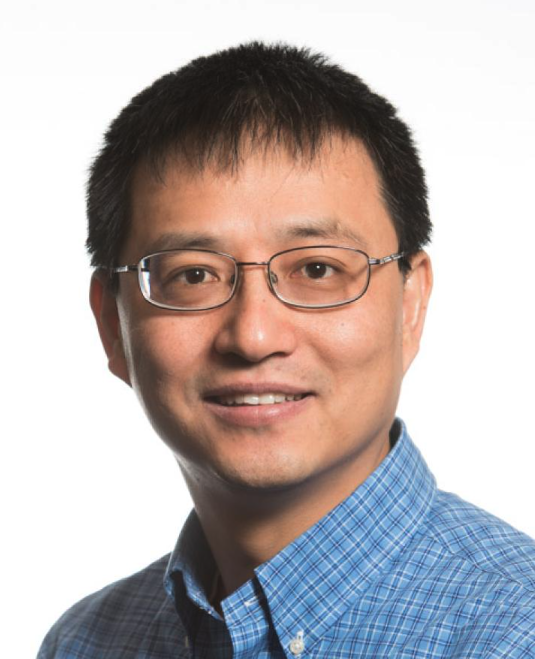 Yousu Chen合作论文数Pacific Northwest National Laboratory3
 Shuai Che合作论文数Microsoft3
 James M Valles合作论文数Department of Physics, Brown University3Steven P. Reinhardt合作论文数2Wei Wu合作论文数2Mingkai Chen合作论文数2
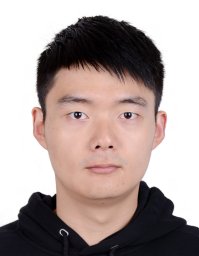 Shihui Cao合作论文数Lab Laser Energet, Univ Rochester2
 Yunan Yang合作论文数Dept Math, Cornell Univ2
 James Liang合作论文数2
 Rushi Patel合作论文数Boston Univ, Dept Elect & Comp Engn, Boston, MA 02215 USA2Charles Lin合作论文数Silicon Therapeutics2Ahmed Sanaullah合作论文数Boston Univ, Dept Elect & Comp Engn, Boston, MA 02215 USA2Qingqing Xiong合作论文数Boston Univ, Dept Elect & Comp Engn, Boston, MA 02215 USA2
 Chenhao Xie合作论文数Sensedeal. Ai2
 Qifan Wang (王奇凡)合作论文数2
 Runbin Shi合作论文数ETH Zürich2
 Yongan Zhang (Luke)合作论文数Abercrombie Engineering Laboratory, Rice University2
 Anthony Skjellum合作论文数Computer Science and Engineering, University of Tennessee at Chattanooga2Chuang Ren合作论文数Department of Physics and Astronomy;University of Rochest;Department of Physics and Astronomy, University of Rochest2Jiayi Sheng合作论文数2Tong (Tony) Geng合作论文数1Michael Huang合作论文数1Tony Tong Geng合作论文数1




