The η2(3e)-vinyl complex is oxidized by [FeCp2]+, [CPh3]+, or B(C6F5)3 to form the 17-electron cation which on warming loses H to form the cationic η2(4e)-alkyne complex [Mo(η2-PhC⋮CPh){P(OMe)3}2Cp]+. In the case of the borane there is evidence for a competing reaction between the η2-vinyl complex and the acid (H2O)B(C6F5)3, resulting in the formation of a labile trans-stilbene complex.
Reaction of cis-[Mo(NCMe)(2)(CO)(2)(eta(5)-L)][BF4] (L = C5H5 or C5Me5) with 1-acetoxybuta-1,3-diene gives the cationic complexes [Mo(eta(4)-syn-s-cis-CH2CHCHCH(OAc)}(CO)(2)(eta(5)-L)][BF4], which, on reaction with aqueous NaHCO3/CH2Cl2, afford good yields of the anti-aldehyde substituted complexes [Mo(eta(3)-exo-anti-CH2CHCH(CHO)}(CO)(2)(eta(5)-L)]2(L = C5Me5), 4 (L = C5H5)]. The corresponding eta(5)-indenyl substituted complex 5 was prepared by protonation (HBF4 . OEt2) of [Mo(eta(3)-C3H5)(CO)(2)(eta(5)-C9H7)] followed by addition of CH2=CHCH=CH(OAc) and hydrolysis (aq. NaHCO3/CH2Cl2). An X-ray crystallographic study of complex 2 confirmed the structure and showed that there is a contribution from a zwitterionic form involving donation of electron density from the molybdenum to the aldehyde carbonyl group. Treatment of 2 and 4, in methanol solution, with NaBH4 afforded the alcohols [Mo(eta(3)-exo-anti-CH2CHCHCH2(OH)}(CO)(2)(eta(5)-L) [6 (L=C5H5), 8 (L=C5Me5)]; however, prolonged (30 h) reaction with NaBH4/MeOH surprisingly gave good yields of the methoxy substituted complexes [Mo(eta(3)-exo-anti-CH2CHCHCH2(OMe)}(CO)(2)(eta(5)- L)] [7 (L = C5H5), 9 (L = C5Me5)], the structure of 7 being confirmed by single crystal X-ray crystallography. This methoxylation reaction can be explained by coordination of the hydroxyl group present in 6 and 8 onto B2H6 to form the potential leaving group HOBH3-, which on ionisation affords [Mo(eta(4)-exo-buta-1-3-diene)(CO)(2)(eta(5)-L)](+) which is captured by reaction with OMe-. Complex 8 is also formed in good yield on reaction of 2 with HBF4 . OEt2 followed by treatment of the resulting cation [Mo(eta(4)-exo-s-cis-syn-CH2CHCHCH(OH)}(CO)(2)(eta(5)-C5Me5)][BF4] with Na[BH3CN]. Reaction of 4 with the Grignard reagents MeMgI, EtMgBr or PhMgCl afforded moderate yields of the alcohols [Mo(eta(3)-exo-anti-CH2CHCHCH(OH)R}(CO)(2)(eta(5)-C5H5)] [11 (R=Me), 12 (R=Et), 13 (R=Ph)]. Similarly, treatment of 2 with MeLi gave the corresponding alcohol 14. An attempt to carry out the Oppenauer oxidation [Al(OPr')(3)/Me2CO] of 11 resulted in an elimination reaction and the formation of the eta(3)-s-pentadienyl complex [Mo(eta(3)-exo-anti-CH2CHCH(CHCH2)}(CO)(2)(eta(5)-C5H5)], which was structurally identified by X-ray crystallography. Interestingly, oxidation of 6 with [(Bu4N)-N-n][RuO4]/morpholine-N-oxide affords the aldehyde complex, 4 in good yield.Finally, reaction of 11 with [NO][BF4] followed by addition of Na2CO3 affords the fur-3-ene complex [Mo(eta(2)-CH=CHCH2OC(H)Me)(CO)(NO)(eta(5)-C5H5)]. (C) 1998 Elsevier Science S.A.
Reaction of cis-[Mo(NCMe)2(CO)2(η5-L)][BF4] (L=C5H5 or C5Me5) with 1-acetoxybuta-1,3-diene gives the cationic complexes [Mo{η4-syn-s-cis-CH2CHCHCH(OAc)}(CO)2(η5-L)][BF4], which, on reaction with aqueous NaHCO3/CH2Cl2, afford good yields of the anti-aldehyde substituted complexes [Mo{η3-exo-anti-CH2CHCH(CHO)}(CO)2(η5-L)] 2 (L=C5Me5), 4 (L=C5H5)]. The corresponding η5-indenyl substituted complex 5 was prepared by protonation (HBF4·OEt2) of [Mo(η3-C3H5)(CO)2(η5-C9H7)] followed by addition of CH2CHCHCH(OAc) and hydrolysis (aq. NaHCO3/CH2Cl2). An X-ray crystallographic study of complex 2 confirmed the structure and showed that there is a contribution from a zwitterionic form involving donation of electron density from the molybdenum to the aldehyde carbonyl group. Treatment of 2 and 4, in methanol solution, with NaBH4 afforded the alcohols [Mo{η3-exo-anti-CH2CHCHCH2(OH)}(CO)2(η5-L)] [6 (L=C5H5), 8 (L=C5Me5)]; however, prolonged (30 h) reaction with NaBH4/MeOH surprisingly gave good yields of the methoxy-substituted complexes [Mo{η3-exo-anti-CH2CHCHCH2(OMe)}(CO)2(η5-L)] [7 (L=C5H5), 9 (L=C5Me5)], the structure of 7 being confirmed by single crystal X-ray crystallography. This methoxylation reaction can be explained by coordination of the hydroxyl group present in 6 and 8 onto B2H6 to form the potential leaving group HOBH3−, which on ionisation affords [Mo(η4-exo-buta-1-3-diene)(CO)2(η5-L)]+ which is captured by reaction with OMe−. Complex 8 is also formed in good yield on reaction of 2 with HBF4·OEt2 followed by treatment of the resulting cation [Mo{η4-exo-s-cis-syn-CH2CHCHCH(OH)}(CO)2(η5-C5Me5)][BF4] with Na[BH3CN]. Reaction of 4 with the Grignard reagents MeMgI, EtMgBr or PhMgCl afforded moderate yields of the alcohols [Mo{η3-exo-anti-CH2CHCHCH(OH)R}(CO)2(η5-C5H5)] [11 (R=Me), 12 (R=Et), 13 (R=Ph)]. Similarly, treatment of 2 with MeLi gave the corresponding alcohol 14. An attempt to carry out the Oppenauer oxidation [Al(OPr′)3/Me2CO] of 11 resulted in an elimination reaction and the formation of the η3-s-pentadienyl complex [Mo{η3-exo-anti-CH2CHCH(CHCH2)}(CO)2(η5-C5H5)], which was structurally identified by X-ray crystallography. Interestingly, oxidation of 6 with [Bu4nN][RuO4]/morpholine-N-oxide affords the aldehyde complex, 4 in good yield. Finally, reaction of 11 with [NO][BF4] followed by addition of Na2CO3 affords the fur-3-ene complex [Mo{η2-Download : Download full-size image(H)Me}(CO)(NO)(η5-C5H5)].
Barriers to metal-arene ring rotation in [1,4-C6H4(SiMe3)2)Cr(CO)2PPh3 and (1,3,5-C6H3tBu2)Cr(CO)2PPh3 are lowered relative to a previously reported barrier of 32 J mol−1 for (1,4-C6H4tBu2)Cr(CO)2PPh3. Reasons for the decreased barriers are discussed in the light of crystal structure determinations of these complexes.
 Matthew R Box合作论文数2
 Mary F Mahon合作论文数Department of Chemistry, University of Bath2Michael Green合作论文数School of Chemistry, University of Bristol2Monika Kursawe合作论文数2Nicholas Carr合作论文数2Christopher Butters合作论文数2Timothy J. Paget合作论文数1
 Andrew D. Burrows合作论文数Department of Chemistry, University of Bath1
 Martin Green合作论文数School of Veterinary Medicine and Science, Faculty of Medicine & Health Sciences, University of Nottingham1Patrick McArdle合作论文数1Neil G. Connelly合作论文数1
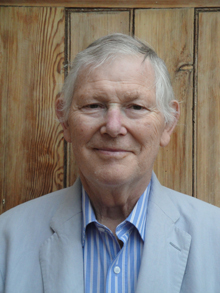 Malcolm Green合作论文数University of Oxford1
 Hugo E. Gottlieb合作论文数Department of Chemistry, Faculty of Exact Sciences | Bar-Ilan University1Desmond Cunningham合作论文数1Paul C. Yates合作论文数1Jason M. Lynam合作论文数Department of Chemistry, University of York1James A. S. Howell合作论文数1




