A highly enantioselective synthesis of (R,S) or (S,S)-2,6-disubstituted dehydropiperidines has been previously achieved through Sn/Li transmetalation of the corresponding stannylated dehydropiperidines or of their precursors. Herein, we successively consider their Upjohn's syn dihydroxylation and their anti-dihydroxylation via an epoxidation reaction followed by epoxide opening reaction. The stereochemical course of these reactions was first reported including the use of appropriate protecting groups before considering the conversion of the obtained compounds into NH or NMe iminosugar hydrochlorides. A primary evaluation of the designed iminosugar C-glycosides as glycosidase inhibitors suggests candidates for the selective inhibition of α-galactosidase, amyloglycosidase and naringinase. Beyond the reported results, the method constitutes a highly modulable route for the synthesis of well stereodefined iminosugar C-glycosides, an advantage which might be used for the design of iminosugars to enhance their biological properties.
An unprecedented catalytic aza-Michael addition to substituted 3-vinyl-1,2,4-triazines, as original bifunctional platforms for the domino conjugate addition inverse-electron-demand hetero-Diels-Alder/retro-Diels-Alder ( ihDA/ rDA) reaction, was achieved using the highly acidic triflimide as an organocatalyst. Based on the use of alkoxyamine nucleophiles, this sequence not only highlights a rare example of the catalytic aza-Michael reaction to alkenylazaarenes but also proves to be useful for the elaboration of an array of biorelevant tetrahydro-[1,6]-naphthyridines.
In this contribution, we describe two simple and efficient routes for the preparation of keto-aldehyde 1, a key intermediate for the synthesis of (13)C3-androstanes and (13)C3-estranes. In the first route, the targeted aldehyde 1 was obtained in 40% overall yield from 1,4-androstadien-3,17-dione (3 mmol scale) via a two-step sequence involving a one-pot, abnormal ozonolysis/sulfur oxidation/retro-Michael/ozonolysis process. Alternatively, a second route from 4-androsten-3,17-dione, using a six-step sequence, was optimized to produce 40 mmol batches of the key intermediate 1 in 42% overall yield. At the final stage, the A-ring was reconstructed through a Wittig reaction with the 1-triphenylphosphoranylidene-(13)C3-2-propanone 2, followed by an intramolecular condensation assisted by thioacetic acid via a Michael addition/retro-Michael reaction sequence to provide 2,3,4-(13)C3-1,4-androstadien-3,17-dione.
A straightforward domino aza-Michael-inverse-electron-demand-hetero-Diels-Alder/retro-Diels-Alder reaction between primary and secondary propargylamine derivatives and 3-vinyl-1,2,4-triazines is developed highlighting not only the uniqueness of this dual-heterocyclic platform but also a novel and unprecedented path to polysubstituted tetrahydro-1,6-naphthyridine scaffolds.
This work highlights the use of 3-vinyl-1,2,4-triazines as original thia-Michael acceptors and inverse electron demanding Diels-Alder platforms en route to new 7,8-dihydro-5H-thiopyrano[4,3-b]pyridines. The required but rather unstable propargylthiol nucleophiles were successfully generated in-situ upon an innovative DBU-catalyzed methanolysis event of the corresponding propargyl thioacetate derivatives.
An unprecedented enantioselective alpha-functionalization of C4-substituted N-alkoxycarbonyl isoxazolidin-5-ones, readily available platforms from Meldrum's acid derivatives, by N-sulfanylphthalimide (PhthSR) electrophiles was achieved upon an efficient phase-transfer catalytic approach, mediated by a commercial N-spiro quaternary ammonium catalyst. Two catalytic activities of the in situ formed R4N(+)Phth(-) species were highlighted, the phtalimidate being involved in the anion metathesis event and likely as a Bronsted base. This sequence offers a straightforward access to alpha,alpha-disubstituted isoxazolidinones, which turned out to be useful precursors of alpha-sulfanyl-beta(2,2)-amino acid derivatives.
 Jean-Francois Briere合作论文数6
 Floris Buttard合作论文数4
 Franck Suzenet合作论文数CNRS, Université d’Orléans4Marie-Aude Hiebel合作论文数4Jabrane Jouha合作论文数2Timothée Cadart合作论文数2
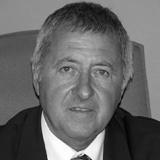 Gérald Guillaumet合作论文数université d’Orléans de2
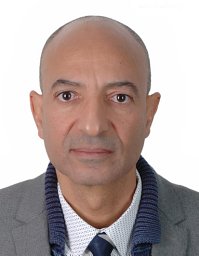 Mostafa Khouili合作论文数Laboratoire de Chimie Bioorgaitique et Analytique, Université d'Orléans2Vincent Levacher合作论文数2
 Stephane Perrio合作论文数2Alexandre Lumbroso合作论文数1Matthieu Rivière合作论文数1Planchat Aurélien合作论文数1Jacques Lebreton合作论文数1
 Pierrick Nun合作论文数EaStCHEM School of Chemistry, University of Saint Andrews1Mickaël Pauvert合作论文数1M. Isabel García-Moreno合作论文数1Carmen Ortiz Mellet合作论文数Facultad de Química, Universidad de Sevilla1
 Jean-Paul Quintard合作论文数1Magali Lorion合作论文数1Fabrice Denes合作论文数1
 Erwan Le Grognec合作论文数Laboratoire de Synthèse Organique, Univ Nantes1Isabelle Beaudet合作论文数1




