Mass estimates of plastic pollution in the Great Lakes based on surface samples differ by orders of magnitude from what is predicted by production and input rates. It has been theorized that a potential location of this missing plastic is on beaches and in nearshore water. We incorporate a terrain dependent beaching model to an existing hydrodynamic model for Lake Erie which includes three dimensional advection, turbulent mixing, density driven sinking, and deposition into the sediment. When examining parameter choices, in all simulations the majority of plastic in the lake is beached, potentially identifying a reservoir holding a large percentage of the lake’s plastic which in previous studies has not been taken into account. The absolute amount of beached plastic is dependent on the parameter choices. We also find beached plastic does not accumulate homogeneously through the lake, with eastern regions of the lake, especially those downstream of population centers, most likely to be impacted. This effort constitutes a step towards identifying sinks of missing plastic in large bodies of water.
AbstractMicroplastic debris ending up at the sea surface has become a known major environmental issue. However, how microplastic particles move and when they sink in the ocean remains largely unknown. Here, we model microplastic subject to biofouling (algal growth on a substrate) to estimate sinking timescales and the time to reach the depth where particles stop sinking. We combine NEMO‐MEDUSA 2.0 output, that represents hydrodynamic and biological properties of seawater, with a particle‐tracking framework. Different sizes and densities of particles (for different types of plastic) are simulated, showing that the global distribution of sinking timescales is largely size‐dependent as opposed to density‐dependent. The smallest particles we simulate (0.1 μm) start sinking almost immediately around the globe and their trajectories take the longest time to reach their first sinking depth (relative to larger particles). In oligotrophic subtropical gyres with low algal concentrations, particles between 1 and 0.01 mm do not sink within the simulation time of 90 days. This suggests that in addition to the comparatively well‐known physical processes, biological processes might also contribute to the accumulation of floating plastic (of 1–0.01 mm) in subtropical gyres. Particles of 1 μm in the gyres start sinking largely due to vertical advection, whereas in the equatorial Pacific they are more dependent on biofouling. The qualitative impacts of seasonality on sinking timescales are small, however, localized sooner sinking due to spring algal blooms is seen. This study maps processes that affect the sinking of virtual microplastic globally, which could ultimately impact the ocean plastic budget.
The distribution of plastic in the ocean is poorly constrained, with the mass of floating plastic at the ocean surface being orders of magnitude smaller than estimated plastic inputs. Coastlines likely contain significant amounts of plastic, but inconsistent methodologies between beached plastic observations prevent determining the mass and distribution of globally beached plastic. We present Lagrangian model sensitivity experiments to estimate the beached fraction of marine plastic and to investigate the global distribution of beached plastic on coastlines. We perform simulations where particles, representing masses of floating plastic, are inserted at the ocean coasts. The particles are then advected by surface currents (HYCOM/NCODA global reanalysis and surface Stokes drift from the WaveWatch III global reanalysis) for 5 years. Beaching is parametrized stochastically using exponentional probability. Here, we test the sensitivity to e-folding time scales between 1 and 100 days, applied when plastic is within the coastal zone, within 10km of the nearest coastline. Resuspension of beached plastic is parameterised exponentially with an e-folding timescale between 69 and 273 days. No other loss processes are implemented. Between 39-95% of floating plastic mass is beached after 5 years, with the beached fraction depending on the ratio between the beaching and resuspension timescales. In all simulations, at least 77% of floating plastic mass is found either beached or within the coastal zone, indicating coastal regions are a significant reservoir of mismanaged terrestrial plastic. However, plastic entering the ocean from islands or near energetic boundary currents is more likely to reach the open ocean. The distribution of beached plastic is closely related to the input distribution, with the highest concentrations found in Southeast Asia and the Mediterranean. Our results highlight coastlines and coastal waters as important reservoirs of marine plastic debris and indicate a need for greater understanding of plastic transport near and at the coastlines. Furthermore, improved representation of plastic beaching can help study marine plastic fragmentation, as mechanical stress during the transitions between coastlines and coastal waters and the increased UV exposure of beached plastic likely contribute to the fragmentation.
Global coastlines potentially contain significant amounts of plastic debris, with harmful implications for marine and coastal ecosystems, fisheries and tourism. However, the global amount, distribution and origin of plastic debris on beaches and in coastal waters is currently unknown. Here we analyze beaching and resuspension scenarios using a Lagrangian particle transport model. Throughout the first 5 years after entering the ocean, the model indicates that at least 77% of positively buoyant marine plastic debris (PBMPD) released from land-based sources is either beached or floating in coastal waters, assuming no further plastic removal from beaches or the ocean surface. The highest concentrations of beached PBMPD are found in Southeast Asia, caused by high plastic inputs from land and limited offshore transport, although the absolute concentrations are generally overestimates compared to field measurements. The modeled distribution on a global scale is only weakly influenced by local variations in resuspension rates due to coastal geomorphology. Furthermore, there are striking differences regarding the origin of the beached plastic debris. In some exclusive economic zones (EEZ), such as the Indonesian Archipelago, plastic originates almost entirely from within the EEZ while in other EEZs, particularly remote islands, almost all beached plastic debris arrives from remote sources. Our results highlight coastlines and coastal waters as important reservoirs of marine plastic debris and limited transport of PBMPD between the coastal zone and the open ocean.
The transport of plastic particles from inland sources to the oceans garbage patches occurs trough coastal regions where the transport processes depend highly on wave-induced motions. In this study, experimental measurements of the plastic particles wave-induced Lagrangian drift in intermediate water depth are presented investigating the influence of the wave conditions, particle size and density on the motion of relatively large plastic particles. A large influence of the particle density is observed causing particles to float or sink for relative densities lower and larger than water respectively. The measured net drift of the floating particles correlates well with theoretical solutions for particle Stokes drift, where the net drift is proportional to the square of the wave steepness. Floating particles remain at the free water surface because of buoyancy and no evidence of any other influence of particle inertia on the net drift is observed. Nonfloating particles move close to the bed with lower velocity magnitudes than the floating particles' motion at the free surface. The drift of nonfloating particles reduces with decreasing wave number, and therefore wave steepness.
Marine plastic debris floating on the ocean surface is a major environmental problem. However, its distribution in the ocean is poorly mapped, and most of the plastic waste estimated to have entered the ocean from land is unaccounted for. Better understanding of how plastic debris is transported from coastal and marine sources is crucial to quantify and close the global inventory of marine plastics, which in turn represents critical information for mitigation or policy strategies. At the same time, plastic is a unique tracer that provides an opportunity to learn more about the physics and dynamics of our ocean across multiple scales, from the Ekman convergence in basin-scale gyres to individual waves in the surfzone. In this review, we comprehensively discuss what is known about the different processes that govern the transport of floating marine plastic debris in both the open ocean and the coastal zones, based on the published literature and referring to insights from neighbouring fields such as oil spill dispersion, marine safety recovery, plankton connectivity, and others. We discuss how measurements of marine plastics (both in situ and in the laboratory), remote sensing, and numerical simulations can elucidate these processes and their interactions across spatio-temporal scales.
A very common observation is the episodic erosion of beaches during storms and the slow recovery (accretion) afterwards (Yates et al. 2009). Morphodynamic models parameterize physical processes in order to relate the fluid motions (hydrodynamics) to the bed level changes (morphodynamics) over a wide range of spatial and temporal scales. Despite recovery of the beach profile being a slow process, accretion mechanisms in the swash zone are complex to represent by a numerical model due to the shallow, rapidly varying flows and high concentration gradients (Brocchini a Baldock 2008). The swash zone on most beaches is readily accessible, but this accessibility does not translate into a broad knowledge of the underlying physical processes (Chardon-Maldonado et al. 2015). This research focused on assessing the representation of physical processes in the swash zone of intermediate-reflective beaches during erosive and accretive conditions in the non-hydrostatic version of the XBeach model (XBeach). This is a depth-averaged phase resolving model, mainly used for calculations of storm impact (hours-days) on sandy and gravel beaches. Based on conclusions in literature, relevant physical processes that contribute to accretion were determined. Using a simple planar beach bathymetry, the sediment transport formulations in XBeach and the individual influence of groundwater effects, bed slope effects, sediment response time and wave breaking induced turbulence were assessed. The results showed that for both accretive and erosive wave conditions, XBeach predicts erosion in the swash zone. Groundwater infiltration and wave breaking induced turbulence are likely to enhance onshore transport significantly Reniers et al. (2013), Turner aMasselink (1998). To verify the findings of the planar beach modeling approach, in the second part of this thesis the morphodynamical predictions of XBeach were compared to the dataset collected during the Bardex II experiment. Bardex II was performed in 2012 in the Delta Flume in the Netherlands and the dataset contains observations of a series of experiments focusing on the effect of varying wave, sea level and beach groundwater conditions on a sandy beach (D50=0.42 mm)(Masselink et al. 2013). Stored data and published resultswere used for comparison with the morphodynamical prediction performance of XBeach. Two timescales have been analyzed, the total morphological response of the beach on a timescale of 100 minutes and the intra-swash sediment transport processes on a timescale of 10 seconds. Two experiments from the series have been reproduced. The first, experiment A4, has an almost stable, slightly erosivemorphological response throughout the swash zone. The second, experiment A8, shows accretion in the upper swash and a stable profile in the rest of the swash zone. XBeach erroneously (over)predicted erosion above the mean sea level (MSL) for both A4 and A8 conditions. This conclusion was related to the results of the intra-swash sediment transport assessment. The modeled velocity in both uprush and backwash were higher than the Bardex II measured velocity and XBeach extremely underpredicted uprush sediment concentrations suggesting that turbulence induced by the bore is not enough taken into account. Over-predicted backwash sediment concentrations for both accretive and erosive conditions suggested that groundwater infiltration was not strong enough. However, enhancing wave breaking induced turbulence and groundwater infiltration did not lead to an improvement of the predictions of sediment concentrations in the swash. The sediment transport formulations of XBeachwere developed using a long wave resolving (short wave averaging) model, andwidely validated and calibrated on field and experimental data (Soulsby 1997, van Rijn et al. 2007, Van Thiel De Vries 2009). Therefore, in the last part of this thesis two possible improvements of the two sediment formulations of XBeach (van Thiel-van Rijn and Soulsby-van Rijn) when applying them in a short wave resolving model are assessed using a 1D sediment transport model. The decomposition of the velocity signal in amean and a fluctuating part improved mainly the predictions using Soulsby-van Rijn where the separate calibration of turbulent kinetic energy resulted in better predictions for both transport formulations. This analysis was performed only at one point on the cross-shore domain (slightly above MSL). Although the results for this position were promising, comparison of modeled sediment transport with Bardex II observations at different positions throughout the upper and lower swash zone is needed to give a full validation of the proposed adaptations to the transport formulations.
 Erik Van Sebille合作论文数Institute for Marine and Atmospheric Research, Utrecht University;Freudenthal Institute, Utrecht University8
 J. M. Alsina合作论文数5
 Charlotte Laufkotter合作论文数Institute of Biogeochemistry and Pollutant Dynamics, ETH Zürich5
 Victor Onink合作论文数Inst Marine & Atmospher Res, Univ Utrecht3
 Delphine Lobelle合作论文数The Laboratory, Marine Biological Association of the United Kingdom3
 Mikael Kaandorp合作论文数Inst Marine & Atmospher Res Utrecht, Univ Utrecht2
 Philippe Delandmeter合作论文数Institute of Mechanics, Materials and Civil Engineering (IMMC),, Université catholique de Louvain2
 AA (Bart) Koelmans合作论文数Department of Aquatic Ecology and Water Quality Management, Wageningen University & Research2
 Patricia Cabrera合作论文数1Federico Drago合作论文数1
 Matthias Egger合作论文数1rocio castanoprimo合作论文数1Ines Haberle合作论文数1Juliette Daily合作论文数1
 Domagoj Hackenberger Kutuzovic合作论文数1Kevin Balem合作论文数1Bruno Ćaleta合作论文数1
 Tamara Djerdj合作论文数Dept Biol, Josip Juraj Strossmayer Univ Osijek1
 Marie Poulain-Zarcos合作论文数Aix Marseille Univ1
 Marija Purgar合作论文数Rudjer Boskovic Inst1
 Alexandre Schickele合作论文数LOV, Sorbonne Univ1
 Massimiliano Drudi合作论文数1David Wichmann合作论文数1
 Laura Gomez-Navarro合作论文数Univ Cadiz1
 Liliya Khatmullina合作论文数1
 Andrei Bagaev合作论文数Marine Hydrophysical Institute1
 Merel Kooi合作论文数Aquat Ecol & Water Qual Management Grp, Wageningen Univ & Res1
 Christian Kehl合作论文数Institute for Marine and Atmospheric Research Utrecht (IMAU), Department of Physics, Princetonplein 5, Utrecht, 3584 CC, Utrecht, The Netherlands1
 Peter G Ryan合作论文数FitzPatrick Institute of African Ornithology, University of Cape Town1
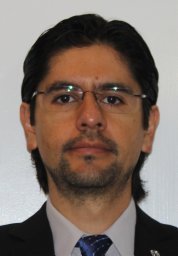 Olmo Zavala-Romero合作论文数1
 Martin Thiel合作论文数Department of Marine Biology, Universidad Catolica del Norte1
 Kara Lavender Law合作论文数Sea Education Association1
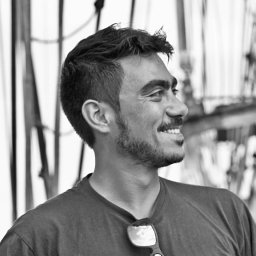 Giuseppe Suaria合作论文数CNR-ISMAR National Research Council - Institute of Marine Sciences1
 Laurent Lebreton合作论文数The Ocean Cleanup;The Modelling House1
 Atsuhiko Isobe (磯辺篤彦)合作论文数Department of Interdisciplinary Engineering Sciences, Interdisciplinary Graduate School of Engineering Sciences, Kyushu University;Center for Ocean Plastic Studies
4 people were found, Research Institute for Applied Mechanics, Kyushu University;Center for Oceanic and Atmospheric Research, Research Institute for Applied Mechanics, Kyushu University1
Atsuhiko Isobe (磯辺篤彦)合作论文数Department of Interdisciplinary Engineering Sciences, Interdisciplinary Graduate School of Engineering Sciences, Kyushu University;Center for Ocean Plastic Studies
4 people were found, Research Institute for Applied Mechanics, Kyushu University;Center for Oceanic and Atmospheric Research, Research Institute for Applied Mechanics, Kyushu University1 Nina Marn合作论文数1
 Garaba Shungudzemwoyo P合作论文数Institute for Chemistry and Biology of Marine Environment - Terramare, Carl von Ossietzky University of Oldenburg1Ernesto Rodriguez合作论文数Jet Propulsion Laboratory, California Institute of Technology1
 Nikolai Maximenko合作论文数School of Ocean and Earth Science and Technology, University of Hawaii at Manoa1
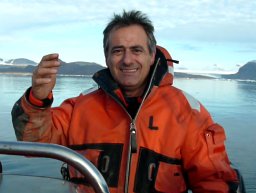 Stefano Aliani合作论文数Universitätsklinik für Kinder- und Jugendmedizin1
 Lucie Bittner合作论文数UMR CNRS 7138 Systématique, Adaptation, Evolution, Muséum National d'Histoire Naturelle1
 Anton Ellenbroek合作论文数1Damir Kapetanović合作论文数Laboratory for Aquaculture and Pathology of Aquatic Organisms, Ruđer Bošković Institute1
 Irina Chubarenko合作论文数1
 Andrés Cózar Cabañas合作论文数Faculty of Marine and Environmental Sciences, University of Cadiz;UCA Marine Litter Lab, Department of Biology, University of Cadiz1
 Tin Klanjscek合作论文数Biology Department, Woods Hole Oceanographic Institution1
 Ton Stefan Van Den Bremer合作论文数Environmental Fluid Mechanics, Department of Hydraulic Engineering, Faculty of Architecture and the Built Environment, Delft University of Technology1
 Fox-Kemper合作论文数Department of Earth, Environmental, and Planetary Sciences, Brown University;Brown Theoretical Physics Center, Brown University1
 Maarten Van Reeuwijk合作论文数Department of Civil and Environmental Engineering, Imperial College London1




