The complex [Pt2Au2(PPh3)4(CNC6H3Me2-2,6)4][PF6]2 has been synthesised from [Pt(PPh3)2(C2H4)] and [Au (CNC6H3Me2-2,6)2]+ in acetone. The cluster crystallises in the triclinic space group P with two formula units and the unit cell of dimensions a= 13.882(4), b= 15.460(2), c= 27.578(5)A, α= 77.99(5), β= 88.95(2), and γ= 67.41(5)°. The metal atoms define a distorted flattened butterfly with the gold atoms occupying the higher connectivity sites and forming a short gold–gold bond of length 2.593(2)A. The platinum–gold distances lie in the range 2.712(2)–3.028(2)A reflecting a distortion of the skeletal geometry from D2h to C2v. 31Pt-{1H} and 195Pt-{1H} n.m.r. studies suggest that in solution a symmetric D2h structure is adopted in which the gold atoms are equivalent.
Some or all of the carbonyl ligands in platinum carbonyl phosphine clusters may be replaced by sulphur dioxide under mild conditions to give high yields of clusters containing the bridging sulphur dioxide ligand. In some cases ligand substitution is accompanied by a change in cluster structure which gives rise to high-yield routes for altering the nuclearity of platinum carbonyl clusters. In particular the reaction of sulphur dioxide with [Pt4(µ-CO)5(PMe2Ph)4] gave the trinuclear cluster [Pt3(µ-SO2)3(PMe2Ph)3] rather than the tetranuclear cluster reported by us in an earlier communication. The molecular structure of [Pt5(CO)(µ-CO)2(µ-SO2)3(PPh3)4]·2CH2Cl2·Me2-CH(OH) has been determined by single-crystal X-ray techniques. The compound crystallises in the triclinic space group P with two formula units in a unit cell with a= 13.991(6), b= 14.625(5), c= 21.285(4)A, α= 84.07(2), β= 83.34(3), and γ= 70.76(4)°. The structure was solved to R 0.059 (R′ 0.079) from 7 033 observed independent reflections [F2 3.0 σ(F2)] collected in the range 3 ⩽ 2θ⩽ 45°. The molecule has an edge-bridged tetrahedral skeletal geometry with Pt–Pt in the range 2.751(1)–2.877(1)A. The cluster has one terminal carbonyl and four triphenylphosphine ligands and two edges of the cluster are bridged by carbonyl ligands and three by sulphur dioxide. The other two edges are unbridged. Detailed analysis of the structure has clarified the nature of the bonding in pentanuclear platinum clusters and enabled the structure of a previously incorrectly characterised platinum arsine cluster to be reformulated.
AbstractThe SO2‐bridged trinuclear Pt complexes (II) and (V) are prepared by CO Substitution reactions of (Ia), (III), or (IV) with SO2 as shown.
[(Ph3P)AuCo(CO)3(PPh3)] has been synthesised from [(Ph3P)AuCo(CO)4], PPh3v and Me3NO in acetonitrile. Its molecular structure, determined by single-crystal x-ray crystallography, consists of an almost linear P-Au-Co-P arrangement in which the Co atom is in a slightly distorted trigonalbipyramidal geometry, with the Au and P atoms occupying the apical sites. The Au-Co bond length of 2.450(1) Å is shorter than that reported for [(Ph3P)AuCo(CO)4]. The carbonyl ligands are bent towards the Au atom and the mean Au-Co-C angle is 81(1)°.
AbstractDie Reaktionen der Bis‐u‐sulfido‐Pt‐Zweikernkomplexe (I) mit Methyliodid oder Methylenchlorid ergeben die u‐Alkylmercapto‐u‐sulfido‐Derivate (lIa,b), aus denen durch Metathesereaktionen die Salze (IIc) erhältlich sind.
[Au9{P(C6H4OMe-p)3}8](NO3)3crystallizes from CH2Cl2–toluene in two crystalline modifications one tetragonal and the other orthorhombic; single crystal X-ray crystallographic determinations on the two modifications have demonstrated that the tetragonal modification has a skeletal geometry derived from an icosahedron and the orthorhombic modification a centred crown skeletal geometry.
A single crystal X-ray crystallographic analysis of [ Au6(PPh3)6] (NO3)2· 3CH2Cl2 has established that the gold atoms adopt the edge-shared bi-tetrahedral structure predicted on the basis of molecular orbital calculations.
C. E. Briant, D. G. Evans and D. M. P. Mingos, J. Chem. Soc., Chem. Commun., 1982, 1144 DOI: 10.1039/C39820001144
The reaction of a atm of SO2 at 60 °C with toluene solutions of platinum carbonyl cluster compounds provides a general synthesis route for platinum SO2cluster compounds.
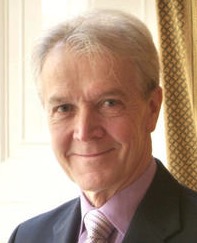 Michael Mingos合作论文数Department of Chemistry, University of Oxford;Keble College, University of Oxford8
 David G. Evans (戴伟)合作论文数State Key Laboratory of Chemical Resource Engineering, Beijing University of Chemical Technology4
 D. M. P. Mingos合作论文数2David I. Gilmour合作论文数2
 Kevin Peter Hall合作论文数Inorganic and Chemical Crystallography Laboratories, University of Oxford2
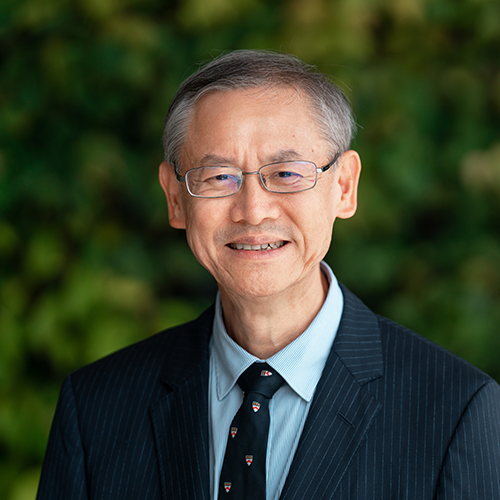 Andy Hor合作论文数Agency for Science, Technology and Research1Robert W. M. Wardle合作论文数1Christopher J. Gardner合作论文数1Nigel D. Howells合作论文数1




