Background: Fever, dry cough and fatigue are the most common symptoms of the Coronavirus Disease-2019 (COVID-19). During the COVID-19 pandemic in China, we treated a patient with fever and finally diagnosed congenital heart disease. Case presentation: An 18-year-old lady came to the fever clinic with a complaint about the symptoms of fever, dry cough and dyspnea for 15 days. She had a travel history of epidemic area two weeks ago. She had a low fever and dry cough accompanied with chest tightness and fatigue. Eventually she diagnosed ventricular septal defect complicated by infective endocarditis. Two months after surgery, the patient returned to normal social life and physical activity. Conclusion: Early surgical treatment is an effective strategy for ventricular septal defect patients complicated with IE, which can improve the early survival rate of patients.
1病例资料 患者,女,18岁,因发热、干咳、乏力15 d于2020年2月8日在我院就诊,伴有胸闷、呼吸困难,活动后明显.2周前有疫区旅游史.体格检查:T:37.5℃,双肺呼吸音粗,可闻及湿性啰音,胸骨左缘第2、3肋间可触及震颤,肺动脉瓣听诊区可闻及响亮收缩期4/6级吹风样杂音,双下肢水肿.血常规示白细胞15.36×109/L,血红蛋白69 g/L,血小板66×109/L.胸部CT平扫:两肺多发感染、实变,呈毛玻璃样改变,心包积液(图la).心脏彩超:右房、右室增大,右室流出道及肺动脉瓣上见稍高回声团,提示肺动脉瓣狭窄,肺动脉增宽,中度肺动脉高压.入院考虑为COVID-19疑似病例,进行隔离治疗.入院以后病情持续恶化(图lb),出现呼吸困难、低氧血症,C反应蛋白逐渐升高,血红蛋白降至57 g/L,血小板降至7×109/L.
Background Data on the relationship of baseline serum uric acid (SUA) with development of low-density lipoprotein cholesterol (LDL-C) level in patients with first acute myocardial infarction (AMI) are limited. The present study is to evaluate whether elevated SUA predicts the development of LDL-C in the first AMI. Methods This is a retrospective 6-month cohort study of 475 hospitalized Chinese patients who underwent first AMI between January 2015 and December 2019 and were reevaluated half a year later at the Department of Cardiology, the Second Affiliated Hospital of Nanchang University, Jiangxi Province, China. The associations of baseline SUA with the percentage decrease of LDL-C (%) and LDL-C control were analyzed by using logistic regression analyses, multivariate linear regression analyses and the restricted cubic spline. Results Over the 6-month follow-up, baseline SUA was independently and positively associated with the percentage decrease of LDL-C (%) and LDL-C control in a dose response fashion. After multivariable adjustment, per SD increment of baseline SUA (120.58 μmol/L) was associated with 3.96% higher percentage decrease of LDL-C(%). The adjusted OR (95% CI) for LDL-C control was 5.62 (2.05, 15.36) when comparing the highest tertile (SUA ≥ 437.0 μmol/L) to the lowest tertile (< 341.7 μmol/L) of baseline SUA. Conclusions Among Chinese patients with first AMI, higher baseline SUA was associated with higher LDL-C deduction percentage (%), and higher rate of LDL-C control in the short-term follow-up, respectively. SUA acquired when AMI occurred was prone to be profitable in predicting the risk stratification of uncontrolled LDL-C and dyslipidemia management.
Background : Fever, dry cough and fatigue are the most common symptoms of the coronavirus disease-2019 (COVID-19). During the COVID-19 pandemic in China, we treated a patient with fever and finally diagnosed congenital heart disease. Case presentation : An 18-year-old lady came to the fever clinic with a complaint about the symptoms of fever, dry cough and dyspnea for 15 days. She had a travel history of epidemic area two weeks ago. She had a low fever and dry cough accompanied with chest tightness and fatigue. Eventually she diagnosed ventricular septal defect complicated by infective endocarditis. Two months after surgery, the patient returned to normal social life and physical activity. Conclusion : Early surgical treatment is an effective strategy for ventricular septal defect patients complicated with IE, which can improve the early survival rate of patients.
目的 比较常规剂量的沙库巴曲缬沙坦(诺欣妥)与靶剂量ACEI对射血分数下降的心力衰竭(HFrEF)患者的治疗效果.方法 连续性纳入我院223例诊断为扩张型心肌病心力衰竭患者,111例给予诺欣妥治疗(观察组),112例给予ACEI标准治疗(对照组),其他治疗遵循指南要求.随访连续治疗18个月.结果 观察组平均使用剂量为138.96 mg/d,1.8%患者达到靶剂量.对照组47.3%患者达到靶剂量.观察组的临床有效率、6 min步行试验及收缩压下降幅度均高于对照组,且BNP及MLHFQ评分、再入院时间及次数均低于对照组(P<0.05).结论 在我院真实世界治疗HFrEF患者中,只是极少数患者使用诺欣妥达到靶剂量;但相比靶剂量的ACEI,常用剂量的诺欣妥在抑制心室重构方面不逊色于靶剂量ACEI,且改善生活质量更加明显.
我国急性心肌梗死(AMI)死亡率很高,城市为58.69/10 万,农村为 74.72/10 万,且每年保持上升趋势[1]. 尤其是AMI合并心源性休克(CS)的死亡率极高,严重影响患者预后. 近年来随着再灌注治疗技术的发展,包括应用主动脉内球囊反搏术(I-ABP) 和体外膜肺氧合( ECMO)等有效呼吸循环支持技术,心源性休克的死亡率有所下降,这也给A-MI合并CS患者带来新的希望.
目的:总结分析沙库巴曲缬沙坦在真实世界临床实际中治疗扩张型心肌病心力衰竭患者的情况、疗效和安全性.方法:本研究是一项前瞻性注册观察性研究.连续性纳入85例诊断为扩张型心肌病心力衰竭的患者,首先给予患者血管紧张素转化酶抑制剂、β受体阻滞剂及醛固酮受体拮抗剂等进行常规治疗,再停用血管紧张素转化酶抑制剂36 h,改用沙库巴曲缬沙坦钠片口服,50 mg/次,2次/d,根据患者的血压及耐受情况,逐步调整剂量为400 mg/d或至最大耐受量,连续治疗12个月,观察真实世界心力衰竭患者使用沙库巴曲缬沙坦治疗的剂量、治疗效果及其对患者血压、心脏结构和功能、血常规和肾功能等生化指标的影响.结果:沙库巴曲缬沙坦平均使用剂量为136.18mg/d,治疗的总有效率为73%.患者治疗后左心室射血分数(LVEF)明显提高(△-x=5.84%,P=0.000),左心室舒张末期内径(LVEDD)(△-x=-3.05 mm,P=0.000)、收缩压(△-x=-9.01 mmHg,1 mmHg=0.133 kPa,P=0.000)、血红蛋白(△-x=-8.14 g/L,P=0.026)均明显降低.治疗对患者肝肾功能及血脂无明显影响.结论:在真实世界的扩张型心肌病心力衰竭患者治疗中,沙库巴曲缬沙坦使用剂量偏低,但也可以取得较好的治疗效果.在使用过程中除了需要关注患者血压,还需要关注血红蛋白的下降情况.
中国心血管病患病率及死亡率仍处于上升阶段. 推算心血管病现患人数2.9亿, 其中冠心病1100万[1]. 经皮冠状动脉介入治疗(PCI)是目前冠心病治疗的主要手段之一[2],极大改善了冠心病患者的预后, 但介入治疗后再狭窄一直是其无法摆脱的梦魇. 近年来,新一代准分子激光冠脉内斑块消蚀术 (excimer laser coronaryatherectomy ELCA)的大量应用[3],给支架再狭窄(ISR)患者带来新的治疗手段,但目前国内应用较少. 2019年7月31日南昌大学第二附属医院在江西地区首次将新一代ELCA技术应用于ISR患者病例, 取得良好的近期效果,现总结汇报如下.
 Renqiang Yang (杨人强)合作论文数The Second Affiliated Hospital of Nanchang University5
 Yanqing Wu (吴延庆)合作论文数The Second Affiliated Hospital of Nanchang University3
 Xiaoshu Cheng (程晓曙)合作论文数Nanchang University3
 Longlong Hu合作论文数2Yumin LI (黎雨民)合作论文数2Yuehua RUAN (阮月华)合作论文数2
 Kai Zou合作论文数Cent South Univ, Sch Minerals Proc & Bioengn, Changsha, Peoples R China2Yi Li (李颐)合作论文数2
 Qinghua Wu (吴清华)合作论文数The Second Affiliated Hospital of Nanchang University2Juesheng Yang合作论文数1Lijuan Wu合作论文数1Liang TANG (唐良)合作论文数1Sai YE (叶赛)合作论文数1Fangjun GUO (郭方君)合作论文数1Cong-cong XU (徐聪聪)合作论文数1ShaoYu Tao (陶少宇)合作论文数1Jian Zhu (朱剑)合作论文数1Wen Zhong (钟雯)合作论文数1Yan Xu (徐艳)合作论文数1
 Min Huang (黄敏)合作论文数Affiliated Stomatological Hospital of Nanchang University1
 Tieqiu Huang (黄铁球)合作论文数The Second Affiliated Hospital, Nanchang University1
 Jianhua Yu (俞建华)合作论文数The Second Affiliated Hospital of Nanchang University1
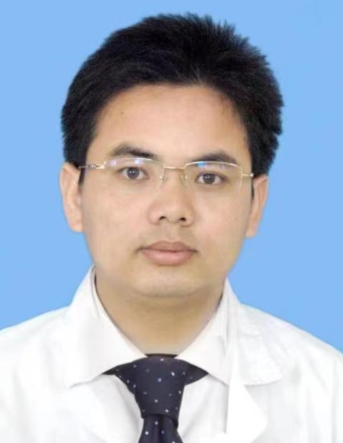 Peng Lu (陆鹏)合作论文数The Second Affiliated Hospital of Nanchang University1
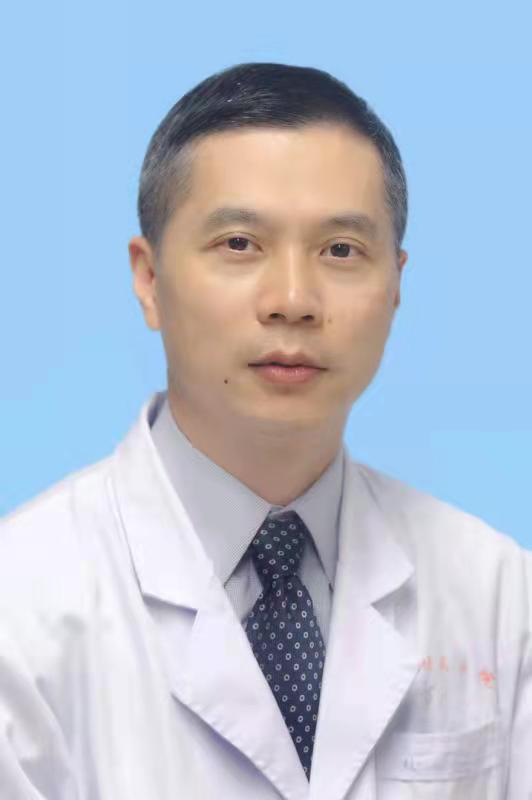 Zhigang You (游志刚)合作论文数The Second Affiliated Hospital of Nanchang University1
 Xinghua Jiang (姜醒华)合作论文数The Second Affiliated Hospital of Nanchang University1
 Yanhua Tang (唐燕华)合作论文数The Second Affiliated Hospital of Nanchang University1Yongbing Wu合作论文数1Yang Chen (陈洋)合作论文数1Jie Cao (曹杰)合作论文数1




