As noted earlier in this book, the general theory of nonlinear hyperbolic systems of conservation laws in several space dimensions is terra incognita. Nevertheless, a number of important problems in two space dimensions are currently tractable, as they admit stationary or self-similar solutions, in which case the number of independent variables is reduced to two.
The aim of this work is to present a broad overview of the theory of hyperbolic c- servation laws, with emphasis on its genetic relation to classical continuum physics. It was originally published a d
The aim here is to discuss the existence and long time behavior of BV solutions to the Cauchy problem for (possibly inhomogeneous) strictly hyperbolic systems of balance laws. Thus, this chapter may be viewed as the counterpart of Sect. 5.5, where the same issues are addressed in the context of classical solutions. For the reasons presented in the preceding chapters, the investigation shall be confined to systems in a single spatial dimension and initial data of small total variation; however, modulo these limitations, the analogy to the results of Sect. 5.5 goes quite far. Thus, the existence of local solutions will be established under moderate restrictions on the flux and on the source, while global existence will hinge on the presence of damping. As in Sect. 5.5, damping shall be induced by a dissipative source incurring nonnegative entropy production.
The paper considers a family of hyperbolic systems of balance laws, with source manifesting relaxation, encountered in continuum physics. It is parametrized by the relaxation time parameter μ . A class of initial data is identified for which the Cauchy problem is well-posed, in the BV setting, for all μ >0 , and the zero relaxation limit is determined as μ→ 0 .
The paper provides a bird’s-eye view of the theory of hyperbolic systems of conservation laws, tracing its history, surveying the state of the art and speculating on future directions of research.
Non-linear singular integral equations are investigated in connection with some basic applications in two-dimensional fluid mechanics. A general existence and uniqueness analysis is proposed for non-linear singular integral equations defined on a Banach space. Therefore, the non-linear equations are defined over a finite set of contours and the existence of solutions is investigated for two different kinds of equations, the first and the second kind. Moreover, the existence of solutions is further studied for non-linear singular integral equations over a finite number of arbitrarily ordered arcs. An application to fluid mechanics theory is finally given for the determination of the form of the profiles of a turbomachine in two-dimensional flow of an incompressible fluid.
In the context of a simple hyperbolic system of balance laws that relaxes to a scalar conservation law, the paper investigates the process by which the synergy of waves propagating with speeds akin to the characteristic speeds of the parent system produces, in the zero relaxation limit, waves propagating with speed akin to the characteristic speed of the equilibrium conservation law.
In the setting of a simple hyperbolic system of balance laws with relaxation, the paper explores the process by which the vanishing of relaxation time yields as zero relaxation limit the unique admissible solution of the associated "equilibrium" hyperbolic conservation law.
The paper discusses the long time behavior of BV solutions to the Cauchy problem for hyperbolic systems of balance laws with partial dissipation, when the relaxed system is adiabatic.
Despite its apparent simplicity, the scalar conservation law in one space dimension possesses a surprisingly rich theory, which deserves attention not only for its intrinsic interest but also because it provides valuable insight in the behavior of systems.
We construct spatially periodic solutions for systems of balance laws with partially dissipative source and show exponential decay as time goes to infinity.
This is a brief, informal introduction to nonlinear hyperbolic conservation laws, underscoring their inherent properties (wave breaking, entropy conditions) and sketching the state of the art in their analysis.
This expository paper surveys the progress in a research program aiming at establishing the existence and long time behavior of BV solutions to the Cauchy problem for hyperbolic systems of balance laws modeling relaxation phenomena.
We establish the existence and long time behavior of spatially periodic BV solutions to strictly hyperbolic systems of balance laws with partially dissipative source satisfying the Kawashima condition.
The paper establishes the existence and long time behavior of BV solutions to a hyperbolic system of balancelaws with partially dissipative source,manifesting relaxation. The component of the state vector that is actively damped decays to zero, while thecomplementary component, whose total mass isnot necessarily conserved, behaves asymptotically as a heat kernel.
By extending the analysis in [C. M. Dafermos, Hyperbolic systems of balance laws with weak dissipation, J. Hyperbolic Differ. Equ.3 (2006) 505–527], this note constructs global BV solutions to the Cauchy problem for strictly hyperbolic systems of balance laws endowed with a convex entropy, under the assumption that the entropy production is positive definite.
 Guiqiang Chen (陈贵强)合作论文数Mathematical Institute, University of Oxford5
 Ling Hsiao合作论文数4Pierre‐Louis Lions合作论文数3W Strang合作论文数3Haïm Brézis合作论文数3K Klrchgassner合作论文数3Elliott Rees合作论文数3
 J. M. Sanz-Serna合作论文数3partial differential equations合作论文数3ima program on continuum physics合作论文数3
 Robert Kohn合作论文数School of Economics, Business School, The University of New South Wales3
 Marshall Slemrod合作论文数Department of Mathematics, University of Wisconsin-Madison3
 David Kinderlehrer合作论文数Department of Mathematical Sciences, Mellon College of Science, Carnegie Mellon University3L Edward Fraenkel合作论文数3
 Hiroshi Matano合作论文数3O Penrose合作论文数2john malletparet合作论文数2Walter Frieberger合作论文数2
 Walter Craig合作论文数Department of Mathematics and Statistics, Faculty of Science, McMaster University2Jack K. Hale合作论文数2
 Milan Pokorny合作论文数Mathematical Institute, Charles University2
 Panagiotis Souganidis合作论文数Department of Mathematics, The University of Chicago2
 Jerald L. Ericksen合作论文数University of Minnesota2
 William J. Hrusa合作论文数Mathematical Sciences, Mellon College of Science, Carnegie Mellon University/Center for Computational Finance, Carnegie Mellon University2Its Applications合作论文数2
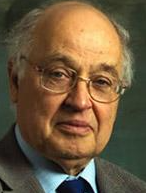 Michael Atiyah合作论文数School of Mathematics, University of Edinburgh2
 Walter A Strauss合作论文数Department of Mathematics, Brown University;Division of Applied Mathematics, Brown University2x geng合作论文数1W. N. Everitt合作论文数1
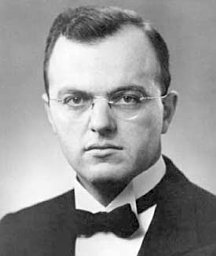 c truesdell合作论文数4007 Greenway, Baltimore, MD 21218, USA1L Hsiao合作论文数1GuangJun Zhang合作论文数Purdue Inst Integrat Neurosci, Purdue Univ1
 Eduard Feireisl合作论文数Institute of Mathematics, Czech Academy of Sciences1
 Michael Shearer合作论文数Department of Mathematics;North Carolina State University;Department of Mathematics, North Carolina State University1
 Ronghua Pan合作论文数School of Mathematics, College of Sciences, Georgia Institute of Technology1
 James Serrin合作论文数School of Mathematics, College of Science and Engineering, University of Minnesota1
 Dehua Wang合作论文数Department of Mathematics, University of Pittsburgh1
 Philippe G. Ciarlet (菲立普希阿雷)合作论文数Department of Mathematics, College of Science, City University of Hong Kong;Hong Kong Institute for Advanced Study;Sorbonne Universités;Institut für Mathematik, Universität Zürich;City University of Hong Kong1
 Joseph Kestin合作论文数Brown University1P Destuynder合作论文数1
 Walter Strauss合作论文数Mathematics Department, Brown University1
 John Mallet Paret合作论文数Division of Applied Mathematics, Brown University1John a Nohel合作论文数1George Majda合作论文数1Jerald Laverne Ericksen合作论文数1Z. Bilicki合作论文数1Ramesh N. Vaishnav合作论文数1
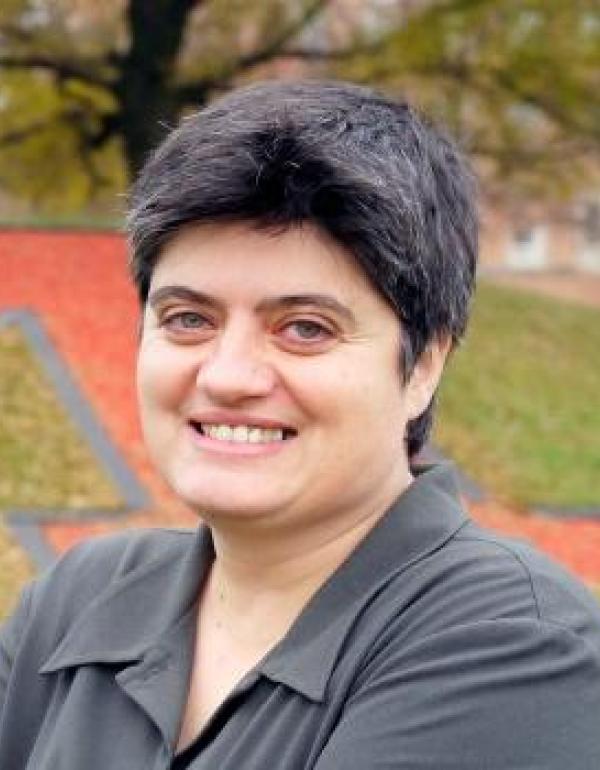 Konstantina Trivisa合作论文数Institute for Physical Science and Technology, College of Computer, Mathematical, & Natural Sciences, University of Maryland;Department of Mathematics, College of Computer, Mathematical, & Natural Sciences, University of Maryland1
 Athanasios Tzavaras合作论文数Department of Mathematics, University of Maryland1




